5 Common Mistakes When Adopting AI Content Tools (And How to Avoid Them)

5 AI content generation mistakes small UK businesses should avoid
If you're a small business owner in the UK exploring AI content generation, here's the honest truth: the tools aren't usually the problem. I've watched dozens of businesses adopt the same AI writing assistant and get wildly different results, and it almost never comes down to which platform they chose. It comes down to how they used it.
The five mistakes I see over and over are publishing AI-generated content without review, ignoring keyword strategy, skipping brand voice setup, keeping an inconsistent publishing schedule, and failing to track performance data. None of these are technology failures. They're workflow failures, and every one is fixable with a bit of upfront planning.
Let's walk through each mistake, with realistic scenarios of what happens when they go wrong and exactly how to avoid them.
A quick note before we start: the examples below are illustrative composites drawn from patterns I've seen repeatedly across small businesses, not single verified case studies. I've kept them specific because vague advice is hard to act on, but treat them as "this is the shape of what commonly goes wrong" rather than a direct quote from one real company.
Mistake #1: publishing AI-generated content without human review
Imagine a small UK ecommerce owner who's thrilled about her new blog automation setup. She connects her AI tool directly to her WordPress site, turns on auto-publish, and walks away for two weeks. When she comes back, she finds a handful of articles live on her site with awkward phrasing, one factual error about her own product range, and a broken internal link pointing to a page she deleted months earlier.
Nothing about this scenario is unusual, and it isn't really her fault. Auto-publish features feel like magic when you're busy running a business, so it's tempting to set them up and forget them. But even the best AI writing assistant works from patterns and probabilities, not lived experience of your business. It doesn't know that you discontinued a product last month or that your brand never uses exclamation marks. That's a job for a human, even if it only takes a few minutes.
Before anything goes live, run through a content review checklist and assign someone as the approval owner, ideally the same person each time, so nothing slips through because everyone assumed someone else checked it:
- Facts: Are product names, prices, dates and claims accurate? Flag anything that makes a regulated claim, such as a health, financial or legal claim, for extra scrutiny.
- Tone: Does it sound like your business, or like a generic AI assistant wrote it?
- Links and calls to action: Do internal and external links work and point somewhere useful? Does the article ask the reader to do something relevant?
- Metadata: Does the page have a sensible title tag, meta description and canonical URL, especially if it's similar to an existing post?
- Formatting and accessibility: Does it look clean on desktop and mobile, with proper headings, alt text on images and reasonable spacing?
Quality scoring tools built into some content platforms can flag likely issues automatically, such as weak structure, thin sections or inconsistent tone, before you publish. That's genuinely useful as a first filter, particularly at scale. But it's worth being clear-eyed about what automated scoring checks: structural and pattern-based signals, not your specific product catalogue or last week's stock changes. It's a good editor's first pass, not the final sign-off. That still needs a human.
Mistake #2: using AI content generation without a keyword strategy
Here's a pattern that comes up more often than you'd think. A small accountancy firm decides to go all-in on content marketing. They generate 40 blog posts in about two months, publishing consistently and proudly announcing each one on social media. Six months later, almost none of it has moved the needle. Organic traffic barely budges.
When you look at what happened, the issue is usually obvious: the topics were things the business wanted to talk about, not things their customers were actually searching for. Posts like "Our Thoughts on Financial Planning" sound fine, but nobody types that into Google. Meanwhile, actual search queries such as "how to register as self-employed in the UK" or "what expenses can I claim as a sole trader" go completely untouched.
This is the difference between generating content and generating content that targets real search intent. AI content generation can produce volume incredibly fast, but volume without direction just fills up a blog archive nobody visits. Here's a simple four-step process that works well for small teams:
- Pull real queries using Google Search Console, Google Keyword Planner or a keyword tool to see what people are actually typing.
- Sort keywords by intent: informational ("what expenses can I claim as a sole trader"), commercial ("best accounting software for small business UK") or navigational (searches for a specific brand or product). Each type needs a different kind of article.
- Check who's already ranking for your priority terms. If the top results are large, well-established sites, you may need a more specific long-tail angle to compete realistically.
- Write one content brief per topic before generating anything, covering the target query, intent, angle and what the article needs to say that competing pages don't.
One trap worth naming directly: generating several near-duplicate articles targeting almost identical keywords doesn't multiply your chances of ranking. It usually splits your own traffic and confuses search engines about which page to show. Better to consolidate similar topics into one strong, comprehensive article.
Platforms that learn from performance data over time can help here too, provided you feed them real results. If certain keyword patterns or article structures are driving traffic and rankings, a system can help you create more of that content. If something consistently underperforms, it can help you spot that sooner. But this only works if you're tracking performance in the first place, which is exactly what Mistake #5 covers.
Mistake #3: skipping AI content brand voice setup
I've read many AI-generated blog posts that were technically fine but felt like they could have been written for absolutely any business in the industry. No personality, no point of view and nothing that made you think, "yes, this is clearly from this company." Nine times out of ten, that happens because nobody configured the tool's brand voice settings before starting.
Picture a family-run landscaping business with 30 years of local experience. Its AI-generated posts are accurate and well-structured, but they read like they were written by a corporate consultancy rather than the friendly, hands-on team its customers actually know. Long-standing customers notice the content doesn't sound like the people they've dealt with for years. That mismatch quietly undermines trust, even if nobody can quite explain why something feels slightly off.
Brand voice setup is worth doing properly at the start, although it isn't strictly a one-off task. Revisit it whenever your messaging, audience or positioning changes. A simple voice brief you can reuse and update looks like this:
- Audience: who you're writing for and what they already know.
- Tone: formal or conversational, playful or serious, technical or plain-spoken.
- Point of view: "we" (the business), "I" (a founder) or neutral third person.
- Preferred vocabulary and banned phrases: words you'd naturally use, and jargon or clichés you'd never say out loud.
- Sentence style: short and punchy, or more detailed and explanatory.
- Two before-and-after examples: a generic AI sentence next to how you'd actually phrase it, so anyone reviewing content has a concrete reference point.
Feed the tool sample content that already sounds like you, whether that's old blog posts, email newsletters or your website's About page. Update the brief every few months as your business evolves. Consistent voice builds reader trust and brand recognition as you scale up your content output. If someone reads five of your blog posts over six months and they all sound like they came from the same source, that consistency is doing real work, even if the reader never consciously notices it.
Mistake #4: failing to maintain a consistent AI content publishing schedule
This one is sneaky because it doesn't feel like a mistake in the moment. Picture a small business that gets excited about a new content marketing push and publishes 10 articles in its first month. Fantastic start. Then life gets busy, priorities shift and it doesn't publish anything for the next three months.
It's worth being precise here: publishing frequency by itself isn't a direct Google ranking factor, and there's no evidence that search engines simply reward volume. What consistency actually buys you is operational. A steady cadence keeps your review process sharp, gives search engines and readers more chances to discover well-optimised content over time, and helps you build the habit of checking whether each article is working before you write the next one.
A burst-then-silence pattern doesn't break anything technically, but it can mean you lose editorial momentum and skip the review habits that make content good in the first place.
The fix isn't necessarily automation for its own sake; it's choosing a cadence that matches your actual review capacity. If you can properly research, generate and check two articles a week, commit to two a week. If that's genuinely one a fortnight because you're a two-person team, that's fine too, as long as it's sustainable.
Some content platforms offer scheduled or autopilot publishing, which can help remove the "we didn't have time this week" excuse. However, only use it if you've already built a review step into that schedule rather than skipping straight to auto-publish, which brings us back to Mistake #1.
Assign a named approval owner for each publishing slot and define a minimum viable cadence you can hit even in a busy month. Two well-reviewed posts a week, published every week without fail, will often outperform a chaotic mix of feast and famine, not because search engines reward frequency directly, but because consistency keeps your quality control honest.
Mistake #5: not tracking AI content performance data
The last mistake is the quiet one. It doesn't cause an obvious disaster like a factual error going live. It just slowly wastes months of effort. It's common to see businesses publish consistently, with decent keyword targeting and a solid brand voice, for the better part of a year without checking which articles are actually working.
That's a real shame, because skipping analytics means missing out on the compounding improvements that make AI content generation genuinely useful over time. Without a feedback loop, you're generating content on autopilot without ever tightening the aim.
Set up a simple monthly dashboard and actually look at it. Here's what to track and where it typically comes from:
- Impressions and clicks (Google Search Console): how often your pages appear in search results and how often people click through.
- Click-through rate: whether your titles and meta descriptions are compelling enough to earn the click when you do appear.
- Average position: whether your target keywords are trending up or down over weeks and months.
- Engaged sessions or time on page (Google Analytics): whether people are actually reading or leaving immediately.
- Conversion from blog to lead: how often a blog visitor takes a meaningful next step, such as signing up or getting in touch, tracked through your CRM or form analytics.
- Content decay: articles that used to perform well but are now sliding, often a sign they need an update rather than abandonment.
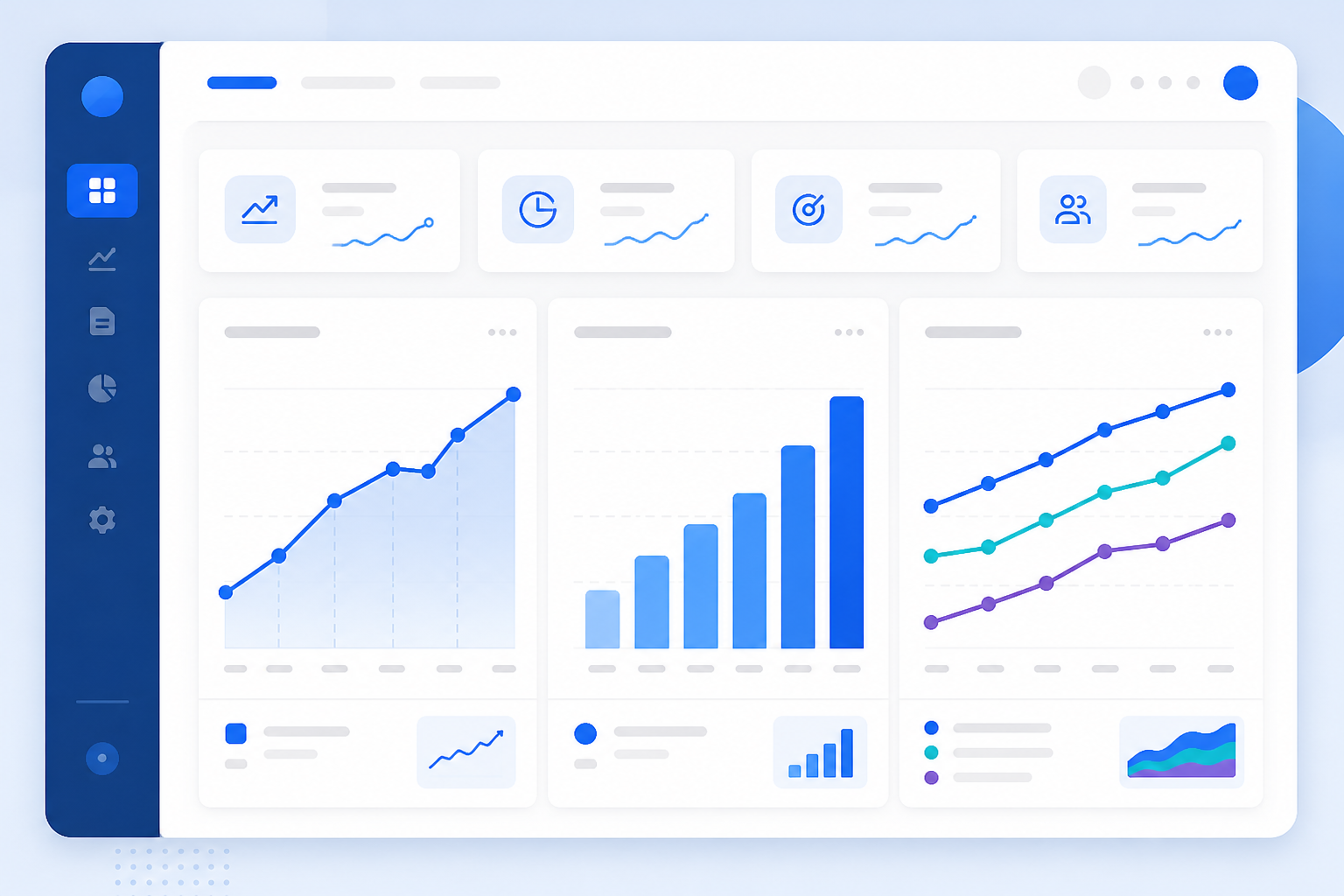
Once a month, turn those numbers into decisions: update an article that's decaying, consolidate two that are competing for the same keyword, add internal links from strong pages to weaker related ones, promote successful pieces on social media or email, and retire anything that's never gained traction after a fair trial.
Some content platforms include adaptive learning features that use performance data to suggest which structures or topics to repeat. Used well, that can meaningfully speed up your improvement curve, but it depends entirely on feeding the system real, honest performance data rather than skipping the tracking step altogether.
The takeaway is simple: publishing content and tracking its performance aren't two separate jobs you can skip independently. They're two halves of the same job.
How to avoid common AI content generation mistakes: an implementation checklist
You don't need to fix all five mistakes at once. Start here:
- Assign one person as the final review owner before anything publishes.
- Build a one-page keyword brief for your next five articles based on real search queries, not internal opinions.
- Write a one-page brand voice brief and share it with anyone generating content for you.
- Pick a publishing cadence you can sustain for three months without fail, even if it's modest.
- Set up a monthly 15-minute review of Search Console and Analytics data, and act on what you find.
Automation and AI content generation tools can genuinely speed all of this up. But they work best as a multiplier on a solid workflow, not a replacement for one. Human review, real keyword research, a defined voice, a sustainable schedule and honest performance tracking: that's the actual difference between businesses that get results and businesses that just get a full blog archive.
Frequently asked questions about AI content generation
What should I check before publishing AI-generated content?
Give every article a human review before it goes live, ideally from a named approval owner rather than "whoever has time." Check factual accuracy, confirm the tone matches your brand, verify links and calls to action work, review metadata such as titles and meta descriptions, and check the formatting and accessibility on desktop and mobile.
Quality scoring tools can flag obvious structural issues, but a final human read-through catches the nuance an algorithm typically misses, especially around specific facts about your own business.
Why isn't my AI content getting traffic?
There's rarely a single cause. Common culprits include content that doesn't match real search intent, weak internal linking, low overall site authority, technical SEO issues such as slow pages or poor indexing, unclear titles and meta descriptions that don't earn clicks even when you rank, and not giving new content enough time to mature in search results, which can take several months.
Publishing consistency helps because it keeps your quality control and review habits sharp, but frequency alone won't fix a keyword or intent mismatch.
How much editing does AI content actually need?
It varies by tool, topic and how well you've set up brand voice and quality checks, but the honest answer is: less than a first draft written from scratch, though never zero.
Even AI writing assistants with strong quality scoring benefit from a human pass for factual accuracy, tone and anything specific to your business that the tool can't know. Treat editing time as an investment that becomes more efficient as your content brief and voice guidelines improve, rather than something that disappears entirely.
Create content like this automatically
Scribe uses AI to generate high-quality blog posts that engage your audience and drive traffic.