A Beginner's Guide to Automating Your Blog Content (Without Losing Your Voice)
13 min read
Loading...

Content automation means using tools such as an AI blog generator to research, draft, optimise and publish blog posts with far less manual effort than doing everything yourself. For small business owners, it is a practical way to publish consistently without hiring writers or losing entire evenings to a blank page.
Getting started is simpler than most beginners expect: choose a platform, connect it to your website, set your topics and review the output before it goes live.
If you have been putting off blogging because you do not have the time, you are not alone. Small business owners across the UK know content marketing can work, but often cannot justify the hours required to write even one useful post. That is the gap blog automation is designed to fill. It is also more approachable—and more limited—than the marketing hype around it suggests.
At its core, content automation is software doing jobs a person used to do by hand: researching a topic, writing a draft, formatting it, sourcing images and publishing to your website. Think of it as delegation, except the person you are delegating to is an AI writing assistant that produces a first draft in minutes rather than days.
An AI blog generator goes further than a simple scheduling tool. A scheduler posts content you have already written at a set time. That is useful, but it does not solve the underlying problem: having no content to schedule in the first place. An AI blog generator can help with content creation, from keyword research through to a structured, SEO-aware draft.
Here is an important nuance: automation does not mean set-and-forget forever. You are not handing your entire content strategy to a machine and walking away. You are removing repetitive, time-consuming parts of the process—the blank page, SEO guesswork and formatting—while staying in control of which topics matter to your business and how the final article reads before publication.
You may also see platforms described as “self-improving”. This usually means the system adjusts future output based on how earlier posts performed. In practice, that might involve tracking signals such as engagement, dwell time or an internal quality score, then favouring the structures and topics that performed well.
Scribe is one example of a platform that describes its process this way. I have not independently verified exactly how its scoring model works, so treat “self-improving” as a platform-specific claim worth asking vendors to explain in plain terms. Some platforms use fixed templates regardless of results, so it can be a genuine differentiator when the feature is real—but ask for specifics before taking the claim at face value.
The important question is whether an AI blog generator is genuinely useful for a small business, rather than simply being good marketing for the tools that sell it. The honest answer is that it can be useful, provided you have realistic expectations about what it saves you and what it does not.
One common misconception is that setting up blog automation is technical or time-consuming. It does not have to be. Here is a straightforward process you can follow this week.
Not all AI blog generators are built in the same way. The differences matter when you are starting out, particularly if you run a UK small business. Check the following before committing to a platform.
| What to check | Why it matters |
|---|---|
| Content quality and usefulness | Look for genuinely useful posts that answer the reader’s question clearly, rather than padded text designed only to reach a word count. |
| Fact-checking and source transparency | Check whether the platform shows sources or flags claims that need verification. This is especially important for factual, financial or health-related content. |
| SEO optimisation features | Look for keyword targeting, heading structure, meta descriptions and internal linking suggestions built into the workflow. |
| Self-improving capability, explained clearly | Ask the vendor what data drives improvement and how you can verify it, rather than accepting the claim at face value. |
| Publishing integrations | Direct publishing to WordPress, Shopify, Wix, Webflow or custom APIs can save time compared with copying and pasting each post. |
| Image licensing and rights | Confirm whether AI-generated and stock images are cleared for commercial use, and ask for this information in writing. |
| Data handling and UK GDPR | If the tool processes customer questions or business data, check where the data is stored and how the platform handles UK GDPR requirements. |
| Pricing structure | Look for plans based on realistic publishing volumes, such as 10 to 30 articles per month, rather than paying for capacity you will not use. |
| Content ownership and exportability | Confirm that you own the published content and can export it if you move to another platform. |
| Analytics and quality scoring | Performance information can help you understand which posts work and improve your future content decisions. |
A useful tip is not to judge a platform only by the sample content on its marketing page. Ask for independent examples of full-length articles published on real customer websites, so you can assess the actual quality rather than the highlight reel.
It is also worth comparing a standalone AI writing tool with an all-in-one platform that combines blog automation with your existing marketing software. The best option depends on your current website, workflow and publishing needs.
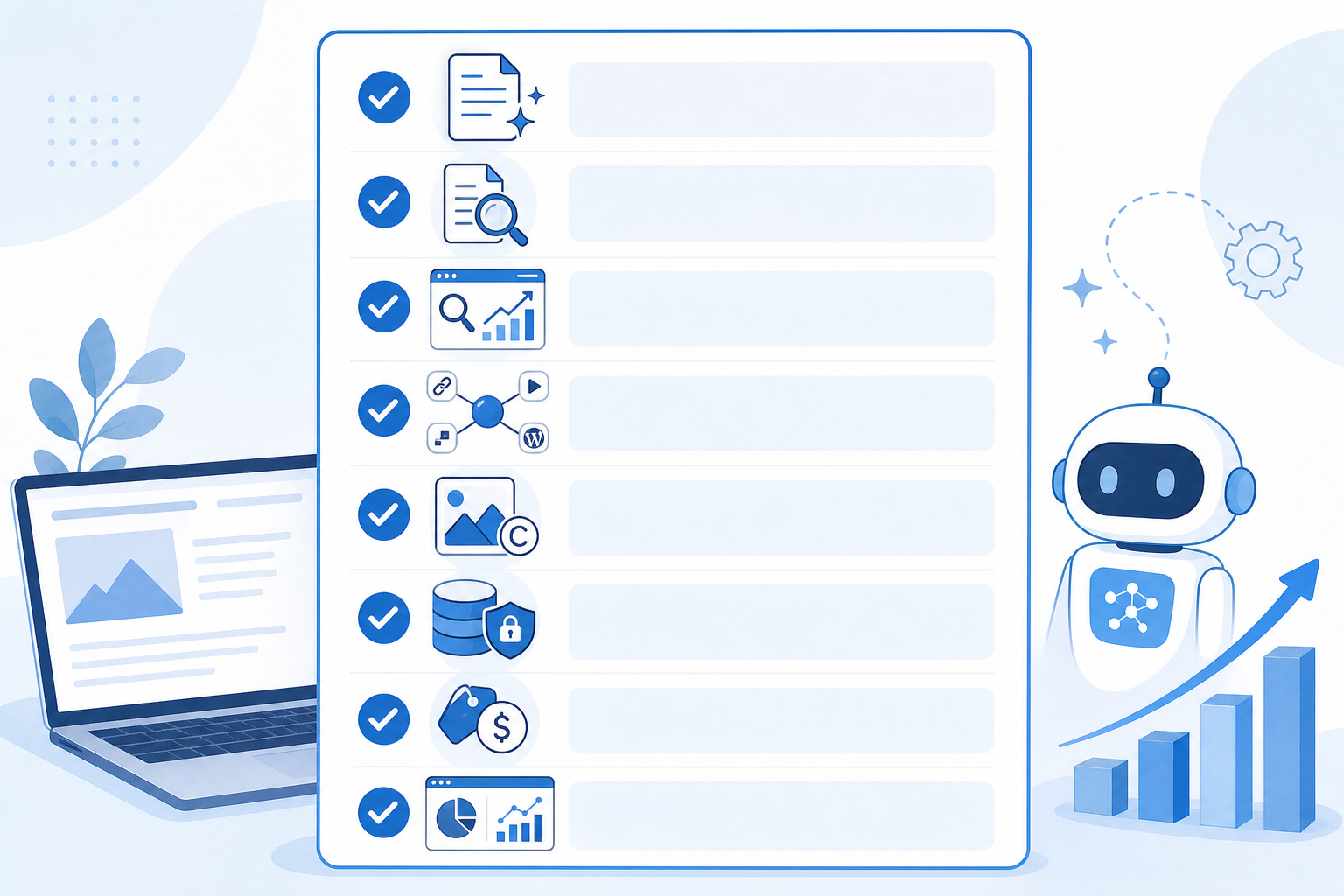
Quality control is one of the most important parts of using an AI blog generator. Before an automated post goes live, run through this checklist:
This does not need to slow down your workflow. Once established, it can become a short review process that protects your business and helps you use automation responsibly.
Small business owners often make similar mistakes when they first automate content. Knowing what to avoid can save time and reduce wasted effort.
It means using software, usually an AI writing assistant, to handle time-consuming parts of blogging, including researching topics, writing drafts, optimising content for SEO, sourcing images and publishing to your website. You still set the direction and review the output; the tool handles much of the repetitive groundwork.
It can be, particularly for businesses without a dedicated marketing team. An AI blog generator can help you publish consistently without the cost of hiring writers. The key is to choose a platform with useful SEO features and quality controls, then keep a human review step before publication.
Start by defining your goals and listing topics your customers search for. Then choose an AI blog generator that integrates with your website, set a manageable publishing schedule and create an approval process. Begin with one post per week and review the results before increasing the volume.
Expect to check the tone, verify factual claims, confirm image rights and adjust anything that does not sound like your business. For many posts, this may be a focused 10- to 20-minute review rather than a full rewrite. Regulated topics require more thorough checking by someone qualified.
This varies by platform, so check the terms before committing. Many reputable tools confirm that customers own the published output and can export it if they change providers, but you should verify the specific terms yourself.
Yes, provided it is genuinely useful, well-structured and reviewed before publishing. Search engines do not automatically penalise content because AI helped produce it. However, thin, unhelpful or duplicate content can perform poorly regardless of how it was created.
Medical, legal, financial and safety advice should always be reviewed by a qualified person before publication. The same applies to content involving specific prices, regulations or guarantees that could mislead customers if inaccurate.
Starting your first automated blog post does not need to be a major project. This week, choose one topic your customers regularly ask about, connect your AI blog generator to your publishing platform and create a single draft.
Review it using the checklist above, publish it and track impressions and clicks over the following two weeks. That small, deliberate loop—one post, one honest review and one look at the data—is a more reliable starting point than trying to automate everything at once.