AI Citations vs Backlinks: What Actually Builds Authority for SaaS and DTC Brands
19 min read
Loading...
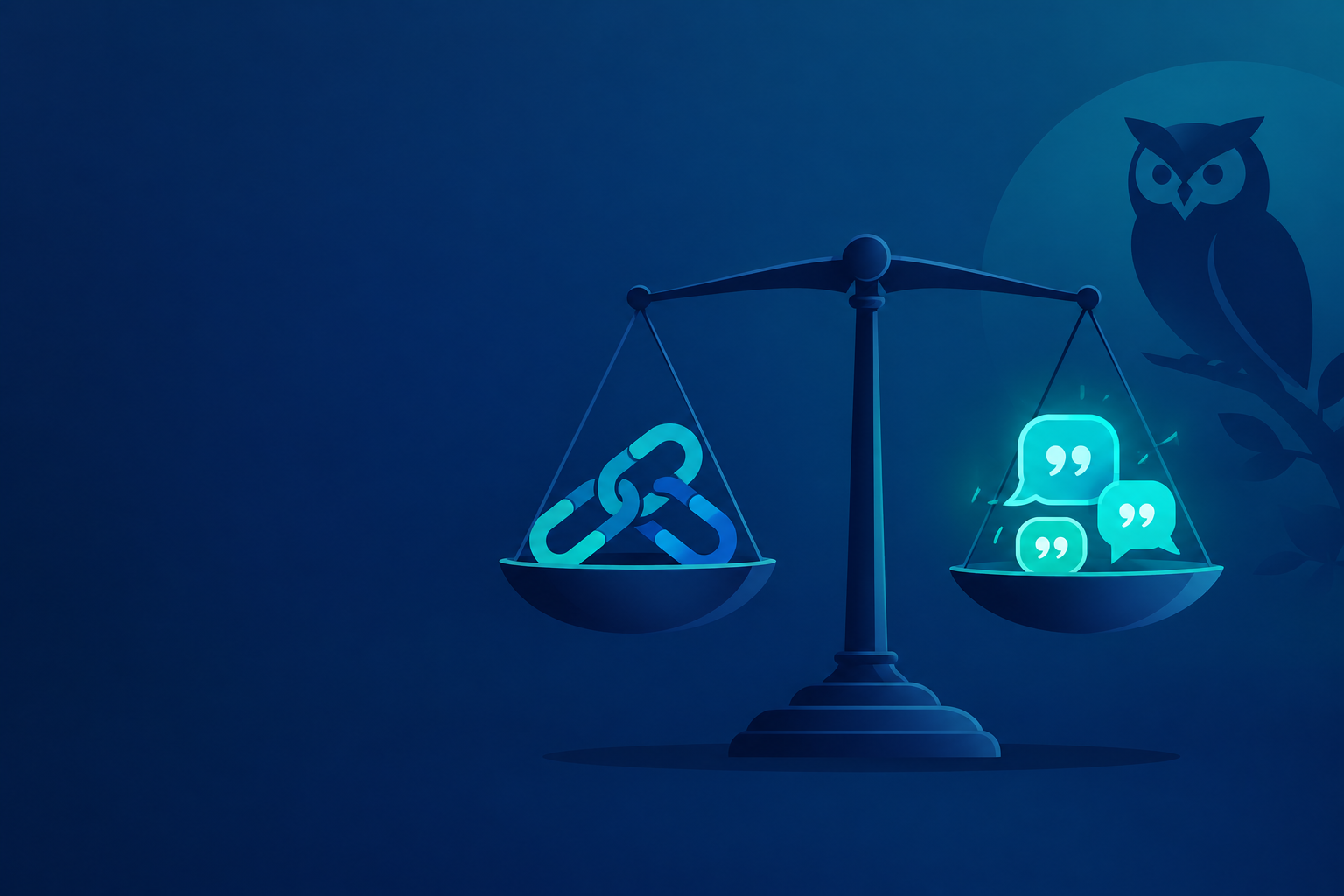
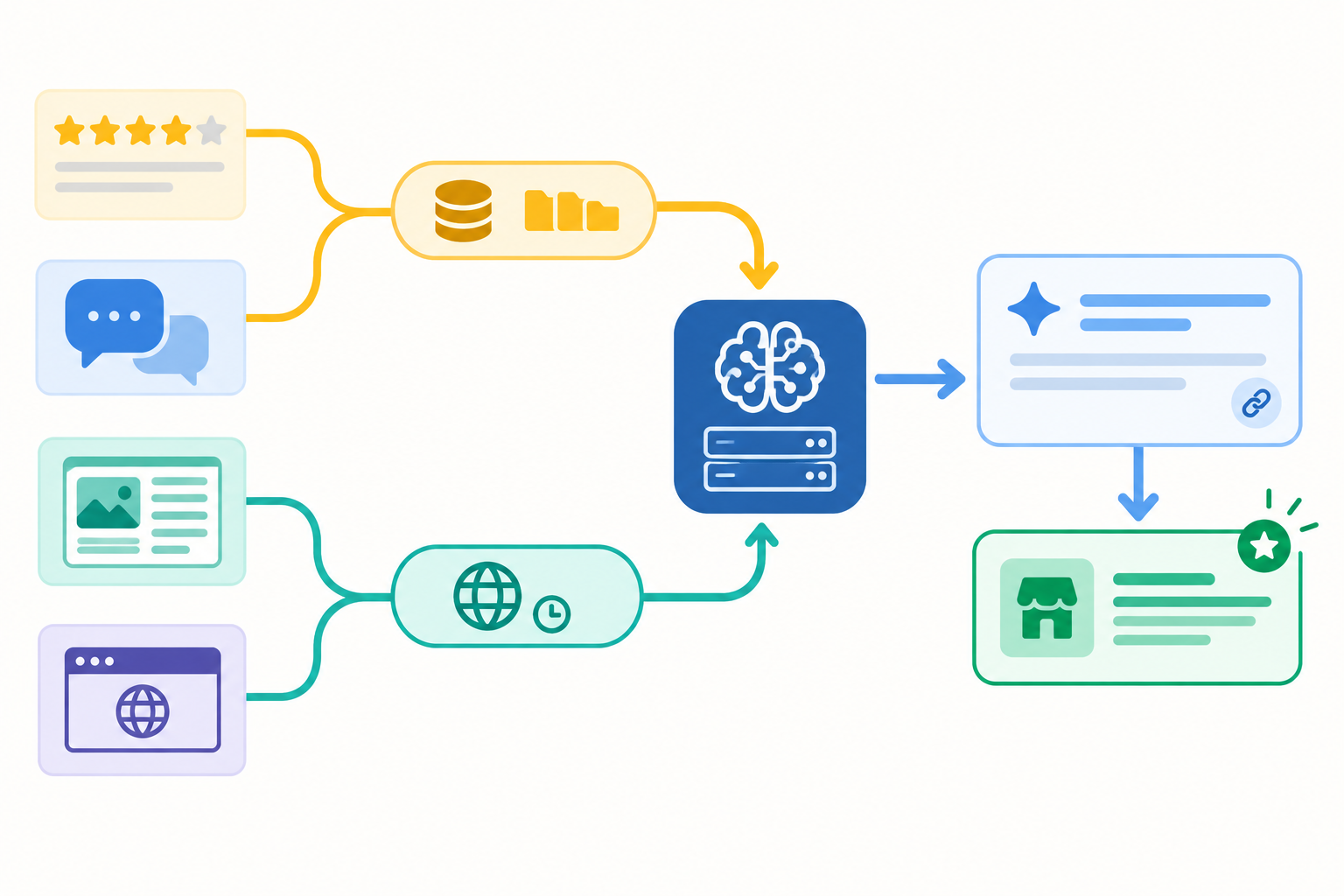
Backlinks still matter, but mainly as an indirect signal. They help your pages rank, get crawled and get discovered, which feeds the pool of sources AI engines can draw from. ChatGPT citations also seem to depend on corroborating mentions on third-party sites, on content that is easy to extract, and on consistent facts about your product. 🦉
I should be candid about the evidence base. No AI engine publishes a full trust formula, and the research is young. Throughout this guide I label claims as documented (stated by the platform or shown in a linked study), observed (a correlation reported by researchers) or hypothesis (my own reasoning, which you should test). I link every study so you can check its date, sample and method yourself.
For roughly two decades, authority meant one thing to most SaaS and DTC marketers: links. These days I find it more useful to think in terms of two currencies.
The two overlap, because a strong editorial placement often delivers both a link and a mention. They are not interchangeable, though. Take a query such as 'best project management tool for small teams'. A page that ranks well on the strength of its backlinks may be retrieved, but the final answer may still depend on which brands show up in reviews, comparison articles and community discussions, and on whether your own pages state facts clearly enough to be quoted.
The logic starts with PageRank. Google's founding research paper, The Anatomy of a Large-Scale Hypertextual Web Search Engine (Brin and Page, 1998), proposed using links between pages to estimate a page's importance, with each link counted as a vote weighted by the standing of the page casting it. Modern link analysis is far more sophisticated. Google's own documentation still lists PageRank among its ranking systems, and its Search Essentials note that links help it discover pages. Google is also clear that links are assessed alongside many other signals, so a link never guarantees a ranking boost.
The correlation evidence is substantial, with caveats:
Both findings are observational. The first shows association, not that acquiring a set number of links causes a ranking gain. The second shows how unevenly links are distributed, not that unlinked pages cannot perform. Both are also several years old, so treat them as directional.
The standard SaaS and DTC playbook grew out of this: guest posts, resource-page outreach, affiliate and review links, and digital PR. In the UK, digital PR through national press and trade titles has been an especially productive lever, since a single placement can carry a high-authority link and real brand exposure at once.
The limitation that matters now is that a link is a proxy for trust. It does not describe what a brand is or does. A language model composing an answer needs to know what you sell, who it suits and how it compares, and a link graph says very little about any of that. Google also treats links created mainly to manipulate rankings, including paid links that pass ranking credit and excessive link exchanges, as link spam. The lesson that has held up is to earn editorially relevant links rather than chase raw volume.
Start with the distinction between two mechanisms, because they behave differently and reward different work.
For ChatGPT, OpenAI documents separate crawlers: OAI-SearchBot surfaces sites in ChatGPT search, while GPTBot is associated with model training. You can manage both through robots.txt. Allowing OAI-SearchBot makes you eligible to appear, but it does not guarantee a citation.
Here are the signals I consider most credible, each with its evidence status:
Part of why citation matters is that behaviour is shifting. A Pew Research Center analysis of browsing data from 900 US adults (68,879 Google searches, March 2025) found users clicked a traditional result in 8% of visits when an AI summary appeared, versus 15% without one. They clicked a link inside the summary in about 1% of visits, and about 18% of the searches observed displayed a summary. That is US Google behaviour, so UK patterns may differ, but being named in the answer is increasingly a separate outcome from earning the click.
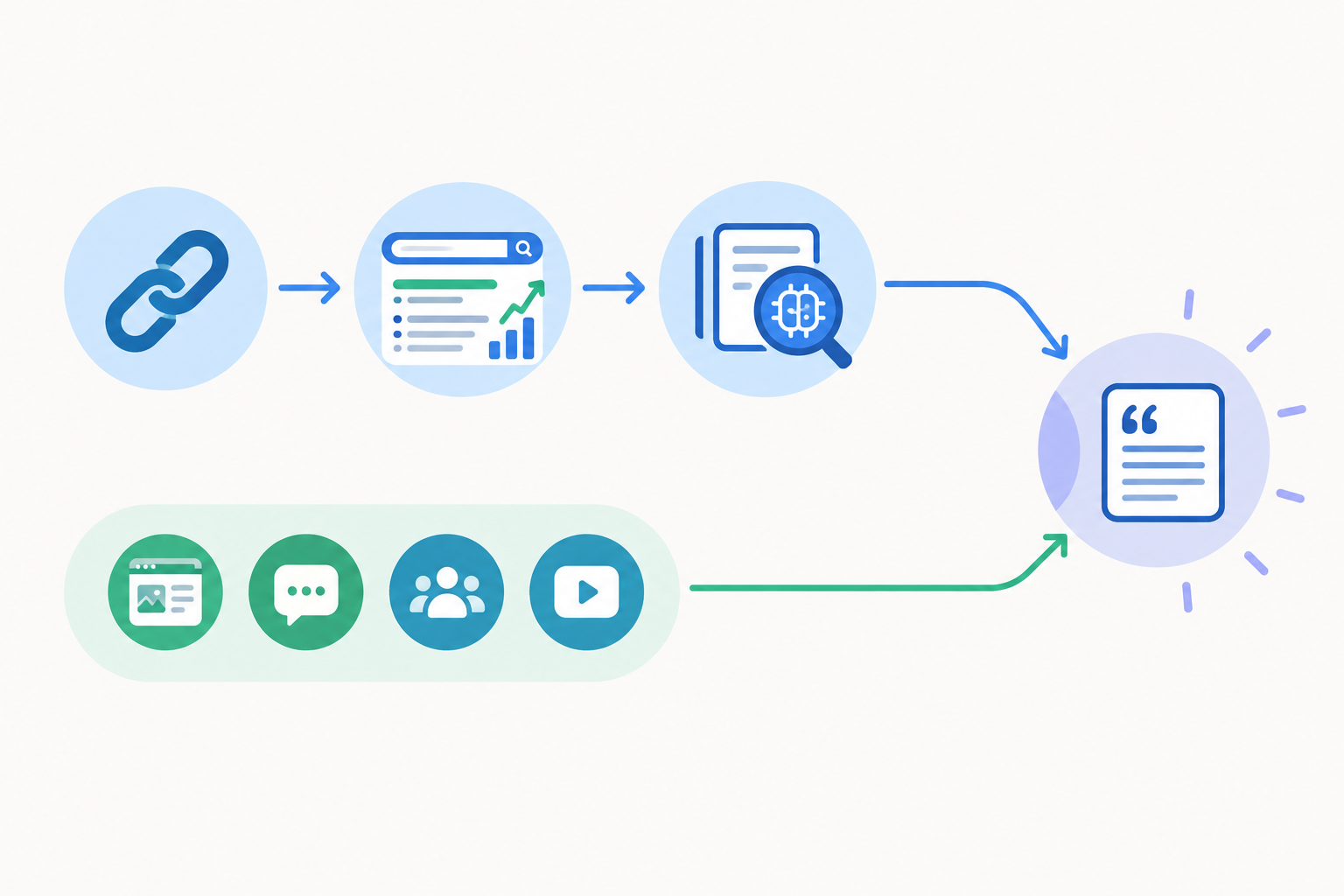
The honest position is mixed. Several industry studies report a positive relationship between domain authority or ranking position and being cited, especially for engines that lean on search indexes. These are correlations, and most come from vendors with their own methods and samples. Google does not say backlinks directly determine citation in AI Overviews, and OpenAI publishes no formula making backlinks a direct citation-ranking factor.
The indirect pathway is one plausible route: links improve rankings, rankings improve the odds a page is retrieved, and retrieval improves the odds it is cited. It applies mainly to search-grounded answers, where the engine fetches pages from a search index. It applies much less to answers written purely from a model's training data, where no page is retrieved at all. Even for search-grounded answers, each step is plausible and none is guaranteed.
The relationship also seems to break down in predictable places. A smaller or newer brand with strong third-party coverage can be recommended ahead of a higher-DR competitor, and some high-authority pages are never cited because their content is hard to extract or doesn't answer the question asked.
What about unlinked mentions? This is a hypothesis, not an established effect. Language models learn from text rather than only from link graphs, so a consistent unlinked mention in a credible context could strengthen the association between your brand and a category. Proving that would take controlled before-and-after tests. You could track citation rates for a fixed query set before and after a mention-only campaign, and compare them against a similar set of queries with no campaign. I have not seen published evidence of that kind, so I treat mentions as worth earning for their reputational value, not as a proven citation lever.
In practice, backlinks look like necessary-but-insufficient infrastructure. They support discovery and traditional authority, but they are not the whole strategy.
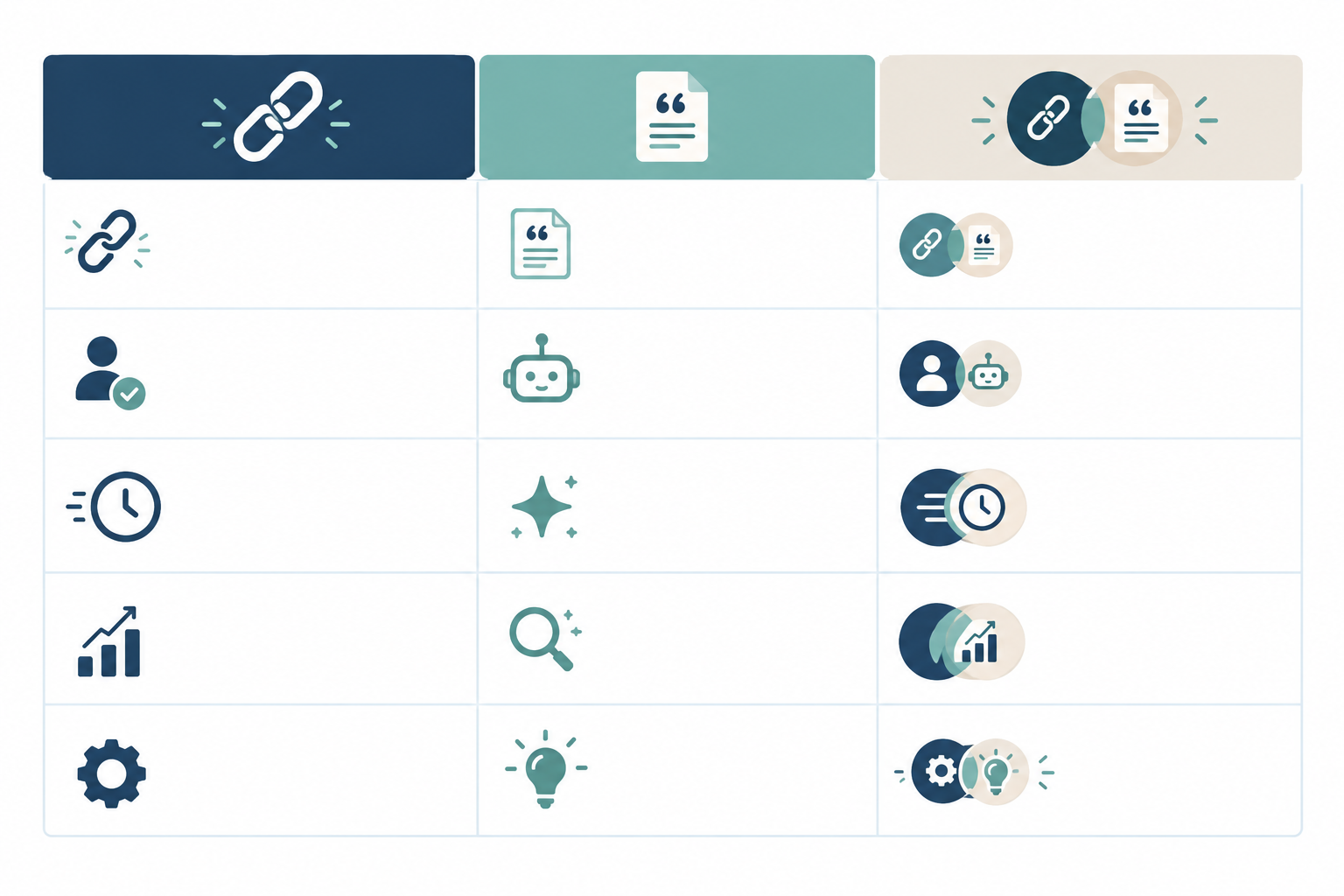
The table simplifies a messy picture. AI engines are not one system: a retrieval layer selects pages, and a language model then composes the answer. Engines differ, and much of the right-hand column reflects observation and inference rather than published specifications.
| Dimension | Backlinks (link-based authority) | AI citations (mention-based authority) | Works in both? |
|---|---|---|---|
| What is measured | Votes of trust between pages | Whether you are cited or recommended in answers | Partly |
| Who decides | Search ranking systems, which Google documents (including PageRank) | Varies by engine: a retrieval layer chooses candidate pages, then a model writes the answer; the weighting is not published | No |
| Main signals | Quality and relevance of linking pages | Observed: corroborated mentions, extractable content, consistent facts | Editorial placements |
| Time to impact | Weeks to months | Variable: potentially faster for live retrieval, slower for training data | Both lag |
| How measured | Domain rating, referring domains, rankings | Query coverage, citations, share of voice, sentiment | Measure both separately |
| Unlinked brand mentions | Little direct value | Hypothesis: may strengthen entity association | Digital PR |
| On-page structure | Helps crawling and relevance | Makes passages easier to quote | Yes |
| Topical depth | Supports rankings | Supports category association | Yes |
| Review-site presence | Often nofollow or limited | Frequently seen as a repeated source for recommendations | Partly |
| Typical tactics | Guest posts, outreach, resource pages | Review profiles, expert commentary, community presence | Original research, expert commentary |
The final column carries the practical message. Original research, digital PR and expert commentary can pay off in both worlds, which is why I advise shifting effort toward them rather than abandoning one currency for the other.
No. Abandoning links would undermine the search rankings that feed many retrieval systems, and organic traffic still drives revenue. Some context helps: a SparkToro and Datos study estimated that 58.5% of US and 59.7% of EU Google searches in 2024 ended without a click to the open web. Clicks are scarcer, but they haven't vanished. (The EU figure is the closest published proxy I know of for UK behaviour. It is not a UK-specific number.)
What I'd do instead is reframe link building as mention building. Prioritise placements on pages that AI engines already cite in your category, because a link on such a page serves rankings and, possibly, recommendation odds at once. Think of it as a portfolio shift rather than a prescribed split. Move a modest share of budget first, perhaps a quarter, and compare changes in AI visibility and referral traffic over a few months before moving more. I wouldn't claim any ratio is optimal, because nobody has the data to support one.
Avoid low-quality link schemes. Paid links that pass ranking credit fall under Google's link spam policy, and they add cost and risk without improving how AI engines describe you.
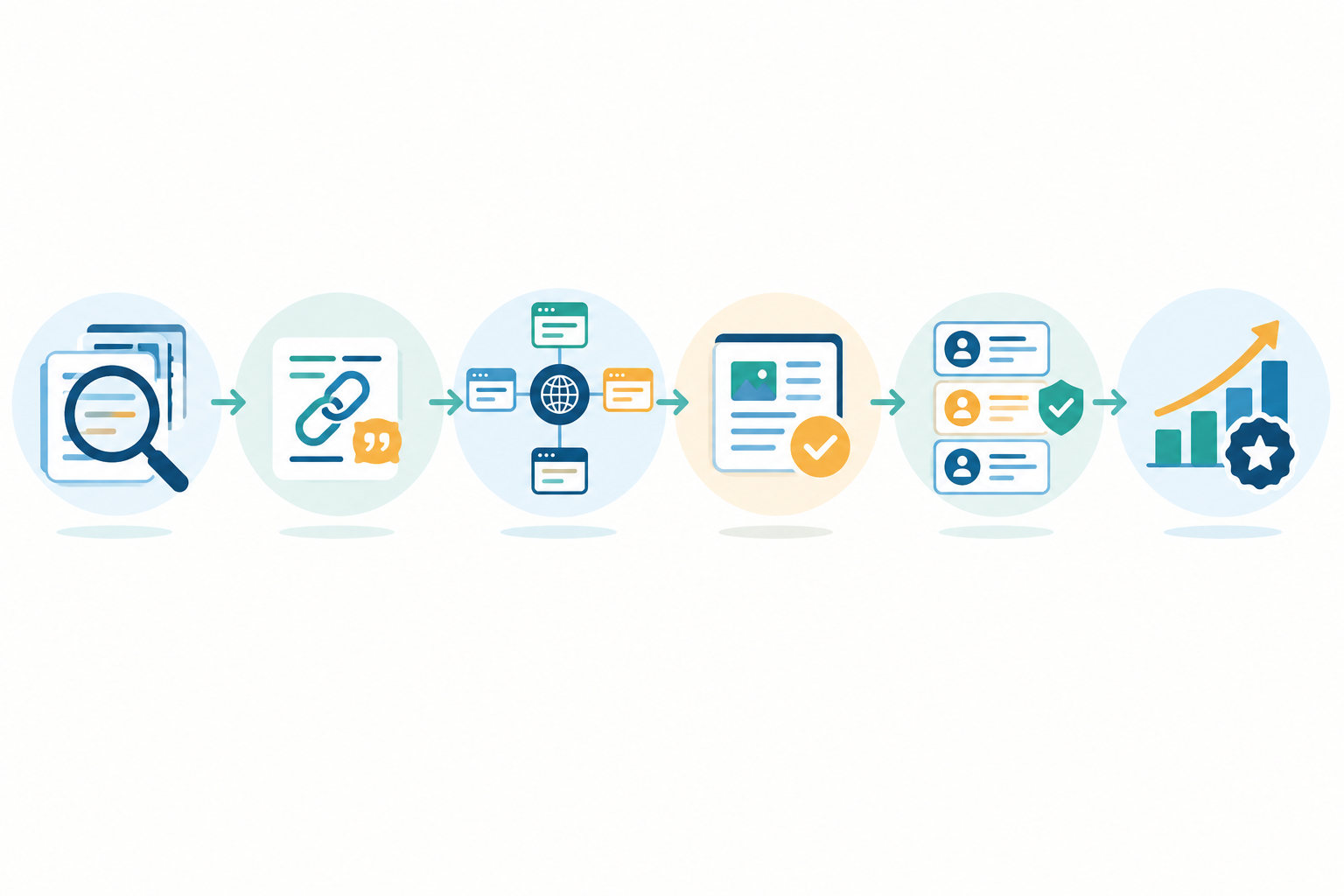
Google says there are no extra technical requirements for AI Overviews beyond regular Search eligibility, so I treat this as one discipline rather than a separate checklist. The steps below support traditional search and AI SEO alike, and I've flagged which ones are more speculative.
None of this needs a separate toolkit. Each step is a content, technical or reputation task that also helps conventional search, and that is exactly why I trust these more than anything sold as an AI hack.
For SaaS brands:
Here is an illustrative scenario (hypothetical, not a case study). A London-based HR software company finds that for 'best HR software for small UK businesses' the cited sources are two comparison articles and a review platform, and it appears on none of them. It would pitch a data-led piece to a UK trade title, complete its review-platform profile, and add an alternatives page with VAT-inclusive pricing in pounds. The outcomes to track are its citation rate for that query set, the number of cited sources that now mention it, and referral sessions from AI engines.
For DTC brands:
Another illustrative scenario (hypothetical): a UK skincare brand checks which review sites and 'best of' lists are cited for 'best fragrance-free moisturiser for sensitive skin'. It then makes sure its ingredient lists, pricing in pounds and delivery details are identical across its site, retailer listings and review profiles, and tracks whether its citation rate and position for that query set change over the next quarter.
For both:
Position within AI-generated lists plausibly shapes purchase-decision queries. Being named third rather than first may still count for something, but earlier placement is clearly preferable.
The UK angle:
UK publications, UK review sites such as Trustpilot and Which? (for DTC), UK trade press (for SaaS), and region-specific details like pounds pricing, UK delivery and VAT-inclusive prices could all influence what UK users see. I have not found UK-specific public evidence on this, so treat it as a hypothesis to test with a UK-located query set rather than an established ranking rule.
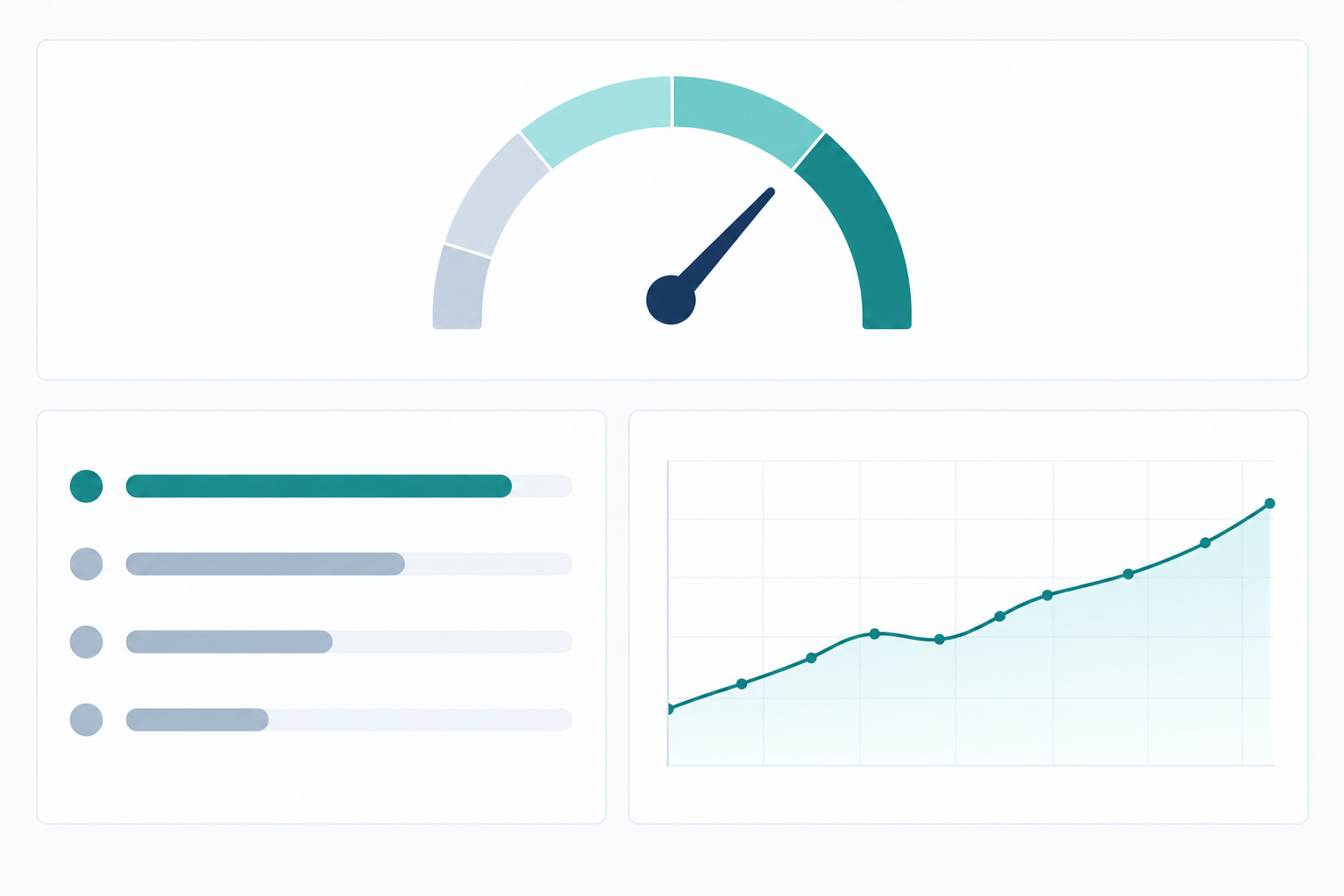
Domain rating and referring-domain counts describe your link graph, not your presence in answers. Measuring AI visibility needs its own method, and you can run it in a spreadsheet before you buy any tool.
The core metrics from this protocol are query coverage (the share of your questions where you appear at all), citation frequency and position, share of voice against competitors, sentiment, and the unlinked mentions that links-only reporting misses. Pair them with referral analytics, bearing in mind that, given the click behaviour Pew observed, citations will often outnumber visits.
Manual testing gets laborious at scale, and that is where monitoring tools come in. At MentionOwl, we automate this protocol with daily monitoring across engines, competitor tracking and a 0-100 AI visibility score. To be clear, that score is a vendor-specific composite, not an industry standard. It combines query coverage, position-weighted citations, share of voice and soft mentions, so it is useful for tracking your own trend over time, but you shouldn't compare it with other tools' scores. Its weighting reflects our judgement rather than independent validation, so I recommend checking its movements against your own spot-test results.
A practical cadence:
For the first 30 days:
If you would rather not run the baseline by hand, MentionOwl offers a 7-day trial (currently $1; check the site for pricing in your currency). It baselines your position, shows which competitors are being recommended and flags the legibility issues worth fixing first.
Yes, mostly indirectly. They support rankings, crawling and discovery, which influence what search-grounded AI answers can retrieve. They are not enough alone, since third-party mentions, content structure and factual consistency also appear to shape ChatGPT citations.
No engine publishes its full criteria. Observed patterns point to corroboration across reputable sources, topical relevance, extractable content, freshness for retrieval-based engines and consistent brand information, and each engine weighs these differently. Training-data answers and live-retrieval answers also work differently, so test them separately.
No. Shift emphasis toward placements on pages AI engines already cite in your category, and drop low-quality tactics that add risk without benefit.
Use a fixed set of buyer queries, test named engines separately on a schedule, repeat each query to allow for variation, and record citations, position, competitors and sentiment against a baseline. Tools such as MentionOwl can automate this, but the method works fine with a spreadsheet.
Possibly, but the evidence isn't there yet. Language models learn from text, so consistent mentions in credible contexts could strengthen how an engine associates your brand with a category. This remains a hypothesis until controlled tests show an effect, so treat mentions as worth earning for reputation while you test their impact on your own citation rate.

A side-by-side comparison of AI SEO and traditional SEO: goals, metrics, tactics and reporting. See what carries over, what to measure anew, and how t

Learn how ChatGPT citations differ from model memory and live search, why brands get recommended, and what businesses can realistically influence.

A practical guide for UK agencies on pitching AI visibility monitoring to clients: how to frame the problem, run a free audit, handle ROI objections a