Client Reporting for Content: Essential Metrics Agencies Need to Track in 2026
Client Reporting for Content: Essential Metrics Agencies Need to Track in 2026
Understanding Modern Content Performance Reporting
Good agency client reporting tracks metrics that connect content performance to business results. We focus on:
- Traffic quality over raw traffic numbers
- Engagement depth beyond simple pageviews
- Conversion attribution instead of vanity metrics
The best agencies show how content directly drives revenue. They bridge the gap between creative work and business impact.
Why Traditional Agency Reporting Falls Short
The Metrics Disconnect
Most agencies make a critical error: they lead with output metrics instead of outcome metrics. Publishing 12 blog posts is nice, but what did those posts actually achieve? Clients care about:
- Leads generated
- Sales driven
- Revenue growth
The Consequences of Weak Reporting
Unclear reporting creates real problems:
- Breeds scope creep
- Undermines client trust
- Makes contract renewals difficult
Core Content Reporting Metrics for 2026
Key Performance Indicators to Track
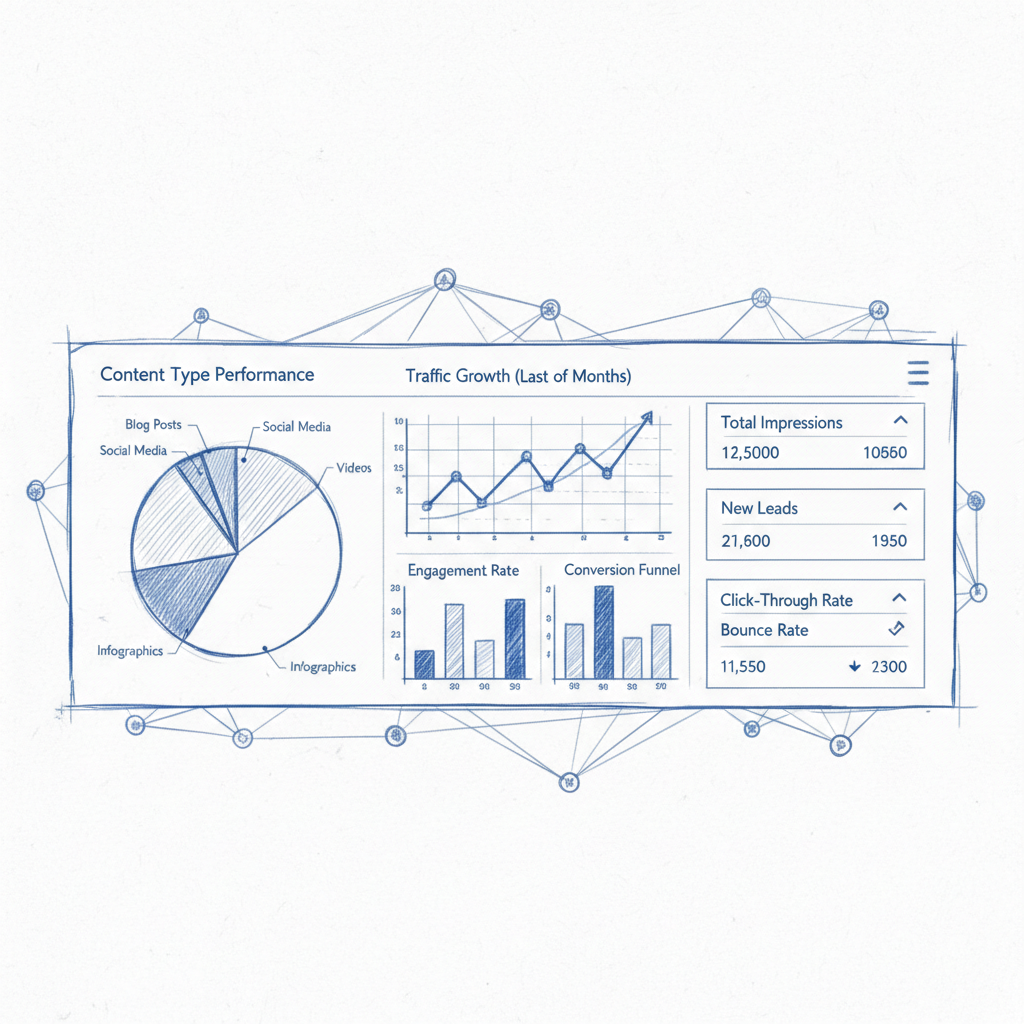
Organic Traffic Growth by Content Type
- Segment traffic by content themes
- Identify high-performing topic clusters
- Track percentage growth for specific content types
Contextual Engagement Metrics
- Time on page
- Scroll depth
- Bounce rate (interpreted with content purpose in mind)
SEO Performance Tracking
- Keyword ranking movements
- SERP feature acquisitions
- Featured snippet wins
Conversion Metrics with Attribution
- Lead generation
- Email signups
- Demo requests
- Direct revenue attribution
Content Velocity Analysis
- Correlation between content production and performance
- Quality vs. quantity insights
Building a Comprehensive Reporting Framework
Tiered Reporting Approach
Executive Summary
- 3-5 headline metrics
- Direct connection to client's business goals
- Clear value demonstration
Detailed Performance Analysis
- Breakdown by content piece/campaign
- Scannable visualizations
- Trend line comparisons
SEO Health Check
- Technical performance overview
- Indexation status
- Ranking trend analysis
Content Pipeline Status
- Recently published content
- Current productions
- Upcoming content plans
Strategic Recommendations
- Data-driven action items
- Future optimization strategies
Customizing Metrics to Client Goals
| Client Type | Primary Metrics | Secondary Metrics |
|---|---|---|
| Brand Awareness | Reach, impressions, share of voice | Backlink acquisition, brand mentions |
| Lead Generation | Form submissions, MQL attribution | Cost per lead, sales pipeline contribution |
| E-commerce | Assisted conversions | Revenue attribution, average order value |
| Thought Leadership | Engagement depth, social shares | Industry publication mentions |
Reporting Best Practices
Automation and Human Insight
- Use AI tools for data gathering
- Maintain human interpretation
- Provide narrative context beyond raw numbers
Scaling Reporting Across Clients
- Create flexible report templates
- Automate data collection
- Use consistent analysis frameworks
Key Takeaway
The most successful agencies in 2026 will be those who:
- Master content performance tracking
- Clearly communicate business value
- Continuously optimize based on data-driven insights
Content reporting isn't about numbers. It's about telling a compelling story of business growth through strategic content marketing.
Frequently Asked Questions
Q: How often should agencies report to clients?
A: Monthly reporting is standard, with quarterly deep-dive reviews and annual strategic assessments.
Q: What tools are best for content reporting?
A: Combine Google Analytics, Search Console, SEMrush/Ahrefs, and AI-powered content platforms for comprehensive tracking.
Start connecting your content work to real business outcomes, and watch your agency's value grow.
Create content like this automatically
Scribe uses AI to generate high-quality blog posts that engage your audience and drive traffic.