E-Commerce Content Marketing: How to Turn Blogging Into Real Sales

Ecommerce content marketing works when it's built around buyer intent, not keyword volume. Product-adjacent guides, comparison posts, and use-case content catch shoppers earlier in their journey and lead them towards your product pages, but only if you also build a clear path from that content to a purchase. The brands seeing real revenue from blogging treat it as a consistent, long-term channel with proper conversion tracking, not a one-off marketing push.
If you run an online store, you've probably heard someone tell you "you need a blog" without much explanation of why or how. I get it. It sounds like extra work with no guaranteed payoff. But when I look at the ecommerce brands actually growing organic revenue right now, blogging is almost always part of the picture. Not because blog posts sell products directly, but because they meet shoppers at the exact moment they're figuring out what they need, before they've even landed on your product pages.
Let's get into why ecommerce content marketing works, which content types drive sales, and how to measure whether your blogging strategy is paying off.
Why E-Commerce Brands Need a Blog
Reach shoppers before they visit a product page
Here's the problem with relying only on product pages: they capture people who already know exactly what they want. If someone searches "best waterproof hiking boots for wide feet," your product page for one specific boot model probably won't show up unless Google already has strong signals that the page matches that query well. Most shoppers aren't at that stage yet. They're still researching, comparing, and narrowing down options.
This is where content marketing earns its keep. A well-written guide answering that exact question can rank for the research-stage search, build trust with the reader, and then point them towards the specific boots you sell that fit the bill. You're showing up earlier in the buyer journey, ideally before competitors who've only optimised their product pages.
Build topical relevance and internal links
There's a second, less obvious benefit: topical relevance. When a site consistently publishes well-structured, genuinely useful content around a topic, it creates more opportunities to be found for related searches and gives search engines more context about what the business does. This doesn't automatically boost every product page's ranking, but it does support discovery and gives you more internal linking opportunities to pass value to commercial pages. A shoe brand publishing useful content about foot health, sizing, and terrain types builds a stronger case, to readers and to search engines alike, that it actually knows its category.
Support email, social media, and paid campaigns
And then there's the practical stuff. Blog posts give you something to share on social media, link to in email campaigns, and point paid traffic towards that isn't just "buy now." A guide or comparison post feels helpful rather than salesy, which makes people more receptive to clicking through and eventually buying.
Content Types That Actually Drive E-Commerce Sales
Not all blog content pulls its weight for ecommerce. Generic "industry news" posts rarely convert because they don't connect to a purchase decision. The formats below tend to perform because they mirror how people actually shop, and each one works best with a specific type of link and call to action.
| Content type | Search intent | Link and CTA |
|---|---|---|
| Buying guides comparing options within your own catalogue | Consideration stage, e.g. "which blender is best for smoothies vs soups" | Comparison table linking each option to its product page, with a "shop this model" button under each recommendation |
| How-to and use-case content | Awareness-to-consideration, e.g. "how to build a skincare routine for sensitive skin" | Soft link to a relevant category page, with a mid-article product callout box rather than a hard sell |
| Comparison posts | Decision stage, e.g. "Product X vs Product Y" | Direct links to both product pages, a comparison table, and a clear "buy now" CTA for the recommended option |
| Seasonal and gift guides | Decision stage but time-bound, e.g. "best gifts for hikers this Christmas" | Link to a curated collection page, ideally with stock and delivery-deadline information visible |
| Customer story and case study posts | Consideration-stage trust-building | Link to the product used, with a testimonial pull-quote and a "see this product" button |
| Bottom-funnel "best X for Y" content | Decision stage, e.g. "best running shoes for flat feet UK" | Direct links to product pages, often with an affiliate-style comparison table and multiple CTAs |
The common thread is that none of these formats feel like advertising. They feel like help, and the link or CTA placement matches how ready the reader is to buy.
SEO for Product-Related Content
Writing good content is only half the job. If it doesn't rank, it doesn't drive traffic, and if it doesn't link back to your products with a clear next step, it doesn't drive sales either. Here's the process I'd recommend for ecommerce blog content, including the parts most guides skip.
1. Start with commercial keyword research
Start with keyword research focused on commercial and transactional intent. Informational keywords have their place, but for ecommerce, prioritise searches that show someone is close to buying: "best," "vs," "review," and "for [specific use case]." A simple content brief should include the target keyword, search intent, the product or category page it supports, and the CTA you want the reader to take.
2. Map each post to the buyer journey
Decide whether a piece is awareness, consideration, or decision-stage, then link it to the relevant product or category page accordingly. A decision-stage post should link almost directly to a product with a strong CTA; an awareness-stage post can link more softly, perhaps to a category page or an email sign-up.
3. Optimise on-page SEO elements
Title tags, headers, meta descriptions, and image alt text all matter for click-through and accessibility. These are small details, but they add up, especially in competitive UK ecommerce niches where several retailers are targeting the same searches.
4. Use internal links strategically
Rather than "click here," link using descriptive phrases like "our full range of wide-fit hiking boots." Build simple content clusters: one pillar guide linking out to several supporting posts, all funnelling back to the same category page. Audit your top-performing posts every quarter and check that the links still point to current best-sellers.
5. Use clear structure and relevant schema markup
Clear headers help readers scan for what they need. Schema markup, such as FAQ or product schema, helps search engines understand your content and may make it eligible for certain rich results, but it doesn't guarantee higher rankings or increased visibility on its own.
6. Track conversions from blog content
Set up GA4 events for key actions like "add to basket from blog post" or "email sign-up from guide." Use assisted-conversion reporting to see which blog posts contribute to sales even when they aren't the last click before purchase. If a post isn't converting after a few months, that's more useful information than raw traffic alone, and it might point to a weak CTA rather than weak content.
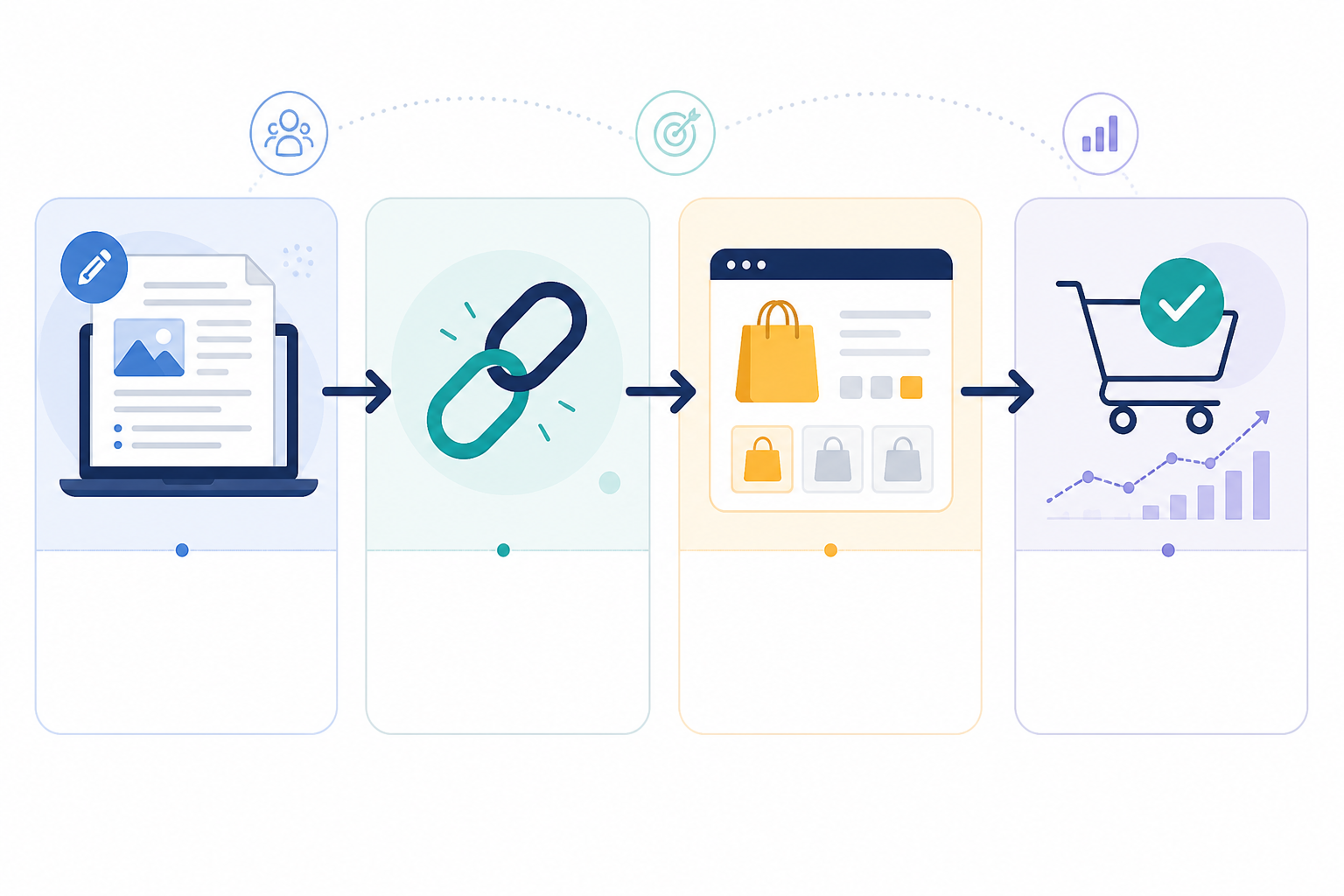
How to Turn Blog Traffic Into E-Commerce Sales
This is the part that most blogging advice skips, and it's the difference between a blog that gets traffic and one that generates revenue. Traffic on its own doesn't pay the bills; the connection between content and checkout does.
Add contextual calls to action
Start with contextual CTAs rather than a single generic "shop now" button at the end of a post. A buying guide should have product recommendations woven into the text, ideally with a comparison table showing price, key features, and a direct link to each option. A how-to post can use a mid-article callout box, something like "Featured in this guide: [product name]" with a small image and price, so readers don't have to scroll to the bottom to act.
Use relevant product recommendations
Related-product modules matter too. If your platform supports it, show relevant products automatically based on the blog post's topic, rather than a generic "you might also like" carousel pulled from your whole catalogue. Email capture is worth including on longer guides. Not everyone will buy on the first visit, and a simple offer, such as a downloadable checklist or a discount code in exchange for an email address, gives you a way to bring them back.
Measure blog-assisted conversions
When it comes to measurement, set up GA4, or whichever analytics platform you use, to track events like add-to-basket clicks, email sign-ups, and outbound clicks to product pages from each blog post. Use UTM parameters on internal links if you want cleaner attribution in your reporting. Look at assisted conversions, not just last-click sales; a blog post that shows up early in a customer's journey often doesn't get credit in simple attribution models, but it's still doing real work. Reviewing this monthly, rather than treating it as a one-off setup task, is what lets you double down on the content formats and topics that are actually contributing to revenue.
Consistency and Long-Term E-Commerce Traffic Growth
Organic traffic compounds. A post you publish today can still be bringing in visitors, and sales, a year or two from now. That's the appeal of blog content compared with paid ads: it keeps working after you stop actively promoting it. But that compounding effect only shows up if you're publishing consistently and maintaining what you've already published.
Publish on a sustainable schedule
Sporadic publishing tends to hurt momentum. If you publish five posts in a burst of enthusiasm and then go quiet for four months, you lose the habit-forming effect for readers who might have started checking back, and you lose the steady stream of new pages that give search engines fresh opportunities to rank you for related queries. Consistency isn't about tricking an algorithm; it's about giving your content the volume and recency it needs to compete.
The honest reason most ecommerce teams struggle with this isn't a lack of ideas. It's time. Writing a genuinely good, well-researched, properly optimised blog post takes hours: research, drafting, editing, formatting, adding images, and publishing. Doing that every week, on top of running a store, managing inventory, and handling customer service, is a lot to ask of a small marketing team.
Use AI-assisted content workflows responsibly
This is where AI-assisted content workflows have started to change things for a lot of the brands I talk to. Used well, AI can handle the first draft, structure suggestions, and some of the formatting work, freeing up a human editor to focus on accuracy, brand voice, and the product-specific detail that only someone close to the business can add. It's not a replacement for subject-matter review or fact-checking; posts still need a human eye before they go live, particularly for claims about product performance or safety.
At Scribe, this is the exact gap we built our platform to close. It generates a full draft, including suggested images and diagrams, in a few minutes, and includes scheduling and one-click publishing to platforms like Shopify, WordPress, Wix, and Webflow. That doesn't remove the need for a review step, but it does mean a small team can maintain a weekly publishing schedule without it consuming their entire week. For a lot of ecommerce brands, that's the difference between "we should really start a blog" staying on the to-do list forever, and actually publishing consistently.
Case Study: Consistent Publishing and Traffic Growth
I want to share an example because it illustrates the point better than theory alone can. One Scribe customer, a mid-sized UK homeware retailer that asked to stay anonymous, started from a low base of roughly 200 monthly organic sessions to its blog and product pages combined. Over six months, publishing two to three optimised posts per week across buying guides, comparisons, and use-case content, organic sessions grew to just over 850 per month, more than four times where it started.
It's worth being clear about what this figure does and doesn't show. This is a traffic measure from the retailer's own Google Analytics account, not independently audited, and it reflects one store's results over one period; it isn't a guaranteed outcome for every business. The retailer didn't run major paid campaigns or site redesigns during this window, which suggests the content programme was the main driver, but seasonal demand for homeware in the run-up to Christmas likely played some part too. The retailer reported an increase in blog-assisted conversions over the same period, tracked through GA4 assisted-conversion reporting, though exact revenue figures weren't shared.
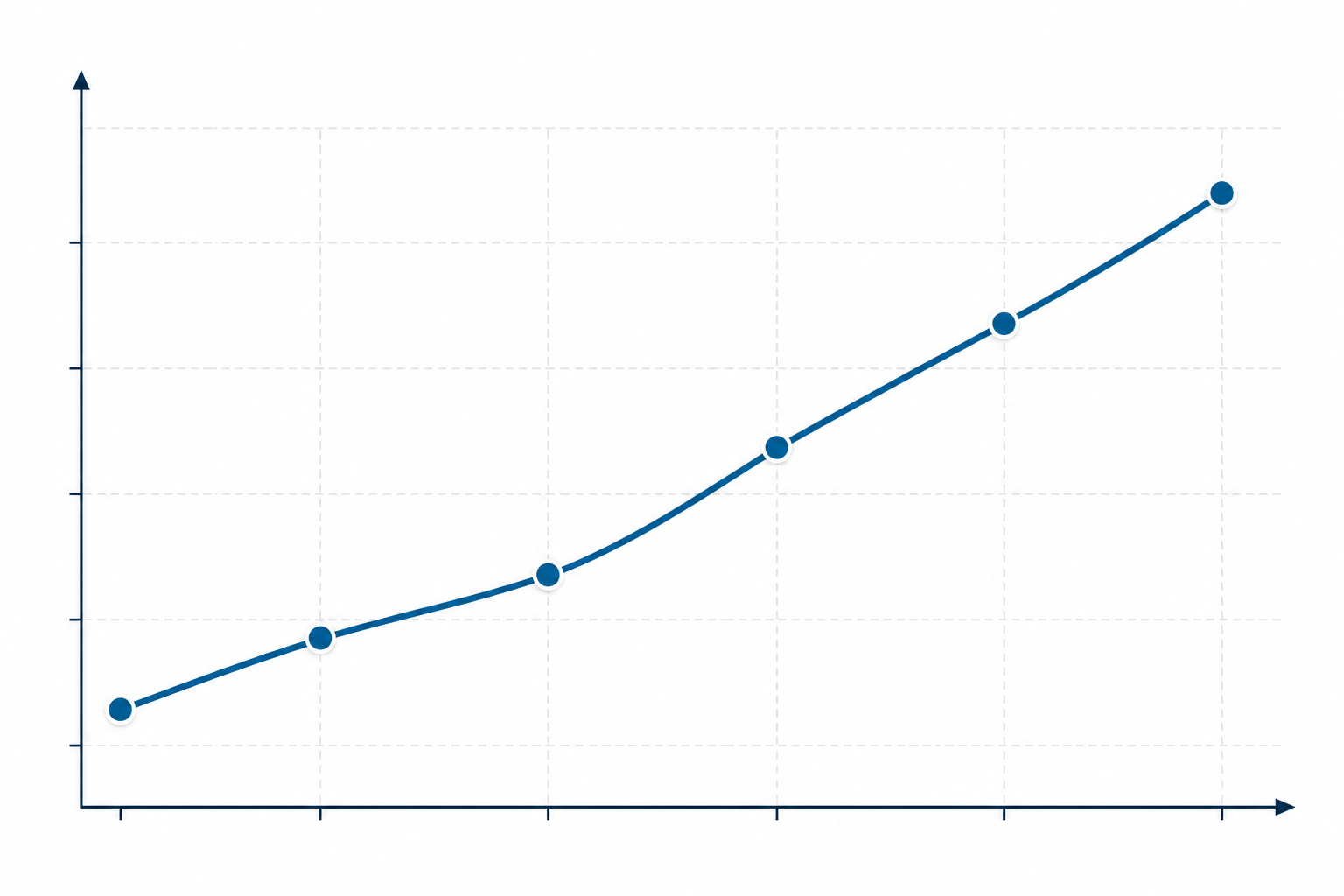
What's notable is where the growth came from. It wasn't one viral post. It was steady, regular publishing across a spread of product-related topics, month after month, combined with internal links pointing back to relevant category pages. Each individual post didn't need to be a home run; the cumulative effect of consistent, reasonably well-optimised posts is what moved the traffic curve. Our system also tracks which topics, structures, and keyword targets tend to perform best for a given store, and uses that to inform suggestions for future posts, though the retailer's own review process remained part of every publishing decision.
Bringing It Together: Build a Revenue-Focused Blog Strategy
Blogging supports ecommerce sales when it's treated as infrastructure, not a marketing stunt. That means choosing content formats that match real search intent, linking with a clear next step in mind, tracking conversions rather than just traffic, and publishing consistently enough for the compounding effect to kick in. None of this requires a huge team, but it does require a process: a content brief, a link strategy, a review step, and a habit of checking what's actually converting rather than just what's ranking.
If you're starting from nothing, don't try to do all of this perfectly from week one. Pick two or three content formats from the list above, map out a simple internal linking plan to your best-selling products, set up basic conversion tracking, and commit to a publishing cadence you can actually sustain. The brands making real money from their blogs got there by doing this steadily over months, not by publishing one perfect post and waiting for it to change everything.
Frequently Asked Questions About Ecommerce Content Marketing
Does blogging actually help ecommerce sales?
Yes, but indirectly and cumulatively. Blog content rarely converts on the first visit; instead, it builds trust, supports SEO visibility, and guides shoppers towards product pages over multiple touchpoints. Brands that track assisted conversions, rather than expecting instant last-click sales, tend to get a clearer, more accurate picture of the revenue impact.
What should an online store blog about?
Focus on content tied to your products: buying guides, comparisons, use cases, and seasonal gift guides tend to perform best because they match how people actually search when they're close to buying. The goal is to answer questions your customers are already searching for, then link naturally to what you sell, with a CTA appropriate to how ready that reader is to purchase.
How often should ecommerce sites publish content?
Consistency matters more than raw frequency. Publishing one well-optimised, properly linked post per week is far more effective than an irregular burst of ten posts followed by months of silence. If maintaining that cadence alongside running a store is the bottleneck, AI-assisted drafting combined with a human review step is one practical way to keep a schedule going without it consuming your whole week.
Create content like this automatically
Scribe uses AI to generate high-quality blog posts that engage your audience and drive traffic.