Eco-Friendly Baby Products Made in South Africa: A Buyer's Guide
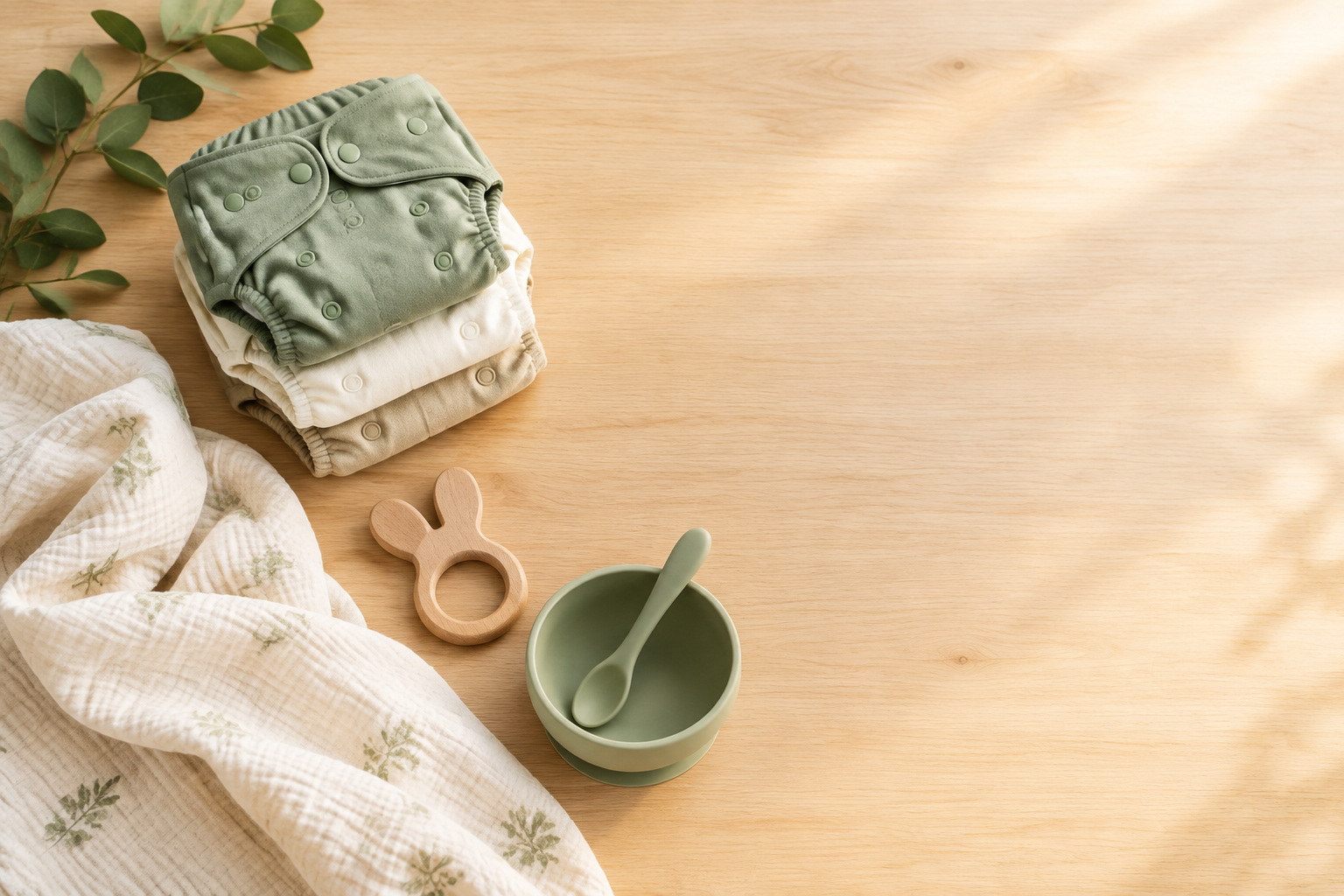
Eco-Friendly Baby Products in South Africa: A Practical Buyer's Guide to Nappies, Clothing and Feeding Gear
Meta description: Compare eco-friendly baby products South Africa families can buy, from reusable nappies to local clothing and feeding gear, with cost tips and maker checks.
For families comparing eco-friendly baby products South Africa has to offer, here's the short answer: pick one or two high-impact categories, usually reusable nappies and natural-fibre newborn clothing, and buy from small local makers who are open about their materials and how they make things. You don't need to switch everything at once.
That's really all there is to it. The rest of this guide helps you shortlist makers, work out the real costs and spot greenwashing, without feeling overwhelmed or priced out. 💚
A quick note on how this guide works: I only name a brand when I can point to a source for it, because I don't want to guess about something that goes on your baby. So instead of a long list of names I can't vouch for, you'll get a way to compare makers yourself, plus a cost model you can plug your own prices into. Reading from the UK? Prices here are in rand, and many small makers ship mainly within South Africa. Before you order, check whether they ship internationally, what duties and delivery cost, how returns work, and whether the product meets the safety standards where you live.
Eco-friendly baby products South Africa parents can compare 🌱
Picture yourself in the baby aisle at eight months pregnant. Every pack says 'gentle', 'natural' or 'pure', your feet hurt, and you have no idea which labels to trust. Plenty of new parents describe exactly that feeling.
Here's how I think about 'eco-friendly' in plain language. It means fewer disposables, so items you can wash and reuse instead of throwing away. It means fibres and fabrics you can actually identify, whether natural or responsibly made. And it means fewer harsh chemicals near your baby's skin.
The local angle matters too. Buying from South African makers can mean shorter delivery routes, and your money goes to South African families and baby artisans. It also fits the direction of South Africa's National Waste Management Strategy 2020, which puts waste prevention and reuse ahead of disposal.
One honest caveat: local doesn't automatically mean a lower footprint. Materials, manufacturing, durability and packaging all play a part. A durable item you use for years usually beats a cheap one you replace.
And nobody does this perfectly. Every swap counts, and a half-switch is still a switch.
How to spot greenwashing in baby products
Words like 'natural', 'eco' and 'pure' don't have one clear, enforceable meaning on baby products, although general consumer law, including South Africa's Consumer Protection Act, prohibits misleading claims. Specific claims are far more useful:
- A named certification (more on those below)
- The exact fibre content, such as '100% organic cotton'
- Clear information about how and where the product is made
If a brand can't tell you those things, that's worth noticing.
Reusable nappies in South Africa and washable wipes
Nappies are usually the biggest eco swap, simply because of volume. The UK Environment Agency's lifecycle assessment of disposable and reusable nappies (updated study, 2008) modelled nappy use over 2.5 years, with several thousand disposable nappies per child as its comparison. That's a UK modelling assumption, not a South African average, but it gives you a sense of how many single-use items even a partial switch can replace.
The same study is a good reality check. It found that reusables aren't automatically greener, because their impact depends heavily on how you wash and dry them. Full loads, line-drying where practical and reusing nappies for another child all improve the picture. The good news is that those habits are very doable.
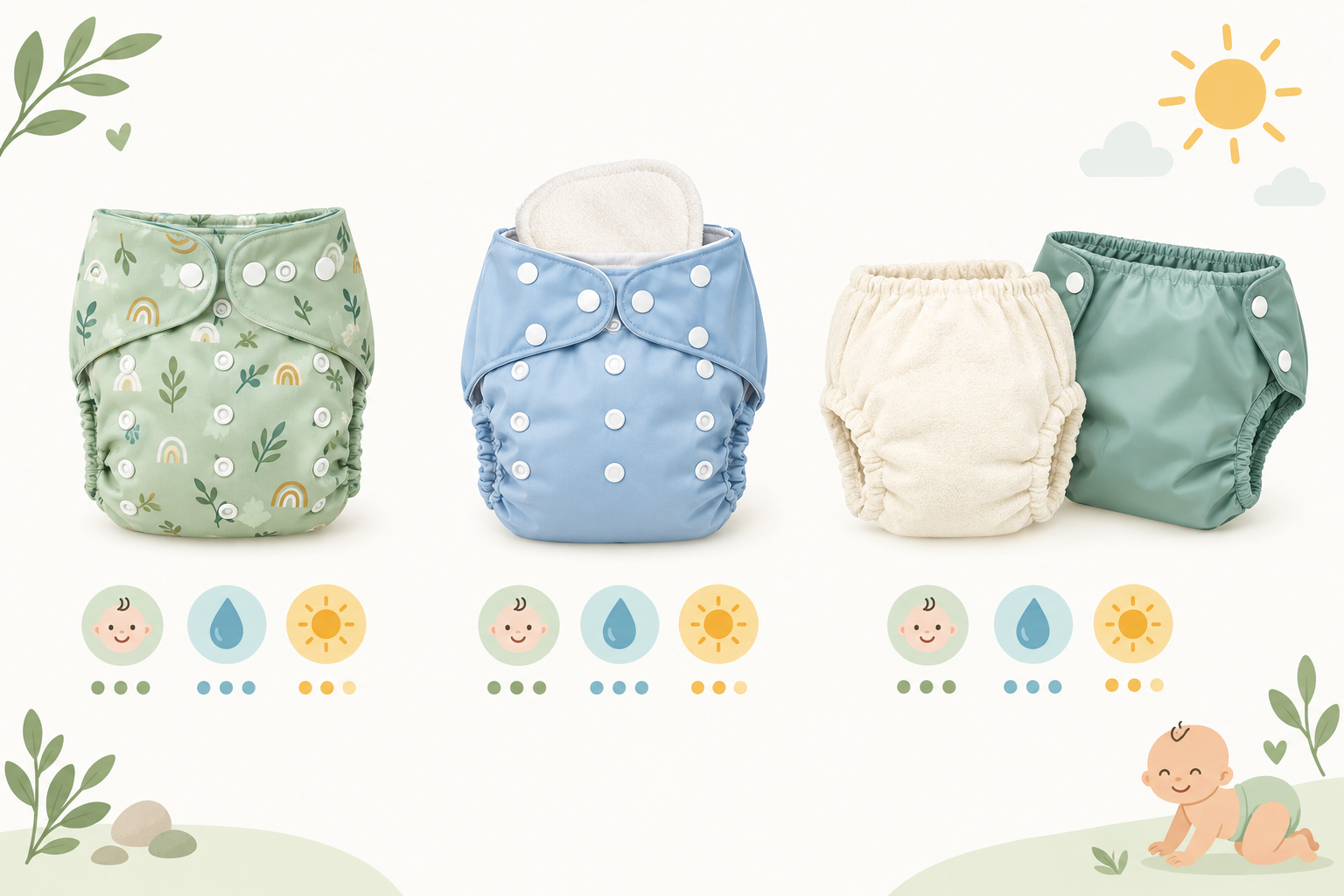
Modern cloth nappy types, explained
Forget the pins and plastic pants. Modern reusables generally combine an absorbent layer with a waterproof outer layer, as the NHS explains. The main styles are:
- All-in-ones: absorbent layer and waterproof outer sewn together. They're closest to a disposable in feel, but slower to dry.
- Pocket nappies: a waterproof shell with a pocket for inserts. You can adjust absorbency, and the parts dry faster.
- Fitted nappies with covers: a soft absorbent nappy plus a separate waterproof wrap. Often great for nights, and you can reuse the cover.
- Birth-to-potty adjustable sizes: snaps or rise settings that grow with baby, so you buy fewer sizes.
How to compare reusable nappy makers in South Africa
One South African cloth-nappy retailer and maker worth looking at is Biddykins. Check their current product details, materials, sizing and care instructions directly, because ranges and prices change.
I'd rather give you a short, honest list than a long, unverified one, so here's how I'd build your own shortlist of three or four makers. Copy this table into your notes and fill it in from each maker's own site:
| What to compare | What to look for |
|---|---|
| Styles offered | Pocket, all-in-one, fitted and covers, so you can trial a mix |
| Absorbent layer | Fibre named clearly (cotton, bamboo blend, microfibre) and how it should be washed |
| Waterproof layer | What it's made of, and whether replacements are sold |
| Sizing | Birth-to-potty adjustable, or sized ranges, with weight guides |
| Where it's made | Cut and sewn in South Africa, or just sold by a South African business? |
| Price of a full system | Nappies, inserts, wet bag and wipes, not one nappy |
| After-sales | Replacement elastics, inserts and repairs; a clear returns policy |
| Real-life feedback | Reviews and photos from South African parents |
That 'where it's made' row matters. 'Local' can mean made in South Africa or simply sold by a South African business, and those aren't the same thing. Message the maker if the site doesn't say.
Cloth nappy laundry, load shedding and drying time
I'd be fibbing if I said cloth is effortless. Laundry is the real hurdle, especially with load shedding and wet-weather weeks. Here are some routines that work for busy parents:
- Keep a dry pail or wet bag and wash every second or third day, in full loads.
- Follow the maker's wash instructions exactly.
- Line-dry in the sun when you can. It's free and gentle on fabric.
- Keep a bigger rotation of inserts for pocket styles so you're never caught short on a cold, cloudy day.
Reusable wipes and part-time cloth nappies
Washable wipes are an easy companion. Keep clean ones separate from used ones, and wash them with the nappies. Check fabric and care guidance rather than assuming every cloth suits every routine.
You also don't have to go all-in. A very sane approach is cloth at home during the day and disposables for outings, travel or overnight until you've tested fit and laundry. The NHS also suggests starting with a small set to try before buying a full stash.
Are eco-friendly baby products more expensive?
Sometimes yes upfront, but not always over time. Reusable nappies need a bigger first outlay, while disposables are a steady repeat cost. A fair comparison includes how long you'll use the product, laundry costs and whether you can reuse or resell it.
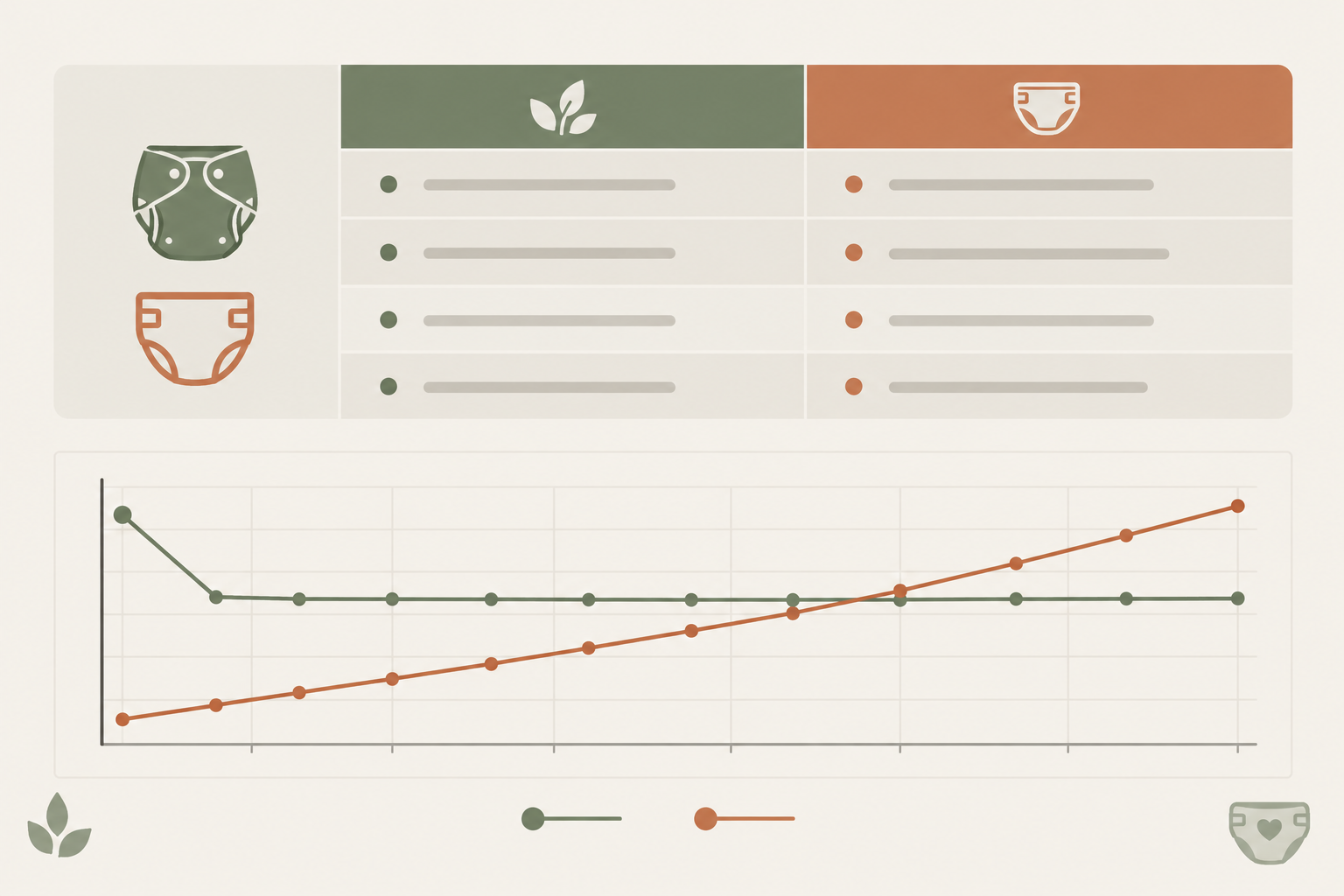
Below is a side-by-side model over 2.5 years (about 912.5 days, or 130 weeks). These are illustrative scenario inputs, not a verified South African average or a quote from any brand. Swap in the prices you actually see, because they vary by brand, retailer and sales.
Disposables (assumed)
| Assumption | Cost | |
|---|---|---|
| Per day | 6 nappies at R2.50 each | R15 |
| Per year | 365 days | R5,475 |
| Over 2.5 years | 912.5 days | R13,687.50 |
Full-time reusables (assumed)
| Assumption | Cost | |
|---|---|---|
| Nappies | 24 at R180 each | R4,320 |
| Extras | 2 wet bags, extra inserts and boosters | R700 |
| Washable wipes | A set of 20-30 | R250 |
| Extra laundry | 4 extra loads a week at R6 each, over 130 weeks | R3,120 |
| Total over 2.5 years | about R8,390 |
On those assumptions, full-time cloth comes out roughly R5,300 cheaper, and the gap widens if the nappies are reused for a second baby or resold. But the result moves with your numbers. Dearer nappies, tumble-drying or a larger stash narrow the gap, and part-time cloth means you'll still buy some disposables. Both models leave out delivery, specials and changing usage as baby grows. (The disposable figure also assumes more nappies than the UK study's modelling, so treat it as a rough ceiling, not a prediction.)
To make this your own, price a complete system, not one nappy, then add your real electricity tariff, water charges and detergent. Compare that total with what you'd actually spend on disposables over the same months.
How to budget for eco-friendly baby essentials
Here's a simple way to split a starter budget. The percentages are my rule of thumb, so adjust them to your own situation.
- Essentials (about 50%): a few trial nappies, a handful of washable wipes and two or three natural-fibre newborn outfits.
- Mid-range (about 30%): a fuller nappy rotation, swaddles and a sleep bag.
- Dream items (about 20%): bigger-ticket handmade pieces like a quality blanket or a complete nappy starter bundle.
So with a R3,000 starter budget, that's roughly R1,500, R900 and R600. Bigger items are exactly where friends and family can chip in, so you're not funding it all yourself.
Local baby artisans often cost more per item than mass-produced imports, because small runs and hand-finishing don't get scale discounts. Judge value by cost per use: fabric, stitching, repairability and whether it can be handed down. And remember that the greenest option of all is second-hand or a hand-me-down. 🙌
Sustainable baby clothing and textiles for newborns
Newborn skin is delicate and babies grow fast, so softness, breathability and durability matter more than trendy details. Here's what I'd look at:
- Organic cotton: soft and widely available, but certified organic cotton was only about 1.4% of global cotton production in 2022/23, according to Textile Exchange, so don't assume 'cotton' means organic.
- Bamboo blends: very soft, so check the blend and care label.
- Merino or linen: good for temperature regulation and durability.
Which baby clothing certifications mean something?
- GOTS (Global Organic Textile Standard): the 'organic' label grade requires at least 95% certified organic fibres, and 'made with organic materials' requires at least 70%. Check the current version of the standard for details.
- OEKO-TEX STANDARD 100: tests for harmful substances. Product Class I covers babies and children up to three and applies the strictest limits. It's a safety check, not proof that something is organic.
No certificate? Don't write the maker off, since certification can be costly for small studios. Just ask who made it, where the fabric was sourced, what the fibre content is and whether they offer repairs.
Handmade baby products from local baby artisans
Local baby artisans are brilliant for swaddles and muslins, sleep bags and blankets, and knitwear and cosy layers.
I'm not going to list makers I can't verify. Instead, use the checks above: fibre content stated clearly, a named certification (or a good reason for not having one), where it was cut and sewn, clear care instructions and real reviews. Local craft markets and independent baby stores are good places to find makers worth asking those questions of.
How many newborn clothes and textiles do you need?
Less than the shops suggest. A small rotation of vests, sleepsuits, a couple of swaddles or sleep bags, a few muslins and one good blanket is a sensible start, because newborns outgrow things in weeks. WRAP has estimated that extending clothing's active life by nine months can cut its carbon, water and waste footprints by around 20-30%. That's a UK figure for clothing generally, not babywear specifically, but it backs up choosing sturdy basics you can hand down.
To help pieces last, wash gently following the label, treat stains early, avoid harsh detergents and line-dry in the shade where you can. Then store them for the next baby or pass them to a friend.
Eco-friendly baby feeding and weaning products
Feeding gear is a lovely place for small swaps, and you can stage it. The World Health Organization recommends introducing complementary foods at around six months while continuing breastfeeding, so you don't need a big weaning haul on day one.
For the early months:
- Reusable breast pads
- Washable bibs and burp cloths
- Muslin squares (these double up for everything)
For weaning:
- Reusable food pouches and snack pots, which cut down on single-use packaging
- Open cups and durable cutlery
- Bowls, cups and utensils in the materials compared below
Comparing reusable weaning products and materials
| Material | Good for | Watch out for |
|---|---|---|
| Food-grade silicone | Suction bowls, soft spoons, teething-friendly utensils; durable and easy to clean | Check it's labelled food-grade; discard if it tears or discolours badly |
| Stainless steel | Cups, bowls and cutlery that last for years and can be handed down | Hot food makes the metal hot; check lids and seals for the plastic parts |
| Bamboo fibre | Lightweight, colourful tableware | Some are bamboo fibre held together with resin, so read the label and follow the maker's heat and dishwasher guidance |
| Solid wood | Spoons and bowls with a natural feel | Hand-wash and dry well, and check what finish or oil has been used |
Baby feeding product safety checklist
- Check the age suitability and manufacturer guidance.
- Look for clear information on food-contact materials and care. 'BPA-free' covers one chemical, so it isn't a full safety assessment.
- Follow temperature and cleaning instructions, and replace anything cracked or deeply scratched.
- Ask the maker whether the product is made locally or just sold locally, and whether replacement parts are available.
- Not sure about something? Check with your healthcare provider.
How to find sustainable baby brands and local baby artisans
Here's a simple process that works whichever shop or platform you use.
- Decide your priorities. Nappies first, then clothing, then feeding is a good order for most families.
- Look for transparency. Check the maker's own site for materials, where it's made and any certifications.
- Check reviews and real photos from other South African parents.
- Message the maker. Small businesses usually love chatting about their craft, and their answers tell you a lot.
- Compare in one place. Opening twenty tabs is exhausting, so keep your shortlist in one document or wishlist.
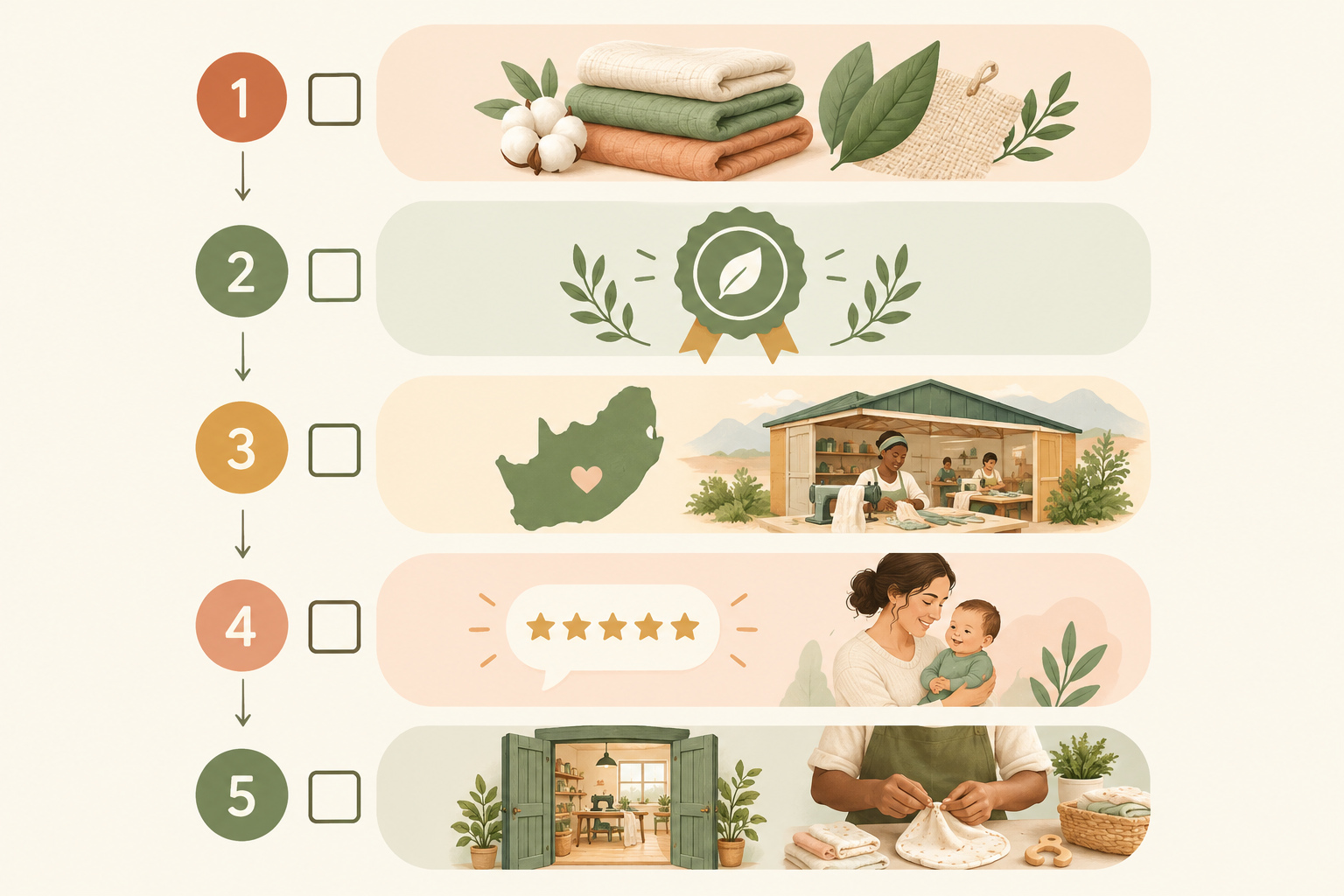
A checklist for choosing sustainable baby products
- ✅ Fibre or material content is stated clearly
- ✅ Certification named (or a good answer if there isn't one)
- ✅ Made where? Sewn where?
- ✅ Care instructions are clear
- ✅ Repairs, replacement parts or returns available
- ✅ Real reviews from South African parents
Add sustainable baby products to your registry with bababloom
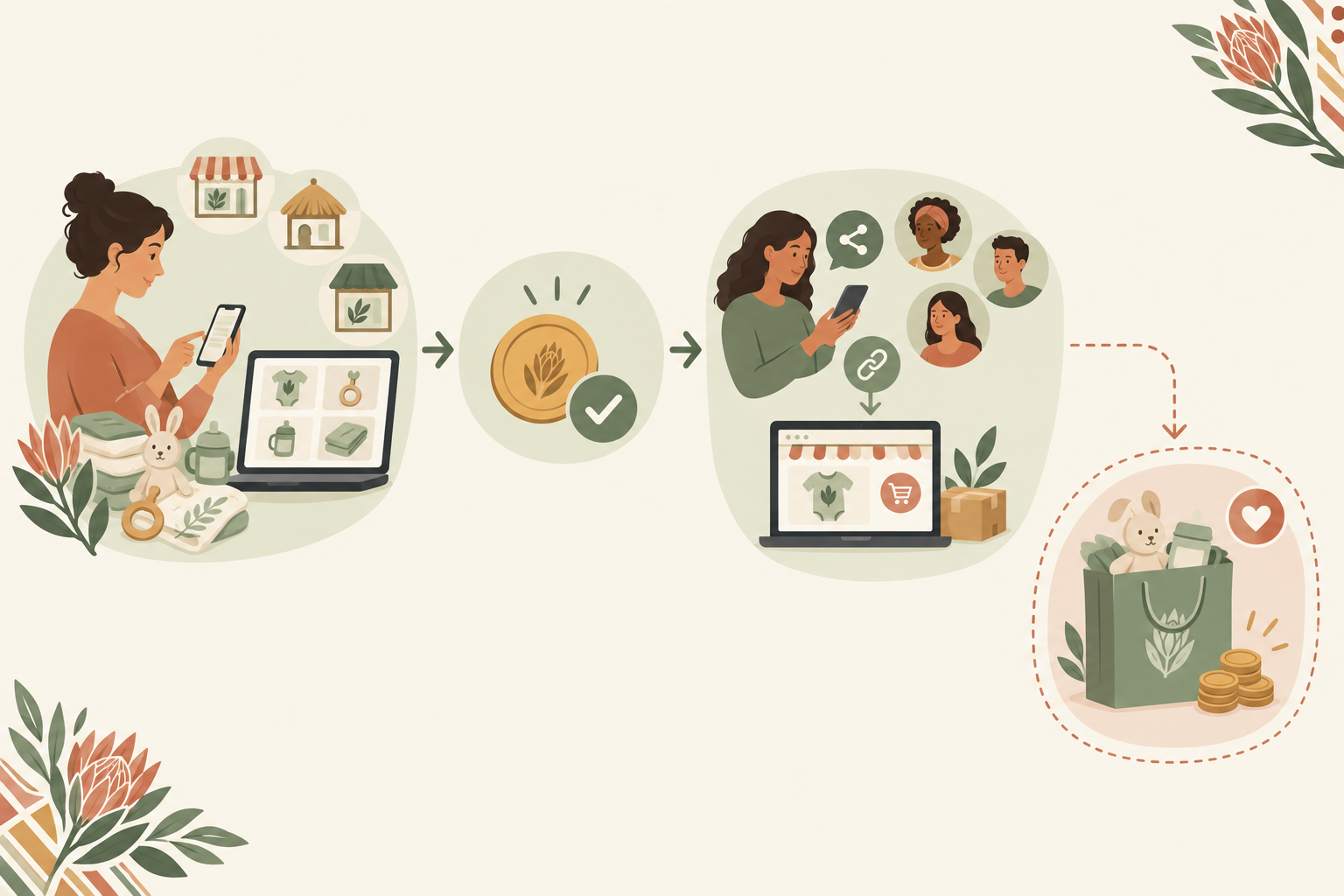
Full disclosure: this is our own platform, so treat this section as the one place where I'm talking about what we offer. A registry is useful for eco-minded parents because it lets friends and family buy the pieces you've chosen, rather than guessing. bababloom is a baby registry platform built around local South African brands and small businesses. Here's how it works:
- Build your registry for free. Browse local baby stores and add the pieces you love. You only pay a one-time R199 fee when you're ready to share it.
- Mix and match. Products from local stores sit in one shareable list, and guests buy directly from each retailer's own site.
- Take inspiration. Our live example registry has 102 gifts from 31 stores, so you can see how nappies, clothing and feeding items can sit side by side.
- Guide the gifts. Group items into themes like a 'cloth nappy starter pack' or a 'natural-fibre newborn bundle'. A trial set of two or three nappy styles is a lovely way to test what suits your baby before committing to a full stash.
- Avoid duplicates. No more five identical muslin sets.
- Give back. Guests can also donate a R500 Hatch Bag of newborn essentials through our partnership with the Hatch Foundation, which goes to a mother who needs one. 💛
A simple sustainable baby product starter plan
Here's the 'first three swaps' approach:
- Nappies or wipes: start with a trial set and use cloth part-time.
- Newborn clothing: a few natural-fibre basics you'll love.
- One feeding item: perhaps a durable bowl and cup set for later, or washable bibs now.
A starter essentials list
Must-haves
- A small trial set of reusable nappies and washable wipes
- A few newborn outfits in natural fibres
- Muslins and a swaddle or sleep bag
- Washable bibs and burp cloths
Nice-to-haves
- A fuller nappy stash and wet bags
- A handmade blanket or knitwear
- Reusable breast pads
Later
- Weaning bowls, cups and utensils
- Reusable pouches and snack pots
- Extra sizes as baby grows
Progress over perfection. Choosing local and handmade is already a big step, and you can add more as you learn what works for your family. If you'd like somewhere to save your favourite local picks as you find them, you can start a free registry any time.
FAQs about eco-friendly baby products in South Africa
What are the best reusable nappy brands in South Africa?
There isn't one best brand, because it depends on your budget, your baby's shape and your laundry routine. Use the comparison table above to shortlist three or four local makers. Look for adjustable birth-to-potty sizing, clear care instructions, available replacement parts and good customer support. Try a small mix of styles, such as a pocket nappy and an all-in-one, before investing in a full stash.
Are eco-friendly baby products more expensive?
Some cost more upfront, especially reusable nappies and organic textiles, but many save money over time because they can be reused or passed to a second child. In the illustrative model above, full-time cloth came out roughly R5,300 cheaper over 2.5 years, though your own prices and laundry costs will change that. Start small with one or two swaps.
How do I find sustainable baby brands locally?
Look for makers who are open about materials, certifications and where products are made. Read reviews from other South African parents and ask questions directly. The checklist in this guide works whether you buy direct from makers or through a platform.
Do I need to go fully eco-friendly from day one?
Not at all. Most parents start with a few swaps and add more later. Even part-time cloth nappies or a handful of natural-fibre outfits make a difference.
How does the bababloom registry and Hatch Foundation partnership work?
On bababloom, guests buy gifts directly from each retailer's own website, so checkout is secure and familiar. They can also choose to donate a R500 Hatch Bag of newborn essentials to a mother in need across South Africa, alongside buying gifts for your baby.
Create content like this automatically
Scribe uses AI to generate high-quality blog posts that engage your audience and drive traffic.