Baby Feeding Essentials in South Africa: A Guide to Bottles, Pumps and Local Brands
Baby Feeding Essentials in South Africa: A Local vs Imported Guide
For families choosing baby feeding essentials in South Africa, the best setup is usually a mix. Start with a small, flexible kit that matches how you expect to feed: a few bottles if you'll use them, a way to clean and sterilise them, and a pump only if you need one. Add local weaning gear and handmade extras later. Most bottles and pumps are international brands sold through local baby stores, while South African makers do their best work in weaning gear, bibs, storage and accessories. Buying local mostly means easier restocking, faster support and fewer stock-out surprises when you're down to your last teat at 3am.
I'm Emma, and I've chatted with plenty of parents-to-be who feel flattened by feeding checklists. So let's keep this one calm and go category by category, with honest notes on price and availability.
What Does 'Local' Mean for Baby Feeding Essentials in South Africa? 🍼
I'll be upfront. Many bottles and breast pumps on South African shelves are international brands stocked by local retailers. Truly local makers lean towards weaning gear, bibs, storage and accessories. I'm not criticising anyone here. It's just useful to know, because 'local' can mean three quite different things:
- Made in South Africa: manufactured here, often by small businesses and baby artisans.
- Sold by South African retailers: an international brand stocked and supported by a local baby store, pharmacy or online shop.
- Imported directly from overseas: ordered from abroad, with shipping, import costs and slower returns.
Why does this matter? Because of what happens after you've paid. Warranty support, spare parts, returns and delivery times all depend on who is standing behind the product in South Africa. A bottle or pump sold by a local retailer is 'available locally', but that doesn't make it locally made. If country of manufacture matters to you, check the specific model's packaging rather than guessing from the brand name.
One note on the figures and brands in this guide: they're a starting point for your own research, not a live stock or price check. Ranges and availability change, so please confirm on current retailer listings before you buy.
Baby Feeding Essentials South Africa: Newborn Registry Checklist
Here's a registry-friendly checklist for your newborn essentials. The tags are a planning aid, not medical or feeding advice. Every family's needs differ, so I've made most items conditional.
Bottles and sterilising
- Small set of bottles with slow-flow teats: must-have if you'll bottle feed (formula or expressed milk); nice to have as a small backup if you're breastfeeding
- Bottle and teat brush: must-have if you're using bottles or a pump
- Spare teats in the same system: nice to have
- Steriliser (electric, microwave or cold-water): nice to have; a pot of boiling water works too
- Bottle warmer: wait and see
Pumping and breastfeeding
- Manual pump: nice to have
- Electric or wearable pump: wait and see
- Milk storage bags or containers: nice to have once you're expressing
- Nursing pads: nice to have, as some mums leak a lot and some hardly at all
- Cooler bag for expressed milk: wait and see
Weaning gear (from around six months)
- Highchair or booster, silicone bibs, suction bowls, soft spoons, open cup: wait and see
- Freezer trays and small containers: wait and see
- Muslin cloths: nice to have, and very handy for every kind of mess
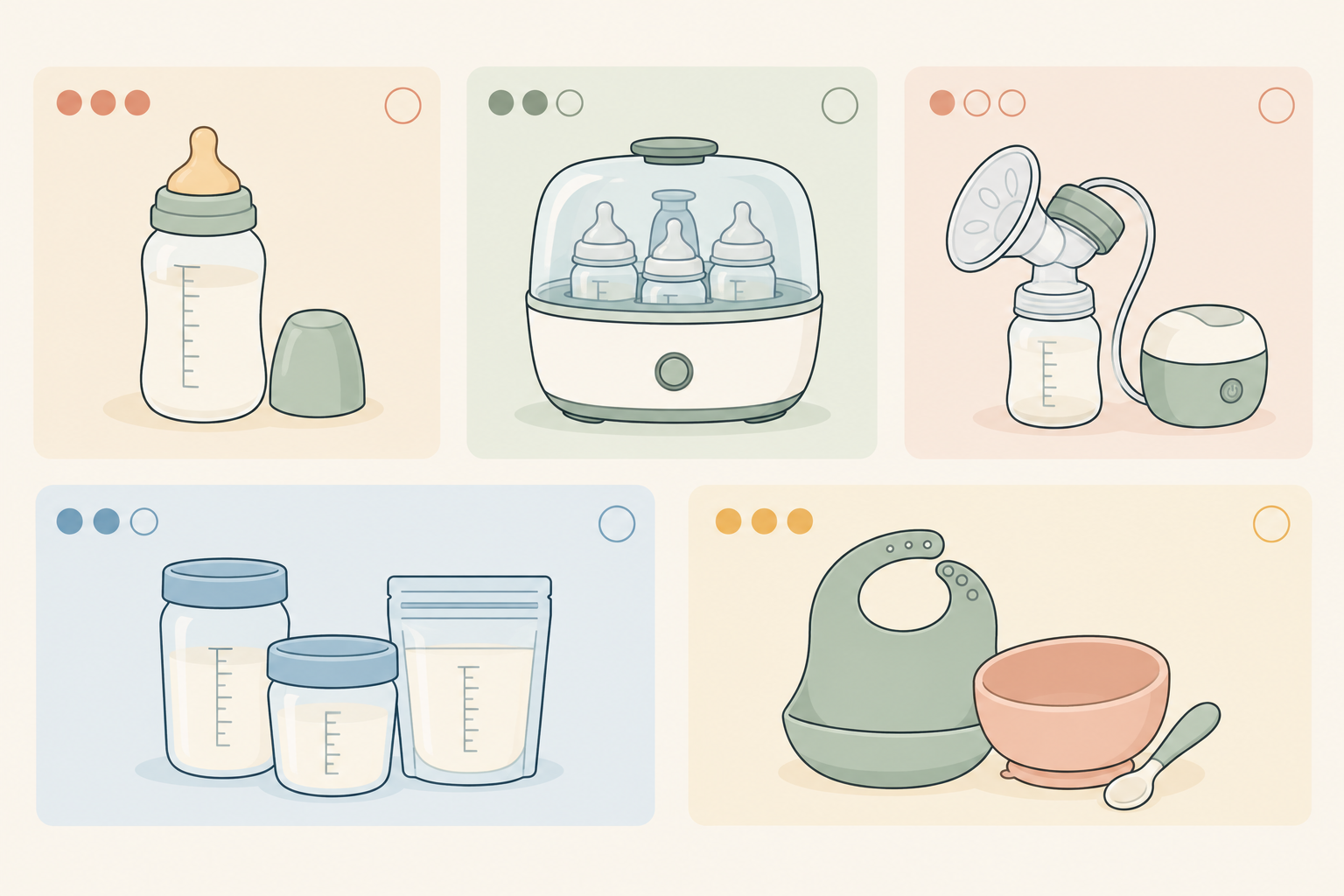
This list slots into a wider baby registry checklist alongside sleep, nappy-changing, bathing and travel gear.
Every feeding journey looks different. WHO recommends exclusive breastfeeding for the first six months, but plenty of families formula feed or combine both for good reasons. Think of this list as a menu, with no verdict attached.
Bottles and Sterilisers: Local Options in South Africa
You'll find bottles and sterilising equipment at local baby stores and pharmacies such as Baby City and Clicks, though stock can vary by branch and online range. Brands commonly sold in South Africa include Philips Avent, Pigeon, Tommee Tippee, Dr. Brown's and MAM. These are international names stocked locally, so search the retailer's site for current ranges (Philips Avent Natural or Tommee Tippee Closer to Nature are good search terms to start with) and check the listing for spare teats.
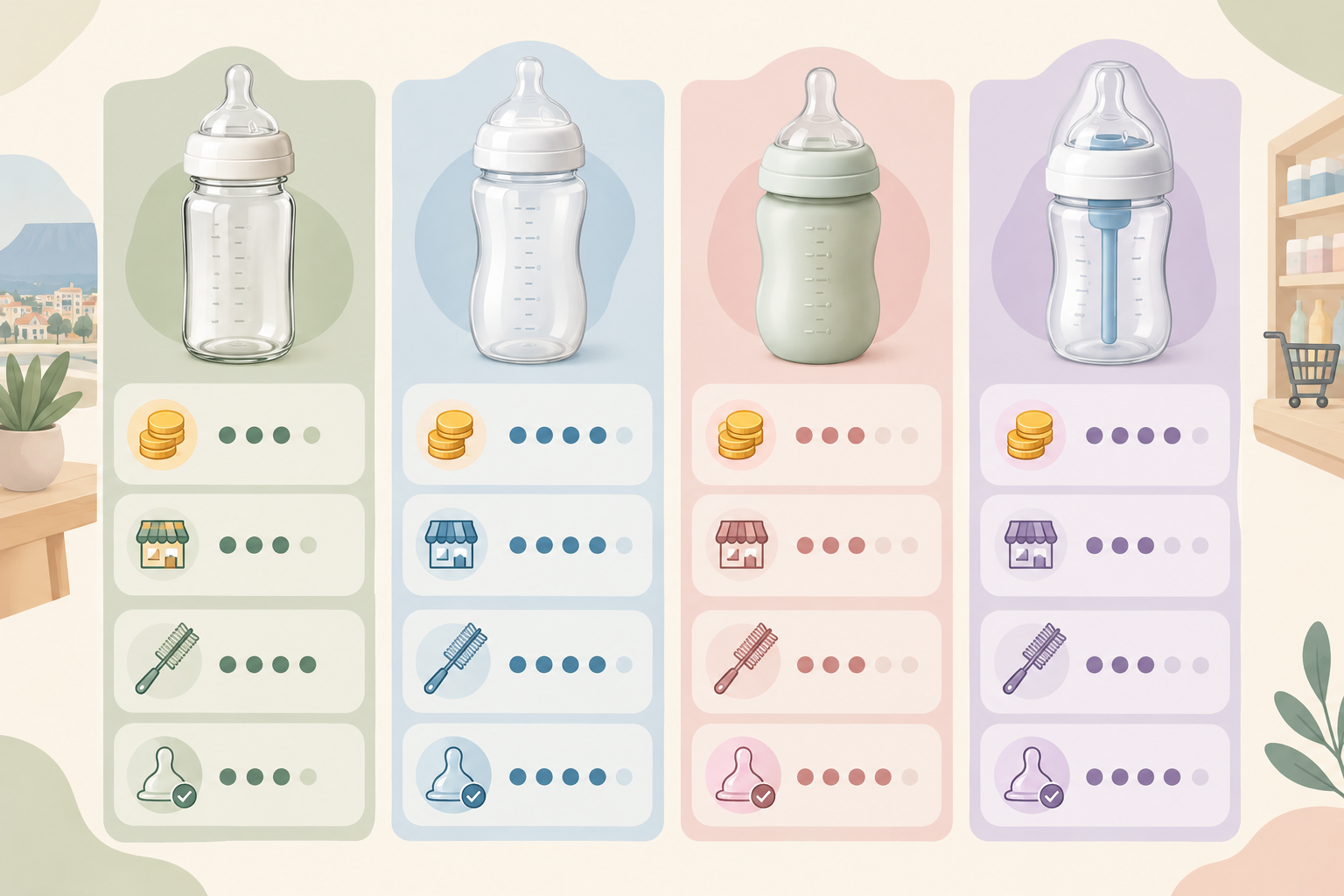
Comparing Bottle Types
| Bottle type | Good for | Watch out for |
|---|---|---|
| Plastic (BPA-free) | Lightweight, widely stocked, usually the most affordable | Can scratch or cloud over time, so replace when worn |
| Glass | Easy to clean and doesn't hold odours | Heavier and breakable |
| Silicone | Soft, squeezable, drop-friendly | Can be harder to find locally |
| Anti-colic designs | Vented systems that suit some babies | More parts to clean; teats and vents can cost more to replace |
What to Look for When Buying Baby Bottles
- Slow-flow teats for newborns, with clear age guidance on the pack.
- Wide necks, which make cleaning easier at 2am.
- BPA-free materials and clear cleaning instructions.
- Parts that fit together, so teats, valves and caps suit your exact bottle model.
A word on teat flow: it's tempting to assume you'll move up a size as baby grows, but that isn't automatic. Follow the manufacturer's guidance, and if baby coughs, chokes, leaks milk or tires very quickly at feeds, ask your clinic nurse, paediatrician or a lactation consultant before changing anything.
Tip: before you commit to a brand, check that teats and spare parts are sold locally. Babies can be surprisingly fussy about teats, so start with a small set and add more of whatever works.
Cleaning and Sterilising Bottles During Load-Shedding
Let's separate two things. Washing bottles thoroughly after every feed is non-negotiable if you use them. Buying a steriliser is optional, because there are several ways to sterilise:
- Electric or microwave steam steriliser: fast and convenient, but both need electricity. Handy on a stable grid, less so in a stage 6 evening.
- Cold-water tablets or solution: no power needed, which makes them a good fit for load-shedding households. Follow the instructions on timing and rinsing.
- Boiling in a pot: free and perfectly valid. Use gas, a camping stove or the stove when the power's on.
How long should you sterilise for? I haven't found one South African rule I'd confidently quote, and international advice differs. The UK's NHS advises sterilising feeding equipment until baby is at least 12 months old, while the US CDC says daily sanitising matters most for babies under three months, premature babies and those with weakened immune systems. For South African families, I'd follow your bottle and steriliser manufacturer's instructions and ask your clinic nurse or paediatrician what suits your baby. And never warm milk in a microwave, because uneven heating creates hot spots. Use warm water or a bottle warmer and test the temperature.
Breast Pumps Available in South Africa: Brands and Buying Tips
Which breast pump brands can you buy in South Africa? You'll find Medela, Philips Avent, Spectra and Lansinoh through South African product or sales channels, in manual, electric and wearable styles. Local baby stores, pharmacies and online retailers such as Baby City, Dis-Chem, Clicks and Takealot stock various models, though availability differs between retailers and over time. Medela Swing, Spectra S1 and Philips Avent manual pumps are useful names to search for, but please confirm what's in stock before planning around them.
Which Type of Breast Pump Suits You?
| Pump type | Best for | Consider |
|---|---|---|
| Manual | Occasional expressing, relieving fullness, travel | Hand fatigue with regular use; usually the lowest cost |
| Electric (single or double) | Returning to work, frequent pumping, building supply | Needs power or batteries; costs more |
| Wearable / hands-free | Pumping while moving about | Check fit, battery life, cleaning and replacement parts carefully |
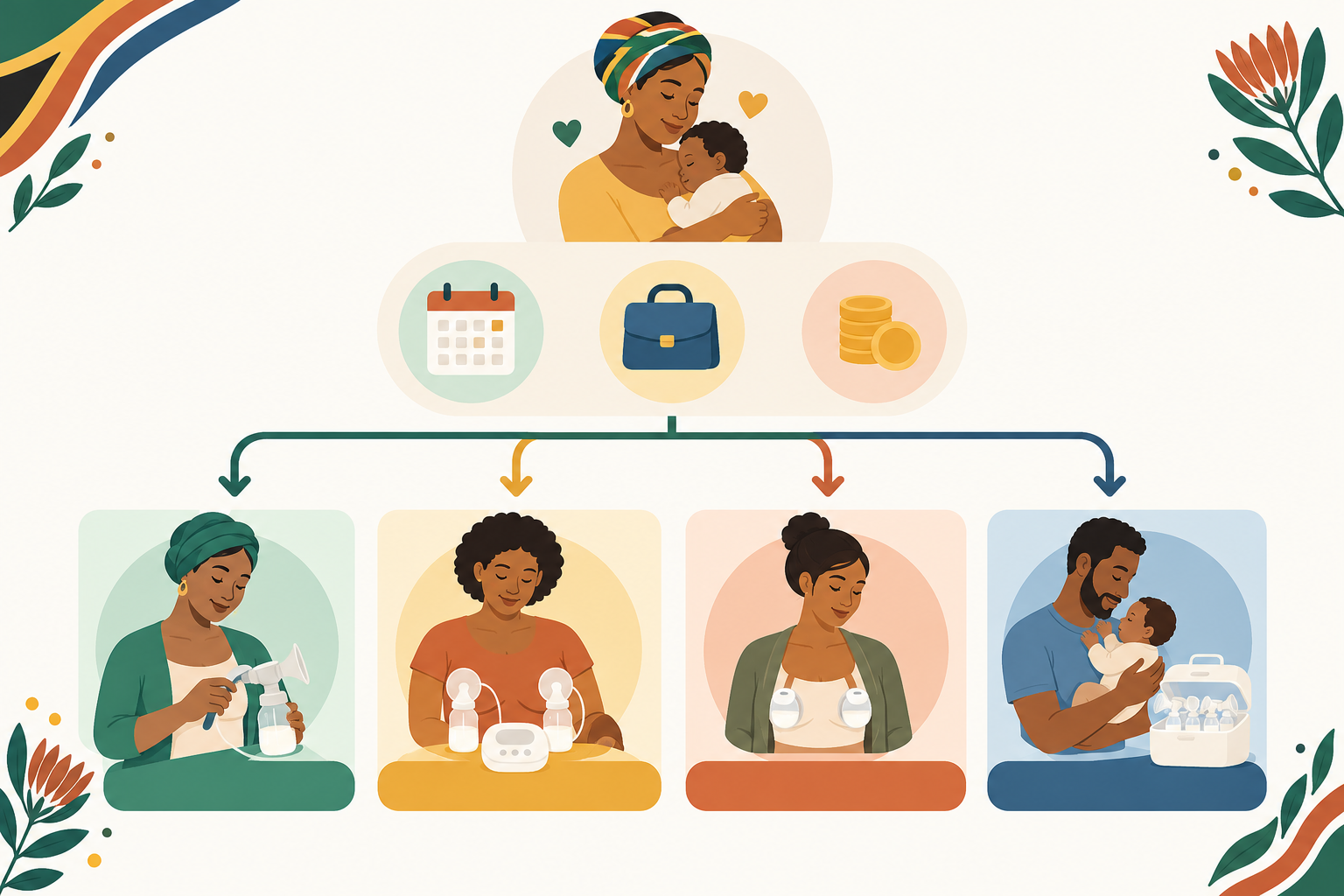
If you're planning to return to work, it's worth knowing South Africa's Code of Good Practice provides for two 30-minute breaks per working day for breastfeeding or expressing during a baby's first six months. A portable pump and an insulated bag can make those breaks far easier.
Should You Hire or Buy a Breast Pump?
Renting a hospital-grade pump can make sense if you need to pump frequently for a limited time, for example with a premature baby. Ask providers about hygiene (including whether you get your own accessory kit), hire costs, deposits and support.
Why Local Support Matters When Buying a Breast Pump
Pumps have valves, membranes, connectors and flanges that wear out. Before buying, confirm that:
- Replacement parts are sold locally or through the brand's South African distributor.
- Your flange size is available. If pumping hurts or yields very little, a lactation professional can help you reassess the fit.
- The warranty is clear, and you know how claims are handled in South Africa.
- The pump is intended for personal use rather than multiple users.
This is where I'd choose local support over a slightly cheaper import. A pump that can't be repaired or restocked is no bargain. For load-shedding, look for rechargeable or battery-powered models and keep a manual pump as backup. And a reassurance: many mums never need an electric pump, so it's completely fine to add one later.
Are Local Baby Feeding Products as Good as Imported Ones?
Honestly, quality depends on the product, not the country of origin. A well-made handmade silicone bib from a South African artisan can outperform a flimsy imported one, and a clinical-grade imported pump will beat a basic knock-off. 'Local' or 'imported' alone doesn't guarantee anything.
What to look for instead:
- Material information: food-grade silicone, BPA-free plastic, clear labelling.
- Care markings: whether it's dishwasher and steriliser safe.
- Age guidance and instructions that are easy to understand.
- Standards claims: for bottles and teats, some products cite standards such as ISO 20695 or EN 14350. That's useful, but check that the specific product actually claims conformity, and remember it says nothing about where the item was made.
South Africa's Consumer Protection Act gives general protection around the safety and quality of goods, but it doesn't prove that a particular bottle has been tested to a product-specific standard. So check each brand's own safety information.
Local brands tend to do well with handmade baby products, designs that suit South African households and fabrics that cope with our climate. Imports still dominate clinical-grade pumps and certain specialist bottle systems.
Picture a mum I'll call Naledi. She buys a well-reviewed imported bottle set and pump from a local baby store, then fills the rest of her list with local silicone bibs, muslin cloths and freezer trays from small makers. She gets proper local backup for the items that need spare parts, and supports small businesses for the rest. That mix is exactly what I'd suggest.
Weaning and Feeding Gear from South African Baby Artisans
WHO recommends introducing solids at around six months, so weaning gear is usually a 'wait and see' item rather than a newborn essential. This is the category where local brands have the most to offer:
- Highchairs and boosters: think about kitchen space, safety features and how easily the tray wipes clean. Straps and stability matter more than style.
- Silicone bibs, suction plates, bowls and spoons: local makers have plenty of good options. Check the intended age, materials and care instructions on each listing.
- Food storage: freezer trays, small containers and pouches make batch-cooking far less daunting.
- Splash mats: weaning is gloriously messy, and a washable mat protects your floors.
Before six months, you might only need bibs for dribbles and, if you're expressing, milk storage items. Highchair, spoons, bowls and cups can wait until you're closer to six months.
A few safety reminders: always supervise your baby while eating, prepare foods in age-appropriate shapes and textures, and don't assume that handmade or locally sold means automatically suitable for feeding. Look for clear product and safety information. WHO also encourages responsive feeding, which means following baby's hunger and fullness cues, so don't expect any particular plate to 'make' a baby eat better.
How Much Should You Budget for Baby Feeding Essentials?
Here's the practical bit. There's no national price series for these products, so everything below is a rough planning estimate based on typical retail ranges, not a live price survey. Please check current listings at Clicks, Dis-Chem, Baby City and Takealot before setting a registry total.
| Item | Rough planning range |
|---|---|
| Basic bottle-and-cleaning setup | R500 to R1,800 |
| Manual pump | R250 to R700 |
| Electric pump | R900 to R6,000 or more |
Example Budgets by Feeding Approach
The amounts below are one-off equipment estimates and exclude formula, highchair and weaning items unless stated.
| Feeding approach | What you might buy | One-off equipment estimate | Recurring costs |
|---|---|---|---|
| Breastfeeding | Nursing pads, muslin cloths, optional manual pump and storage bags, small backup bottle set | R300 to R2,500 | Pads, storage bags, replacement pump parts |
| Formula feeding | Bottles, brushes, spare teats, sterilising method | R500 to R2,500 | Formula (budget separately), teats, steriliser tablets |
| Combination feeding | Bottle setup, manual or entry-level electric pump, storage, optional steriliser | R1,000 to R6,000 or more | Formula, storage bags, teats, pump parts |
Formula is a recurring cost. Compare the cost per prepared feed rather than just the price per tin, and follow the preparation instructions carefully. The monthly amount depends on baby's age, intake, tin size and whether you're feeding exclusively formula or combining.
Where to Spend and Where to Save
- Spend on a pump you'll genuinely use (with local spare parts) and a sturdy, safe highchair.
- Save on bibs, spoons and extra bottles you may not need.
When comparing prices, include delivery fees, warranty and spare parts. If you're weighing a local retailer against an overseas import, add shipping and import costs, and think about how slow a return would be. The cheapest upfront price isn't always the cheapest over time.
Why Local Baby Brands Are Easier to Restock
Picture it: it's 3am, the teat has split, and the shop that stocks your bottle system is a courier slot (or a few weeks of shipping) away. That's the 3am problem, and it's the strongest argument for choosing locally supported products. Buying through South African retailers and brands generally means faster delivery, easier returns and customer service in your time zone. It also supports small South African businesses.
Sticking to one bottle system helps too. Mixing brands means mixing teats, valves and cleaning routines, while one system means one set of replacements.
A Simple Restocking Routine for Feeding Supplies
- Every few weeks: check teats for splits or cloudiness, and top up steriliser tablets and storage bags.
- Every few months, or sooner if worn: replace pump valves and membranes per the manual.
- Around five to six months: start shopping for weaning gear.
Building Your Feeding List on a bababloom Registry 🌸
A quick transparency note: bababloom is our platform, so this section is product information rather than independent buying advice.
bababloom is a curated baby registry platform built around local South African baby stores and artisans. Here's how it works for your feeding list:
- Decide your likely feeding approach, while staying flexible. Plans change, and that's okay.
- Browse local baby stores and artisans and add items to your registry. You can build as much as you like before paying anything.
- Mix big and small gifts so every guest budget is covered, from a muslin cloth to a pump.
- Pay the one-time R199 fee only when you're ready to share your registry.
- Guests buy directly from each retailer's site. Your registry shows which items have been gifted, so guests can check before they buy. Because checkout happens on each store's website, it's worth asking bababloom how purchases are tracked if you want the details.
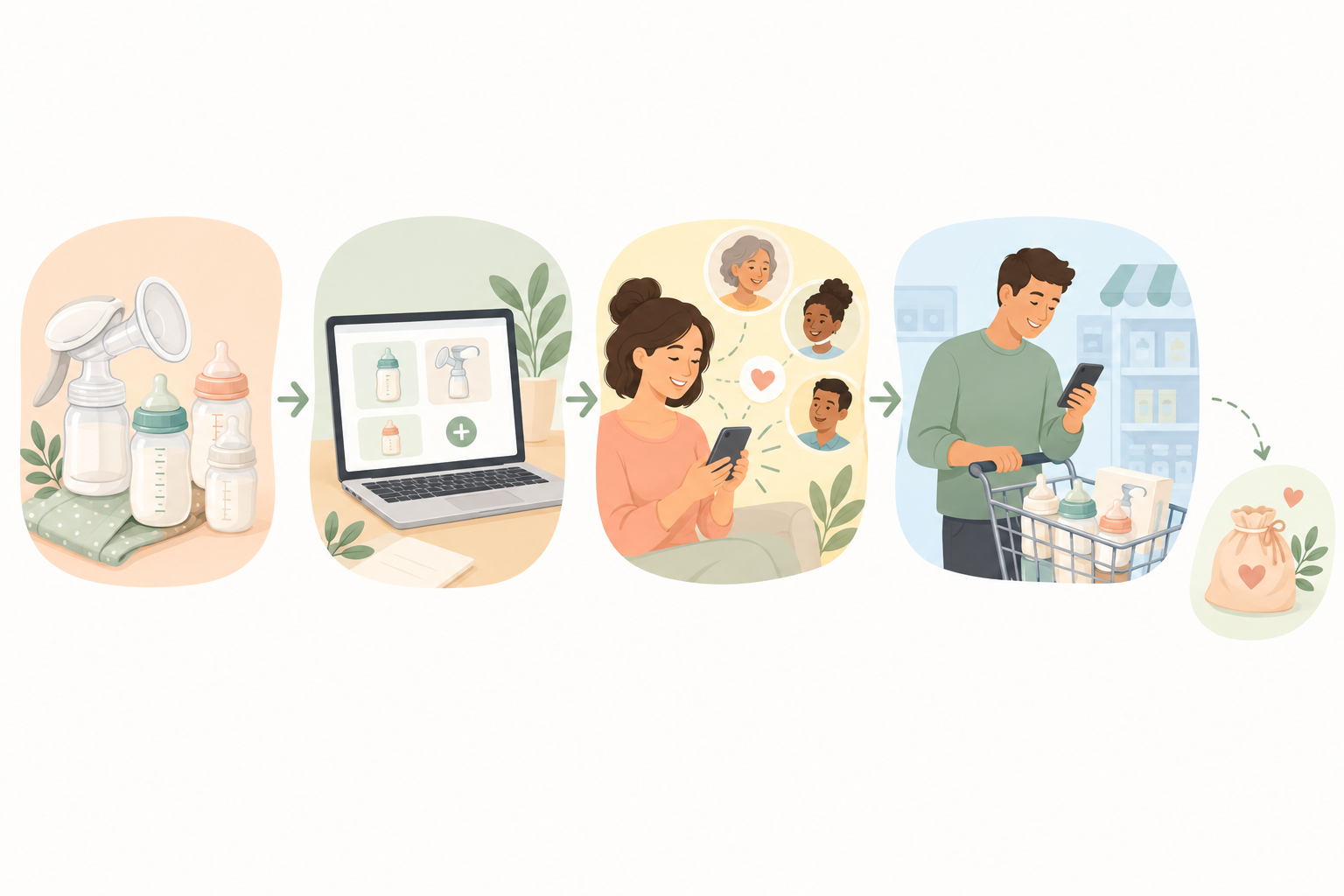
There's one more option I'm fond of. Through our partnership with the Hatch Foundation, guests can also donate a R500 Hatch Bag of newborn essentials to a mother in need. Our live example registry has 102 gifts from 31 stores, if you'd like to see how local baby stores and handmade makers sit side by side.
Have family abroad who want to send something? A shareable link makes it easy, but delivery options depend on the store, so check shipping details before ordering.
FAQs About Baby Feeding Essentials in South Africa
What Breast Pump Brands Are Available in South Africa?
You'll find well-known international brands such as Medela, Philips Avent, Spectra and Lansinoh stocked by South African baby stores and pharmacies, in manual, electric and wearable styles. Availability and pricing change, so check current retailer listings, and confirm that spare parts and warranty support are available locally before you buy.
Are Local Feeding Products as Good as Imported Ones?
Often, yes, especially for weaning gear, bibs, storage and accessories. Quality depends on the specific product, so look for food-grade materials, clear safety information and honest reviews rather than judging by country of origin.
How Much Should I Budget for Feeding Essentials?
It varies widely with your feeding method. As a rough guide, a lean starter kit might sit between R500 and R2,500, while a fully equipped setup with a quality electric pump, steriliser and highchair can run well beyond that. Budget for formula separately, and verify prices on current listings.
Do I Need a Steriliser, or Is Boiling Water Enough?
You do need a reliable way to clean and sterilise bottles if you use them, but it doesn't have to be an electric steriliser. Boiling, cold-water tablets and steam sterilisers are all options. Follow your equipment's instructions and ask your clinic nurse or paediatrician how long to keep sterilising.
Should I Buy Bottles Before the Baby Arrives?
It depends on your plan. If you expect to formula feed or give expressed milk, a small starter set is sensible. If you're planning to breastfeed and don't expect to use bottles, it's fine to wait and see. A small backup set is a personal choice, not a requirement.
Can Family Overseas Buy Gifts from a bababloom Registry?
Guests buy directly from each local retailer's own website, so delivery and checkout options depend on the individual store. It's worth checking each retailer's shipping details before ordering.
A Final Word on Newborn Feeding Essentials
Feeding your baby doesn't need a mountain of gear. Start small, choose products you can restock locally, and let your registry fill in the rest as you learn what works for you. When you're ready, you can start building your free bababloom registry. 🌸
Related Articles

Cape Town Baby Shower Venues: A Guide to Indoor, Garden and Budget Options (and How to Share the Registry)
Explore Cape Town baby shower venues, from cosy indoor spots to gardens and budget ideas, plus easy registry tips and local baby store picks.
Best South African Baby Clothing Brands to Add to Your Baby Registry: A Guide for First-Time Moms
Discover South African baby clothing brands for your baby registry, from newborn essentials and organic basics to handmade knitwear and keepsake outfits.
Create content like this automatically
Scribe uses AI to generate high-quality blog posts that engage your audience and drive traffic.