How Agencies Can Offer AI Content Services to Clients: A Practical Guide to a New Revenue Line

AI Content Services for Agencies: How to Package, Price and Deliver a Profitable New Service Line
Meta description: Help agencies turn AI-assisted content into a profitable service line with practical packages, pricing models, margins, safeguards and client expectation-setting.
Here's the short version: agencies make money on AI content services by packaging faster production together with the stuff AI can't do alone — strategy, editorial oversight, fact-checking, publishing and reporting — and pricing around that human layer instead of word count. This works well if you already run content or SEO retainers and want more capacity without hiring.
The rest of this article walks through how to structure AI content packages, price them with real margin numbers, pick a platform without exposing yourself to licensing or data risk, and handle the client conversation so nobody's disappointed six months in.
If you run a digital agency in 2025, you've probably had this conversation more than once: a client asks why they can't get more blog posts for the same monthly fee, because "it's just AI now, isn't it?" It's a fair question from their side and a genuinely tricky one from yours. AI hasn't made content free to produce. It's changed what you're actually charging for.
Why clients are asking for more AI-assisted content
Content demand has gone up, and it's worth understanding why before you respond to it. Clients see competitors publishing more often, they've heard AI tools can spit out drafts in minutes, and they've done the maths: if a blog post used to take four hours and now takes ninety minutes, surely the price should drop or the output should multiply. That logic isn't unreasonable. It's just incomplete.
What's missing is the assumption that publishing more automatically means ranking higher or generating more leads. It doesn't, and the nuance matters here. For genuinely time-sensitive topics — news commentary, price changes, seasonal offers, regulatory updates — freshness is a real ranking factor and posting more often helps. For most commercial, evergreen content — service pages, comparison guides, how-to content — search systems weigh relevance, depth, structure and demonstrated first-hand expertise far more heavily than how recently something went live. A ten-year-old guide that's genuinely useful will often outrank last week's post if that post isn't as good.
So the real driver behind "more content, same price" usually isn't a client's careful reading of search algorithms. It's competitor pressure, a lower perceived cost of production, and marketing teams under pressure to show pipeline. That's actually good news for you: the opportunity isn't arguing about volume, it's repositioning the service around what actually drives results — well-researched, properly edited content aligned to what people are searching for — and letting AI make that cheaper to produce, not free to produce.
Can agencies resell AI content services?
This is one of the first questions agencies ask, and the honest answer is: it depends, so check before you build a business model on an assumption. Commercial resale of AI-assisted content is generally fine — you're selling a deliverable, not the underlying software licence. But "generally fine" isn't the same as "safe by default," and there are a few risks worth separating out.
Platform licensing and agency resale terms
Tools like Scribe, Jasper and Copy.ai have different commercial terms for agency use. Some explicitly allow reselling drafts to clients; others restrict bulk output, white-labelling or multi-client accounts under a single seat. Read the current terms for whatever tool you're using rather than trusting what a competitor told you at a conference — these terms change more often than people expect.
Copyright, ownership and client data
Confirm, in writing, who owns the final output once it's edited and published. This is usually the agency or the client by contract, not the AI vendor, but check your platform's terms of use to be sure. Don't assume US-based tool terms map cleanly onto UK client contracts.
Work out whether client briefs, drafts and any first-party data you feed into a third-party tool get retained, used for model training, or accessed by the vendor's staff. This matters for confidentiality clauses and, in some cases, UK GDPR compliance if personal data ends up in a prompt.
UK clients increasingly want to know how AI is involved in their content, especially in regulated sectors like finance, health and legal services. Build disclosure language into your contracts rather than treating it as an awkward mid-project conversation.
Before reselling AI content services commercially, run through this checklist:
- Does your plan include a commercial or agency-tier licence, not a personal or trial licence?
- Can you create separate, brand-isolated workspaces per client, or does everything sit in one shared account?
- Does the platform log who generated and edited each piece, for audit purposes?
- Can you export your data and turn off retention or training use if a client requires it?
- What happens to client data and drafts if you cancel the subscription?
None of this is legal advice. If a client asks for contractual guarantees around AI use, bring in a solicitor. But doing this groundwork upfront saves you from awkward conversations well after the retainer has started.
How to package AI content services for agencies
The biggest mistake I see agencies make is selling "AI content" as one undifferentiated blob rather than a structured service with clear boundaries. Clients need to know exactly what they're getting, how many revisions are included, whether publishing is part of the deal, and what happens when they ask for something outside scope.
Starter AI content package: for clients testing the model
- 10 articles per month, each 800–1,200 words
- AI-assisted first draft, with human editing for accuracy, tone and basic SEO
- Lightweight keyword targeting, no dedicated research phase
- One round of revisions
- CMS upload included for WordPress, Shopify, Webflow or Wix; no scheduling or reporting
Growth AI content package: for lead generation
- 20 articles per month, mixed lengths of 1,000–1,800 words
- AI-assisted draft plus dedicated fact-checking and brand-voice editing
- Topic research aligned to a content calendar, plus basic quality-score benchmarking per piece
- Two rounds of revisions
- CMS publishing with scheduling and basic performance reporting, including traffic and rankings for target terms
Authority AI content package: for long-term organic growth
- 30+ articles per month, including long-form guides and pillar pages
- Full editorial process: research brief, AI draft, senior editor pass, fact-check and SEO review
- Custom visuals, data charts or diagrams where relevant
- Unlimited minor revisions within scope
- CMS publishing, monthly performance reporting, quarterly strategy review and quality-score tracking over time
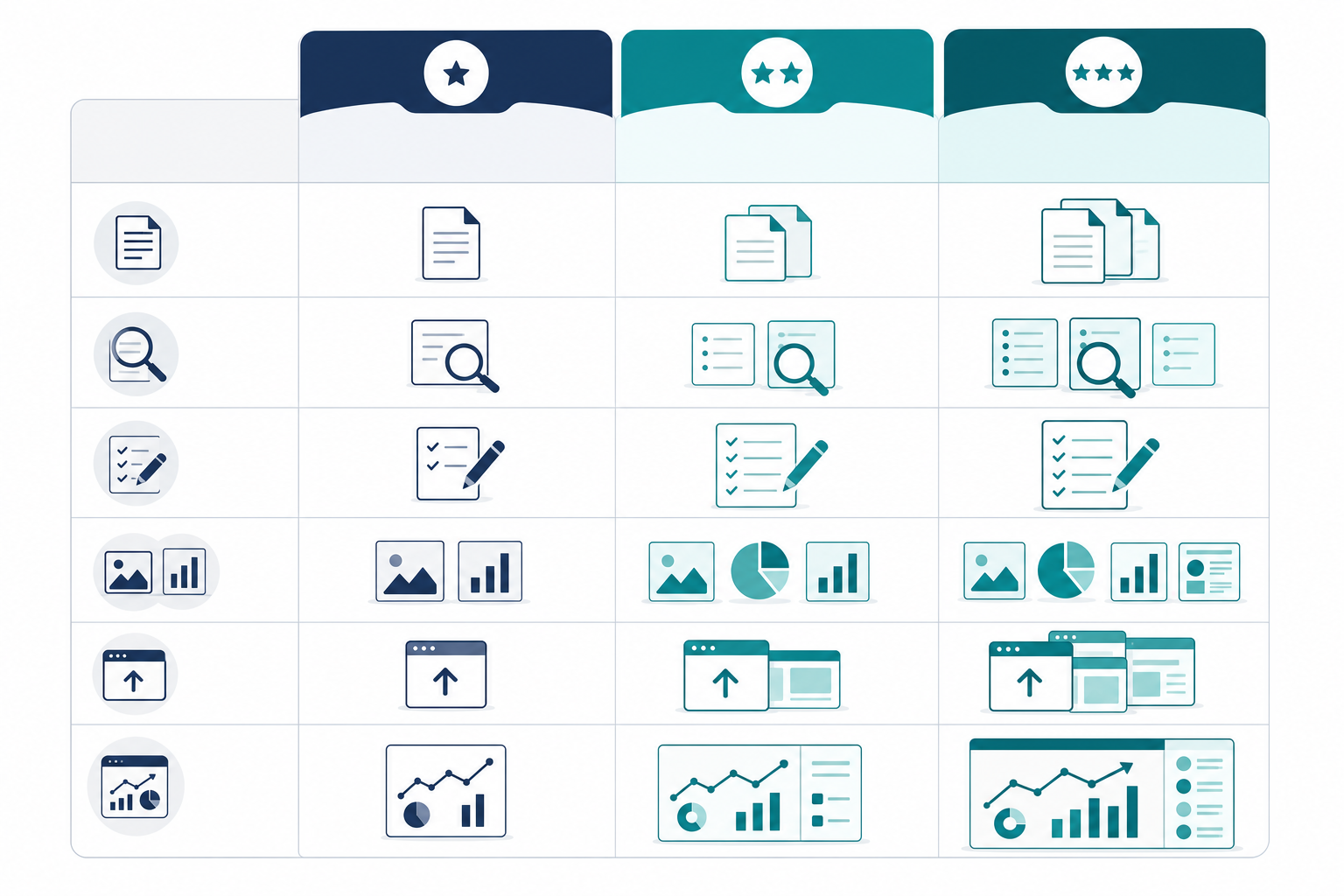
Be explicit about what's excluded — original interviews, primary research, video production, paid promotion, content refreshes on old material — so scope creep doesn't quietly eat your margin. If a client runs multiple brands or sites, offer a modest volume discount of 5–10% rather than an open-ended "we'll just add more" arrangement, and cap it in the contract. A one-page service definition attached to the agreement saves a lot of back-and-forth later.
AI content pricing models that actually work
There are four pricing approaches agencies commonly use, and most successful agencies end up blending two of them rather than picking one in isolation.
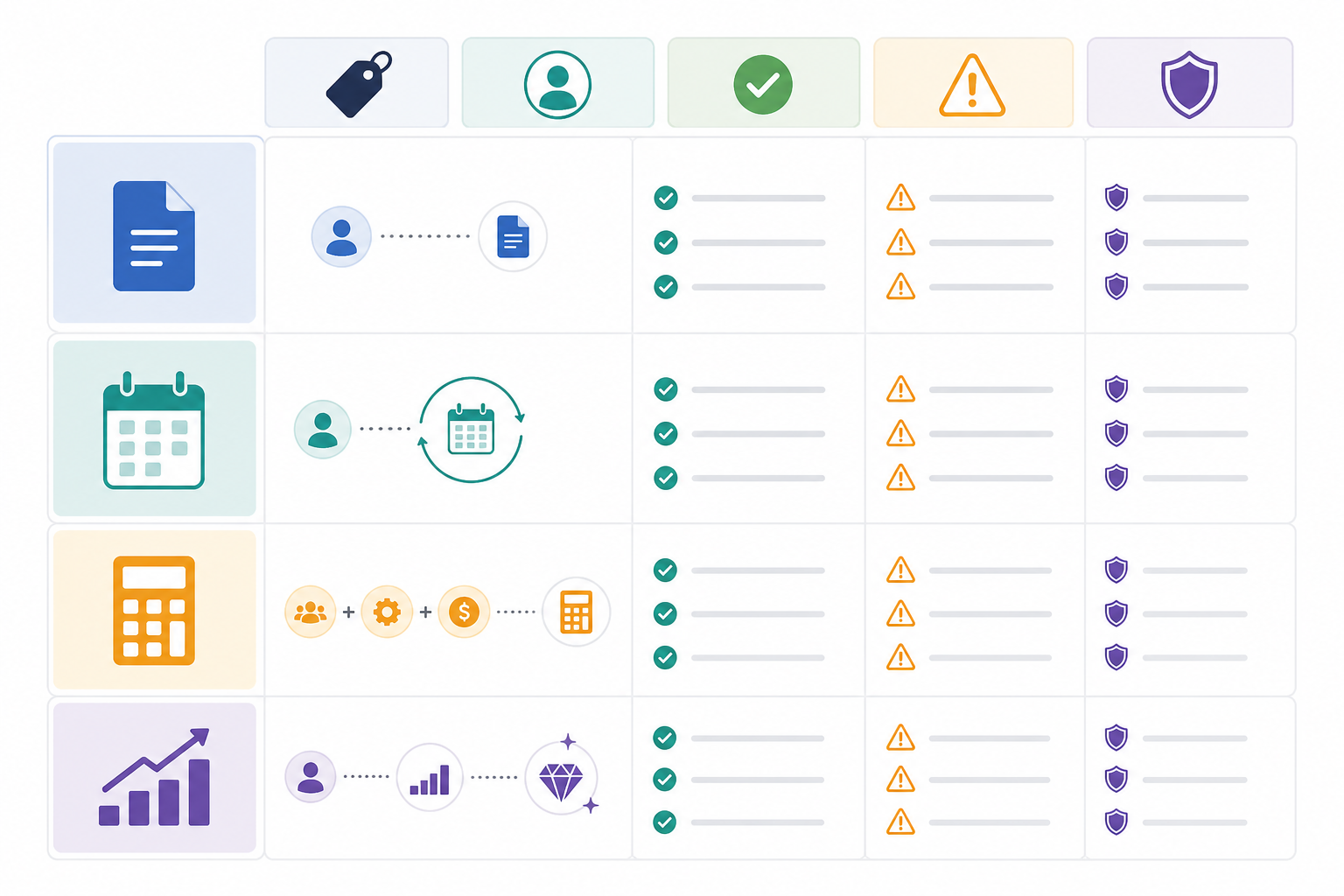
| Model | Best used for | Advantage | Risk | Safeguard |
|---|---|---|---|---|
| Per-article | New or low-volume clients, one-off projects | Simple to quote and understand | Undervalues strategy and editing time | Set a minimum order and include one revision only |
| Monthly retainer | Ongoing content programmes | Predictable revenue, easier resourcing | Scope creep if boundaries aren't written down | Attach a one-page scope document to every contract |
| Cost-plus | Any new AI content service line, especially early on | Protects your margin regardless of client outcomes | Doesn't reflect true value delivered | Revisit pricing every quarter as your process matures |
| Value-based | Established clients with attributable performance data | Captures upside from strong results | Requires reliable, agreed-upon data | Only offer after three or more months of measurable performance |
Cost-plus pricing for AI content services
Cost-plus pricing is the safer starting point, especially before you have performance data to justify value-based fees. The formula is simple:
Delivery and review cost (writer/editor time) + platform and tool costs + account management time + risk buffer + target margin = package price
Here's a worked example for a Starter package of 10 articles per month, priced at £1,800 per month:
- Editor/writer review time: 1.5 hours per article × 10 articles × £45/hour = £675
- AI platform cost, agency-tier licence: £50/month
- Account management: 4 hours × £40/hour = £160
- Subtotal: £885
- Risk buffer, 10%: £88.50
- Total delivery cost: £973.50
- Gross margin at £1,800: £826.50, roughly 46%
And for a Growth package of 20 articles per month, priced at £4,500 per month:
- Editor/writer review time: 2 hours per article × 20 × £50/hour = £2,000
- Research and reporting time: 5 hours × £45/hour = £225
- Platform costs: £100/month
- Account management: 6 hours × £45/hour = £270
- Subtotal: £2,595
- Risk buffer, 10%: £259.50
- Total delivery cost: £2,854.50
- Gross margin at £4,500: £1,645.50, roughly 37%
These numbers are illustrative — your actual staff costs, seniority mix and local market rates will move them around — but the method is the point. Know your real delivery cost before you quote a package price, and treat 30–45% gross margin as a healthy target for a new service line, tightening it as your workflow matures.
Value-based pricing for established clients
Value-based pricing works once you have reliable data showing content is driving leads, sign-ups or revenue for a client. You price against the outcome rather than the hours. A client generating meaningful pipeline from organic content will happily pay more than the cost-plus number suggests, because the return justifies it.
The catch: you need genuine, attributable data before making this pitch. Don't promise performance-based pricing on day one of a new engagement. Earn the right to it with a few months of measurable results first, then renegotiate.
Whatever model you choose, price strategy calls, custom visuals, content refreshes and interview-based research as separate line items rather than folding them silently into a flat fee. This protects margin and makes upsells feel like a conversation rather than a renegotiation.
Managing client expectations for AI-powered content
The most common source of friction isn't quality — it's mismatched expectations about what AI-assisted content can and can't do, and how fast it can be delivered. Set clear, written service standards from the outset:
- AI drafts need human review, every time, no exceptions. Build 1.5–2.5 hours of editing time per article into your quoted delivery windows so you're not rushing fact-checks under deadline pressure.
- Define turnaround times precisely. If your Growth Package promises 20 articles a month, specify the standard delivery window — say, first draft within 5 working days of an approved brief, final version within 3 working days of client feedback — and who's responsible at each step.
- Set acceptance criteria upfront. Spell out what "approved" actually means: factual accuracy, brand voice match, SEO checklist passed. Revisions shouldn't be open-ended.
- Agree what happens when a client delays approval. Late feedback shouldn't compress your editorial timeline. Build in a clause that shifts delivery dates when client sign-off is late.
- Consistency comes from better inputs, not magic. The more detailed your briefs, style guides and approved examples, the more consistent the output gets over successive articles. That's a workflow improvement driven by your team's process, not an AI system quietly "learning" a client's brand on its own.
- Publishing frequency isn't a ranking guarantee. Be upfront that more content supports long-term visibility and lead generation, but results depend on topic selection, on-page optimisation, site authority and competition, not volume alone.
What clients expect from AI content services
Most UK clients considering AI content services are weighing the same handful of things, and it's worth turning them into a checklist you can walk through on a sales call or in an onboarding document:
- Speed and reliability — will this actually get done on time and to a consistent standard, month after month?
- Transparency — are we being told clearly how AI is used in the process, and are we comfortable with that?
- Quality evidence — is this actually working, or just cheaper to produce? Ask agencies for quality-score benchmarks or sample before-and-after edits, not just finished drafts.
- Visual and formatting needs — will articles include diagrams, charts or custom images where relevant, or is that a separate cost?
- Direct publishing — does the service include CMS publishing and scheduling, or does the client need to upload content themselves?
- Performance reporting — will we see traffic, rankings or lead data tied to this content, and how often?
Address these six points directly in your sales process and onboarding documentation, and you'll pre-empt most of the objections that come up later.
An illustrative profitability model for an AI content service line
To make the economics concrete, here's a worked financial model based on a typical mid-sized UK agency structure. I want to be upfront: this isn't a sourced case study with real client results. Vague success stories erode trust faster than an honest, clearly labelled example.
Picture a 12-person agency previously producing four blog posts a month per client using a traditional freelance writer model, at roughly four hours of writer and editor time per article. They switch to an AI-assisted workflow — research brief, AI-generated first draft, senior editor review, fact-check, SEO pass — and human time per article drops to around ninety minutes.
Before: 4 articles/client/month × 4 hours = 16 hours of production time per client, capping the agency at roughly 15 active content clients with existing staff.
After: 4 articles/client/month × 1.5 hours = 6 hours per client. The same staff can now support roughly 3 additional retainer clients without new hires, assuming account management and QA time scale modestly rather than linearly.
Financial effect: if each new client is a £1,800/month Starter package at the roughly 46% margin calculated earlier, three additional clients add around £5,400 in monthly recurring revenue and roughly £2,480 in additional monthly gross profit. That's before any pricing uplift from Growth or Authority tiers, and before any SEO performance gains for existing clients, which the agency tracks separately.
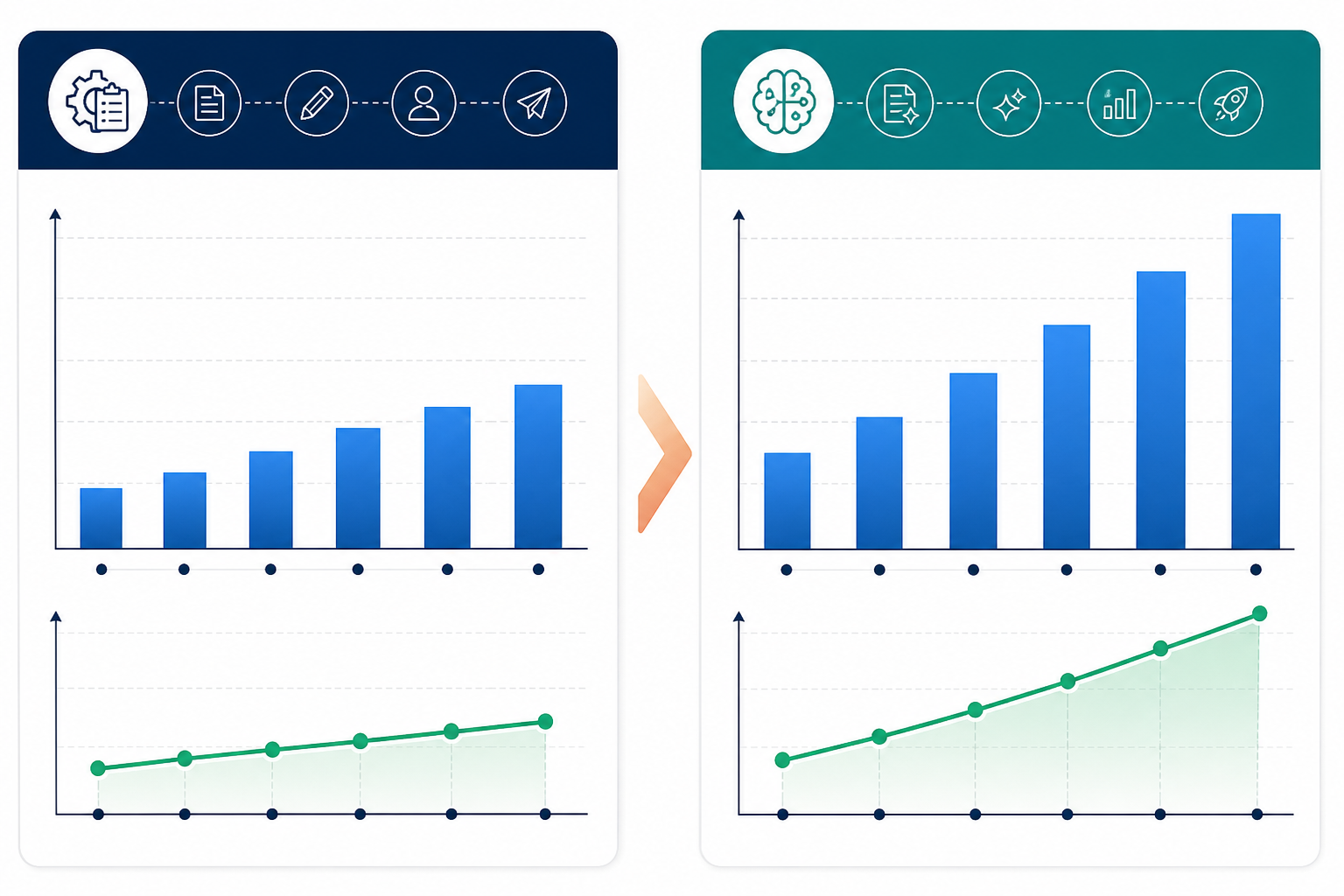
A sensible six-month measurement framework for a rollout like this would track average delivery time per article, gross margin per package tier, average revisions required per piece, ranking movement for target terms, organic session growth, and qualified leads attributed to new content. Report these honestly, including any flat months — a modest, credible result told straight sells better in the next pitch than an inflated one that falls apart under scrutiny.
If you're building your own case study from real client data, always include the baseline, the timeframe, exactly what changed in the workflow, and how you measured the result.
How to launch AI content services: a practical rollout checklist
If you're ready to introduce AI content services as a new agency service line, resist rolling them out across your whole client base at once. Instead:
- Audit your platform and CMS integrations first. Confirm your AI tool's commercial licence covers agency resale, check white-labelling terms, and verify it connects cleanly to your clients' CMS platforms — WordPress, Shopify, Webflow, Wix — for direct publishing.
- Build a standard brief template and documented approval workflow before taking on a pilot client — who reviews at each stage, who signs off, and what the escalation path is for disputed edits.
- Pick one low-risk pilot client — ideally someone open to experimentation and not in a highly regulated sector.
- Define who owns final approval on every piece before it publishes, and put that in writing.
- Set a quality-score baseline in month one — track factual error rate, revision count and time-to-approval so you have something to compare against as your process matures.
- Calculate your actual production cost after the pilot, not before. Your initial estimate will almost certainly be wrong the first time.
- Review the package after 30–60 days and adjust pricing, scope or workflow before rolling it out further.
This staged approach protects your margins and your reputation while you work out the kinks that every new service line inevitably has.
AI content services for agencies: frequently asked questions
Should agencies charge per article or by monthly retainer?
Retainers work better for ongoing programmes because they smooth revenue and let you plan editorial capacity. Per-article pricing suits new or cautious clients testing the model, but cap it with a minimum monthly order and limit it to one revision round. Otherwise it undervalues the strategy and editing work behind each piece.
How much should an agency charge for AI content services in the UK?
Using a cost-plus approach, a 10-article Starter package typically costs an agency roughly £900–£1,000 to deliver once editing time, tools, account management and a risk buffer are included, supporting a price around £1,800 per month at a 40–45% margin. A 20-article Growth package tends to cost closer to £2,800–£3,000 to deliver, supporting a price around £4,500 per month. Adjust these for your actual staff costs and local market rates.
How should agencies disclose white-labelled AI content services?
Disclose the process, not necessarily the specific tool brand. Clients generally want to know that AI drafts a first version and that a human editor, fact-checker and SEO reviewer approve it before publishing. Put this in a short paragraph in the contract or service definition, and update it if your workflow changes materially.
What should be included in a CMS publishing fee?
At minimum, CMS publishing should include uploading the article with correct formatting, meta title and description, internal linking and image alt text. Scheduling, staging previews and multi-platform publishing for clients running content across more than one CMS are reasonable add-ons rather than default inclusions.
Does AI content actually rank well in search results?
Only if it's well-researched, properly edited and demonstrates genuine first-hand expertise or usefulness to the reader. Search systems don't reward AI content differently from human content based on how it was drafted. They reward relevance, depth, originality and quality signals, and penalise thin or unedited output regardless of where it came from.
What's the biggest risk of offering AI content services without safeguards?
Publishing factual errors or off-brand content at scale, faster than you can catch them. Human review isn't optional — it's the core of what you're actually charging for, and it's the line item that protects both your client's reputation and your own.
Bringing it all together: building a profitable AI content service
AI hasn't devalued content services. It's shifted where the value sits. Clients asking for "more posts for the same fee" are really asking whether your agency can move faster without cutting corners. The agencies getting this right package strategy, editorial oversight and measurable results into clear, well-priced tiers rather than selling raw output.
If you're starting from scratch, here's a concrete next step: model one package using the cost-plus formula above with your actual staff rates, pilot it with a single suitable client for 30–60 days, and review your real delivery cost, quality-score baseline and margin before rolling it out further. Start small, price around your real costs and the value you deliver, and build the evidence base that eventually lets you charge for outcomes rather than just output.
Create content like this automatically
Scribe uses AI to generate high-quality blog posts that engage your audience and drive traffic.