How Agencies Can Pitch Competitive Intelligence as a Service (With Scripts You Can Steal)
13 min read
Loading...


A competitive intelligence service is easiest to sell when you lead with evidence, not features. The structure that works consistently is Problem, Proof, Insight, Price: show the client a specific, dated example of what a competitor is doing right now, explain what it likely means strategically, then price ongoing monitoring as a retainer or add-on—typically somewhere between £150 and £600 a month depending on scope, which I'll break down properly further down. With a whitelabel tool like Rival Ads handling the actual monitoring, agencies can build this offer and have it live within days, without hiring a research analyst or building anything from scratch.
This post is the playbook I use with agencies building a competitive intelligence offer. I'll walk through how to frame the conversation, what to say when a client pushes back, how to price the service properly, and give you a slide-by-slide outline for the pitch deck itself. Steal whatever's useful.
Here's the thing about competitive intelligence: most clients think they're already doing it. Ask a marketing director whether they track competitor activity and you'll usually get a confident yes. In my experience, what that often means is someone glanced at a competitor's Facebook page a few weeks back, or a founder mentioned seeing an ad on Instagram once.
That's casual checking, not a structured competitive intelligence service. The two are genuinely different, and the gap between them is where this service lives.
Structured monitoring means regularly tracking a competitor's activity across ad platforms—catching new creative, paused campaigns, and shifts in how many variations they're running. Most clients have simply never seen this done properly, so they don't know what they're missing. It's worth being precise about what this kind of monitoring can and can't tell you: if a competitor scales from three ad variations to eleven, that's a real, observable signal worth flagging. It suggests they're investing more in that creative direction. It doesn't prove the campaign is converting or that spend is scaling—only the advertiser's own data could confirm that. Being upfront about this distinction actually makes you more credible with clients, not less.
This is why I always tell agencies: don't explain competitive intelligence, show it. Pull up a live dashboard on a call and say something like, "Here's an ad your competitor launched nine days ago—they've since expanded it from three variations to eleven, which usually signals they're leaning into it." A two-minute screen share of real, dated ad activity tends to land better than a long deck of abstract claims, because it gives the client something concrete to react to.

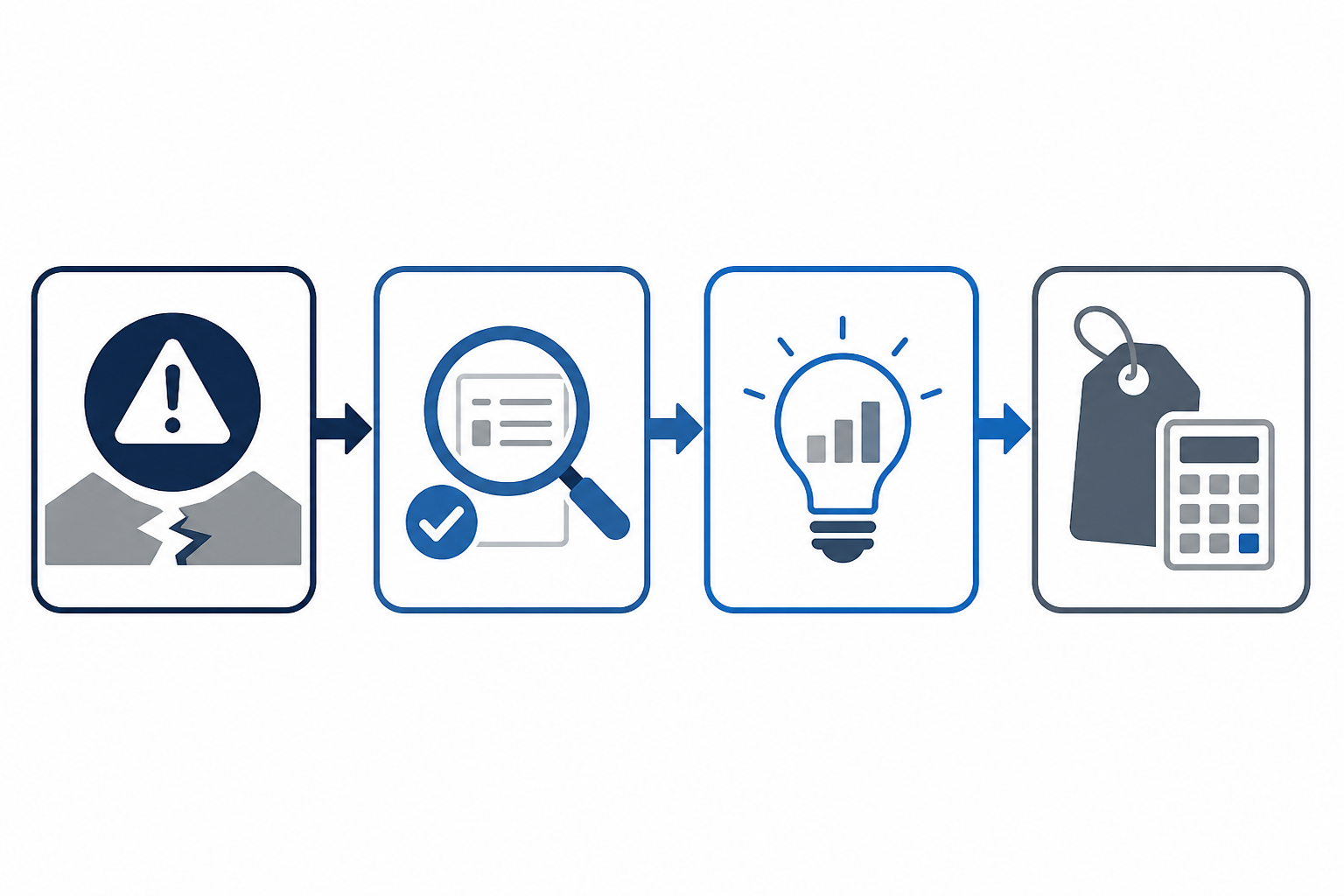
Once you've got their attention, you need structure. I've found this four-step sequence works consistently, regardless of the client's industry or how sophisticated their marketing team already is.
Don't start with what you're selling. Start with what they're missing. Something like: "Right now, you're making budget and creative decisions without much visibility into what your competitors are actually running, testing, or scaling." Let that sit for a second. Most clients will nod, because on some level they already suspect it's true.
This is the part agencies tend to skip, and it's the part that makes the biggest difference. Before the call, run one of the client's actual competitors through a monitoring platform and pull a real week-over-week comparison. You want to walk in holding a specific example, not a general pitch about what the service could find.
A raw list of ad changes isn't a pitch on its own—it's just data. The value comes from interpretation: what does it likely mean that a competitor launched five new video creatives on TikTok while pausing their static Meta ads? Tools like Rival Ads use AI-generated analysis (built on Claude, as of writing) to help surface this kind of pattern quickly. Treat that output as a strong first draft, though—it's worth sense-checking against your own media buying experience before you present it as fact to a client.
Don't lead with price. Frame it against the cost of not knowing—time spent missing a competitor's shift in strategy, or budget spent testing something a competitor already tried and dropped.
Here's a sample talking point you can adapt:
"Here's what [Competitor] changed in their Meta ads last week—and here's what it could mean for your Q2 plan."
Specific, dated, and grounded in something real, rather than a general claim about value.
This objection comes up constantly, and it's usually not a flat rejection—it's an information gap. The client genuinely believes their current approach counts as competitive intelligence. Your job is to show them the gap without making them feel foolish, and to be fair when their process is actually decent.
Here's how I'd handle it:
The goal isn't to prove the client wrong. It's to make the difference between casual checking and structured monitoring easy to see for themselves.
Once a client's convinced they need this, the next question is how to price a competitive intelligence service—and this is where a lot of agencies get vague. Here's how I'd scope it into three tiers, rather than quoting a single wide range:
These are indicative UK price bands based on how agencies commonly package this kind of service—your positioning, market, and the sophistication of your analysis will shift things up or down.
There are two ways to sell it:
Standalone offer: Sold as its own monthly retainer, using the tiers above. This positions your agency as a strategic partner rather than just an execution team, and it's a clean line item for new business conversations.
Bundled offer: Folded into an existing paid media or strategy retainer as a value-add, often at a smaller incremental increase than the standalone price. Clients tend to perceive this as less of a new cost, which makes it a useful lever at renewal time.
| Standalone Retainer | Bundled Add-On | |
|---|---|---|
| Best for | New client acquisition | Existing account upsells |
| Perceived cost | Clear, visible line item | Feels like added value, not new spend |
| Positioning | Strategic partner offer | Retention/renewal lever |
| Typical price | £150–£600/month depending on tier | Smaller incremental increase to existing retainer |
| Sales friction | Higher (new ask) | Lower (existing relationship) |
On margins: whitelabel tools like Rival Ads start at around $29/month (check current pricing, as this changes), with tiered plans based on the number of competitors monitored. That means even a Starter package resold at £150–£250/month can leave reasonable margin once you account for the tool cost and your own time spent reviewing and packaging the insights—it's not pure profit, since someone still needs to sense-check the output and write it up for the client.
My general recommendation: use standalone pricing as a door-opener for new client acquisition, since it's a self-contained, easy-to-explain pitch. Use bundling for upselling existing accounts where the relationship is established and you want to avoid friction.
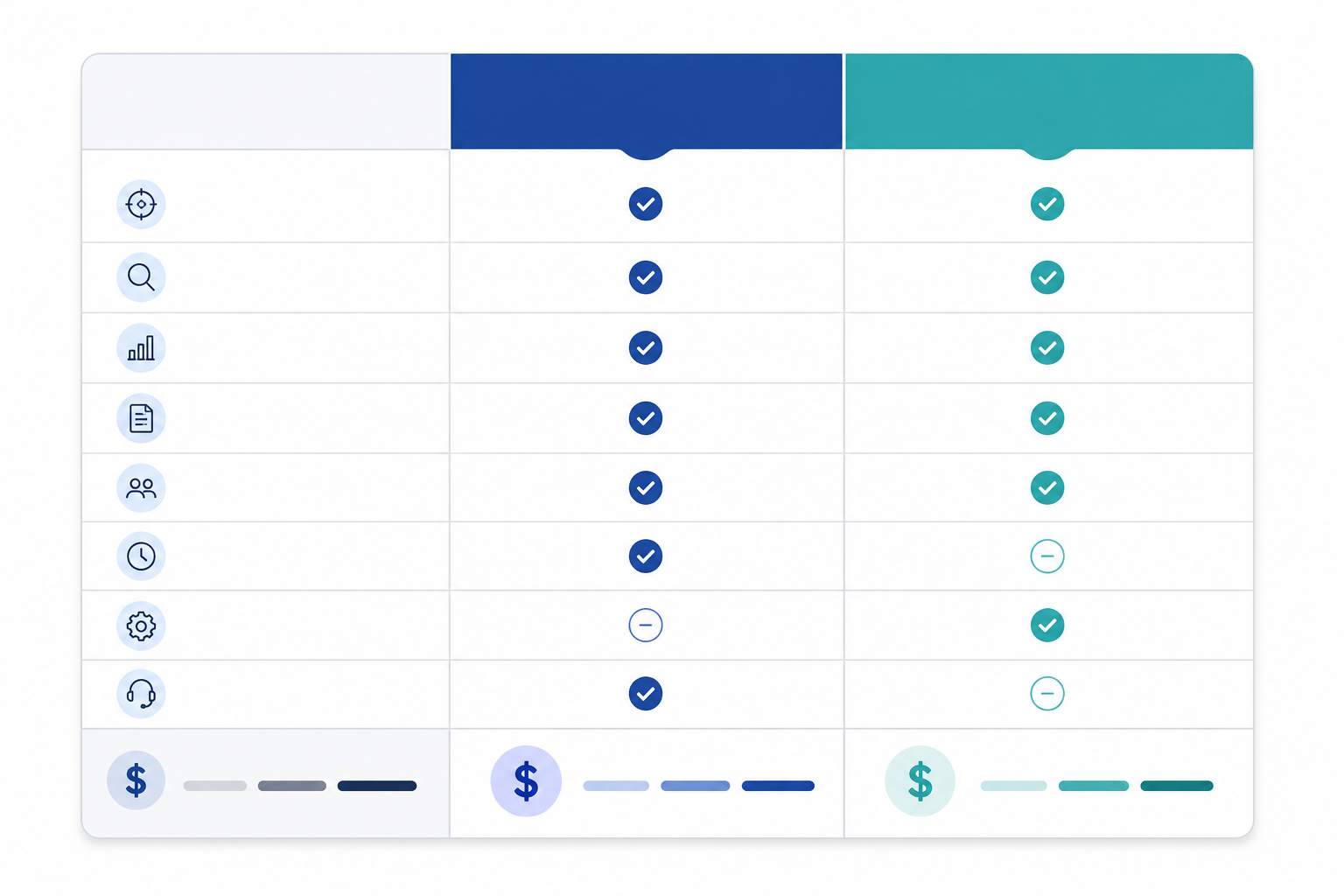
If you want something ready to present soon, here's a six-slide structure that follows the Problem, Proof, Insight, Price framework, with a clear objective and proof point for each slide.
In my experience, that pilot slide tends to be one of the better-converting parts of the deck, because it turns a long-term commitment into a small, low-risk trial—though results will vary by client and how strong slide 2's example is.

Most agencies use tiered pricing based on scope: a Starter package (one to two competitors, monthly reporting) around £150–£250/month, a Growth package (three to five competitors, weekly monitoring, cross-platform coverage) around £300–£500/month, and custom Enterprise pricing above that. It can be sold as a standalone retainer or bundled into an existing paid media or strategy retainer—standalone tends to work better for new client pitches, bundling for upsells.
The most common one is "we already do this," which usually means someone checks a competitor's page occasionally rather than tracking activity in a structured, ongoing way. Ask how often they check and across how many platforms—this often reveals the gap on its own. If the client's existing process is genuinely solid, position your service as adding coverage or consistency rather than replacing it.
Standalone pricing tends to work better for acquiring new clients since it's a clear, self-contained offer. Bundling works better for existing accounts where you're increasing retainer value without a hard pitch. Many agencies run both, depending on the client relationship and where they are in the sales cycle.
A 30-day pilot tracking two or three competitors is a common starting point—long enough to catch at least one meaningful competitor change, short enough to keep the ask low-risk. A reasonable success criterion is delivering at least one actionable insight the client wouldn't otherwise have had, on the schedule you promised. If you can't point to something concrete by the end of the pilot, it's worth extending or narrowing the competitor set rather than pushing straight to a full retainer.
Avoid framing observed ad activity as proof of performance. A competitor running more creative variations suggests investment or testing, not confirmed conversion or scaled spend—be upfront about that distinction with clients. It's also worth being clear about what a whitelabel tool automates versus what still needs a human eye: the AI-generated analysis is a helpful starting point, but the strategic interpretation you deliver should be sense-checked, not passed along unedited.
Competitive intelligence tends to sell itself once a client sees a real example in front of them. The pitch isn't about convincing anyone something is theoretically valuable—it's about showing a specific, dated competitor move and letting the client draw their own conclusion about what they're missing. Get the Problem, Proof, Insight, Price sequence right, have a considered response ready for "we already do this," price your competitive intelligence service in scoped tiers rather than one vague range, and use a whitelabel platform to handle the monitoring so you can focus on the interpretation and the relationship. That's the whole offer.