How AI Is Changing the Way Marketers Analyze Competitor Ads
16 min read
Loading...
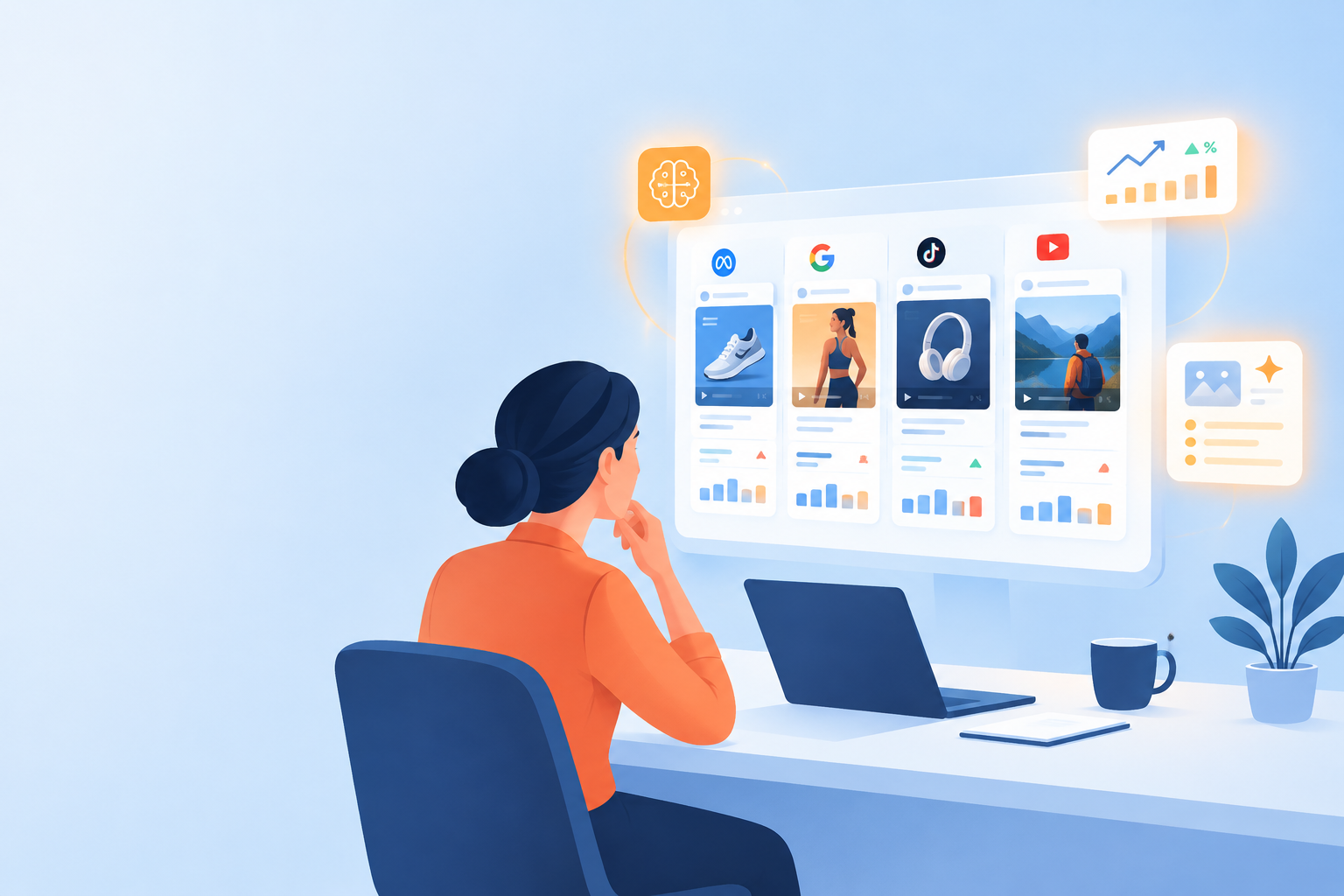
The core idea behind How AI Is Changing the Way Marketers Analyze Competitor Ads is simple: instead of scrolling the Meta ad library and screenshotting creatives, you read week-over-week patterns: what launched, what stopped, and what's still live. AI is very good at spotting and summarising those patterns across large volumes of ads. It can't see spend, results or intent. So I'd treat it as a fast first read, then pressure-test it with your own judgment.
That's the balanced view this post takes. We'll look at what a good strategic read covers, where AI earns its keep, where it falls short, and how to build it into a weekly routine without outsourcing your brain.
You probably know the routine. Monday morning, you open the Meta ad library for competitor one, then Google's Ads Transparency Center, then TikTok, then LinkedIn. You screenshot a few things, paste them into a deck, and move on to competitor two. By Thursday you can't remember which ads were new and which you'd already seen. The swipe file grows and the insight doesn't.
The problem was never a lack of ads. Public ad libraries are brilliant for seeing what a rival is running right now. But they're snapshots, and a snapshot can't tell you what changed.
That's the real shift. Competitor ad monitoring used to be about collecting ads: archives, screenshots, swipe files. Now it's about interpreting change over time. A modern AI-assisted workflow looks something like this:
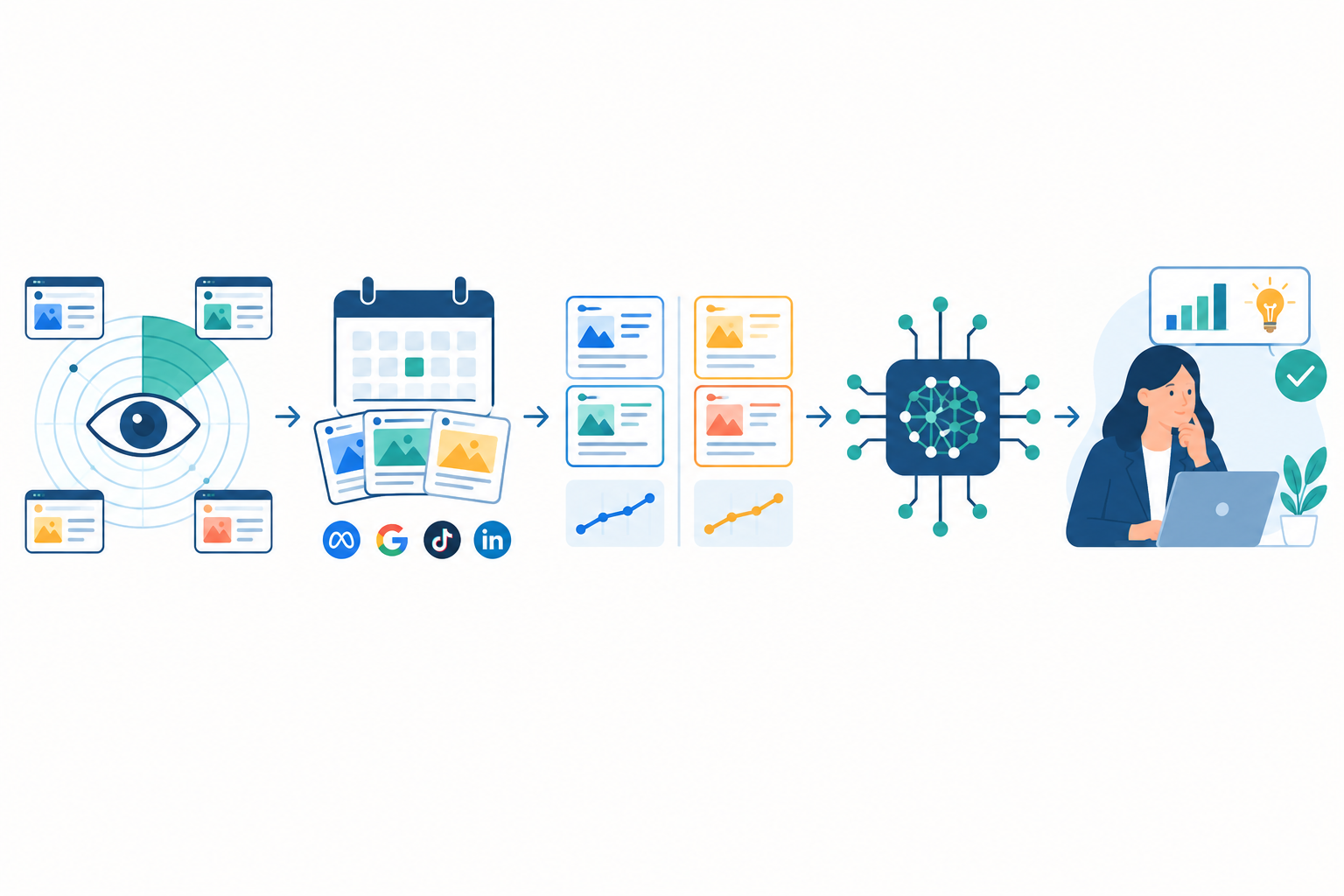
Here's our take, as the team building Rival Ads: the diff matters more than any single ad. One great-looking creative tells you very little. Ten new creatives, three gone after a week and two still live a month later? That's a story about what a competitor is testing and what they may be keeping around.
Notice the careful wording there. Public data shows what's live, for how long, and how many creatives appear. It doesn't show spend, so an ad that stays live isn't proof that a competitor is scaling it. Duration and creative volume are useful proxies, nothing more. We'll come back to handling that properly in the checking framework below.
One more thing before we go further. I'm not claiming AI replaces your instincts. Salesforce's 2024 State of Marketing research found 75% of marketers surveyed said their organisation was exploring, experimenting with or implementing AI. That's broad adoption, though it isn't specific to competitor analysis. So the question isn't whether to use AI. It's where to trust it.
Before asking what AI can do, it helps to be clear about what good competitor ad analysis looks like. When an experienced media buyer reads a competitor's activity, they're usually checking a handful of things:
This checklist is the mental model AI analysis is trying to copy. A good tool isn't inventing a new way to think about competitor ads. It applies this lens consistently, at a scale no human has time for.
AI is most useful for turning big piles of competitor ads into searchable, comparable evidence. It can tag creative by format, offer, message and call to action, then summarise recurring patterns for a human to review. In practice, that shows up in a few ways.
Here's an illustrative example of how a Claude-powered analysis might describe a competitor over a month. It's a hypothetical, not a real brand:
Weeks 1 to 2: the advertiser led with percentage-off offers across most new Meta ads, with urgency-style CTAs. Weeks 3 to 4: three of those discount ads are no longer live, and new creatives centre on customer reviews and star ratings, linking to a reviews-focused landing page. The longest-running ad is now a testimonial video. This could suggest a move from promotion-led to proof-led messaging, possibly to protect margin, though spend and results aren't visible.
Look at how it's built. It states what happened (observable), offers a plausible reading (inference), and flags what it can't know. That's the standard to look for. It's also the kind of output agencies can whitelabel for client reporting, so a weekly competitor read lands in the client's inbox under your own brand.
On the bigger picture, McKinsey has estimated that generative AI could lift marketing productivity by the equivalent of 5% to 15% of total marketing spend. That's an estimate across marketing generally, not a measured result for ad analysis, so read it as direction of travel rather than a promise. For monitoring specifically, I'd time your own manual process for a couple of weeks. That gives you a real baseline to compare against.
Now the honest bit. AI can group ads and describe patterns, but those groupings are hypotheses, not explanations. Here's where you still need to step in.
This matters beyond marketing, too. In Moffatt v. Air Canada (2024), a Canadian tribunal held the airline responsible after its chatbot gave a customer wrong information about a bereavement fare. It wasn't an advertising case, but the lesson travels: if you repeat an AI-generated claim without checking it, the mistake is yours.
The wider AI picture backs up the caution. In 2024, Gartner forecast that at least 30% of generative AI projects would be abandoned after proof of concept by the end of 2025, citing poor data quality, inadequate risk controls, escalating costs or unclear business value. That was a prediction rather than a measured outcome, so check Gartner's latest published findings for how it played out. Either way, tools without clear value and sound checks tend to stall.
Imagine an AI read says a competitor has pushed hard into free-delivery messaging for three weeks. Directionally, that's correct. You see the ads, the copy, the links. The temptation is to match it.
But a media buyer who knows the category might recognise that this competitor has just changed its delivery partner and has excess stock to clear. The ads are a clearance play, not a lasting positioning shift. Matching them would eat into your margin to answer a short-term move. The AI got the pattern right. The human supplied the reason not to follow.
So, will AI replace media buyers? Honestly, no. It takes over much of the grunt work of monitoring, not the decision-making.
A good analysis is only as useful as the questions you put to it. These are the ones we'd start with, each tied to the decision it informs.
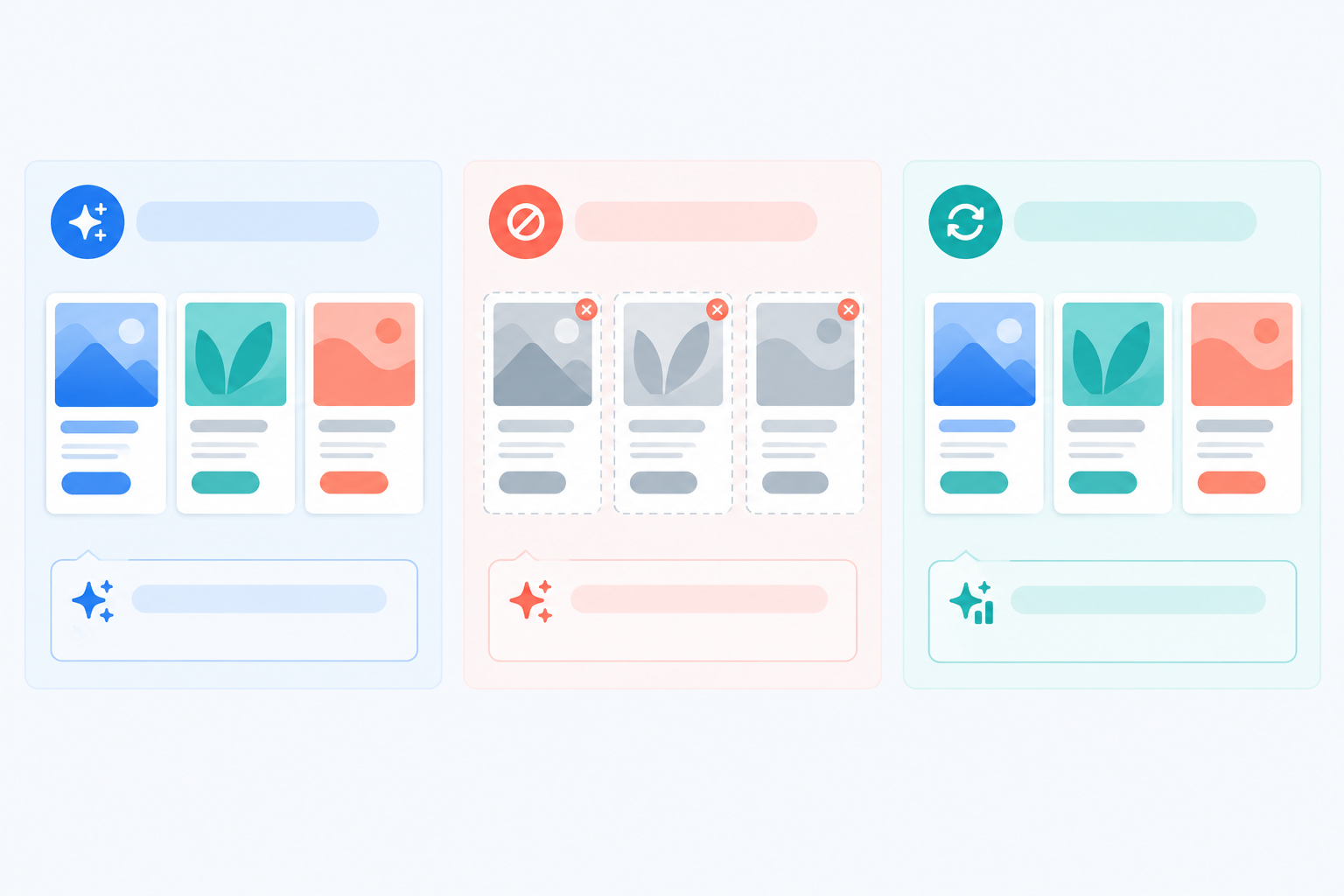
The most useful mental shift is to treat an AI summary as an interpretation, not a verified record. The US National Institute of Standards and Technology (NIST) makes a related point in its Generative AI Profile for the AI Risk Management Framework: organisations should be able to trace and verify generated content rather than take it at face value. For competitor ads, that translates into three buckets.
| Observable | Inferred | Unknowable from public data | |
|---|---|---|---|
| Examples | Ad creative, exact copy, links, format, first-seen and last-seen timing | Strategy, intent, audience, positioning, whether an ad is 'working', whether it's being scaled | Ad spend, ROAS, conversion rates, targeting settings |
| Confidence | High, if the tool shows the original | Medium to low, treat as a hypothesis | None, don't accept claims about these |
| How to handle it | Verify against the source creative | Test it, or look for corroborating signals | Ignore, or clearly label as speculation |
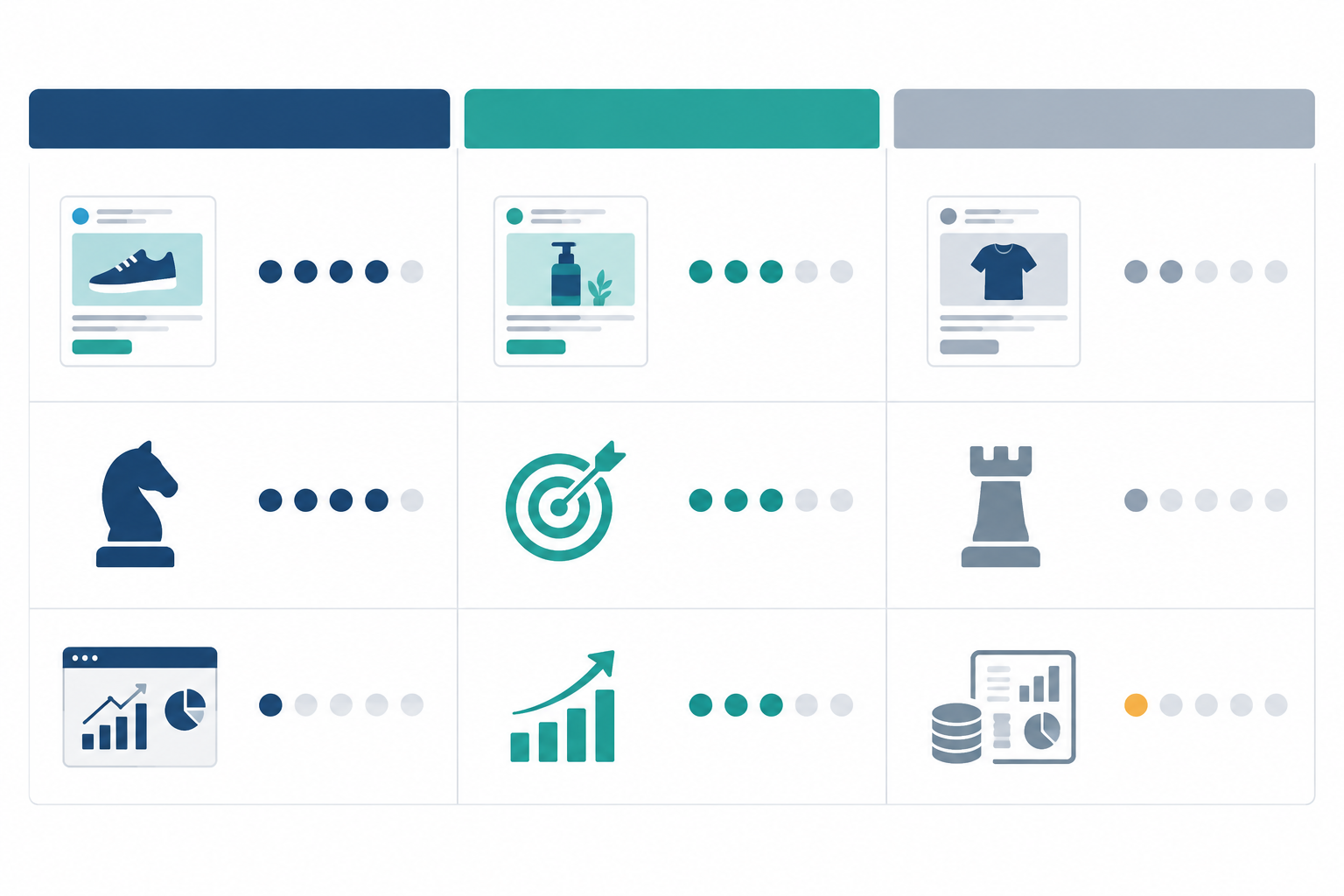
This table is the one place we spell the distinction out in full. Everywhere else in this post, the short version is: observable facts you can check, inferences you should test, and spend you can't see.
This is why traceability matters. Rival Ads is built to keep the real creatives, exact copy and links alongside the analysis, so claims can be traced back to something you can look at. If a tool hands you a confident paragraph with nothing to check it against, be wary.
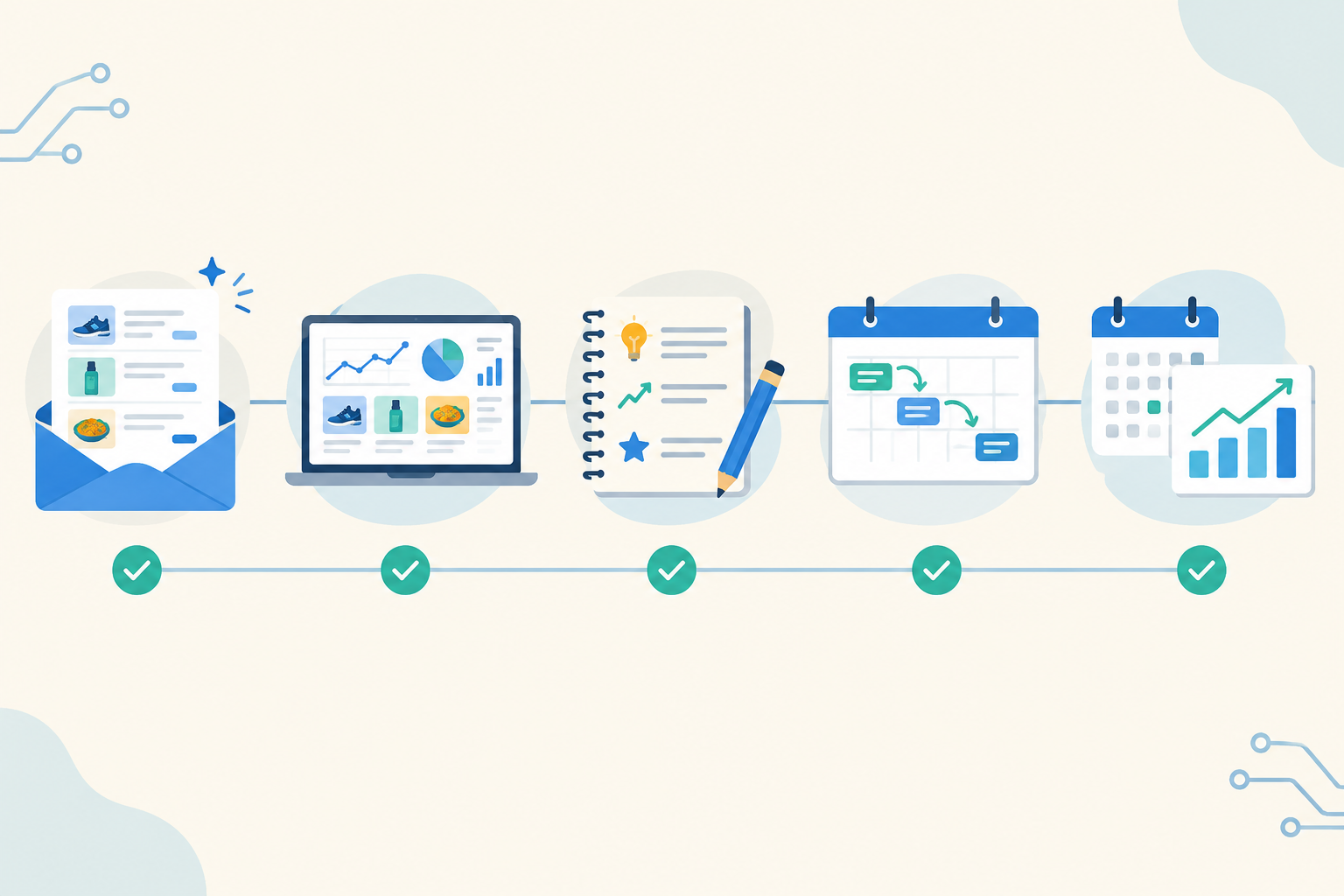
Tools only help if they fit a rhythm. Here's a routine that works for most paid media teams.
A note on teams: assign competitors to specific people and keep roles clear, so insight doesn't sit with one person who then goes on holiday. Rival Ads has roles and competitor assignment built in for exactly that, and agencies can package the weekly read as a client deliverable under their own brand.
The gap between 'what they did' and 'what we'll test' is where most competitor research dies. Here's one worked example (hypothetical, for illustration).
Observation: a rival has stopped three discount-led Meta ads and launched two review-led video ads linking to a new testimonials page. One of the review ads is still live four weeks later.
Interpretation: they may be moving from promotion to proof, possibly because discounting wasn't sustainable. We can't see their results.
Our action: we don't copy their testimonial video. Instead, we add one proof-led concept to our own test backlog, built around our own customer evidence, and run it against our current best offer-led ad. We also note that nobody in the category is talking about delivery speed, which could be worth a separate test.
That's the difference between reactive and strategic. Reactive means matching a competitor because they moved. Strategic means using their move to sharpen your hypotheses, then testing on your own terms. Competitor insight should help you prioritise your test backlog, not replace it. And don't copy creatives wholesale. It rarely works, and it can create problems of its own.
To sum up: AI gives you a sharper first read, and you bring the judgment. A tool like Rival Ads (priced from $29/month at the time of writing, so check the current pricing page) is one way to make the routine stick, because the monitoring, diffing and first-pass analysis happen without you having to remember to do them.
Partly. It's good at describing what changed and proposing plausible reasons, such as a shift in offer or channel focus. Intent is still your call, so treat any strategic reading as a hypothesis and test it before you act.
It depends which part you're asking about. Copy, format, links and first-seen dates are checkable against the source. Claims about performance or spend aren't, so see the framework above and favour tools that show the underlying creatives.
Unlikely. It takes over repetitive monitoring and first-pass analysis, which leaves more time for creative direction and decisions that depend on context AI doesn't have, like your margins, stock and brand position.
Turn each weekly read into no more than two or three actions: a creative angle to test, an offer to review, or a channel to watch. Write down what you observed, what you think it means and what you'll do, then revisit it a month later to see if you were right.
No. Competitor ad monitoring relies on publicly available ads, so you only need the competitor's website. One boundary to bear in mind: the depth of public data varies by platform, so you'll see what each one chooses to publish, not everything a competitor is running.