How ChatGPT Decides Which Brands to Recommend: A Technical Breakdown for Product Marketers

ChatGPT Citations: How Brands Get Recommended in AI Search
ChatGPT doesn't recommend brands at random—it weighs a combination of training-data exposure, real-time retrieval from indexed web sources, and citation-worthiness signals such as structured content, third-party validation, and topical consistency. In practice, this means brands with clear, well-structured, frequently referenced content across the web get surfaced more often than brands with thin or inconsistent digital footprints, regardless of ad spend.
I've spent the last several months at MentionOwl analysing exactly how this plays out across thousands of tracked prompts for SaaS and DTC clients. What I've found consistently contradicts the assumption that AI recommendations are some kind of black-box lottery. They're not. There's a discoverable logic underneath, and in this piece I'll explain how ChatGPT citations work and, more importantly, which levers product marketers can pull.
Before I go further, I want to be transparent about something important: OpenAI does not publish a complete, page-level ranking formula for ChatGPT citations, and it explicitly states there's no way to guarantee top placement in ChatGPT Search. What follows is built from OpenAI's own documentation, published generative engine optimisation research, and pattern analysis across the AI visibility data we track daily at MentionOwl. Where I'm citing observed patterns rather than confirmed mechanics, I'll say so.
The Data Sources Behind ChatGPT Answers
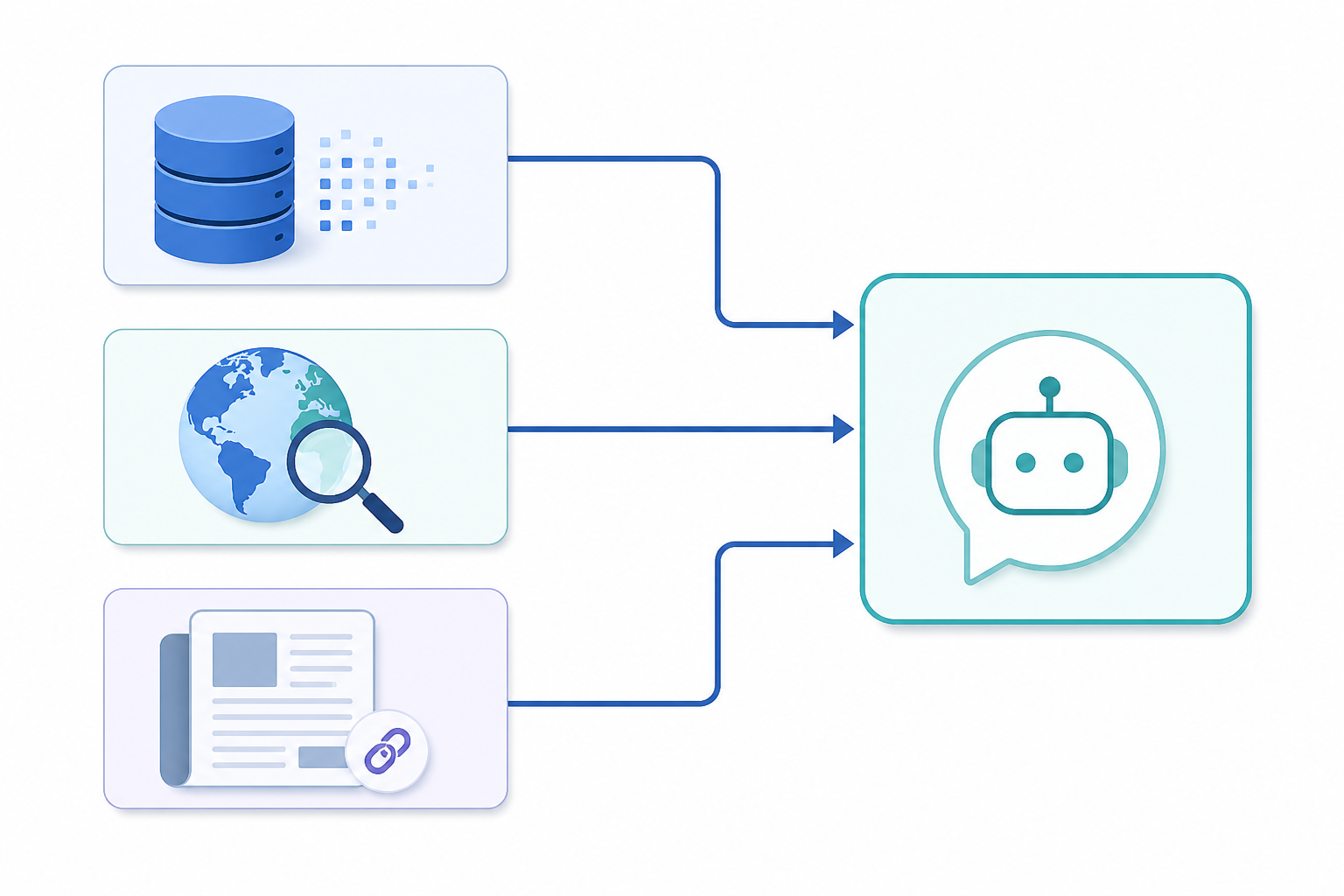
To understand why ChatGPT mentions one brand over another, you first need to understand that a ChatGPT response isn't drawing from a single, unified database. It's assembled from up to three distinct layers, and which layers are activated depends heavily on the product mode and the query itself.
The first layer is pre-training data—the static corpus the model was trained on, which OpenAI describes as a mix of publicly available information, licensed or partnership data, and content generated by human trainers and researchers, all captured up to a training cutoff date. Critically, OpenAI doesn't publish a complete inventory of exactly which pages or domains fed into this corpus, which means you can't audit your presence in it directly. You can only infer it from how the model discusses your brand in non-browsing conversations.
The second layer is the browsing and retrieval layer, which activates when ChatGPT Search is enabled, including in Plus, Team and increasingly free-tier contexts. Here, the model issues live retrieval calls against an indexed web corpus, pulling current pages, comparison articles and review content. It may then attach inline citations and a visible Sources panel to the answer. This is the layer where most practical AI SEO and generative engine optimisation work has leverage because it queries a web index that updates continuously rather than a frozen training snapshot.
The third layer involves licensed content partnerships. OpenAI has struck deals with a number of publishers, and while the company hasn't disclosed a public weighting system for how licensed sources are treated relative to organically indexed pages, it's reasonable to assume—based on how retrieval systems generally work—that trusted, licensed sources carry different retrieval priority from an arbitrary blog post.
Here's why this three-layer structure matters in practice: a claim on your own marketing page (“the #1 rated tool for freelancers”) sits entirely inside your controlled narrative. Retrieval systems generally treat self-published claims as lower-corroboration evidence than the same claim appearing in an independent comparison article or review site. I've seen this play out repeatedly in our client data—brands with strong owned-site copy but weak third-party presence get mentioned far less than their market share would suggest.
How ChatGPT Citation Ranking Works
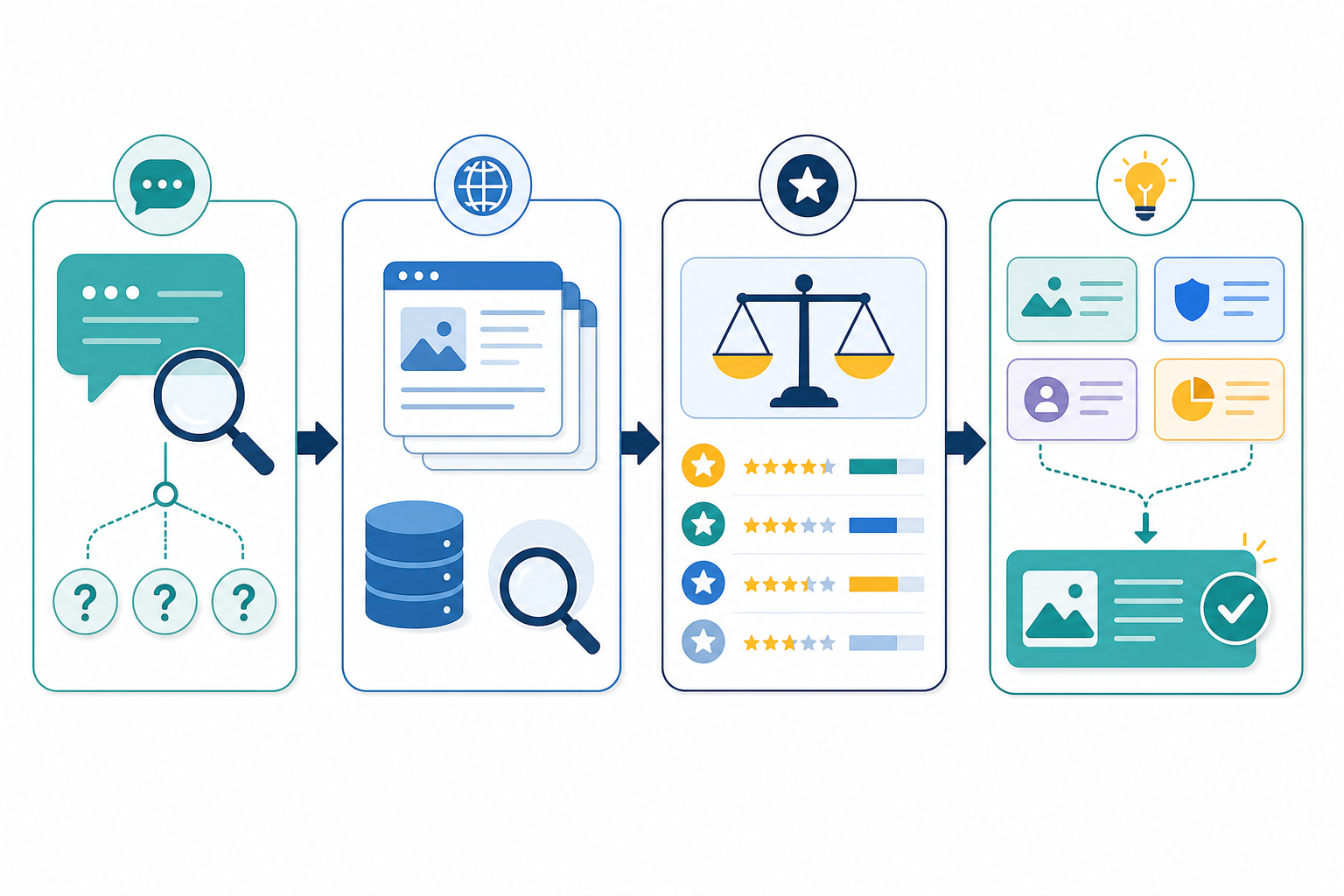
Once you understand the source layers, the next question is how ChatGPT decides what to surface and in what order. Based on OpenAI's documentation and the generative engine optimisation research coming out of Princeton, including the GEO benchmark study that evaluated 10,000 queries across multiple domains, the process runs through roughly five stages:
Query interpretation — ChatGPT parses the intent behind a prompt such as “best project management tool for freelancers” and determines whether it can answer confidently from training data alone or whether it needs to trigger live retrieval for current, verifiable information.
Source retrieval — For retrieval-augmented queries, the model pulls a shortlist of candidate documents. OpenAI's own guidance indicates this shortlist is shaped by relevance, reliability and usefulness to the specific query—not by domain authority alone, and critically, not by any mechanism related to advertising spend.
Source scoring — Documents get implicitly evaluated against factors including topical relevance, structural clarity, clean headings, lists, schema markup and corroboration—whether multiple independent sources say the same thing. The GEO research found that content featuring clear explanations, statistics, direct quotations and technically precise language tended to perform better in generative visibility tests, sometimes by margins as large as 40% in the study's benchmark conditions. However, that's an academic result under controlled test conditions, not a guaranteed real-world uplift.
Synthesis and citation surfacing — The model composes an answer and, depending on the surface—ChatGPT Search versus standard chat—may attach inline citations. Brands referenced across multiple corroborating sources tend to surface earlier and more consistently than brands appearing in just one high-authority post.
Repetition effect — This is one of the more counterintuitive findings from our monitoring work: a brand that appears modestly across ten independently authored sources often builds stronger “citation gravity” than a brand that lands one glowing feature in a single prestigious publication. Corroboration density, not peak authority, seems to be the deciding factor.
It's worth being precise about terminology here too: a citation is not an endorsement. ChatGPT can cite your page as one piece of evidence while still concluding that a competitor is the better fit for the user's stated criteria. This is why I always encourage clients to separate mention rate, citation rate and recommendation rate as three distinct metrics rather than collapsing them into one vague “visibility” number.
Why Some SaaS Brands Get Mentioned More Than Others
When we run comparative audits across SaaS clients at MentionOwl, the pattern that separates high-citation brands from low-citation brands is remarkably consistent. It rarely comes down to product quality differences—it comes down to how discoverable and corroborated the information around the product actually is.
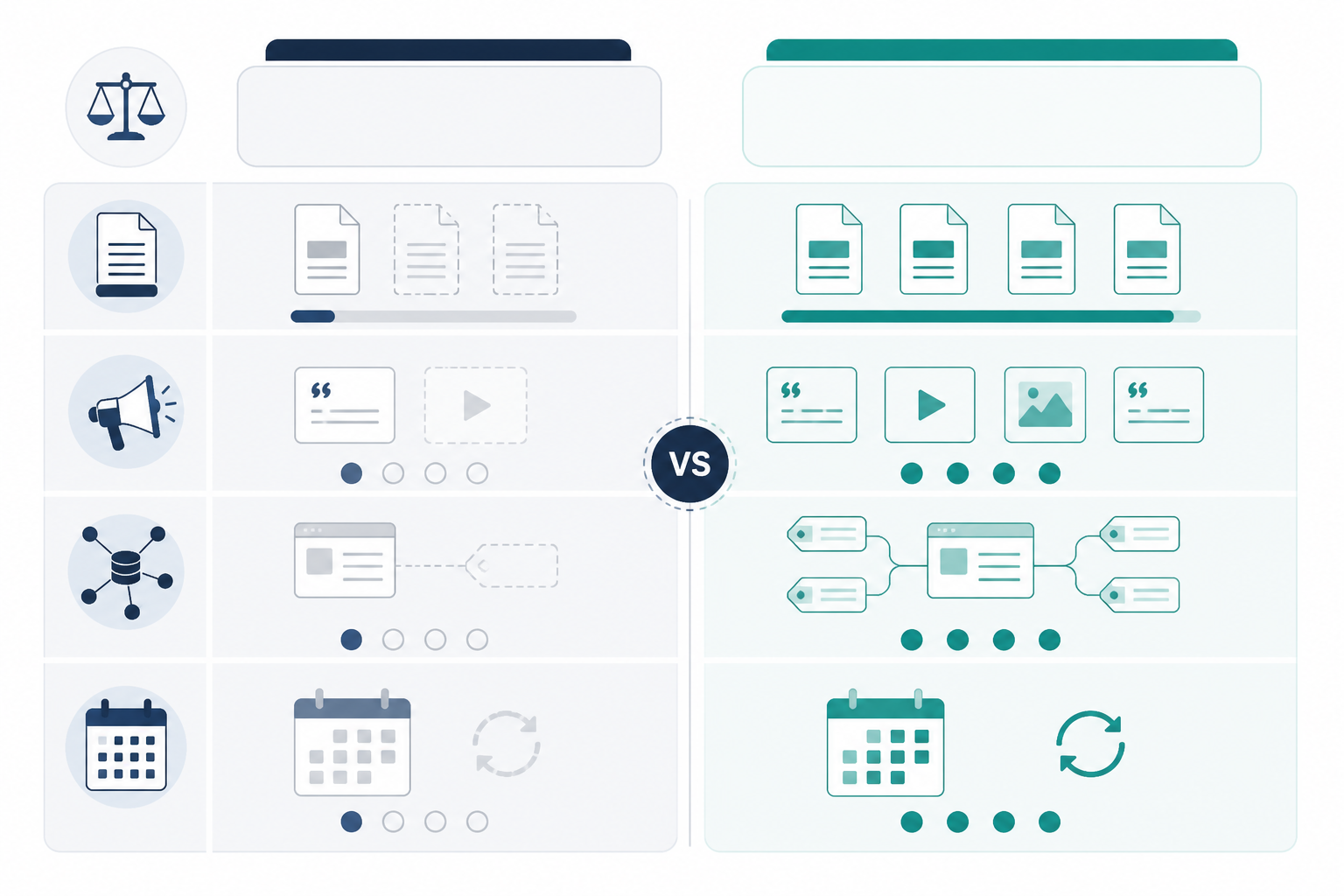
| Factor | Low-Citation Brand | High-Citation Brand |
|---|---|---|
| Content depth | Vague marketing copy, generic feature lists | Detailed comparison pages, explicit use-case breakdowns, transparent pricing |
| Third-party corroboration | Relies almost entirely on owned-site claims | Present in G2/Capterra reviews, independent roundups, niche blog coverage |
| Structured data | Minimal or missing schema | FAQ, product and organisation schema implemented and maintained |
| Domain authority | Generalist site touching many unrelated topics | Consistent topical coverage of a defined niche, such as “CRM for agencies” |
| Freshness | Published once, rarely revisited | Comparison and pricing pages updated on a regular cycle |
The freshness point deserves emphasis because it's the one teams most often neglect. Pricing, integrations, security certifications and feature sets change constantly in SaaS, and retrieval systems appear to favour recently updated content when synthesising answers. A comparison page that hasn't been touched in eighteen months isn't just stale—it risks actively feeding the model outdated or inaccurate information about your product, which can suppress recommendations or, worse, produce a citation that misrepresents your current offering.
Signals That Influence AI Trust in Your Brand
Beyond the structural factors above, there's a set of trust signals that consistently correlate with higher citation frequency and more favourable framing in the data we track:
- Fact consistency — When your pricing, feature descriptions and positioning match across every source the model can retrieve, citation confidence goes up. Contradictions between your site, your G2 listing and third-party coverage appear to reduce how confidently a model will cite you.
- Sentiment of third-party mentions — In our client analysis, consistently positive independent coverage correlates with higher recommendation frequency. Negative or mixed sentiment doesn't necessarily eliminate citations, but it often shifts the framing towards caveats rather than endorsement.
- Presence in trusted aggregators — Review platforms, industry directories and roundup articles function as high-authority corroboration hubs that retrieval systems appear to lean on heavily for comparison-style queries.
- AI legibility — This is a technical dimension many marketing teams overlook entirely. It's not enough to have good content; a crawler needs to be able to parse your site's semantic structure cleanly. This is why AI legibility audits—covering heading hierarchy, schema completeness, crawlability and rendering—matter as much as traditional backlink building. It's also precisely why we built a dedicated legibility audit into MentionOwl's platform: technical accessibility is a prerequisite, not a nice-to-have.
- Backlink and citation diversity — Being referenced by many independent domains signals broader market validation than a handful of high-authority links concentrated in one or two sources.
What You Can Control as a Brand: A Generative Engine Optimisation Checklist
Given everything above, here's the practical sequence I recommend to product marketing teams starting this work:
- Run an AI legibility audit covering schema markup, crawlability and semantic structure. This is the technical foundation everything else builds on—no amount of great content helps if a crawler can't parse it.
- Publish comparison and “best for X” content that mirrors the exact question phrasing customers use when prompting ChatGPT. Think in terms of prompts, not keywords.
- Actively pursue third-party citations. Reviews, roundups and community mentions carry disproportionate weight in retrieval scoring compared with owned-site claims alone.
- Monitor competitor share of voice weekly to identify which sources are driving their citation advantage, then target those same sources for your own coverage.
- Track your AI visibility score over time rather than relying on one-off manual prompts. ChatGPT's cited sources shift as the web index refreshes, so a single check gives you a snapshot, not a trend.
- Prioritise freshness. Revisit and update high-value comparison and pricing pages at least quarterly to stay competitive in retrieval ranking.
Measuring What Matters: AI Visibility Score and Share of Voice
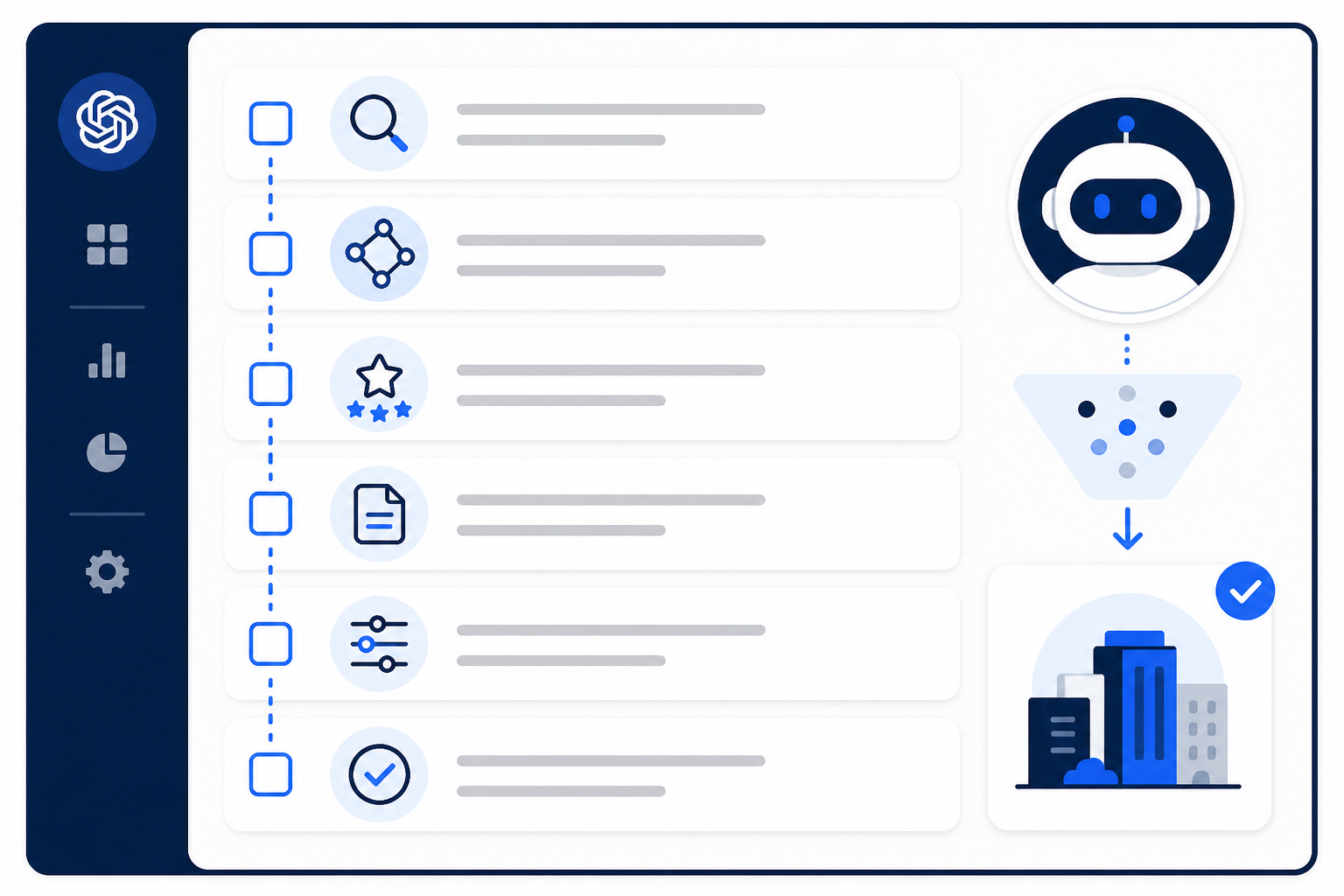
I want to be direct about something: there is no universal, OpenAI-sanctioned “AI visibility score”. It's a measurement framework the industry has built to make an otherwise invisible, probabilistic system trackable. At MentionOwl, we've built ours around four components that I think give the most honest picture of a brand's standing:
- Query coverage — how many relevant customer questions actually surface your brand at all, out of the full set of purchase-decision queries your buyers are realistically asking.
- Position-weighted citations — being mentioned first in a list carries measurably more value than being buried as the fifth alternative, so raw mention counts alone are misleading.
- Share of voice — your citation frequency relative to named competitors across the identical query set, which is the only fair way to benchmark competitive standing.
- Soft mentions — instances where your brand is referenced without a direct citation or link, which still shape how the model characterises the market even though they're easy to miss with manual spot-checks.
The reason we run this daily rather than weekly or monthly comes down to volatility. Our data shows ChatGPT's cited sources can shift meaningfully week to week as the underlying web index refreshes—a comparison article gets updated, a new review lands on G2, or a competitor publishes fresh pricing. A single manual prompt check, however carefully done, is really just one frame from a moving picture. That's the entire premise behind building continuous LLM monitoring rather than treating AI visibility as a quarterly audit item.
Frequently Asked Questions About ChatGPT Citations
What sources does ChatGPT pull from when recommending brands?
It draws from two layers: its static pre-training corpus, which includes a broad snapshot of web content up to a cutoff date, and a live retrieval layer that pulls from an indexed web corpus plus select licensed publisher content when a query requires current information. Brands cited across multiple independent sources in that retrieval layer tend to surface more consistently than those relying solely on owned-site content.
Can paid ads influence ChatGPT's recommendations?
No—there's no evidence, and no disclosed mechanism, by which ad spend directly buys placement in ChatGPT's answers. What ad spend can influence indirectly is traffic and brand searches, which occasionally correlate with increased third-party coverage. However, the actual citation logic runs on retrieval relevance and source authority, not media budget.
Why does my competitor get cited more often than my brand?
In nearly every case I've analysed, it comes down to corroboration density: the competitor appears across more independent sources—review sites, comparison blogs and community forums—that the model's retrieval layer treats as trustworthy. It's rarely about domain authority alone; it's about how many separate places on the web are saying the same thing about them.
How often does ChatGPT update the sources it relies on?
The live retrieval layer refreshes continuously because it's querying a web index in near real time, but the static training data only updates with major model releases, which happen on a much longer cycle. This is exactly why relying on a one-time manual check of ChatGPT's answers gives you a misleading picture—ongoing monitoring is needed to catch genuine shifts.
Does having a Wikipedia page or press coverage matter for AI citations?
Generally yes, because both can serve as high-corroboration sources that many retrieval systems weight heavily. That said, for most SaaS and DTC brands, consistent presence in review platforms and niche industry publications will move the needle faster than chasing a Wikipedia entry, which has strict notability requirements.
Related Articles

How to Track Competitor Mentions Across AI Answer Engines: A Share of Voice Guide
A repeatable process for tracking competitor share of voice across ChatGPT, Claude, Gemini, Copilot and Perplexity, with reporting guidance for UK mar

A Technical Guide to AI Legibility Audits for SaaS Sites
Learn how to run an AI legibility audit on your SaaS site. Fix SPA rendering, gated docs and structured data so AI crawlers can read your product and

Create content like this automatically
Scribe uses AI to generate high-quality blog posts that engage your audience and drive traffic.