Measuring Content Success for Agency Clients: Essential Metrics for 2026
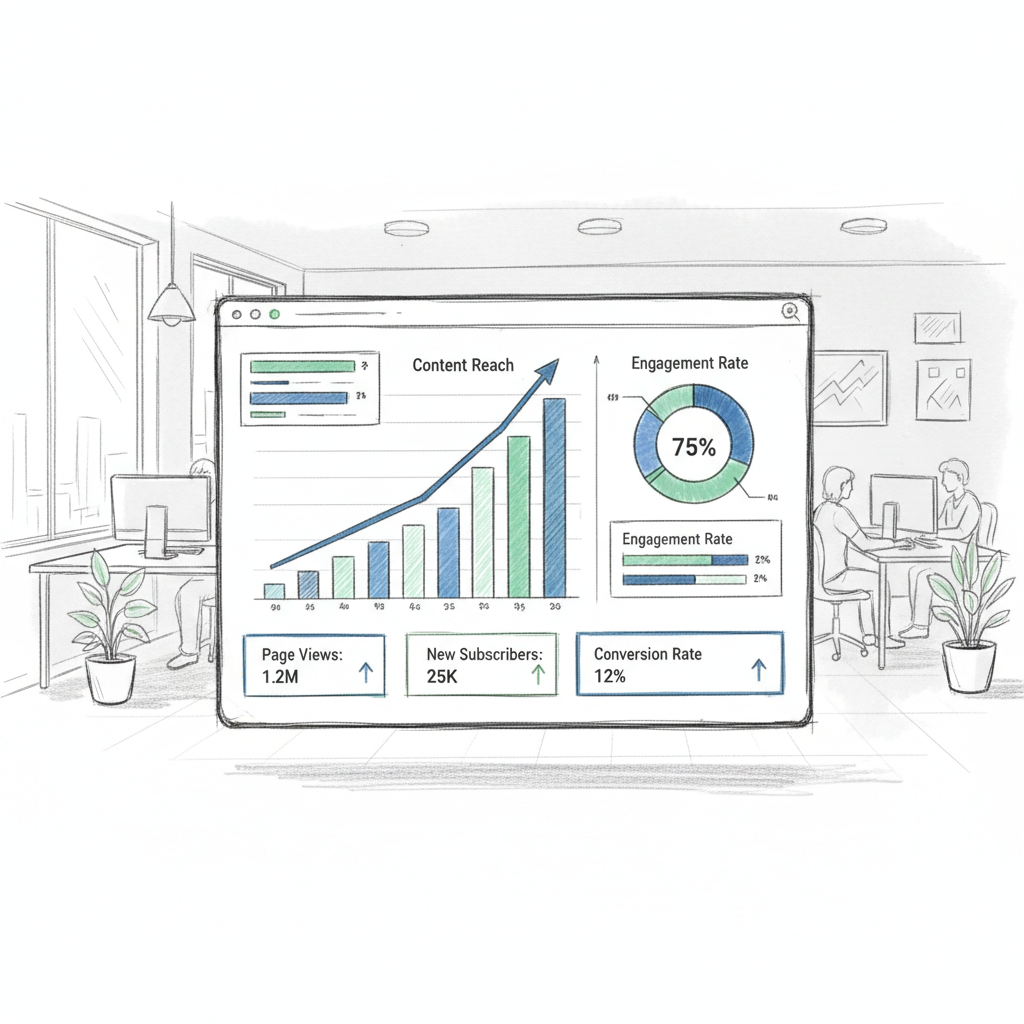
Measuring Content Success for Agency Clients: Essential Metrics for 2026
Why traditional content metrics fail agencies and clients
Most agencies are still reporting on pageviews and social shares while clients ask the hard question: "Is this actually working?" We've been stuck measuring the wrong things.
I've seen too many agencies lose clients because their monthly reports looked impressive but never connected to business results. A client doesn't care if your blog post got 10,000 views if it generated zero leads.
The problem with vanity metrics
Pageviews and clicks don't answer what clients really want to know. A recent Content Marketing Institute study found that 72% of marketing agencies can't demonstrate clear content marketing ROI. That's a problem.
Here's what we know from the data:
- Businesses that track advanced content metrics see 3-5x higher conversion rates
- Standard traffic metrics miss most content engagement signals
- Clients are getting smarter about what matters
What happens when reporting goes wrong
When we stick to surface-level metrics, three things happen:
- Clients start questioning their marketing spend
- The real impact of our work stays invisible
- We miss chances to double down on what's actually working
A better content analytics framework
I like to think about content metrics in three tiers, each building on the last.
Tier 1: Engagement depth metrics
These tell you if people actually care about your content:
- Time on page (aim for 2+ minutes on long-form pieces)
- Scroll depth percentage
- Return visitor rates
- Actual engagement actions (not just views)
Tier 2: Conversion pathway metrics
This is where content starts connecting to business outcomes:
- Content-assisted conversions
- Which pieces drive the most leads
- Email capture rates by content type
- CTA performance
- Micro-conversions that signal buying intent
Tier 3: Business impact metrics
The numbers that make clients happy:
- Customer lifetime value from content-sourced leads
- How content engagement affects retention
- Deal velocity for prospects who engage with content
- Customer acquisition costs compared across channels
- Revenue you can trace back to specific content
Revenue attribution: the game changer
Here's where most agencies get stuck. You need to connect content to actual revenue, not just assume it's helping.
How to track what really matters
- Set up multi-touch attribution (not just last-click)
- Use UTM parameters religiously
- Connect your CRM to see the full customer journey
HubSpot's internal data shows that proper content attribution leads to 20% better budget allocation. That's the difference between guessing and knowing what works.
The tools that actually help
Google Analytics 4 is your starting point, but you'll need more. We use a combination of CRM integration, heat mapping tools, and custom tracking to get the full picture.
Scaling measurement across client portfolios
Once you figure this out for one client, you need systems to do it for everyone.
Our approach
- Build standardized reporting templates (but customize the insights)
- Automate as much data collection as possible
- Create industry-specific benchmarks
- Use past performance to predict future results
- Make dashboards that clients actually understand
The key is finding the balance between consistency and customization. Every client needs the same rigorous tracking, but the story you tell depends on their industry and goals.
What this means for your agency
Stop defending your content strategy with traffic numbers. Start using data to make it better.
The agencies winning long-term client relationships aren't just reporting metrics—they're using those metrics to continuously improve results. Every month should include at least one insight about what to do differently next month.
Common questions we get
Q: How do you measure content success for long sales cycles?
Focus on leading indicators like engagement depth, email captures, and how well people move through your nurture sequences. You're looking for early signals of buying intent.
Q: What's the minimum tracking setup needed?
Google Analytics 4 with proper goal tracking, UTM parameters on everything, and some way to connect marketing actions to sales outcomes. Start simple, then layer on complexity.
Q: How often should agencies report content metrics?
We do monthly reports with quarterly deep dives. Monthly keeps everyone aligned, quarterly lets you spot longer-term trends and make strategic adjustments.
The bottom line: when you can show clients how content directly impacts their business, you stop being a vendor and start being a partner. That's where the real agency growth happens.
Target Keywords: content analytics, measure content success
Create content like this automatically
Scribe uses AI to generate high-quality blog posts that engage your audience and drive traffic.