Preparing Your Store for Holiday AI Shopping Searches: A UK E-Commerce Visibility Audit
16 min read
Loading...

A practical, evidence-based guide to auditing and improving how your products appear in ChatGPT, Gemini, Perplexity and other AI assistants before Black Friday and Christmas trading peaks.
The short version: run a structured AI visibility audit now, fix crawler access and product-data accuracy first because those move fastest, then spend any remaining weeks on comparison content. Aim to start 6–8 weeks before peak trading. Everything below explains why and gives you a repeatable protocol to do it.
UK shoppers are increasingly asking AI assistants for gift ideas and product recommendations before they open Google. For UK e-commerce brands, holiday AI shopping is becoming an e-commerce AI visibility problem: if you don't appear in an AI-generated shortlist, you lose a slice of consideration-stage attention during your highest-revenue weeks. Not all of it — shoppers still use Google, marketplaces and retailer sites directly — but enough that ignoring the channel is a genuine commercial risk given how few brands most AI answers actually name.
One thing worth getting straight before anything else: the fixes that move your AI visibility rely on different underlying systems, and they don't move at the same speed. Product feeds refresh on their own schedule. Search and AI crawlers revisit and re-index your site periodically — sometimes within days, sometimes longer. Some AI platforms browse the live web at query time; others lean more heavily on a cached index. This varies by platform and isn't something you can fully control. Base-model retraining is separate again — slow, infrequent and not something a schema fix will influence on any holiday timescale. I'll keep these mechanisms distinct throughout, because conflating them is the most common mistake I see in AI SEO commentary, and it leads directly to unrealistic timelines.
This is a parallel discipline to traditional SEO — generative engine optimisation, AI SEO or simply e-commerce AI visibility — with its own rules and failure modes. Here's what the evidence shows, how to audit your standing, what you can realistically fix before peak trading and how to keep monitoring once the rush begins.
Capgemini Research Institute's 2024 study, Generative AI and the Evolving Consumer, found that 58% of consumers said they now use generative AI for product or service recommendations instead of traditional search engines, and 70% expect generative AI to change how they discover and interact with brands. That's a global consumer sample, surveyed across multiple markets — not UK-specific data, and I want to be clear about that rather than imply otherwise.
The holiday-specific evidence is similarly striking and similarly US-centric. Adobe Analytics reported that generative-AI-driven traffic to US retail websites rose by roughly 1,300% during the 2024 holiday season compared with 2023, and that this traffic converted at a higher rate than traffic from other referral channels over the same period. That looks like consideration- and purchase-stage behaviour, not curiosity clicks — but it's US retail data, measured through Adobe's own analytics stack.
What we know — and don't know — about the UK. I haven't found UK-specific, methodologically transparent data isolating AI-assistant-driven holiday shopping traffic with the rigour of Capgemini's global study or Adobe's US figures. IMRG and Barclaycard track UK online holiday spending closely but, as of late 2024, hadn't published a breakout for generative-AI referral traffic specifically. That absence doesn't mean the UK trend isn't happening — ChatGPT, Gemini and Perplexity have materially overlapping UK and US user bases, and UK generative AI adoption has been rising in broader usage surveys — but treat the global and US figures as directional for British retailers, not conclusive.
What makes holiday shopping well-suited to conversational AI is the query itself. A shopper types “best waterproof hiking boots under £100 for a Scottish winter” or “a gift for a six-year-old under £30 that can arrive in Manchester before Christmas” — budget, recipient, location and deadline bundled into one request. Traditional search has gotten better at handling this kind of compound intent, so it isn't that Google “can't” parse it. What's different is the synthesis step: an AI assistant collapses the filtering the shopper would otherwise do and hands back a short, opinionated answer citing three to five brands, sometimes fewer.
That compression is the structural shift that matters. Ranking eighth on page one of Google still earns clicks. Being the sixth-most-relevant brand in an AI answer that only names five earns nothing from that query. The competitive question is shifting from “are we ranking on page one” towards “are we one of the names the AI says out loud” — a distinction that's close to binary within a single conversation, even though it isn't binary across a customer's whole shopping journey. AI answers also draw on sources well beyond your own site — retailer feeds, reviews and comparison content — so consistency across that wider surface area matters as much as polish on your own product pages.
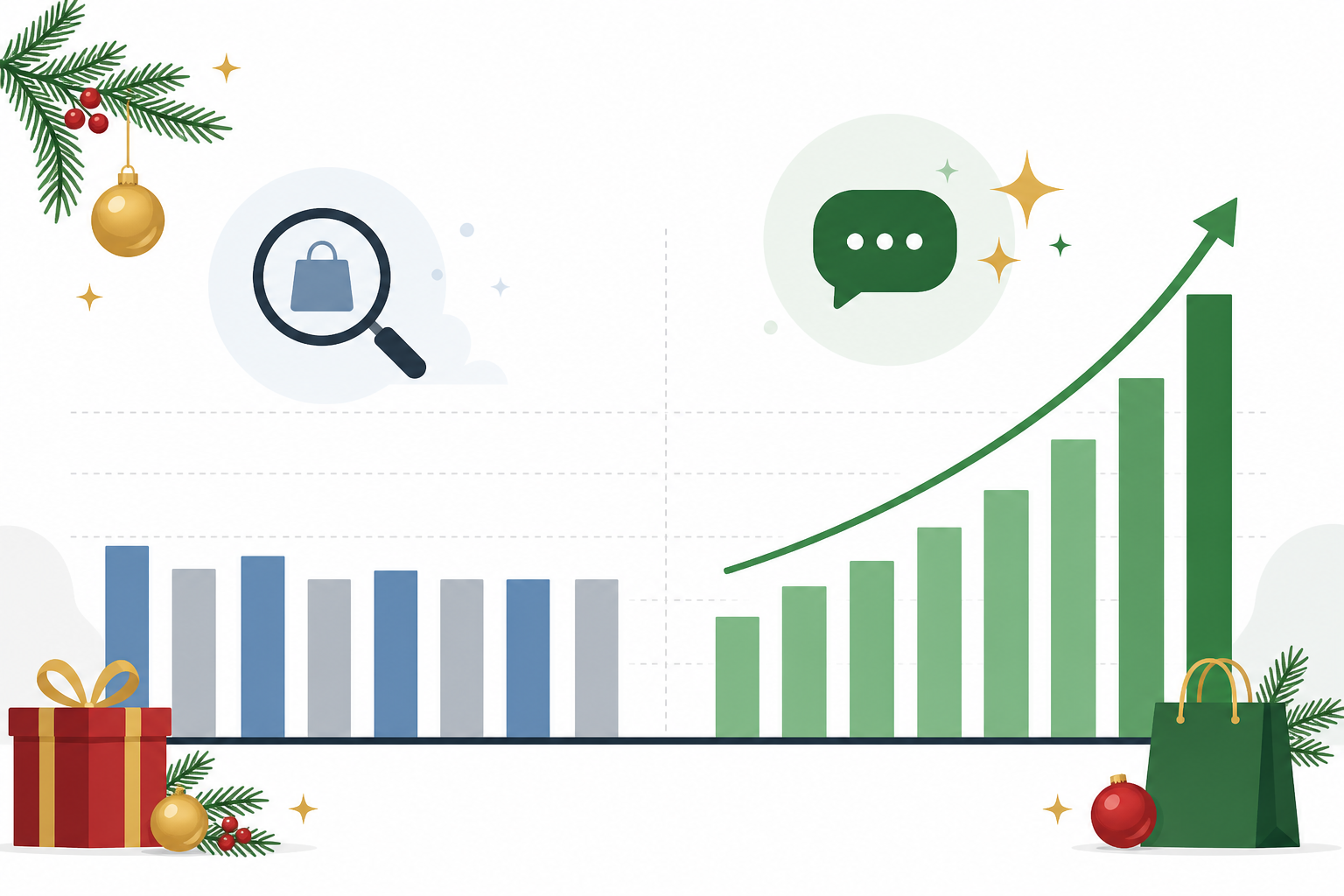
Caption: Illustrative comparison of query styles, not measured UK data — see the evidence caveats above.
Before fixing anything, build an honest, repeatable baseline. Skip straight to fixes and you won't know which changes actually worked.
Glossary:
Test protocol (record this every time): platform and model version where visible, logged-in/out status, browsing or “search grounding” mode if the platform exposes one, device, UK location setting where available, exact query text, date and the full answer text or a screenshot. ChatGPT, Claude, Gemini, Copilot and Perplexity don't have identical browsing or shopping capabilities, so treat cross-platform comparisons as directional rather than a strict ranking, and treat any single run as one data point rather than a verdict — answers vary run to run even for identical prompts.
Steps:
If the must-have items fail, content strategy won't fix your citation rate because the model can't reliably read what you've published.
Illustrative example (hypothetical, for method demonstration only): Imagine running “best waterproof hiking boots under £100 UK” and finding three retailers cited with links, one soft-mentioned and a fifth brand — despite carrying the right product — absent entirely. A legibility check might show a missing stock-status field in schema and a duplicated manufacturer description. Neither issue would be exotic, and both are the kind of thing this audit is built to catch quickly — but I want to flag this as an illustration of the method, not a documented case, since a single anecdote can't establish causation on its own.
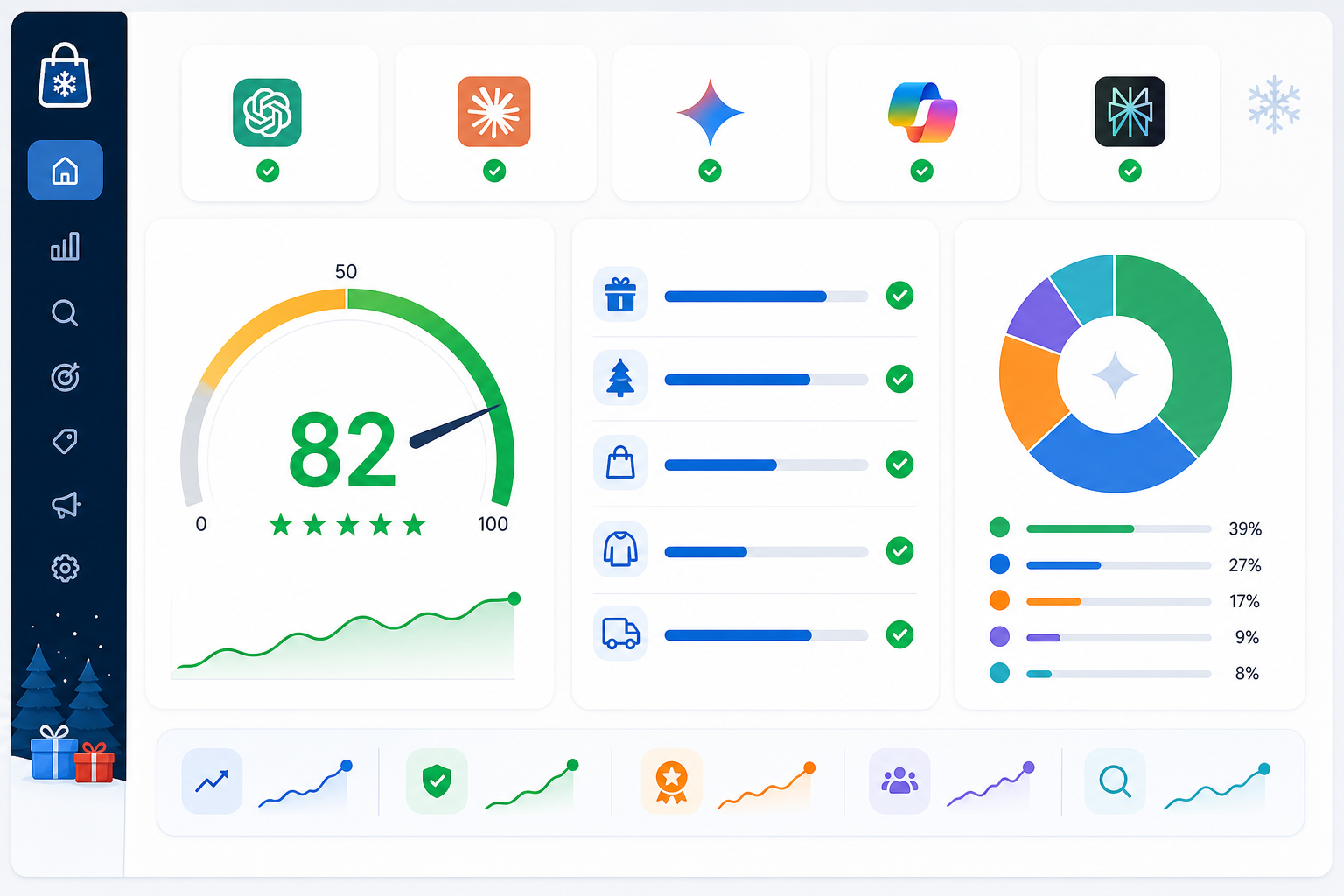
Caption: Mockup for illustration — build your own version from the protocol above, reported by platform and query type rather than a single blended score.
Once you know where the gaps are, triage: what can realistically move before peak trading, and what won't finish in time.
| Fix | Typical Owner | Effort | Dependency | Expected Signal | Operational Estimate (Time-to-Impact) |
|---|---|---|---|---|---|
| Structured data / schema markup (Product, Review, FAQ) | Engineering / Dev | Low–Medium | Recrawl by search & AI crawlers | Improves machine readability and citation eligibility; doesn't guarantee citation | Days–1 week after recrawl, based on typical recrawl cycles |
| Surface shipping cutoffs, stock, returns in visible/structured text | Content / Merchandising | Low | None | Fewer “absent due to missing data” gaps | Days–1 week |
| Fix legibility barriers (crawler access, rendering, duplicate content) | Engineering / SEO | Medium | Recrawl | Pages become parseable at all | Days–2 weeks |
| Publish conversational comparison content (“best X for Y UK”) | Content / SEO | Medium–High | Indexing + AI retrieval refresh | New citation opportunities on long-tail queries | 2–6 weeks, variable and less predictable |
| Fix product feed data consistency (Merchant Center etc.) | Merchandising / Ops | Medium | Feed refresh schedule | Fewer mismatches between site and feed data | Days–1 week |
These are operational estimates based on typical recrawl and feed-refresh cycles, not guarantees — and it's worth separating two different outcomes clearly. Technical fixes generally improve eligibility: the model can now read and trust your data. Whether that translates into an actual citation still depends on retrieval and ranking logic that AI platforms don't publish and that none of us fully control. Structured markup raises the ceiling on legibility; it isn't a lever with a guaranteed payoff.
UK-specific details matter throughout: VAT-inclusive pricing, UK delivery coverage and cutoff dates, and distance-selling compliance language all need to be accurate and current, since AI answers increasingly need to reflect local retail norms to be useful to a UK shopper.
If you're working against a hard deadline, prioritise the technical and data layer first — it depends mainly on recrawl and feed-refresh cycles rather than new content being indexed and then picked up in retrieval. Content-based fixes are valuable but slower and less predictable; save them for the weeks after your technical layer is clean, not instead of it.
An audit isn't a one-off — it needs to become a monitoring habit, because holiday query patterns and competitor positioning shift faster than most brands can track manually.
Share of voice means the percentage of your core query set where you appear — cited or soft-mentioned — relative to all tracked competitors' combined appearances across the same queries. Sentiment is the three-point scale from the audit — favourable, neutral or undistinguished — averaged across your appearances.
| What to Monitor | Cadence | Why It Matters |
|---|---|---|
| Competitor citation appearances | Daily during final pre-Christmas fortnight | Rivals can gain ground quickly if they fix legibility issues or publish new comparison content mid-season |
| Share of voice across core queries | Weekly (daily in peak weeks) | Holiday query patterns shift fast enough that monthly tracking misses the window to react |
| Sentiment shifts — yours and competitors' | Weekly | Negative sentiment can be amplified in AI answers before you'd notice it elsewhere |
| Aggregated pattern review | Weekly digest | Prevents having to manually re-run dozens of queries daily across five platforms |
Daily tracking across the full query set isn't realistic for most small teams, and I don't think it should be the bar you hold yourselves to. A minimum viable version: pick your five highest-commercial-value queries — the ones closest to a purchase decision — and check those daily in the final pre-Christmas fortnight. Run the full 15–20 query set weekly. That's enough to catch a competitor displacing you on your most valuable terms without requiring a full-time analyst over the holidays.
A weekly digest — visibility index movement, citations gained or lost and sentiment changes — lets a small team spot patterns without burning hours on manual query testing during the busiest weeks of the year.
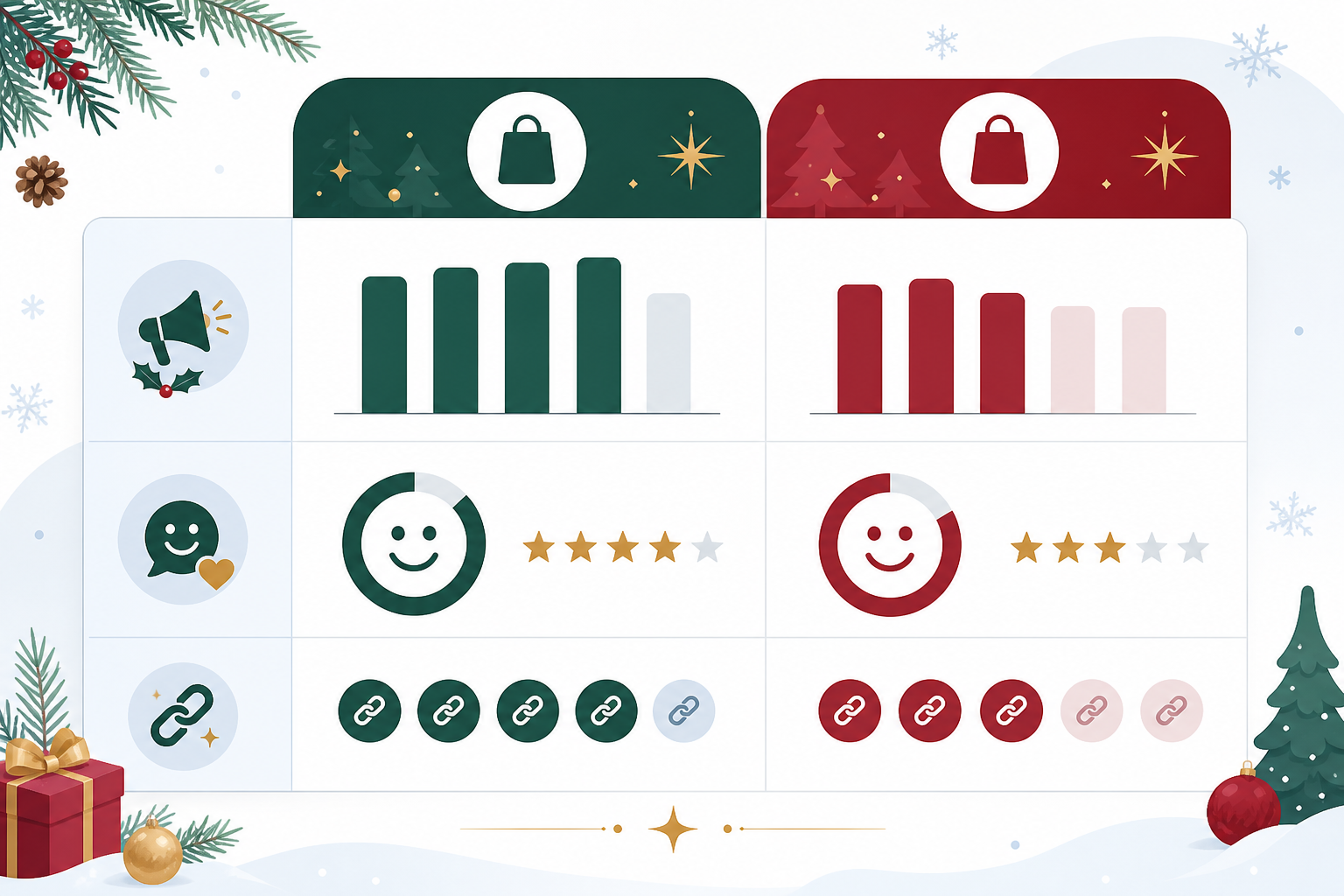
Caption: Template structure for your weekly competitor digest — populate with your own audit data.
Once peak has passed, resist moving straight to next quarter's priorities. This window is where you generate the evidence that makes next year's audit faster and more precise.
| Signal | What It Tells You | Causal Confidence |
|---|---|---|
| Direct referral traffic (where AI platforms pass a UTM or referrer) | Confirmed AI-driven sessions | High, but only covers a fraction of AI-influenced traffic |
| Branded search volume upticks | Possible AI-driven discovery converting to a direct search | Medium — correlates but doesn't prove the AI answer caused it |
| Direct-traffic changes correlating with citation gains | Possible zero-click discovery followed by a direct visit | Low–Medium — directional only |
| Server-side analytics vs. client-side tags | More complete picture where cookie/ad-blocking suppresses client-side tracking | Improves measurement accuracy, doesn't add causal proof |
Document these limitations honestly — full attribution for AI-referred discovery isn't solved yet, by anyone.
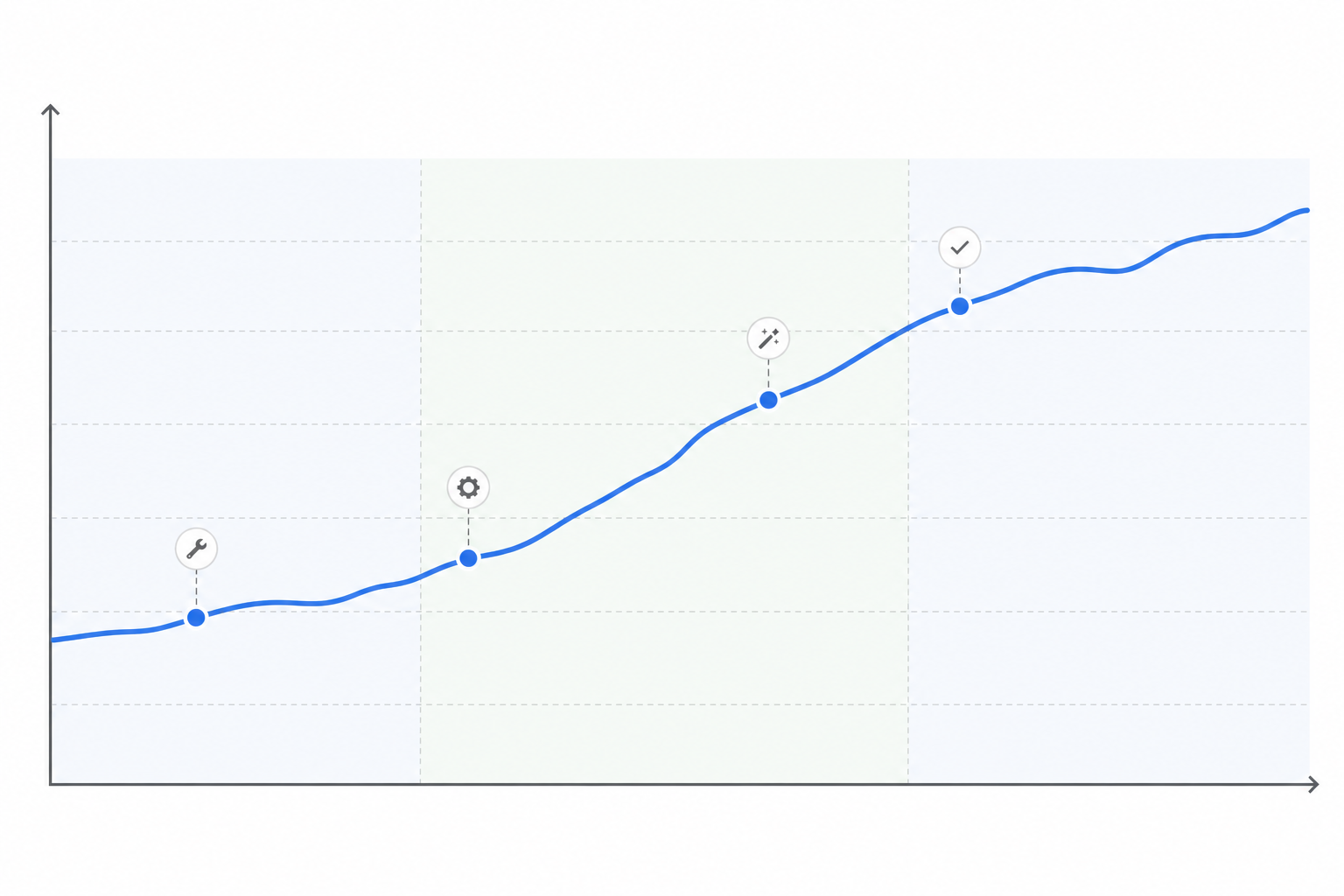
Caption: Template for tracking your own visibility index over time — plot your actual audit results, not a projected trend.
If you're starting this for the first time this season, begin with the legibility checklist — it's the fastest, most controllable layer, and where I'd spend the first week of any audit before touching content strategy.
Probably, directionally — but the strongest available evidence is global (Capgemini) or US-specific (Adobe), not UK-specific. Given the overlapping user bases between UK and US/global AI platform usage, a similar trend in the UK is a reasonable inference, but treat it as an inference rather than a confirmed statistic until UK-specific research catches up.
Start 6–8 weeks before peak trading. Week one: run the audit protocol and fix legibility barriers and schema, since these tend to show measurable change within days to two weeks of recrawl. Weeks two through six: content-based fixes — comparison guides and clearer FAQs — since these depend on slower, less predictable indexing and retrieval cycles. Final two weeks: monitoring and rapid response, not new build work.
Focus on the legibility and data layer over new content volume: validate schema markup, put shipping cutoffs and stock availability into visible machine-readable text rather than PDFs, and confirm AI crawlers aren't blocked. These are the changes most likely to improve whether AI assistants can read and trust your data — though whether that produces an actual citation still depends on platform-specific retrieval behaviour outside your direct control.
Track share of voice and citation frequency weekly, and daily for your five highest-value queries in the final pre-Christmas fortnight, using the same fixed query set from your initial audit. A single pre-season snapshot will miss shifts caused by competitors publishing new content or fixing their own technical issues mid-season.