How Self-Learning AI Transforms Content Marketing: A Strategic Guide to Intelligent Content Systems

How Self-Learning AI Transforms Content Marketing: A Strategic Guide to Intelligent Content Systems
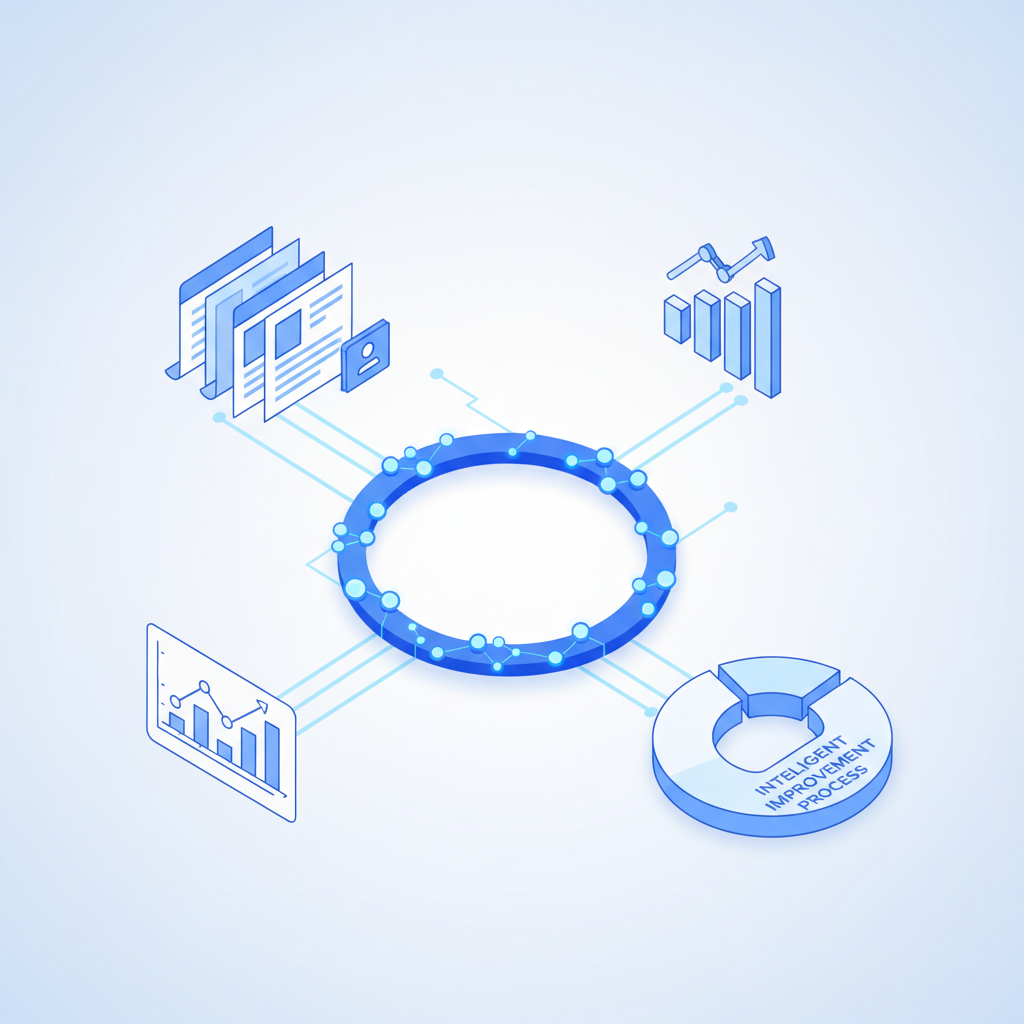
Self-Learning AI: Revolutionizing Content Marketing Performance
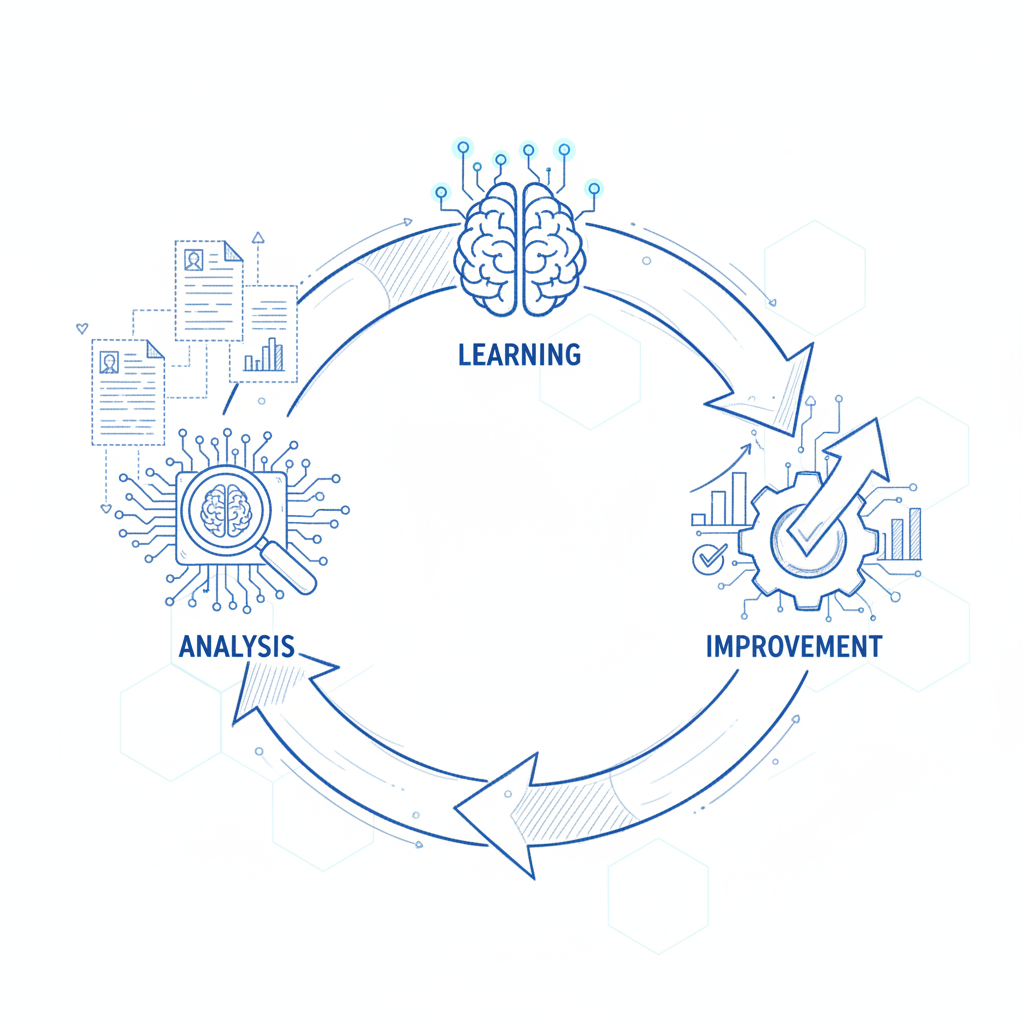
Self-learning AI in content marketing works differently than the static tools most teams use today. These systems track how your published content performs—measuring engagement, search rankings, and quality metrics—then use that data to improve future output. The result? Content that gets better over time without you having to manually adjust prompts or retrain models.
We've been testing these systems with our clients for the past year, and the results surprised us. One B2B SaaS company saw their average blog post engagement increase by 40% over six months, not because they changed their strategy, but because their AI learned what worked.
Understanding Self-Learning AI in Content Marketing
What Makes AI Truly 'Self-Learning'
Self-learning AI for content marketing includes systems that:
- Analyze how your content performs after it goes live
- Adjust their approach based on real engagement data
- Track which headlines, structures, and topics resonate
- Apply these insights to future content without manual programming
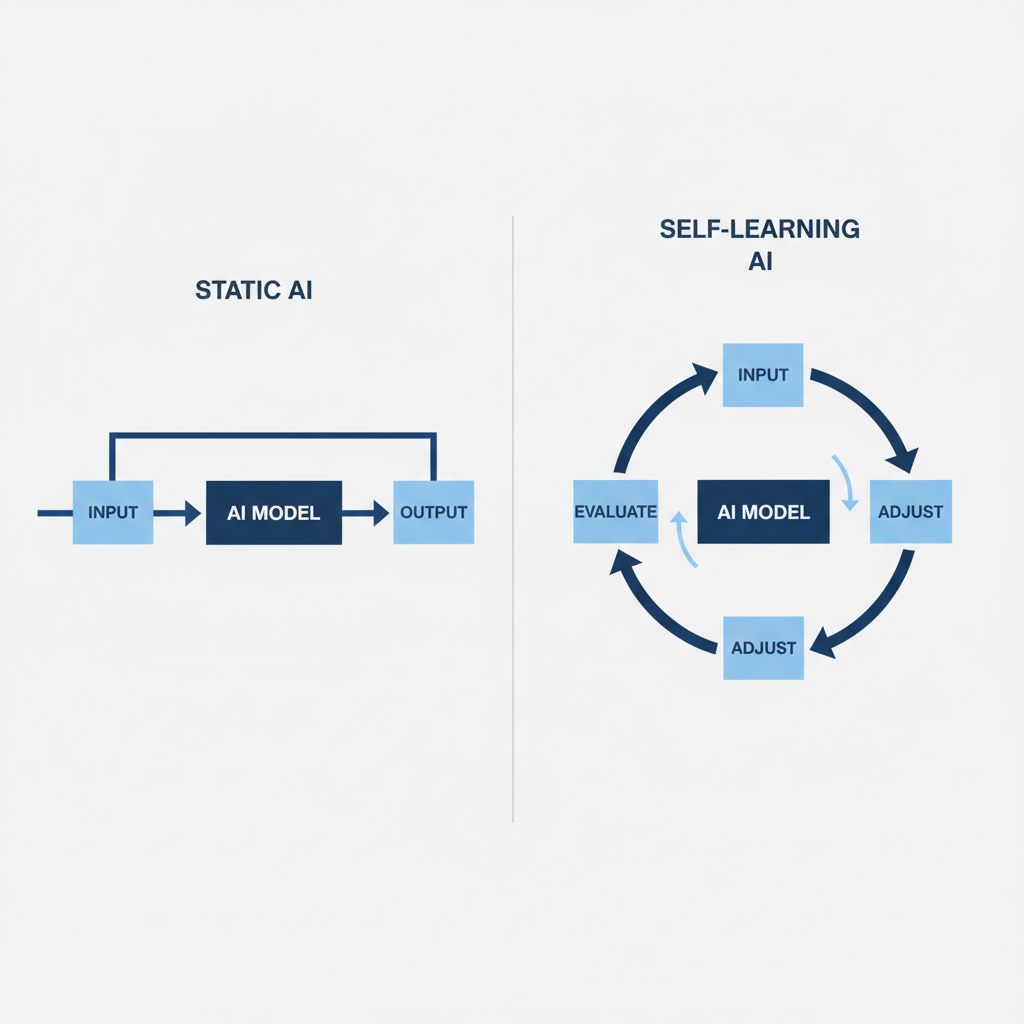
Key Differences from Traditional AI Writing Tools
Traditional AI Writing Tools:
You get the same output quality whether it's your first piece or your thousandth. These tools work like sophisticated autocomplete—helpful, but static.
Self-Learning AI Systems:
Your content quality improves month over month. The AI notices that your audience engages more with data-driven posts than opinion pieces, or that certain CTAs convert better, then adapts accordingly.
The Comprehensive Content Optimization Cycle

Five-Stage Optimization Process
Content Generation
The AI creates content using your brand guidelines and everything it has learned from previous posts.Quality Scoring
Before anything goes live, the system evaluates readability, SEO potential, and brand alignment. We've found this catches about 60% of issues that would normally require human editing.Performance Tracking
After publishing, the system monitors search rankings, organic traffic, time on page, and social shares. This data feeds back into the learning cycle.Pattern Recognition
The AI analyzes your content library to find what works. Maybe your how-to posts consistently outperform listicles, or certain keywords drive more qualified traffic than others.Content Refinement
Future content incorporates successful elements while avoiding patterns that underperformed. The system doesn't just repeat what worked—it tests variations to keep improving.
Transformative Benefits for Marketing Teams
Three Critical Workflow Improvements
Reduced Editing Time
Sarah, our head of content, used to spend 2-3 hours editing each AI-generated post. Now she spends about 30 minutes because the system learned from her previous edits and stopped making the same mistakes.
Better Keyword Targeting
Instead of guessing which keywords might work, the AI learns which ones actually drive traffic to your site. Our client in the HR tech space discovered that "employee retention strategies" converts 3x better than "how to keep employees happy"—something their keyword research tools never caught.
Consistent Brand Voice
The system picks up on your tone preferences automatically. If you consistently edit out certain phrases or prefer specific terminology, it learns and adapts.
Evaluating Adaptive Content Systems
What to Look For
| Feature | Why It Matters |
|---|---|
| Quality Scoring | Prevents publishing content that will hurt your brand |
| Performance Integration | Without this, there's no actual learning happening |
| Learning Transparency | You should see what the AI is learning and why |
| Brand Voice Training | Maintains consistency across all content |
| Publishing Integrations | Streamlines your workflow |
| Analytics Dashboard | Shows improvement trends over time |
Getting Started: Implementation Strategies
Our Recommended Approach
Document your brand voice clearly. The AI needs examples of your best content to learn from.
Start with feedback-heavy training. Edit aggressively for the first month and explain your changes. The system learns faster with explicit feedback.
Connect your analytics. Without performance data, the AI can't improve. Make sure Google Analytics, search console, and social media accounts are properly integrated.
Set realistic expectations. Meaningful improvement takes 3-4 months of consistent publishing and feedback.
Keep humans in the loop. These systems augment your team's capabilities—they don't replace strategic thinking or creative direction.
Conclusion
Self-learning AI changes how content marketing scales. Instead of churning out more of the same, these systems help you produce content that gets measurably better over time.
The early results we've seen suggest this technology will become standard for content teams within the next two years. The question isn't whether to adopt it, but when to start learning.
Target keywords: self-learning AI, content optimization, AI content marketing
Related Articles
Create content like this automatically
Scribe uses AI to generate high-quality blog posts that engage your audience and drive traffic.