How to Optimize AI-Generated Blog Posts for SEO That Actually Rank in 2025
14 min read
Loading...

AI-generated content can absolutely rank well in search engines when you combine smart optimization with human oversight. The key is treating AI as your writing assistant rather than a replacement—adding unique insights, optimizing for search intent, and ensuring every piece delivers genuine value to readers. We've seen businesses achieve remarkable results, including 340% increases in organic traffic, by following a systematic approach to AI-generated content SEO.
If you've been hesitant about using AI content generation for your business blog, I get it. There's been so much conflicting information about whether search engines will penalize you, how to maintain quality, and whether it's worth the investment. The truth is that when done right, blog automation can transform your content marketing strategy without sacrificing the rankings you've worked hard to build.
Let me walk you through everything we've learned about making SEO for AI content work in 2025—from the foundational principles to the specific optimizations that move the needle.
Let's address the elephant in the room first. Google's official stance is clear: AI-generated content is not against their guidelines if it provides value to users and meets quality standards. This isn't speculation—it comes directly from Google Search Central.
The search giant prioritizes content quality, originality, and user experience over the method of content creation. In other words, they don't care if a human typed every word or if you used an AI writing assistant. They care about whether your content actually helps people.
When Google's algorithms assess your content, they're looking at factors that apply equally to human-written and AI-generated pieces:
The helpful content update specifically targets thin, unhelpful content created primarily for search engines rather than people. This applies whether you wrote it yourself at 2 AM or used the most sophisticated blog post generator on the market.
Consider these statistics about the current state of SEO for AI content:
Major publications like The Washington Post use AI systems for data-driven reporting, and companies like HubSpot use AI to generate initial content drafts that human writers then refine. These aren't fringe experiments—they're mainstream content strategies that work.
The difference between AI-generated content SEO that ranks and content that fails comes down to effort after generation:
Think of AI as your research assistant and first-draft writer, not your finished product.
Now let's get into the specific optimizations that make AI-generated content competitive in search results. These seven steps form the core of our approach to AI content generation that actually drives organic traffic.

This is the single most important optimization you can make. AI cannot generate original research, proprietary data, or genuine expert insights. When you add these elements, you create content that's impossible for competitors to replicate.
Ways to add original value:
Every search query has an intent behind it, and your content format needs to match. A query like "how to optimize AI content" requires step-by-step instructions, while "best AI content tools" expects a comparison list.
Before publishing, ask yourself:
Links signal authority and help search engines understand your content's context. AI-generated content often lacks strategic linking, so this requires manual attention.
Aim for:
Your meta elements are your content's first impression in search results. AI can generate these, but they often need refinement to maximize click-through rates.
Best practices:
Well-structured content is easier for both users and search engines to understand. Use heading tags to create a logical outline:
Generic stock photos don't help your SEO. Custom visuals increase engagement, time on page, and shareability—all positive ranking signals.
Visual elements to consider:
At Scribe, we generate AI images and diagrams as part of our content creation process because we know visuals make a measurable difference in performance.
Schema markup helps search engines understand your content's structure and can earn you featured snippet positions. For blog posts, consider:
Even the best AI content generation needs human enhancement to truly shine. Here's what you should add after your initial draft:
Personal anecdotes and real-world examples: Share stories from your business that illustrate key points. These are unique to you and build authentic connection with readers.
Industry-specific insights only an expert would know: Include the nuances, exceptions, and contextual information that comes from years of experience in your field.
Updated statistics and recent developments: AI training data has cutoff dates. Verify all statistics are current and add recent news or developments in your industry.
Unique angles or contrarian viewpoints: Don't just agree with conventional wisdom. Add your perspective on where the industry is heading or what others get wrong.
Customer stories and testimonials: Real results from real customers build credibility that AI simply cannot manufacture.
Local or niche-specific information: If you serve a specific geographic area or industry niche, add the localized details that make your content more relevant to your target audience.
This human enhancement layer is what transforms competent AI output into content that truly resonates and ranks.
I've seen countless businesses make these errors with their AI-generated content. Avoid these pitfalls:
Publishing without fact-checking or editing: AI can hallucinate facts and statistics. Every claim needs verification before publishing. This single mistake has tanked more AI content strategies than any other.
Ignoring keyword research and search intent: Generating content without understanding what people actually search for is like opening a store without knowing what customers want to buy.
Creating thin content that lacks depth or original value: Short, superficial content that just restates obvious information won't compete with comprehensive resources already ranking.
Over-optimizing with keyword stuffing: Cramming keywords into every paragraph triggers spam filters and creates a terrible reading experience. Natural integration is essential.
Neglecting E-E-A-T signals: Content without author attribution, expertise demonstration, or trust signals struggles to rank for competitive queries.
Failing to update and refresh content regularly: SEO optimization isn't a one-time task. Top-performing content gets regular updates with fresh information and improved optimization.
Using generic stock images instead of custom visuals: Those overused business people shaking hands don't help your SEO. Custom images aligned with your content perform significantly better.
Use this checklist for every piece of AI-generated content before it goes live. We've found that systematically working through these items dramatically improves ranking performance.
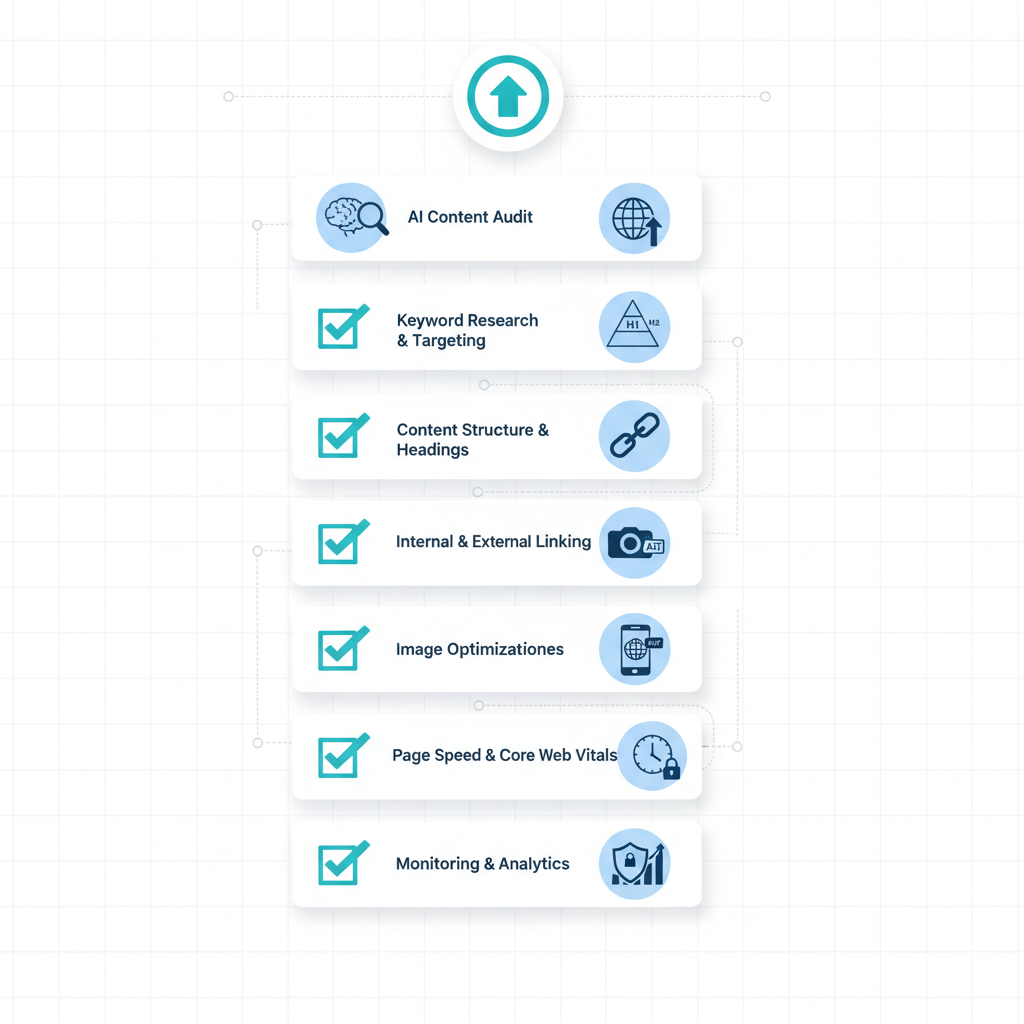
Verify all facts, statistics, and claims for accuracy: Cross-reference every data point with authoritative sources. One inaccurate statistic can undermine your entire piece.
Ensure target keyword appears in title, first paragraph, and headers: Natural placement in these strategic locations signals relevance without over-optimization.
Check content matches the search intent for your target query: Review what's currently ranking and ensure your content format and depth align with user expectations.
Add 3-5 internal links to relevant pages on your site: Connect your new content to existing resources, creating a web of related information.
Include 2-3 external links to authoritative sources: Linking out to respected resources shows you've done your research and adds credibility.
Optimize images with descriptive alt text and compressed file sizes: Every image needs alt text that describes its content, and file sizes should be compressed for fast loading.
Review readability and break up long paragraphs: Scan through and ensure no paragraph exceeds 4-5 sentences. Add subheadings, bullets, and white space.
Add a compelling meta description under 160 characters: Write a summary that entices clicks while accurately representing your content.
Ensure mobile-friendly formatting with scannable sections: Preview on mobile devices. Most of your traffic will come from phones, so the experience must be excellent.
The real power of AI content generation isn't just creating one great article—it's building a sustainable content scaling operation that grows your organic traffic month after month.
Blog automation can multiply your content output dramatically. Where you might have published one or two posts per month before, you can now produce quality content consistently at four, eight, or even higher volumes. The key is maintaining quality standards at scale.
This is where quality scoring becomes invaluable. Not every AI-generated piece needs the same level of human intervention. A robust scoring system identifies which pieces need extensive editing and which are closer to publish-ready, helping you allocate your time efficiently.
The most advanced approaches involve self-improving AI that learns from performance metrics. When we analyze which content performs well and which underperforms, we can identify patterns—structural elements, topic angles, formatting choices—that correlate with success. This data-driven optimization means your AI writing assistant gets better over time.
Balancing quantity with quality requires discipline. It's tempting to publish everything your AI generates, but flooding your site with mediocre content damages your domain authority. Focus on maintaining a consistent publishing schedule with pieces that meet your quality threshold.
Integrating automated publishing with your existing workflow makes sustainability possible. Direct integration with platforms like Shopify, WordPress, or Webflow eliminates the friction of manual uploading and formatting, letting you focus on strategic optimization rather than administrative tasks.
You can't improve what you don't measure. Track these metrics to understand how your AI-generated content performs:
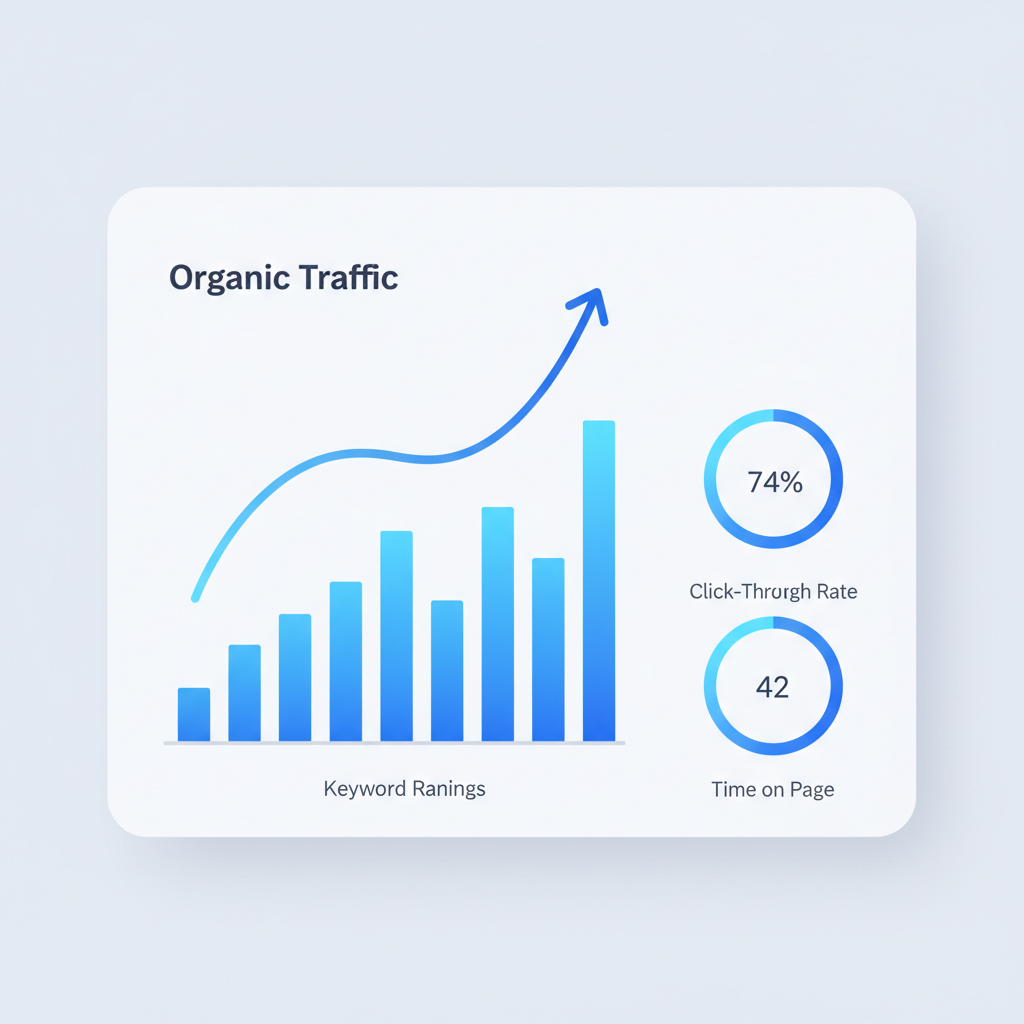
Organic traffic growth and keyword ranking positions: The ultimate measure of SEO success. Track which AI-generated posts drive the most search traffic and which keywords they rank for.
Time on page and bounce rate indicators: These engagement metrics reveal whether visitors find your content valuable. High time on page and low bounce rates signal quality content that satisfies user intent.
Conversion rates from AI-generated content: Traffic means nothing if it doesn't convert. Track how AI content performs for newsletter signups, lead generation, or sales compared to other content.
Backlink acquisition and social shares: Quality content naturally attracts backlinks and shares. Monitor which AI pieces earn external validation.
Content quality scores and readability metrics: Use tools to assess readability, grammar, and optimization scores. These correlate with user experience and rankings.
Month-over-month performance trends: Look for patterns over time. Are your AI content pieces improving? Which optimizations correlate with better performance?
The businesses seeing results like 340% increases in organic traffic aren't just creating content—they're measuring, analyzing, and continuously improving their approach based on real performance data.
No, Google does not penalize content simply because it was created with AI. Their guidelines focus on content quality and helpfulness, not the production method. However, low-quality, spammy, or unhelpful content will struggle to rank regardless of whether a human or AI wrote it.
Add personal experiences, industry-specific insights, and conversational elements that reflect your brand voice. Edit for natural flow, vary sentence lengths, and include examples from your own business. Think of AI as a first draft that needs your expertise layered on top.
For SEO purposes, comprehensive posts of 1,500-2,500 words typically perform best for competitive keywords. However, always prioritize matching search intent over hitting a word count. Some queries are best answered with shorter, focused content.
There's no requirement to disclose AI involvement, and most businesses don't. Focus instead on ensuring the content is accurate, helpful, and represents your brand well. The emphasis should be on value delivery, not production methods.
Consistency matters more than frequency. Most small businesses see strong results publishing 2-4 quality posts per week. The key is maintaining quality standards with every piece rather than flooding your site with thin content.
AI-generated content SEO isn't complicated, but it does require intentionality. The businesses winning with AI content treat it as a strategic advantage rather than a shortcut. They invest time in optimization, add genuine human expertise, and continuously refine their approach based on performance data.
Start with the fundamentals we've covered here: understand Google's real priorities, apply the seven essential optimizations, add the human touch that makes content unique, and measure everything. As your self-improving AI learns from each published piece, your content quality and SEO performance will compound over time.
The future of content marketing belongs to businesses that can scale quality content production efficiently. With the right approach to SEO for AI content, AI content generation gives you that capability without sacrificing the rankings you've worked to build.