The Agency Owner's Guide to Reselling Ad Intelligence Tools (Without Looking Like a Middleman)

Reselling Ad Intelligence Tools: A UK Agency Owner’s Guide
A practical, UK-focused guide to packaging competitor ad monitoring software as a branded agency service — covering licensing, pricing, margins, and how to present reselling ad intelligence tools as genuine strategic work.

If you're weighing up whether reselling ad intelligence tools is worth the effort, here's the honest answer: most agencies get it half right. They pick a decent platform, stick their logo on the login page, and call it a day. Then they wonder why clients push back on price, or worse, ask why they're paying for something that looks suspiciously like off-the-shelf software.
The agencies that build a defensible, margin-rich service around this do a few things differently. They treat the software as one input among several — alongside their own review time, strategic framing, and account knowledge — rather than the whole product. They price it as a retainer built on labour and expertise, not just a subscription with a markup. And they're upfront, in their contracts if not in every client conversation, that they use specialist software layered with their own analysis. That's a very different thing from hiding the tool's existence entirely, and it's worth being clear about that distinction before we go further.
Done properly, a platform tier costing you £30–£80 a month can genuinely support a £400–£600+ a month client line item — not because you've disguised a cheap tool, but because you've added enough analyst time, context, and strategic interpretation that the client is paying for a service, not a login. I'll walk through how agencies structure this in practice, including a worked pricing example, using Rival Ads as a reference point for the kind of capability to look for (though you should always confirm specifics against a vendor's current documentation before relying on them commercially).
Licensing and Ethics When Reselling Ad Intelligence Tools
Before any of the branding or pricing tactics below, there's a step that's easy to skip and expensive to get wrong: checking whether your vendor's terms actually permit resale or white-label use in the first place.
A few things worth confirming before you build a service on top of any platform:
- Does the vendor's licence explicitly allow agency resale or white-labelling? Some tools are built for this and say so clearly; others are licensed for single-brand internal use only, and repackaging them as your own service could breach the terms.
- Who owns the underlying data and creative assets? If your reports include screenshots of competitor ad creative pulled from the platform, check whether the vendor's terms restrict how that content can be shared with your own clients.
- What are you responsible for if the AI-generated analysis is wrong? If a platform uses AI to summarise competitor strategy and you're passing that analysis to a client as your own commentary, you're taking on responsibility for its accuracy. Build in a human review step rather than passing AI output through unchecked.
- Do you need to disclose vendor use to clients? Legally, this depends on your contract and jurisdiction, but as a matter of good practice, most agencies are fine being general ("we use specialist monitoring software as part of our process") without naming the vendor. What you shouldn't do is explicitly claim you built proprietary technology you didn't build — that's the line between smart packaging and misrepresentation.
- VAT and billing. If you're VAT-registered in the UK and your platform is billed from overseas, ask your accountant whether reverse charge VAT applies to that cost. Either way, make sure your client invoice reflects your own VAT position correctly rather than just passing through what the vendor charges you.
None of this needs to slow you down for long, but a five-minute check of a vendor's terms and a conversation with your accountant will save you a much longer conversation with a client later.
What Makes an Ad Intelligence Tool Resellable?
Once you've confirmed resale is genuinely permitted, the next question is whether the tool itself is built for agency use. Not every ad spy tool is designed with agencies in mind, and trying to white-label something that wasn't built for it is a fast way to embarrass yourself in front of a client.
Here's what to check for — treat these as evaluation criteria to verify with any vendor, rather than assumptions about what every platform (including Rival Ads) definitely offers, since features and plans change:
- No visible third-party branding anywhere the client can see — not on the dashboard, not on PDF exports, not in the email digest footer. Ask the vendor to show you exactly what a client-facing export looks like before you commit.
- Setup that doesn't require the client to connect their own ad accounts. If a client has to log into their own Meta Business Manager or Google Ads account to make the tool work, it stops feeling like your process and starts feeling like a plugin. Some tools sidestep this by monitoring public ad libraries directly from a competitor's website or domain, without needing account-level access — worth confirming this is how your chosen platform actually works.
- Genuine data coverage across the platforms your clients care about. Meta-only coverage is fine for some accounts, but many agencies need Google Ads, TikTok, and LinkedIn in the mix too, particularly for B2B clients. Check exactly which networks are covered and how current the data is before you promise anything to a client.
- Automation that reduces manual work, with a clear refresh cadence. Ask specifically how often data updates — weekly, daily, real-time — and don't assume it's more frequent than it is. If you're paying a strategist's hourly rate to manually screenshot competitor ads every week, you've lost the margin you're trying to create.
- Team and role features, so you can assign specific competitors to specific account managers without everyone sharing one login and losing track of who's watching what.
- A resale or agency licence tier, ideally with white-label options for domains, email sending, and exports built in rather than bolted on.
If a platform ticks these boxes — and its terms explicitly support agency resale — you've got something worth building a service around. If it doesn't, no amount of clever branding will fix that.
How to Brand a White-Label Ad Intelligence Tool as Your Own
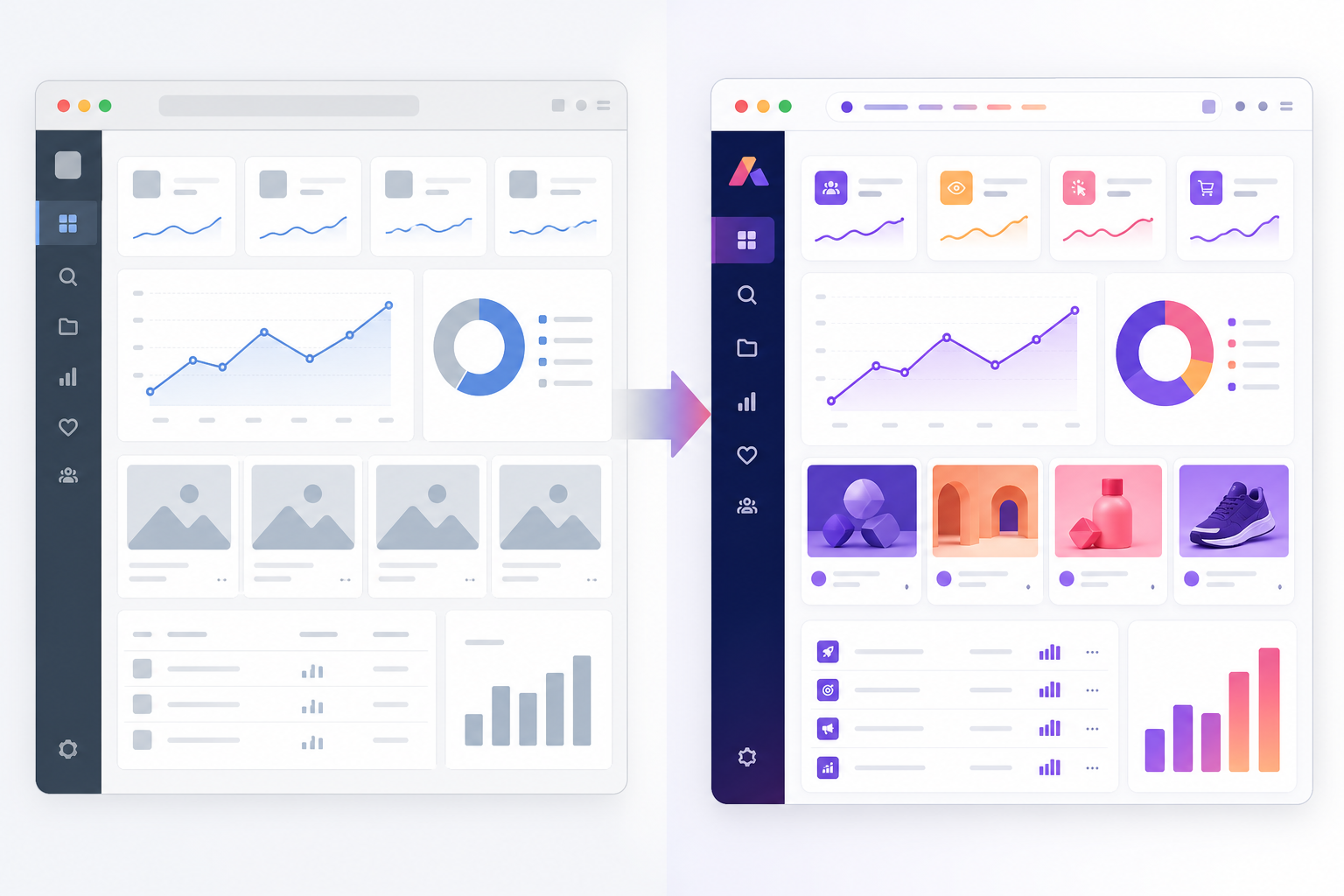
This is where most agencies stop too early — swap the logo, ship it, move on. Real white-labelling goes further, but it's worth being clear about what branding actually achieves: it doesn't turn someone else's software into your intellectual property. What you own is your methodology, your prioritisation of what matters for a given account, your commentary, and the workflow you wrap around the data. Branding presents that ownership clearly; it doesn't create it out of nothing.
Here's a step-by-step approach that holds up under client scrutiny:
- Set up your custom domain, colours, and logo before showing a single client. Most agency-tier tools let you configure a white-label subdomain or full custom URL. Do this first — don't let a client see the vendor's native environment by default.
- Give the service its own name internally. Don't call it "the tool" in client meetings. Give it a name — "Competitor Intelligence Suite," "Market Watch," whatever fits your brand voice. This changes how your team talks about it, which changes how clients perceive it.
- Customise the email digest templates so weekly reports land in a client's inbox from your agency's domain, not a vendor's. This is one of the most common giveaways that an agency is reselling rather than building in-house, so don't skip it.
- Add your own framing to any AI-generated analysis. If your platform uses AI to produce strategic breakdowns of competitor activity, treat that output as a first draft, not a finished deliverable. Have someone on your team read it, check it against what they actually know about the client's market, and wrap a short intro or closing note around it so the final version reads as informed commentary — because it should be.
- Keep pitch materials in your own branded environment when presenting to prospects. Avoid showing the platform's native interface during a pitch, even accidentally in a screen share — it undermines the positioning you've built without adding anything useful to the conversation.
Pricing Strategies for Reselling Ad Intelligence Tools
This is where the real money is made or lost. I've seen agencies do all the branding work well and then undercut themselves at the pricing stage, treating the tool as a £10 add-on because "it's just software." That mindset ignores the actual cost of delivering the service — your time, not just the subscription.
Here's how agencies commonly structure pricing, and what each model actually includes:
| Pricing Model | How It Works | What's Typically Included | Best For |
|---|---|---|---|
| Cost-plus | Mark up your platform cost by a multiple, framed as a "Competitive Intelligence Retainer" | Platform access, basic review time | Agencies wanting simple, predictable pricing |
| Bundle pricing | Fold monitoring into an existing strategy or reporting package | Monitoring plus your team's existing reporting cadence | Clients who might otherwise try to negotiate a standalone line item down |
| Per-competitor pricing | Charge per competitor tracked | Scales with monitoring scope | Accounts where competitive tracking naturally grows over time |
| Tiered service pricing | Basic (dashboard access), Standard (weekly digest + written summary), Premium (dashboard + digest + monthly strategy call) | Varies by tier — see below | Agencies wanting a built-in upsell path |
A worked pricing example for a white-label ad intelligence service
Treat the following as one illustrative scenario, not an industry benchmark — your own costs and rates will differ.
Say you're running a Standard tier service for one client tracking five competitors:
- Platform cost: roughly $49/month, which converts to around £39 at a rough $1 = £0.79 exchange rate (check current rates and your own billing currency — this will shift over time).
- Analyst review time: about 1.5 hours a week reviewing the digest and adding written commentary, at a loaded internal rate of roughly £30/hour → around £195/month.
- Account management overhead: a short monthly check-in and quality check, roughly £25/month.
- Total delivery cost: approximately £259/month, before VAT.
If you price this tier at £400/month (excluding VAT), that's roughly a 35% gross margin after covering platform and labour costs — reasonable for a retainer service, though many agencies target 40–60% once a service is running efficiently and review time drops with practice. If you're only clearing 10–15% after real labour costs, that's a sign your price is too low for the effort involved, not that the model doesn't work.
The reason underpricing is risky here isn't just abstract margin erosion — it's that platform costs and your own review time both scale as competitor counts grow. A flat low fee that felt fine at three competitors quietly stops covering your costs at ten. Pricing per competitor or per tier from the start avoids that slow leak.
What to include in each service tier
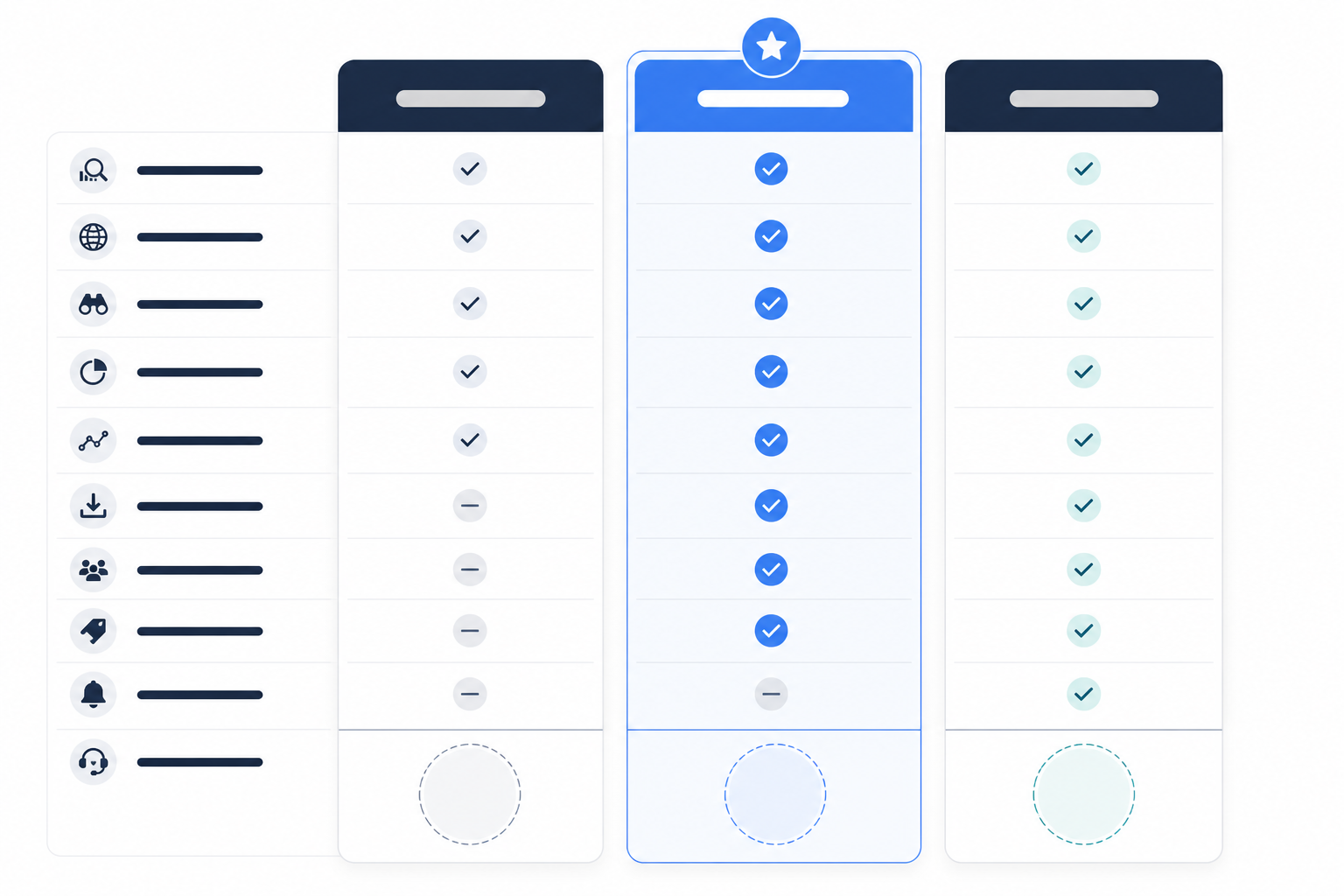
To make the table above concrete, here's roughly what I'd put in each tier:
- Basic (from ~£150/month): Branded dashboard access, up to 5 competitors, weekly automated digest, no written commentary.
- Standard (from ~£300–400/month): Everything in Basic, plus a short written summary from your team each week and up to 10 competitors.
- Premium (from ~£500+/month): Everything in Standard, plus a monthly strategy call, screenshots and copy pulled from specific competitor ads, and a recommended action for the client's own campaigns.
How to Present Ad Intelligence Reports as Strategic Deliverables
Here's a mistake I see constantly: agencies do the branding and pricing work properly, then hand the client a raw dashboard export on a client call. It undoes everything else you've built. The data itself isn't the product — your interpretation of it is.
A useful weekly report structure looks something like this (illustrative example, not a real client):
What changed: Competitor X launched three new video ads on Meta and paused their previous static campaign.
Evidence: [Screenshot of new creative and ad copy]
Likely implication: The shift to video suggests they're testing a new acquisition angle rather than retargeting — possibly in response to seasonal demand.
Recommended action: Worth testing a short video variant of our own top-performing static ad over the next two weeks.
Confidence: Medium — based on one week of data, worth confirming next cycle.
Owner: [Account manager name]
A few principles that separate agencies who nail this from those who don't:
- Never hand over the raw export unexplained. Even a two-line note above the data — "here's what stood out this week and why it matters" — changes the entire perception of the deliverable.
- Lead with the "what changed" summary. New creatives, paused ads, campaigns that are clearly scaling — open with this before the granular detail. Clients want the headline first.
- Translate any AI-generated analysis into your own agency's language and voice, and have a human check it against what you actually know about the client's market before it goes out.
- Position it as an ongoing service, not a one-off report. A weekly cadence is one of your strongest retention tools — clients get used to expecting it, and cancelling starts to feel like losing visibility they've come to rely on.
- Use real creative examples pulled directly from competitor ads, checked against your vendor's terms for how that content can be shared. A screenshot with the exact copy a competitor is running is memorable in a way a chart rarely is.

Common White-Label Mistakes to Avoid
Even agencies that get the strategy right can trip up on execution. Here are the mistakes I see most often, split between branding slip-ups and the legal or operational ones that get less attention but matter more.
Branding and presentation mistakes:
- Forgetting to strip vendor branding from PDF exports or email footers. Dashboards get the glamorous rebrand treatment; the auto-generated PDF or footer text gets forgotten. Clients notice this far more than agencies expect.
- Overpromising real-time data when the tool actually refreshes weekly. Set this expectation upfront. Weekly monitoring is still valuable for strategic decisions — just don't let a client assume they're getting live alerts if that's not what they're paying for.
- Not testing the client-facing experience yourself first. Log in as if you were the client. Check every screen, every export, every email. Catch the unbranded corners before your client does.
Legal, licensing, and operational mistakes:
- Reselling without confirming the vendor's terms actually permit it. This is the single biggest risk in this whole model, and it's the easiest to check upfront.
- Passing AI-generated analysis to clients without human review. If the commentary is wrong and a client acts on it, that's your reputation on the line, not the vendor's.
- Treating the service as a bolt-on nobody owns internally. If no one on your team is actually reviewing the weekly output before it goes out, you'll eventually send a client something irrelevant, or worse, embarrassing. Assign ownership.
- Pricing too low out of fear of pushback, then losing margin as competitor counts grow. Covered above, but worth repeating — it's the most common margin killer I see.
- Ignoring VAT and currency conversion when setting client prices. If your platform bills in dollars and you invoice in pounds, build a buffer into your pricing for exchange rate movement, and confirm your VAT treatment with an accountant rather than guessing.
How to Scale Reselling Ad Intelligence Tools Across Your Client Roster
Once you've got branding, pricing, and presentation working for one client, the value comes from replicating it efficiently — but only if you're honest about how much capacity that actually takes.
As a rough guide, one account manager reviewing digests properly (not just skimming) can typically handle somewhere in the region of 8–12 Standard-tier clients before quality starts to slip, assuming roughly 1.5 hours of review time per client per week. That's a starting point to sanity-check against your own team's pace, not a fixed rule.
- Standardise your reporting template once, then reuse it across every account. Consistency saves time and makes your service feel like a defined product rather than something improvised per client.
- Use role and competitor assignment features to divide the monitoring workload across account managers, so no one's sharing a single login and losing track of who's watching what.
- Batch your weekly review process. Rather than reacting to each client's digest as it lands, block out a set period each week to review everything at once. It's more efficient and keeps quality consistent.
- Build a simple upsell path. Start clients on Basic or Standard, then introduce strategy calls once trust is established and they've seen a few weeks of solid insight.
- Track which insights actually influenced client decisions. Did a competitor's new creative push prompt a client to test something similar? Did a paused campaign flag a market shift worth acting on? These make strong case studies for new business pitches later — and they're the real evidence that the service is worth the price, not just the branding around it.
- Add headcount before quality drops, not after. If review time per client keeps climbing or reports start going out late, that's your signal to bring in another team member rather than stretch further.
Frequently Asked Questions About Reselling Ad Intelligence Tools
How do I brand a white-label ad intelligence tool as my own?
Start with the visible surfaces — logo, colour scheme, custom domain, and email templates — then go deeper by naming the service internally and adding your own reviewed commentary to any AI-generated analysis. The goal is a consistent client experience from login to inbox, not concealment of the fact that you use specialist software.
What's a fair markup when reselling competitive intelligence tools?
There's no single fair number — it depends on your labour costs, not just the software price. A useful way to think about it: add up platform cost, review time at your loaded hourly rate, and account management overhead, then price to hit a target gross margin (commonly 40–60% once the service is running smoothly). In the worked example above, a £259/month delivery cost supported a £400/month price at roughly 35% margin — treat that as one illustration, not a rule.
How do agencies present ad intelligence reports to clients?
Agencies getting the most traction don't hand over raw dashboards — they wrap the data in a short strategic narrative each week: what changed, why it matters, and what action it suggests, with a human checking any AI-generated analysis before it goes out. Real creative examples and copy from the tool make the insight concrete rather than abstract.
Is it legal or ethical to resell a third-party ad intelligence platform as my own service?
It can be, but only if your vendor's terms explicitly permit resale or white-labelling — check this before building a service around any tool. Being transparent that you use specialist software layered with your own analysis is good practice; explicitly claiming to have built proprietary technology you didn't build is the line you shouldn't cross.
How much human review does a white-label report actually need?
Enough that someone on your team has read every AI-generated summary and checked it against what they know about the client's market before it goes out. Treat AI output as a draft, not a finished deliverable — the review step is what you're actually being paid for.
Can I resell ad intelligence tools without telling clients I'm using a third-party platform?
You can keep the specific vendor name out of client conversations if your contract allows it, but you shouldn't claim to have built proprietary technology that you haven't. Most clients care about outcomes and expertise rather than your exact tool stack — being general ("we use specialist monitoring software as part of our process") is usually enough, and it keeps you on the right side of the line between smart packaging and misrepresentation.
Reselling Ad Intelligence Tools: Launch Checklist
- Confirm the vendor's licence explicitly permits agency resale or white-labelling.
- Check who owns the data and creative assets you'll be showing clients.
- Set up your branded domain, email templates, and exports before any client sees the platform.
- Build a human review step into every AI-generated report before it goes out.
- Price using your actual delivery cost — platform plus labour plus overhead — not just a multiple of the subscription fee.
- Confirm your VAT treatment and build in a currency buffer if your platform bills in a different currency to your invoices.
- Assign clear internal ownership so someone is accountable for every report before it reaches a client.
Get these right, and the branding and pricing tactics above stop being cosmetic tricks — they become the visible layer on top of a service that's actually earning its margin.
Create content like this automatically
Scribe uses AI to generate high-quality blog posts that engage your audience and drive traffic.