The Anatomy of a High-Converting DTC Ad Creative: What Scaling Ads Actually Have in Common
17 min read
Loading...
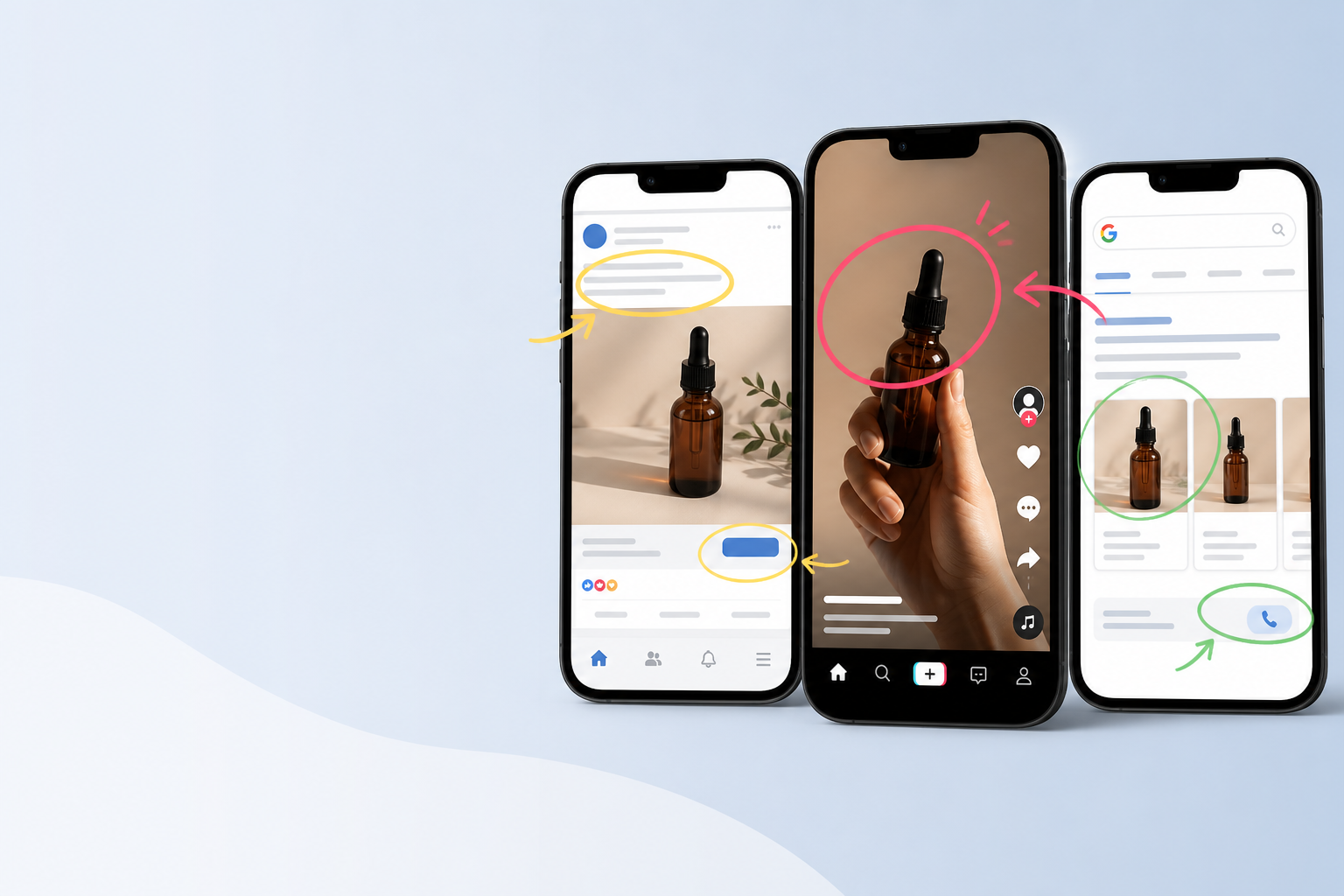
High-converting DTC ad creative isn't lucky—it tends to follow repeatable patterns. The ads that scale often share four things: a hook built to earn attention in the first few seconds, an offer structure designed for immediate action, visuals that feel native to the platform, and copy formulas refined through repeated testing by brands with bigger budgets than yours. Once you can spot these patterns, you can study the structure—not copy the ad—and plug it into your own testing pipeline.
I've spent a lot of time inside the Meta ad library and TikTok's Creative Center watching how DTC brands actually build their ads. The honest truth is that a fairly small set of structures keeps showing up again and again. That's not proof of a universal formula; it's more that thousands of pounds in ad spend across the market have quietly narrowed down what tends to make people stop, believe, and buy.
This post breaks down those recurring DTC ad creative patterns, with a clear caveat: pattern-spotting is a starting point for your own testing, not a substitute for it. By the end, you'll have a swipeable checklist instead of a blank page.
If you've ever worked in traditional brand marketing and then moved into DTC, the shift can feel jarring. TV-style storytelling arcs, slow builds, and clever twists don't translate well to a thumb scrolling through a feed at 6am. DTC ad creative plays by a different set of rules.
Here's what actually separates it:
Once you internalise that DTC ad creative behaves more like an ongoing test than a finished campaign, the rest of this post will make more sense.
The opening seconds of a DTC ad do more work than almost any other part of the creative. Most people scroll with the sound off, so the hook usually has to communicate a problem, an outcome, or a tension visually—before any spoken context kicks in.
Both TikTok and Meta have published guidance through their respective creative and business resource centres suggesting that front-loading your key message tends to improve early engagement. The exact lift varies by category, format, and audience, so treat any specific percentage you see quoted online as directional rather than a guarantee for your product. The practical takeaway holds regardless: don't save your best idea for the middle of the video.
The most common hook formats I see repeated across scaling DTC ads include:
Here's a quick five-second audit you can run on any ad, yours or a competitor's:
One tactical insight worth remembering: the hook is often the single most-swapped element in a scaling ad set. Brands will frequently keep the same offer and body copy but rotate several different hooks to see which one earns the scroll-stop. If you're studying a competitor's ads and everything looks identical except the first few seconds, that's usually not an accident—that's an active hook test.
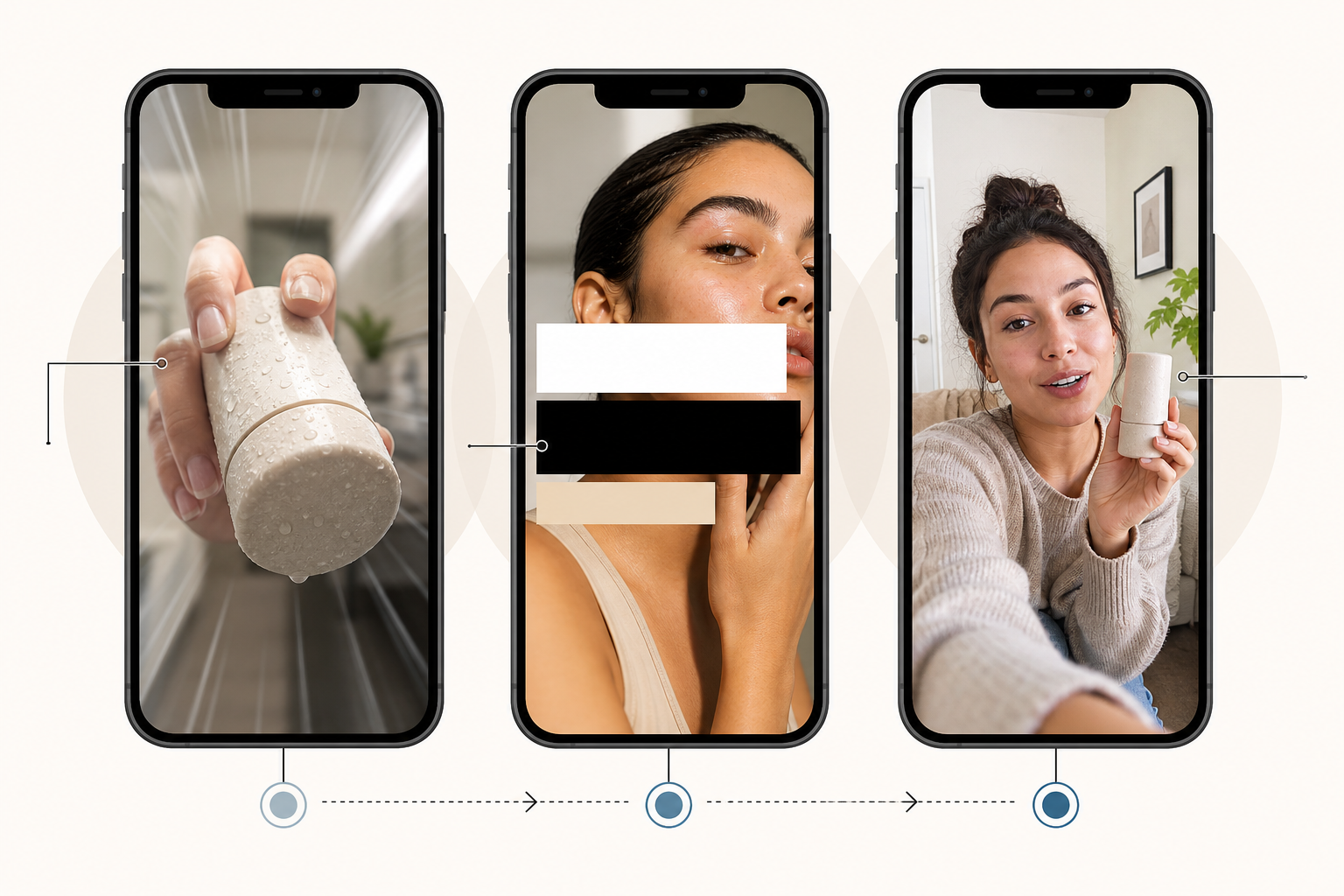
A great hook earns attention, but the offer is what turns attention into action. The offer shown in the ad also needs to match the landing page exactly—any mismatch in price, shipping terms, or subscription conditions erodes trust quickly and inflates support tickets.
Here's how the most common DTC offer structures stack up:
| Offer Type | How It Works | Why It Converts | Watch Out For |
|---|---|---|---|
| Bundle deals | “Buy 2, get 1 free” or starter kits | Increases AOV while still feeling like a discount | Can train customers to wait for bundles instead of buying single items |
| Urgency-driven | Limited stock counters, 48-hour flash sales, restock alerts | Creates a real reason to act now, not later | Must be genuinely true—see compliance note below |
| Risk-reversal | Extended guarantees, free returns, “try it for 30 days” | Removes the fear of getting it wrong | Returns costs can quietly erode margin if not modelled properly |
| First-order incentives | Percentage off, free gift, free shipping thresholds | Lowers the barrier for a first-time buyer | Can compress margin on already-thin categories |
| Subscription-first | Discounted intro period with clear billing terms | Reduces initial commitment while increasing LTV | Billing terms must be crystal clear to avoid disputes and complaints |
A compliance note for UK advertisers: urgency and scarcity claims fall under the Advertising Standards Authority's remit and the CAP Code, which requires that time-limited offers, stock claims, and “was/now” pricing be genuinely accurate and substantiated. A countdown timer that never actually expires, or a “only 3 left” claim that's been running for six months, isn't just a trust problem—it’s the kind of thing the ASA has upheld complaints against.
The same applies to subscription transparency. Billing frequency and cancellation terms need to be clear before purchase, not buried in the terms and conditions. Testimonials or review counts used in ads also need to be genuine and capable of being substantiated if challenged. If you're running health, beauty, or supplement offers specifically, it's worth getting your ad copy reviewed by someone familiar with the CAP Code before you scale spend behind it.
What's interesting is how often risk-reversal gets paired with urgency rather than replacing it. “30-day money-back guarantee, but the launch discount ends Sunday” gives the customer both a reason to buy now and a reason not to worry if it doesn't work out. That combination shows up often once you start tagging competitor offers by structure.

Once the hook and offer are locked in, the visual execution decides whether the ad feels native to the platform or gets scrolled past as “obviously an ad”. There's a reason so many scaling DTC creatives look similar in structure even across different product categories—although the right execution still depends heavily on your specific audience and platform.
The recurring visual patterns worth building into your own checklist include:
A subtler pattern that's easy to miss: many strong ads combine a human face, a visible product, and an explicit proof point in the same frame. That's a creator holding the product while a review screenshot floats on screen, or a founder talking direct-to-camera with a “12,000+ five-star reviews” badge underneath.
This doesn't mean static product beauty shots never work. They often perform well further down the funnel, with warmer audiences who already trust the brand. For cold audiences, however, a human anchor and a reason to believe usually do more heavy lifting.
It's also worth noting that creative fatigue is a visual problem as much as a media-buying one. If a brand keeps reusing the same opening frame or the same creator, don't be surprised to see it quietly pulled from rotation a few weeks later, even if the underlying offer is still strong.

Visuals earn the stop; copy earns the belief. Just like hooks and offers, the copy underneath scaling DTC ads tends to fall into a handful of well-worn formulas rather than pure creative inspiration.
The formulas I'd put on any testing checklist are:
Here's what PAS might actually look like for, say, a coffee brand targeting a cold audience: “Ever finish a coffee and immediately feel your stomach turn on you? (Problem) It's usually the acidity, not the caffeine—and most ‘gentle’ coffees still hide it. (Agitate) We slow-roast ours specifically to cut acidity without losing the flavour. (Solution)”
For a retargeting audience that's already seen that message once, you'd likely drop the problem-agitate build-up and lead straight with proof instead: “4,800 people switched to low-acid coffee this year and haven't looked back—here's why.” Same underlying idea, different entry point depending on how warm the audience already is.
Founder-voice copy deserves a mention because it's become so common in the last couple of years. It works because it disguises a sales pitch as a personal update—“I built this because I couldn't find a coffee that didn't wreck my stomach”—and that framing tends to lower the reader's guard in a way that more formal ad copy struggles to. It's not a universal fit, though; it tends to work better for founder-led brands with a genuine story than as a copy trick bolted onto an unrelated business.
The smart move isn't picking one formula and sticking with it forever. It's rotating formulas against a stable hook and offer so you can isolate which piece of copy is doing the heavy lifting. Test cold-audience versions separately from retargeting versions, since the job each one is doing is different.
All of this pattern-spotting is only useful if it turns into an actual testing process, with clear rules for what counts as a win. Here's the workflow I'd recommend.
| Hypothesis | Variable Changed | Audience | Primary Metric | Minimum Spend/Sample | Decision Rule |
|---|---|---|---|---|---|
| A pattern-interrupt hook beats a static product shot for cold audiences | Hook only (offer and copy held constant) | Cold, lookalike 1% | Hook rate / 3-sec view rate, then CTR | £150 or 1,000 impressions per variant | Keep hook if CTR is 20%+ higher at similar CPM; kill if CTR is lower after full spend |
| Risk-reversal + urgency beats urgency alone | Offer framing only | Warm retargeting | CVR and CPA | 50 sessions per variant minimum | Scale winner if CPA is lower and CVR is equal or better |
The point of a matrix like this is to isolate one variable at a time and decide in advance what “working” means. Otherwise, it's easy to mistake a high-CTR hook for a profitable ad, when the real test is whether it converts at an acceptable cost once people land on your site.
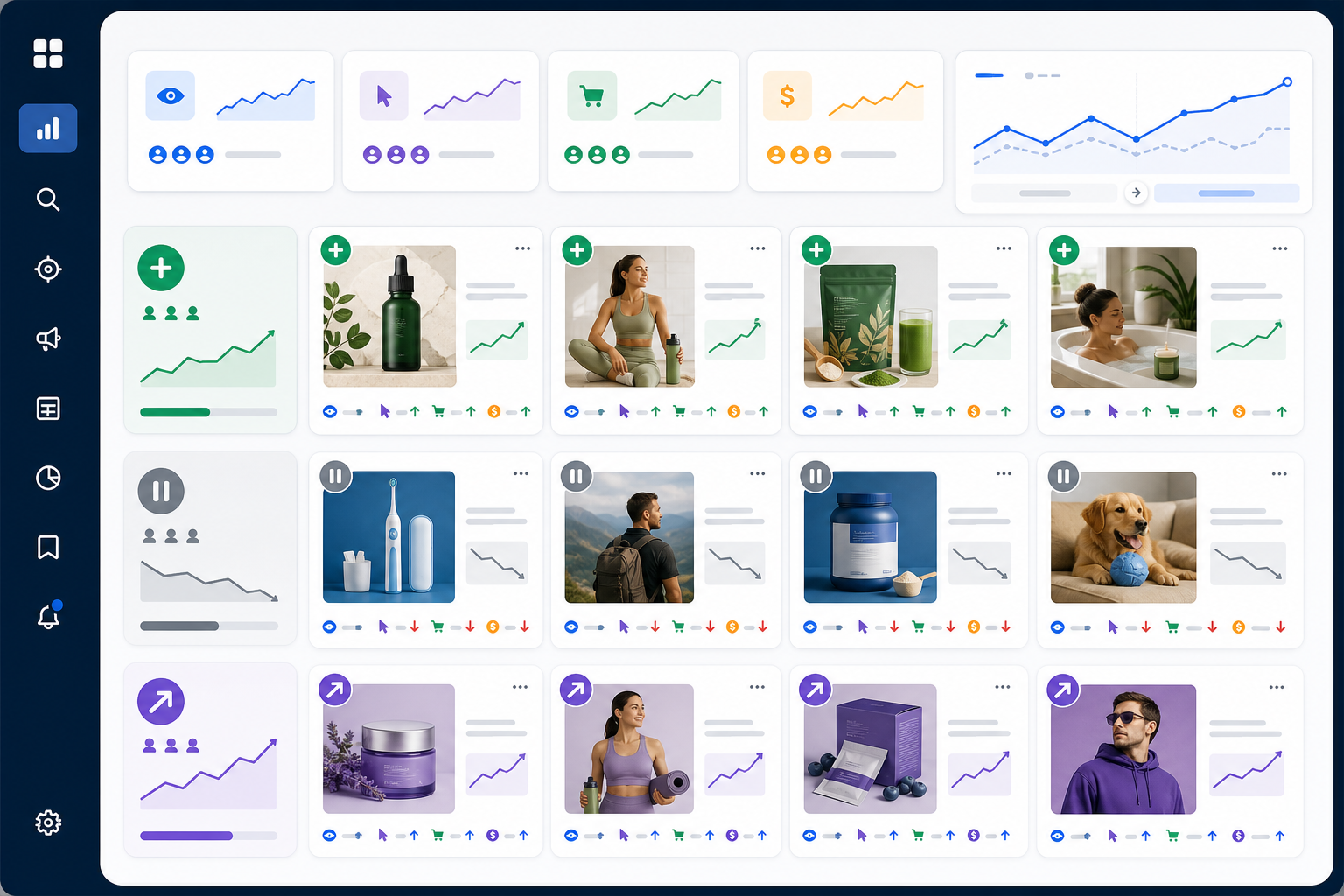
Manually running this process every week across a dozen competitors gets old fast. That's the exact problem we built Rival Ads to solve: give us a competitor's website, and we automatically detect their presence across Meta, Google Ads, TikTok, and LinkedIn, then fetch every active ad weekly with real creatives, exact copy, and links.
You get a week-over-week difference report showing what's new, paused, or scaling, plus an AI-generated strategic read that interprets those changes the way a senior media buyer would. It's genuinely useful for steps 3 and 4 above, but the framework in this post works whether you use a tool like ours or simply use a spreadsheet and some discipline.
Many scaling DTC ads share the same four ingredients: a hook built for the first few seconds, an offer that removes hesitation through urgency, risk-reversal, or bundling, visuals that feel native to the platform rather than overly polished, and a copy formula that's been tested repeatedly before you saw it.
The specific product changes, but the underlying structure is often recognisable. It isn't a guaranteed formula, and category, audience temperature, and funnel stage all affect what actually works.
Start by watching what your direct competitors are still running after several weeks, since longevity is a useful discovery signal—but not proof of performance on its own. Ads can stay live for reasons unrelated to results.
Where possible, corroborate longevity with other signals: whether the offer has stayed stable, whether the same creative reappears across placements, and your own funnel data once you start testing. A monitoring tool such as Rival Ads can surface the week-over-week differences, but the follow-up testing is still on you.
Common patterns across scaling DTC ads include bundle-based AOV boosters, time-limited urgency offers, and risk-reversal guarantees, often paired together. Subscription-first introductory discounts are also common, particularly in beauty and supplements, because they lower the barrier to a first purchase while increasing recurring revenue.
Whichever structure you borrow, make sure the claims are accurate and match your landing page exactly. UK advertising rules under the CAP Code apply specifically to urgency, pricing, subscription, and testimonial claims.
Studying structural patterns—hook types, offer formats, and copy formulas—is standard competitive research, similar to studying category benchmarks, and is generally fine. Where it gets riskier is copying specific assets, exact copy, distinctive visual styles, or anything that could amount to passing off or infringe copyright or trade marks.
If you're building a campaign closely modelled on a specific competitor ad rather than a general pattern, it's worth a quick sanity check with someone who understands intellectual property and advertising law in your market, particularly if the resemblance is more than structural.
The brands winning on Meta and TikTok right now aren't necessarily the most creative—they're the most systematic about testing, and the most honest with themselves about what the data actually shows. Before you go, here's the compact version of everything above:
Build your own DTC ad creative checklist, apply it consistently, and watch your own funnel data rather than assuming a competitor's long-running ad is automatically outperforming yours. That's really the whole system.
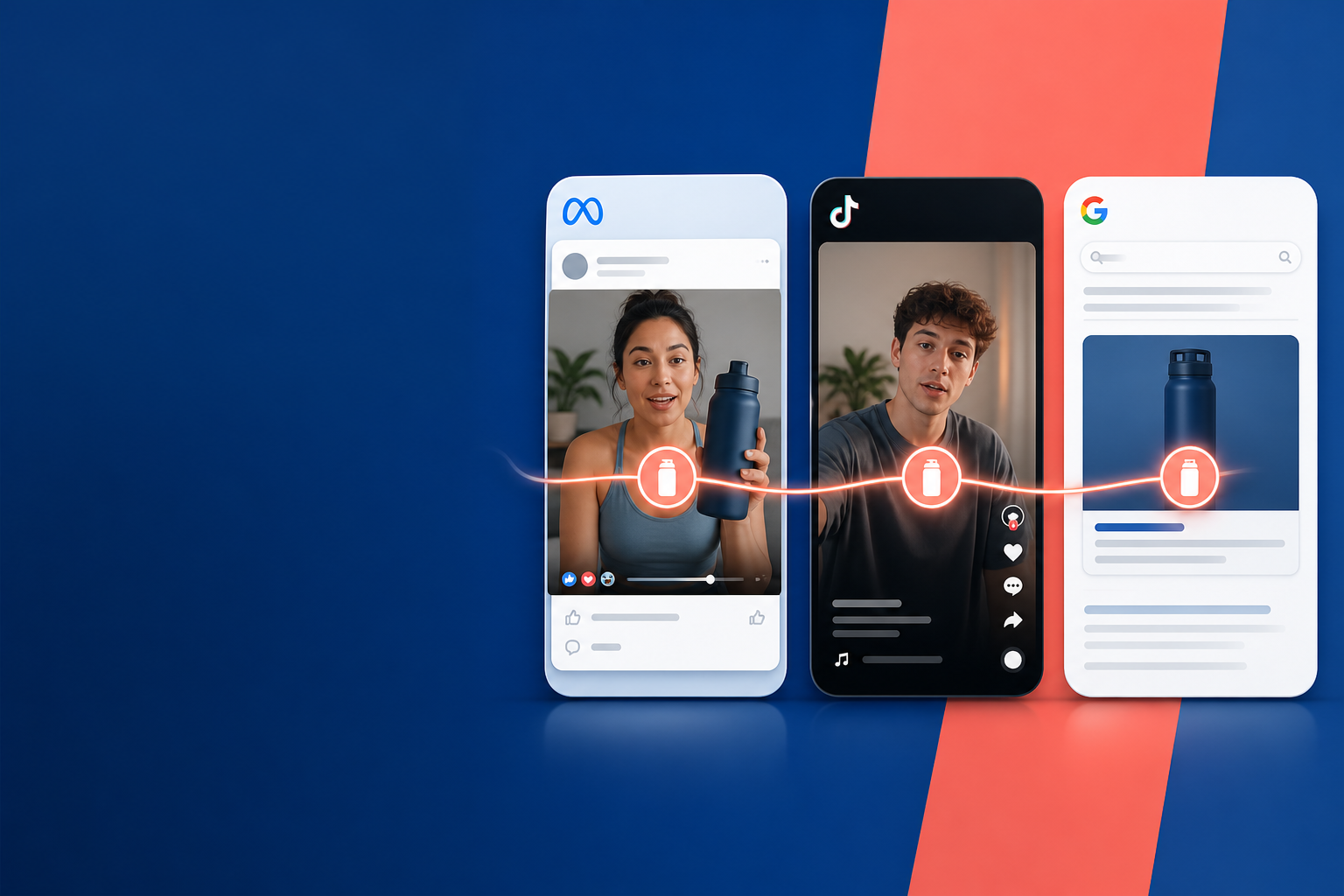
See how winning ad angles shift across Meta, TikTok, and Google Ads. A UK marketer's guide to adapting one core message for each platform, with a test

Use competitor ad monitoring to read public ad-library signals, spot likely winners early, and act before a rival’s scaling campaign becomes obvious.