The Real ROI of Automated Content Marketing for Small Business: A Numbers-First Breakdown
13 min read
Loading...

A numbers-first look at what automated content marketing costs, what it saves, and how long it realistically takes to pay off for a UK small business.
If you're a small business owner in the UK trying to work out the ROI of content marketing automation, here's the honest short answer: it depends on your current setup. For most businesses paying freelance rates or losing owner hours to writing, the direct production cost savings can show up within the first month. The bigger SEO and traffic return takes longer, usually 3–6 months, and it's not guaranteed just because you're publishing more.
The part people miss is that the real value isn't only the hours you save, though that's a big part of it. It's the opportunity that comes from showing up in search results consistently over time, provided what you're publishing is actually useful and well-targeted. Consistency helps you build topical coverage and gives search engines more chances to find and rank your best work. It doesn't override quality, relevance, or usefulness, since those are still what Google evaluates. Publishing a lot of thin content won't move the needle.
So let's build a worked example using explicit assumptions you can adjust for your own business, rather than relying on broad claims.
Most small business owners underestimate what manual content actually costs. It's not just the freelancer invoice. It's everything that happens before and after the writing.
Here's a rough breakdown of what typically goes into a single 2,000-word blog post when it's done manually, with illustrative hours and costs so you can see where the time actually goes:
| Task | Typical time | Cost at £40/hour (owner time) |
|---|---|---|
| Topic and keyword research | 45–60 minutes | £30–£40 |
| Drafting | 2–3 hours | £80–£120 |
| Editing and fact-checking | 45–90 minutes | £30–£60 |
| Image sourcing or creation | 30–45 minutes | £20–£30 |
| Formatting, metadata and publishing | 30–45 minutes | £20–£30 |
| Total | 4.5–7 hours | £180–£280 |
If you're outsourcing instead, freelance writer rates in the UK generally run £75–£300 per blog post. That figure often excludes editing, image sourcing and publishing, which someone still has to do.
That last point is the one business owners consistently underweight. If you're writing content yourself on a Sunday evening, that time isn't free, even without an invoice attached. Value your own time at even a modest hourly rate, and four posts a month can easily represent £700–£1,100 in owner time alone, on top of any direct spend. Those are the content marketing cost savings automation can make visible when you compare them with a realistic platform and review cost.
Then there's the inconsistency problem. When content creation competes with the rest of running a business, publishing schedules slip. One month you manage four posts; the next month, none. That inconsistency limits how much topical ground you can cover and how many chances you give search engines to find your content, though frequency itself isn't a ranking factor.

Let's get specific here, because a lot of AI content ROI claims stay vague on purpose. It matters to separate the time it takes an AI tool to generate a draft from the total time it takes to produce something ready to publish.
A platform like Scribe can generate a complete first draft, averaging over 2,000 words with AI-generated images, in around five minutes. That's genuinely fast, but it's not the whole story. A realistic automated workflow still needs a human to check tone, verify facts, fix anything that reads oddly, and confirm the piece actually serves the reader's search intent before it goes live. I'd budget 20–30 minutes of review per post, not zero.
Here's the comparison scaled across a month, using four posts as the baseline:
That's a gap of around 20 hours and £788 a month in owner time value alone, before you even factor in the platform's subscription cost. To be clear, these are illustrative figures based on the assumptions above, not a guarantee. Your actual hours and hourly value will vary.
This is the practical heart of AI content ROI. Five minutes doesn't equal a finished, publish-ready article, and I'm not pretending it does. What it does is remove the repetitive parts of production, research, drafting, first-pass writing, formatting, so the human time that's left goes into judgement calls: accuracy, brand fit and strategy.
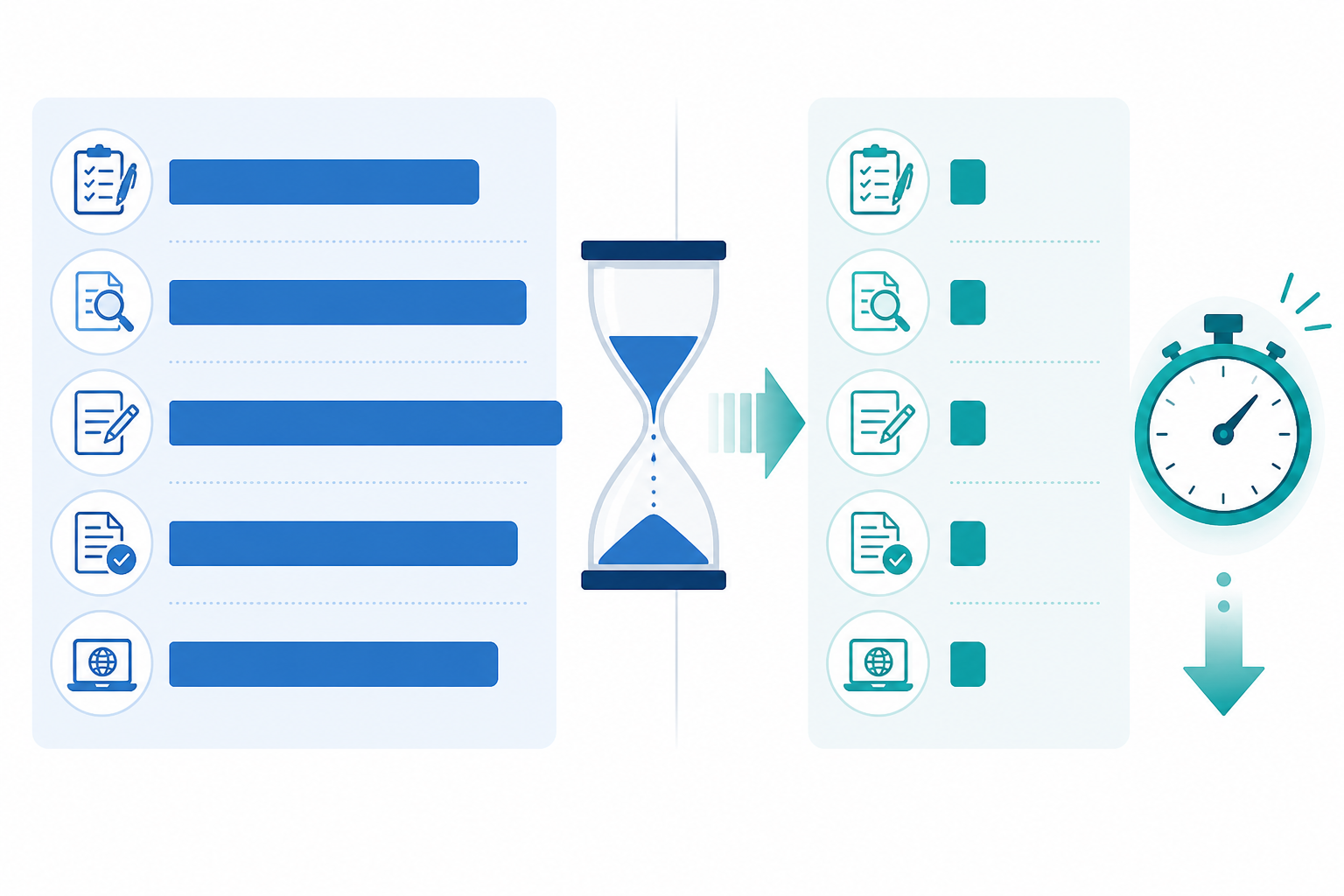
Numbers only mean something once they're pulled into one place, so here's a full worked scenario using explicit, adjustable assumptions.
Assumptions:
Result: £880 manual cost minus £179 automated cost leaves roughly £700 saved per month in the first month, purely from production time and cost, before any traffic or SEO benefit is factored in.
Because the direct cost saving typically beats the platform's subscription price within the first billing cycle, most small businesses in this scenario break even on production cost immediately, within month one. The slower-building return is the SEO and traffic benefit, which isn't guaranteed and depends heavily on content quality, how competitive your niche is, and how well the content matches what people are actually searching for. That benefit typically takes 3–6 months to show up in a measurable way, if it shows up at all.
If your numbers look different, run the same formula with your own hourly value, freelance rate and actual platform price. The structure of the calculation matters more than these illustrative figures.
I want to be upfront here: Scribe has published a customer case study reporting a 340% increase in organic traffic within six months of switching from sporadic manual publishing to automated, consistent publishing. That's a genuine reported result from one customer, not an average or typical outcome, and I don't have full visibility into that business's baseline traffic, niche competitiveness, or what else changed in their SEO approach during that period. Treat it as an encouraging data point, not a promise.
To make the mechanism clearer, here's a hypothetical composite scenario based on patterns discussed in this space. I want to be clear that it's illustrative, not a verified case study. A UK service business publishing roughly one post every six to eight weeks, with organic traffic plateaued around 400–600 monthly visits from blog content, might see incremental traffic growth over three to six months after moving to a consistent schedule of two to three posts a week. This assumes each post gets reviewed for accuracy and search intent.
Whether that growth lands at 30%, 100%, or something closer to the 340% figure above depends heavily on niche competition, content quality and technical SEO factors outside the content itself.
The mechanism is straightforward: publishing more consistently gives you more shots at ranking for relevant terms. A system that reviews quality scores and performance data after publishing can also help you produce better-targeted content over time, rather than repeating the same mistakes at volume. That's meaningfully different from a static AI writing tool that never adapts. None of that replaces genuine usefulness, accuracy and relevance, though, since those are what actually earn rankings.

Not every business gets the same speed of return, and it's worth being honest about that. From the worked example above, automated content marketing tends to pay off fastest if you fit one or more of these:
Here's a quick decision rule: work out your current monthly content cost, freelance spend or owner hours multiplied by your hourly rate, then subtract a realistic automated platform cost plus review time. If the result is comfortably positive, as in the worked example above, the direct cost case is already made before you even factor in traffic gains.
If you're already publishing consistently with a well-resourced content team producing strong results, switching entirely isn't as urgent, though automation can still support what you're doing.
Once automation makes sense on paper, the next question is how to think about cost and risk properly. Here's a comparison using the same assumptions as the worked example above, so it's apples to apples rather than vague ranges.
| Option | Monthly cost (4 posts) | Includes review/editing time | Approx. break-even vs. manual |
|---|---|---|---|
| Freelance writer (UK) | £300–£1,200 (£75–£300/post) | Often extra; varies by writer | N/A, this is the baseline cost |
| Owner/employee time only | £880 (5.5 hrs/post at £40/hr) | Included in hours | N/A, this is the baseline cost |
| AI content platform (illustrative £99/month plan) | £179 (£99 platform + £80 review time) | 30 min/post included in estimate | Immediate, within the first month, based on the assumptions above |
Check actual current pricing with any platform you're considering. Plans and tiers change, and the figures above are illustrative rather than fixed quotes.
A few things are worth weighing beyond raw price per post:
Quality scoring and analytics aren't just nice extras; they protect your ROI. A platform that tracks performance and quality after publishing helps you avoid paying for volume that never ranks or converts.
Publishing integrations with platforms like Shopify, WordPress, Wix and Webflow cut down on friction, so the time savings you calculate don't get eaten up by manual uploads and formatting fixes.
The risks are real and worth planning for. AI-generated content can occasionally produce inaccurate claims or made-up details, generic or thin content if prompts aren't specific enough, and image licensing questions depending on how visuals are generated or sourced. If you're in a regulated or sensitive sector, financial services, health or legal, you'll want human review and possibly compliance sign-off on every piece before it publishes, not just a spot check.
None of this rules automation out, but it does mean the 30 minutes of review time in the worked example above isn't optional. It's the safeguard that makes the numbers trustworthy.
The businesses that get the best return tend to treat this as an ongoing investment, matching the plan tier to realistic content needs, rather than a one-off purchase they set and forget.

For most small businesses currently publishing inconsistently or paying premium freelance rates, the direct cost savings tend to show up almost immediately, as the worked example above shows. The SEO and traffic return is real but less certain. It depends on content quality, competition and search intent alignment, and typically takes 3–6 months to become measurable.
Generation itself takes minutes, but total production time, including human review for accuracy and tone, is the more honest comparison. In the worked example above, automation needs roughly 2.3 hours a month for four posts, versus roughly 22 hours for the same work done manually.
Production cost savings typically show up within the first billing cycle, since the platform cost plus review time is usually lower than the freelance or owner-time cost it replaces. SEO and traffic gains build more slowly, usually over 3–6 months, and depend on factors beyond publishing frequency, including content quality and niche competition.
It can, provided the content is accurate, genuinely useful, matched to real search intent and reviewed by a human before publishing. Systems that analyse quality and performance data after publishing and adjust accordingly may improve over time, but no platform can guarantee rankings. Google evaluates relevance and quality signals, not publishing volume alone.
If you're doing the maths on your own content costs, freelance rates, your own time, inconsistent publishing, the direct cost case for automated content marketing is usually easy to prove within a month, using the kind of worked calculation above. The SEO and traffic upside is real but takes longer and depends on quality, not just frequency.
A practical next step: total up your current monthly content cost using your own hourly rate or freelance spend. Get an actual quote for a platform's monthly plan at the volume you need, add 20–30 minutes of review time per post, and compare the two totals.
If you want to go further, trial a defined batch, say eight to twelve articles over 30 days, and track review time, ranking movement and traffic against your baseline before deciding whether to scale up.