The Weekly Ad Digest Habit Top Marketing Teams Swear By
12 min read

Loading...
A few teams I've worked with have a simple rule: every Monday morning, before anything else gets planned for the week, someone pulls up a weekly ad digest and the whole team spends ten minutes going through it. Nobody has to remember to "check competitor ads sometime this week." It's just part of the stand-up, like checking last week's numbers. That small structural choice is the difference between competitor tracking that actually shapes decisions and competitor tracking that produces a Slack message nobody reads twice.
If you've ever spent a Tuesday afternoon manually scrolling through the Meta Ad Library trying to remember what a competitor's ad looked like last month, you already know why this matters. One-off checks feel productive in the moment, but they rarely add up to anything strategic. A weekly competitor ad digest does. Not because it's magic, but because it turns a single blurry snapshot into a comparable series.
Most competitor ad research happens when someone remembers, not when it actually matters. Someone spots a competitor's ad in their own Instagram feed, spends twenty minutes digging through the Meta Ad Library or Google Ads Transparency Center, jots a note in Slack, and then three weeks pass before anyone looks again.
The issue isn't effort. It's that a single glance is inherently reactive. Meta and TikTok creatives can rotate within days, so what you saw last Tuesday might already be gone by Friday. A one-off check tells you what happened once. It can't tell you what's actually holding up over time.
Here's a concrete example of what a weekly cadence reveals that a one-off check can't. Say a competitor launches a new offer in week one. In week two, it's still running, maybe with a tweaked headline. By week three, they've doubled down with two more variations of the same core message. A single glance in week one just shows "new ad." Four consecutive weekly checks show a pattern: they're testing an angle, getting enough signal to keep investing, and iterating on the message rather than the offer itself. That's the kind of insight your own creative team can actually use, and it only shows up when you're comparing week to week, not dipping in occasionally.
There's a bit of behavioural psychology worth borrowing here: habit stacking. New habits stick far more easily when you attach them to something you're already doing. Rather than trying to remember to check competitor ads at some point, you stack the review onto a routine that already exists: your Monday stand-up, your weekly reporting call, whatever's already on the calendar. The digest becomes part of a meeting you're already having, not an extra task competing for attention.
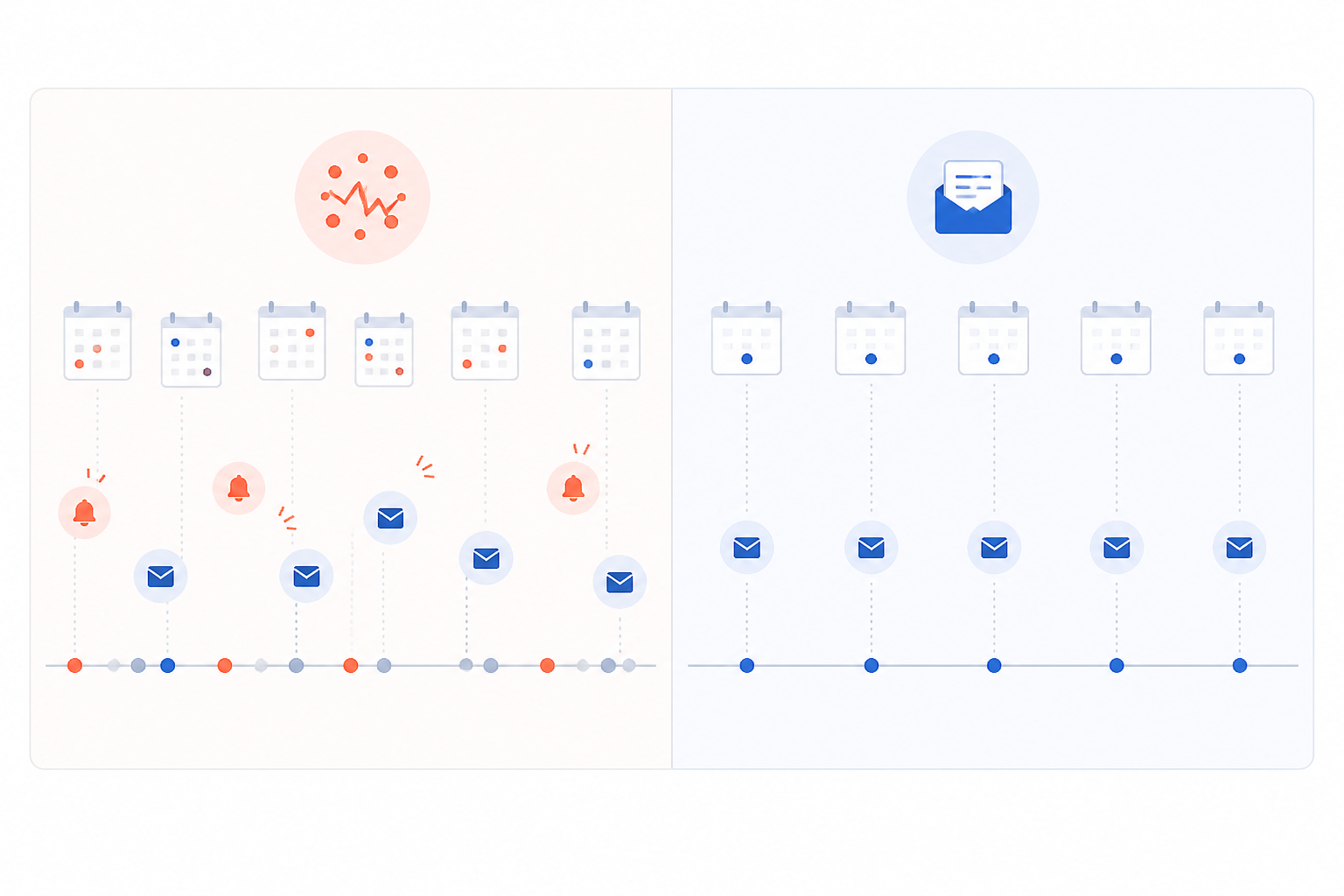
Caption: Ad-hoc checks produce disconnected snapshots; a weekly habit produces a comparable timeline you can actually spot patterns in. Suggested alt text: "Comparison of irregular ad-hoc competitor checks versus a consistent weekly digest habit."
Not all digests are created equal. A folder full of screenshots isn't a digest. It's clutter with extra steps. A genuinely useful weekly ad digest needs structure, and it needs to separate what you're actually observing from what you're guessing it means.
Here's what I'd want in mine, and how I'd think about each item:
| Section | What you're observing | What it might mean | Confidence |
|---|---|---|---|
| New ad launched | Fresh creative, copy, landing page | Testing a new angle or offer | Low — could be a one-off test |
| Ad paused | Ad no longer visible in the library | Underperformance, an expired offer, a completed campaign, or simply a platform delisting it | Low-medium — needs more context |
| Ad still running (3+ weeks) | Same creative live over multiple checks | Possibly performing well enough to keep funding | Medium — still not proof of results |
| Same angle in new creative | Different execution, same core message | A theme they're actively testing or scaling | Medium-high, especially after 2-3 weeks |
A quick honest note on that middle column: public ad libraries show you what's live, not why. A paused ad doesn't necessarily mean it failed. It might have hit a budget cap, a seasonal offer might have simply ended, or a platform review could have pulled it temporarily. Likewise, an ad that's still running isn't proof it's converting well; it's a proxy signal, not a performance report. Treat everything in the "meaning" column as a working hypothesis, not a fact, until you've seen the pattern repeat.
With that caveat in mind, here's the full list of what belongs in a weekly ad digest:
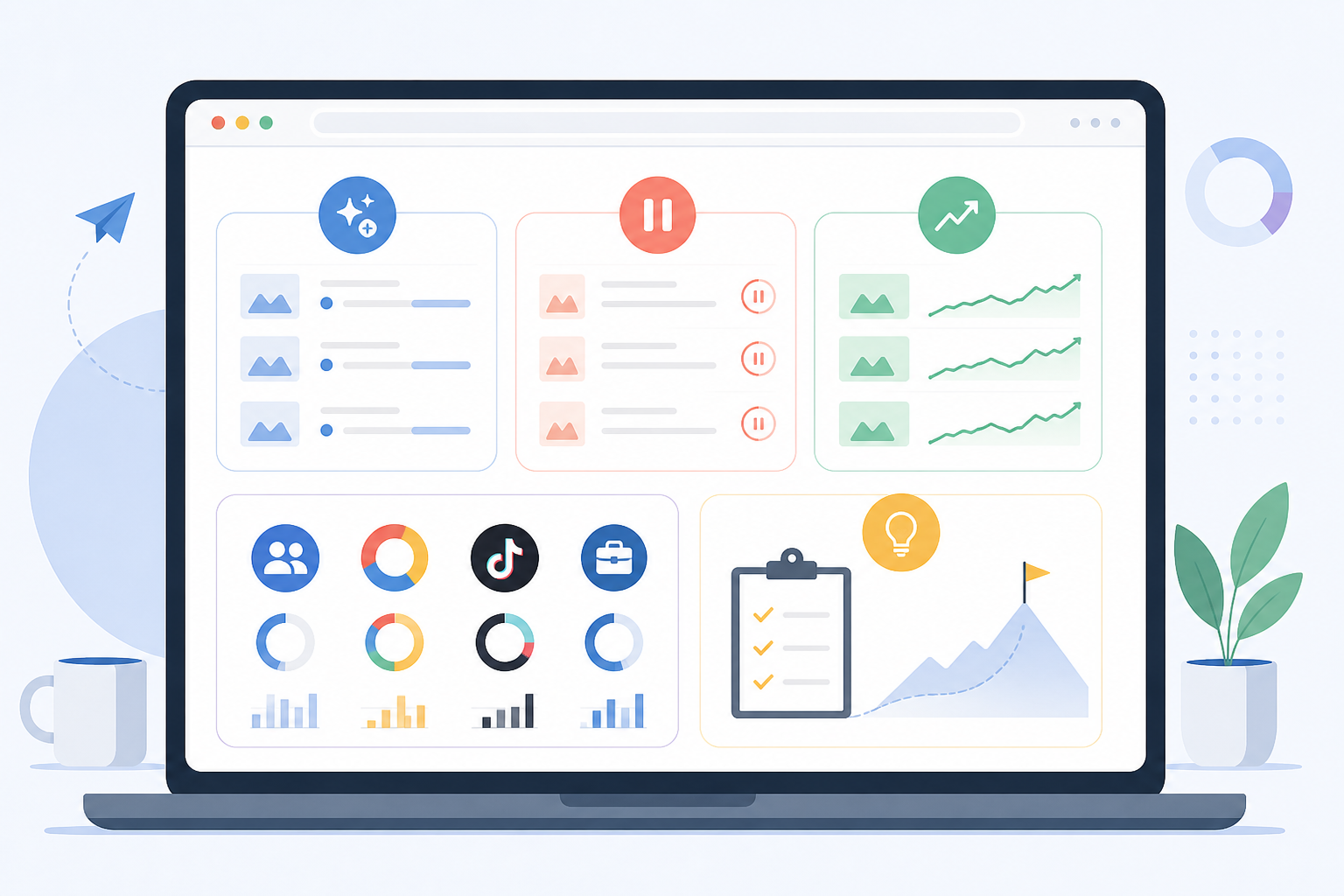
Caption: A well-structured digest separates raw observation (what changed) from interpretation (what it might mean). Suggested alt text: "Anatomy of a weekly competitor ad digest email showing new, paused, and scaling ads across platforms."
Knowing what should be in the digest is one thing. Getting your team to review it every week without it fizzling out after a month is a different challenge. Here's a structure that's worked well for teams I've spoken with, including a few UK agencies juggling multiple client accounts and seasonal calendars like Black Friday and Boxing Day sales periods, when competitor activity tends to spike hardest.
Here's roughly how that ten minutes might actually run:
The goal isn't to turn competitor tracking into a production. It's the opposite: make it small and predictable enough that skipping it feels more awkward than doing it.
Here's where a lot of teams stumble: they build the habit of reviewing the digest, but never quite figure out what to do with what they see. Reviewing without acting is just a more organised way of doing nothing.
Not every insight deserves a full creative brief. Some things are just interesting: a competitor tried something new, it's mildly notable, and that's fine. Save your team's energy for what's actually actionable.
A useful starting rule of thumb: when a competitor scales a specific angle for two or more weeks running, it's usually worth testing against. Not proof they're winning, but a reasonable signal to investigate. Treat two weeks as a threshold to prompt discussion, not a guarantee of success. Short seasonal promotions, product launches, or smaller competitors with limited budgets can all break this pattern. A two-week Black Friday push doesn't necessarily mean the same angle will work in March. Use the rule as a filter, not a verdict.
When you do brief against a competitor insight, use their exact copy and creative as a reference point for your own ideation, not something to copy, but something to understand. If a specific pain point or offer structure seems to be resonating with a shared audience, that's useful context, even if your execution ends up completely different.
It also helps to log recurring themes over a longer stretch, say a month, rather than reacting to single-week blips. A competitor testing five headlines in one week doesn't tell you much alone. But if the same underlying angle keeps reappearing across weeks in different forms, that's a pattern worth building a brief around.
Finally, share the digest with creative and paid media too, not just strategy. Media buyers get context on why a segment might be getting harder to convert; creative teams get a starting reference instead of a blank page.
I'll be upfront: building this habit manually is genuinely hard to sustain. Checking multiple platforms every week, screenshotting creatives, comparing them to last week's version by memory, and writing up a coherent take is a lot to ask of a team already stretched across several accounts.
This is the gap we built Rival Ads to help close. You enter a competitor's website, and the tool looks for their presence across Meta, Google Ads, TikTok, and LinkedIn, then pulls active ads on a weekly basis: the creative, the copy, and the destination link, where that data is publicly available. Coverage depends on what each platform's ad library exposes, so it won't catch everything a competitor runs, particularly ads outside public transparency tools.
The part that saves the most time is the week-over-week comparison: instead of manually comparing this week's screenshots against last week's, Rival Ads highlights what's new, what's no longer visible, and what's continued to appear across checks. That last category is a proxy for possible scaling, based on continued visibility in the public library. It's not a confirmed performance metric, since we don't have access to a competitor's actual spend or conversion data.
There's also an AI-generated summary, powered by Claude, that flags likely reasons behind a change. It's useful as a starting hypothesis for your team to sanity-check, not a substitute for your own judgement. You can review everything in a dashboard, or get the weekly ad digest by email for a Monday scan, depending on how your team prefers to work.
At minimum, what's new since last week, what's been paused or stopped, and what's continued to appear, across every platform your competitors use, including Meta, Google Ads, TikTok, and LinkedIn. The most useful digests separate observation from interpretation and flag uncertainty, since public ad data shows signals, not confirmed performance.
Attach it to a routine you already have, like a Monday stand-up or midweek reporting call, rather than creating a new meeting. Keep it time-boxed to 10-15 minutes, assign an owner per competitor, and rotate who presents. The habit sticks fastest when it's predictable and low-effort to prepare for.
Separate genuinely repeatable patterns from one-off noise. If a competitor scales the same angle for two or more weeks, treat that as a signal worth investigating rather than confirmed proof of success. Short campaigns and seasonal pushes can break the pattern. Log recurring themes over a month, share the digest with creative and paid media, and use competitor copy as a reference point for ideation rather than direct copying.