How to Track Competitor Discount Codes Without the Manual Screenshot Grind
13 min read
Loading...
If you're still screenshotting competitor websites and Instagram ads to catch their latest discount codes, you're going to miss things. Codes get swapped mid-week, tested on specific audiences, or pulled after 48 hours—long before your next competitor research session rolls around. This is exactly the gap eCommerce ad monitoring is built to close: instead of relying on what happens to land in your own feed, a monitoring tool checks competitor activity on a set schedule across Meta, Google, TikTok, and LinkedIn. It can then flag new discount codes and show you how discount depth has shifted over time.
I want to be upfront about how this actually works, because a lot of the marketing around “automated ad tracking” implies real-time, catch-everything alerts. That’s not quite the reality, and it’s worth understanding the actual mechanics before you build a process around it. So let’s look at why the manual screenshot habit falls apart, what a proper monitoring setup can and can’t do, and how to build it into a workflow your team will actually stick with.
A lot of eCommerce teams start out the same way. Someone on the marketing team keeps a spreadsheet, a Notion document, or a folder of screenshots grabbed during a Monday morning coffee scroll through competitor Instagram accounts. It’s scrappy, it’s free, and honestly, it works fine when you’re casually watching one or two rivals without much riding on it. Manual checks aren’t useless, either—they’re a perfectly good way to verify that a live offer is genuinely running when you spot it.
The trouble is, manual checking alone breaks down the moment you need it to be reliable.
Here’s why:
I’ve spoken with UK eCommerce marketers who believed they had competitor tracking “covered” because someone checked Instagram every Monday. Then a rival ran a 25%-off flash sale on a Wednesday, pulled it Friday, and nobody on the team knew it happened until a customer mentioned it in a support ticket. That’s the gap manual tracking leaves wide open, and it’s the specific problem eCommerce ad monitoring tools are designed to solve.
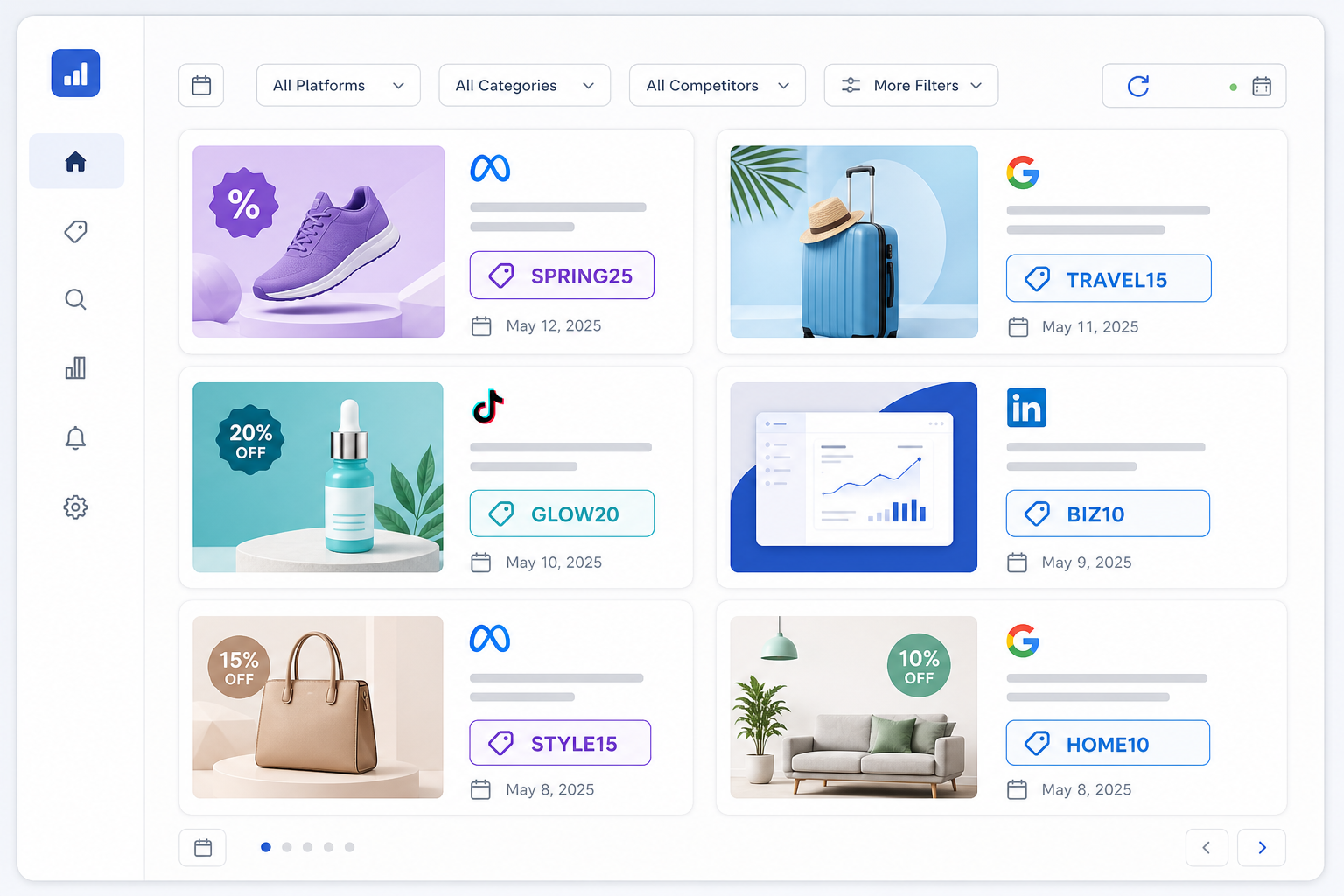
This is where automated discount tracking earns its keep—with some caveats worth being clear about. Rather than depending on what shows up in your own personal feed, a monitoring tool like Rival Ads works from a competitor’s website URL and checks their advertising presence across Meta, Google Ads, TikTok, and LinkedIn on a weekly refresh cycle.
Here’s what that actually gives you:
That last point matters more than it might seem, but it’s also worth saying plainly what this doesn’t cover: whether a code still works at checkout, whether it’s profitable for the competitor, or whether it’s being distributed through email, affiliates, or on-site banners rather than paid ads. Ad monitoring tells you what a competitor is advertising—not everything they’re doing to move product. Treat it as one input into your competitive picture, not the whole picture.
Here’s something I think gets overlooked constantly: a single discount code, on its own, tells you almost nothing. It’s the pattern across weeks and months where the actual insight lives.
Let’s make this concrete. Say you’re tracking a mid-size UK homeware brand, and you notice they moved from 10% off to 15% off two weeks before the last two payday weekends—not just once, but in the same window both times. That’s not noise anymore; it’s a pricing pattern. It tells you they’re willing to sacrifice roughly five extra points of margin specifically to catch cash-strapped shoppers before payday, and it tells you when to expect it again.
Here’s where it gets useful: knowing that pattern, you don’t have to just match their discount. You could instead launch a free-delivery-plus-bundle offer in that same window, which protects your margin while still giving shoppers a reason to buy from you instead of waiting for the competitor’s payday sale. That’s a decision you can only make with the pattern in hand—not from a single screenshot.
This kind of trend is nearly impossible to catch manually but becomes obvious once you have a running archive of every ad a competitor has served. Week-over-week differences make it visible without you having to manually cross-reference old screenshots against new ones—which, let’s be honest, nobody actually does consistently.
Once you start watching this over time, a few questions tend to answer themselves:
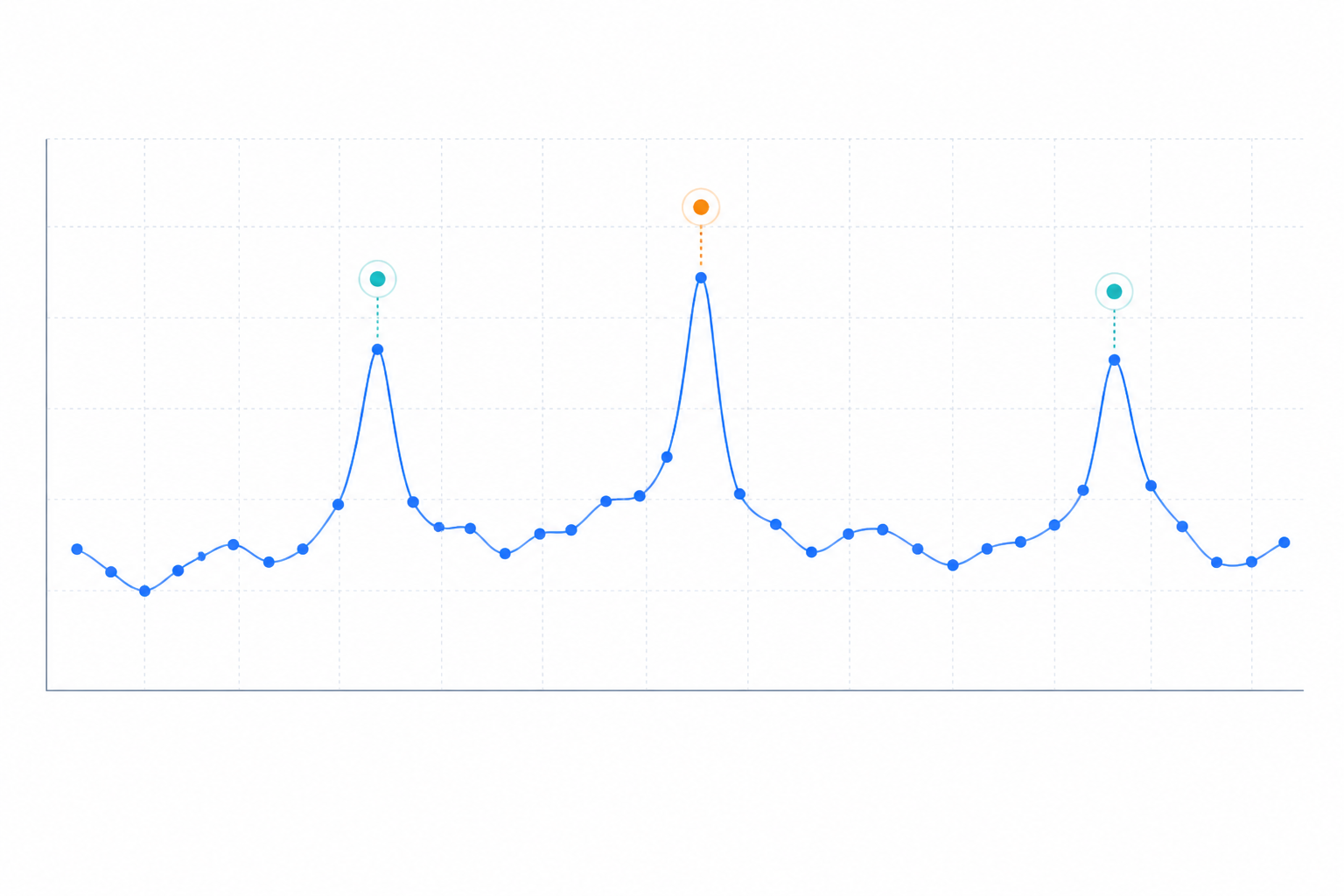
UK eCommerce brands often have fairly predictable seasonal rhythms around Boxing Day, back-to-school, and end-of-season clearance, though this varies a fair amount by category—fashion and beauty tend to run more frequent promotional cycles than, say, furniture. The more interesting insight often comes from the smaller, quieter promotional cycles that happen in between the obvious calendar moments. You only spot those with a continuous record, not a folder of screenshots.
Knowing about a competitor’s move is only useful if you can act on it. Here’s what a realistic response workflow looks like once you’ve got a monitoring system doing the watching, rather than a person doing the scrolling:
The point isn’t real-time speed—it’s consistency. A code that’s live for 72 hours before being pulled is functionally invisible to a team checking in once a week manually. Catching it within a few days of it going live, reliably, every single week, is the difference between reacting strategically and finding out three weeks later from a customer support ticket.
Having the data is one thing. Actually using it consistently is where most teams fall down, even after they’ve set up a monitoring tool. So it’s worth being deliberate about how this fits into your existing rhythm rather than treating it as a side project someone checks when they remember.
A simple 15-minute slot works better than you’d expect. Try this agenda:
A few other things that make this stick:
If you want to move off the manual screenshot habit this week rather than “eventually”, here’s roughly how to do it:
That last step is the one people underestimate. Alerts without an owner just become more noise in an inbox.
The most reliable way is to stop relying on manually checking their site or ads and instead use an eCommerce ad monitoring tool that checks their advertising activity on a set schedule. Rival Ads checks Meta, Google, TikTok, and LinkedIn weekly and flags new creative and offers once detected. This won’t catch a code the second it goes live, but it will catch it far more consistently than a weekly manual scroll—and it won’t depend on the code showing up in your own feed.
Yes, though it’s worth understanding the boundaries. Competitive intelligence platforms can monitor a competitor’s public ad activity automatically from their website URL, pulling ad copy, creative, and linked landing pages without needing access to their ad accounts. What they generally can’t do is confirm a code still works at checkout, catch codes distributed only through email or affiliates, or see private and highly geo-targeted ads that fall outside public ad libraries. Use it to build a running history, not as proof a code is currently valid.
Many eCommerce brands deepen discounts around predictable periods—Black Friday, Boxing Day, back-to-school, and end-of-season clearance being the obvious ones in the UK market—though the exact rhythm varies by category. Some brands also run smaller, less obvious promotional cycles tied to payday weekends or slower sales months. You’ll only spot these quieter patterns with a continuous archive of their ads rather than occasional manual checks.
These are the genuine blind spots. A code only shown to a specific geo-targeted audience, hidden behind a login, or applied automatically at checkout without appearing in ad copy may not surface through ad monitoring at all. If a competitor relies heavily on this kind of targeting, expect monitoring to give you a partial picture rather than a complete one—worth pairing with the occasional manual spot-check for competitors where this matters most.