What TikTok Ad Trends Reveal About Your Competitors' Strategy
17 min read
Loading...

The most useful TikTok ad trends aren't in industry roundups. They're hiding inside a single competitor's ads: the hooks they repeat, the formats they rotate and the creative they keep running week after week. Track those changes over time and you get a decent read on their testing priorities. You can spot what might be working before it becomes obvious, and feed that straight into your own briefs.
That's the whole idea of this post. I'll walk through how to see what a rival is running, what to log, how to read the signals (and where they mislead), and how to turn them into a brief your creative team can use. I've written it with UK DTC and ecommerce teams in mind, so I'll flag local angles as we go.
TikTok creative tends to fatigue quickly. TikTok's own creative guidance leans on a strong opening, an early value proposition, vertical video and sound, because you get a tiny window to earn attention. So many brands don't rely on one polished hero ad. They make lots of versions, test different openings, and swap out whatever tires. The feed you studied last week may not be the feed running today.
That's annoying if you're trying to keep up, but it's handy for competitor research. Every new batch of ads leaves a trail of decisions: which hook they tried, which creator they used, which offer they put in front of people, and what stayed live. A rival is, in effect, publishing part of their experimentation in public.
It helps to separate two kinds of insight:
I'll be upfront about my bias: I think one competitor's ad history is worth more than a dozen 'top trends' posts. A trend list can't tell you that the brand eating your market share has tried eight problem-first hooks in a month and only kept one live. Repeated hooks and formats are the fingerprints of a testing programme, and once you know where to look, they're surprisingly easy to spot.
One caveat before we go further. Public ad data shows creative, copy and timing. It doesn't show budgets, targeting or profit. Treat everything here as a hypothesis, not proof.
Start with TikTok's own tools for one-off lookups, then decide whether you need something more systematic. Here's the manual route:
The manual route is fine for a quick look at one brand. It gets painful fast. There's no built-in week-over-week comparison, it's easy to miss ads, and library data isn't a permanent archive. Multiply that by five to ten rivals and it turns into a part-time job.
That's where automated monitoring comes in. One example is Rival Ads, which, according to the vendor, detects a competitor's presence across TikTok, Meta, Google and LinkedIn from their website, without connecting an ad account, and fetches active ads weekly so you build an archive of creatives, copy and links. Check the current feature list before you buy, and compare it with other options. Whatever you use, the aim is the same: a dated record you can compare week to week.
It also helps to look beyond TikTok. Checking the Meta ad library and Google Ads tracking alongside TikTok shows whether a concept is cross-platform or TikTok-only. A hook running on both TikTok and Meta may be a core message. One that only appears on TikTok might be a platform-native experiment, though that's a guess until you see more evidence.
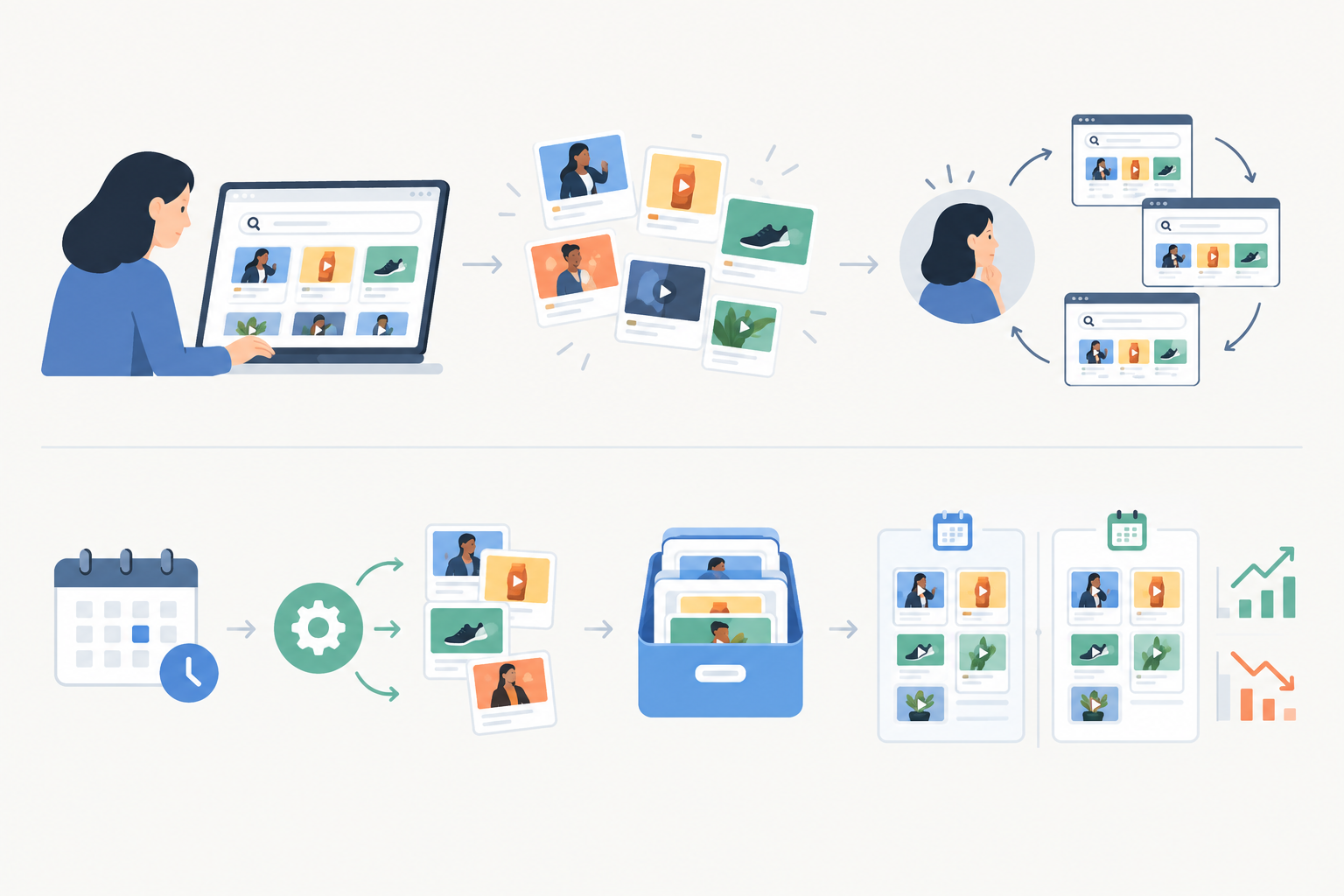
So, what formats are competitors leaning on? You'll only know if you count. Judging from one standout video is how people end up thinking a rival is 'all UGC' when 70% of their active ads are product demos. Count format share across all of a rival's active ads and the answer gets much clearer.
Start with a simple creative tracking sheet. Each row is one ad, with columns for hook type, format, opening line (spoken), on-screen text, length, offer, CTA and destination, and first-seen date. TikTok's own guidance suggests going further than the opening line, so capture the first frame, product proof, sound and creator too. The more you record, the easier it is to tell a repeatable strategy from a one-off. This is especially handy for ecommerce TikTok ads, where creative variations often swap in different products, offers and calls to action.
Here's what one row might look like (invented example, not a real brand):
| Field | Example entry |
|---|---|
| Hook type | Problem-first |
| Format | Creator talking to camera |
| Opening line | 'If your mornings are chaos, watch this.' |
| On-screen text | 'The 5-minute fix' |
| Length | 22 seconds |
| Offer | Bundle: 3 for the price of 2 |
| CTA and destination | Shop Now, product page |
| First-seen date | 3 March |
| Concept tag | 'Fixes your morning routine' |
Here's a tip that saves a lot of confusion: tag by concept as well as format. One concept, say 'this fixes your morning routine', can show up as a creator video, a demo and a slideshow. If you only tag format, you'll think they're running three ideas when it may be one idea packaged three ways.
A personal observation: ecommerce TikTok ads often lean on creator-style content because it blends into the feed, and people tend to scroll past anything that looks like an advert. Check whether your rivals do the same. If they do, see whether it's one creator or many, because that hints at how they're testing.
TikTok has also published research suggesting people often discover products on the platform without actively searching. If you want to cite figures from it, take them from TikTok for Business's current published research and note the date and market, because platform-reported numbers aren't guarantees. The takeaway for us is simple: discovery-style hooks, like a reveal or an unexpected use case, make sense on a feed built for browsing.
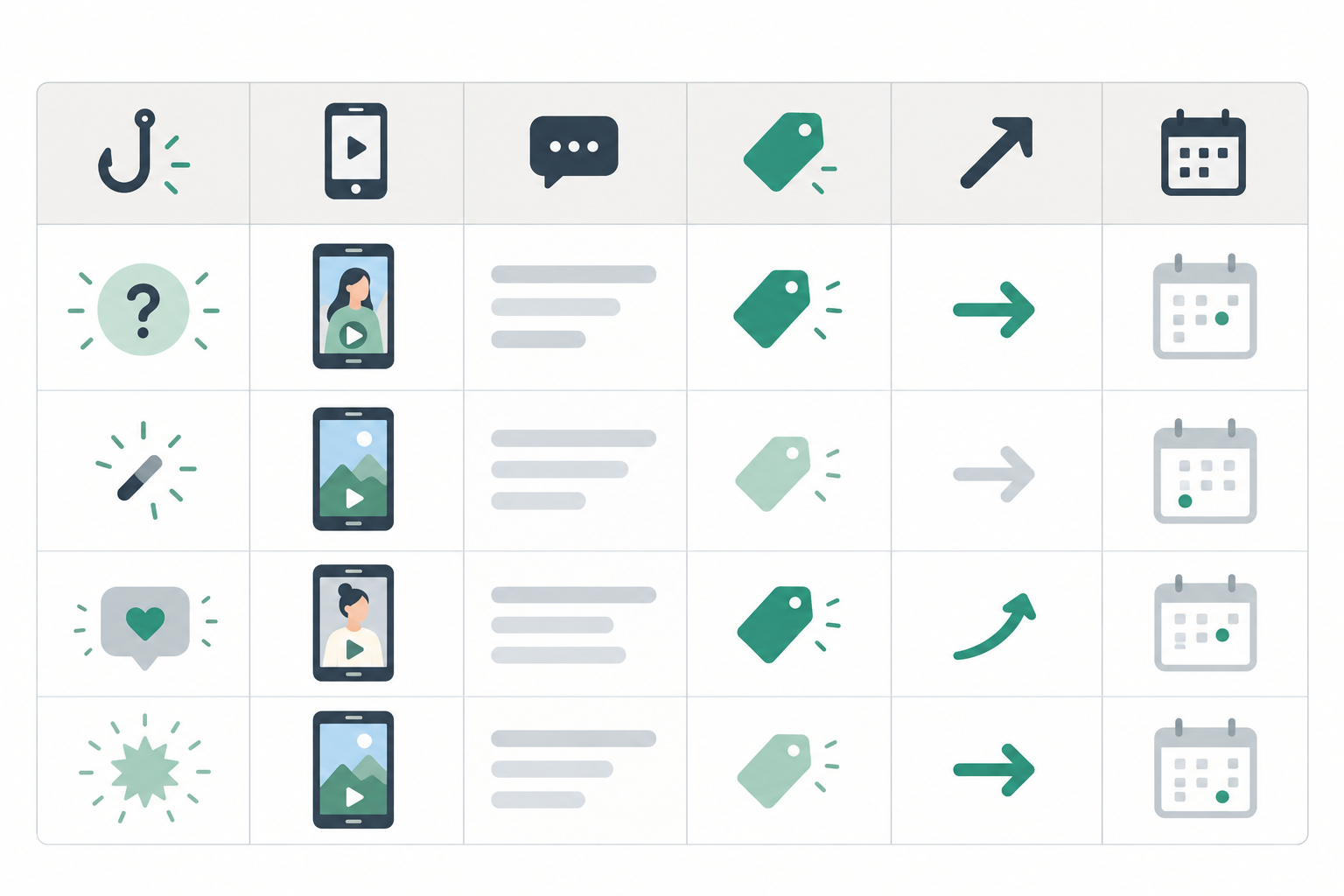
The core skill is spotting repetition and variation. Look at what stays the same and what changes:
Notice all the 'may be's. You're inferring intent from outputs, so treat each reading as a hypothesis.
An ad that keeps running for weeks shows continued activity. It might be a strong performer, and it's worth noting if it also gets iterated into new versions. But it could just as easily be a low-maintenance evergreen ad, one nobody has got round to switching off, or part of a campaign with a fixed run.
Ads that vanish within days may have underperformed. They may equally have been a planned short burst, paused for stock reasons, replaced after a policy review, or changed in delivery. Look for corroboration, like whether a similar concept returns in a new form, before deciding it failed.
This is where monitoring beats a one-off look. Comparing weekly snapshots gives you three separate lists:
Here's a hypothetical. A skincare brand launches six new ads in one week, all opening with a 'dermatologist reacts' hook. Two weeks later only two remain, and both feature the same creator. One reasonable reading is that the concept was tested broadly and the creator may be the variable that mattered. Another is that the other four were seasonal or simply got paused. Your next move might be testing a credible expert voice in your own style, framed as a test rather than a certainty.
Public data can't establish spend, audience, performance or the reason for a change. That's why I'd always treat these patterns as ideas to test, not conclusions.
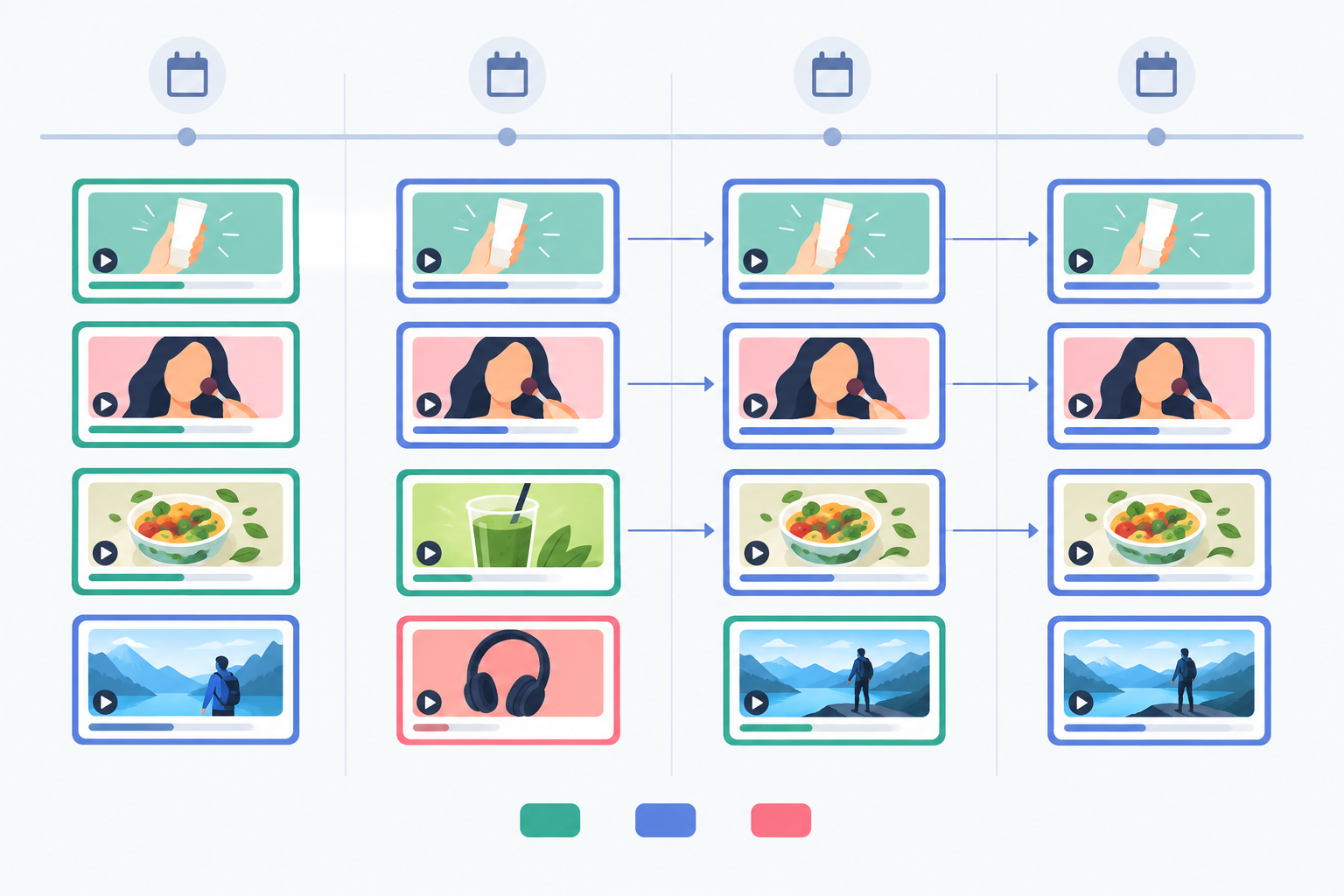
There's no universal figure. TikTok doesn't publish a rule for how often advertisers should refresh creative, and I haven't seen a credible, dated benchmark I'd trust for UK ecommerce, so I won't invent one. Cadence varies with spend, audience size, product, campaign goals and how quickly performance drops off.
TikTok's guidance is that refresh decisions should follow performance signals, such as declining click-through or conversion rates, rather than a fixed calendar. When a creative looks tired, advertisers can swap one element, like the hook, the creator, the demo or the offer, and keep the rest consistent. You can often see that pattern in a competitor's history.
So instead of asking what the 'right' cadence is, use cadence as a relative signal:
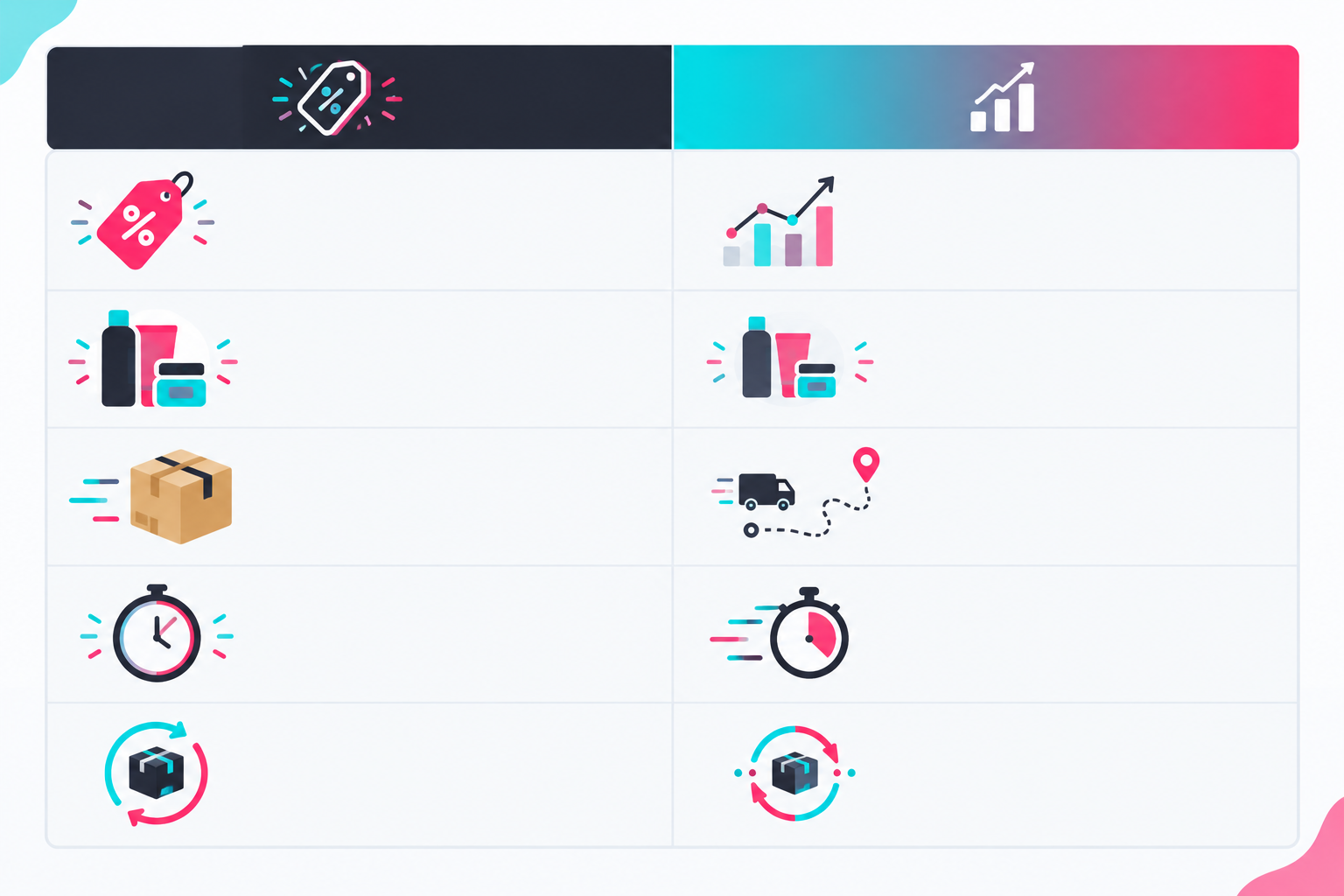
Hooks get attention, but offers and CTAs hint at commercial intent. Here's how I read the common offer types:
| Offer type | What it might signal |
|---|---|
| Percentage discount | Acquisition push or price-led competition; heavy, constant discounting can hint at inventory or acquisition pressure |
| Bundle or multi-buy | A push on average order value |
| Free shipping or free gift | Removing purchase friction without cutting headline price |
| Limited-time or seasonal sale | A planned campaign tied to a retail moment |
| Subscription discount | Focus on repeat purchase and lifetime value |
| Free trial or guarantee | Reducing risk for a higher-consideration product |
These are readings, not rules. Pair them with what you see in the rest of the account before drawing conclusions.
Then check where the link goes: a product page, a collection page, a quiz or a dedicated landing page. Always click through. The landing page often reveals the real offer and which audience the ad is aimed at.
When a rival's offer language changes across several ads at once, it's often a planned campaign rather than a one-off test. That's your cue to look at what they did at the same time last year.
So, how do you turn TikTok ad trends into briefs? Here's the process I'd follow:
Here's a compact example brief built from the pattern above (hypothetical):
One rule above all: don't copy creative. Borrow the structure and bring your own product truth, brand voice and proof. Copying rarely works, and audiences can tell.
A weekly rhythm is a sensible default. It's frequent enough to catch new tests and spaced enough to see which ads stick around. Daily checks mostly show noise, and monthly checks can miss whole test cycles. If your category moves faster or slower, adjust.
A reusable weekly checklist:
A few team tips. Assign each competitor to a specific person so nothing falls through the cracks, share findings in a standing weekly creative meeting, and build a swipe file of reference ads with notes on why each one matters. As a rule of thumb, I'd start with two or three key rivals and see what the first few weeks of data suggest before widening the list.
You can run this routine in a spreadsheet or with a monitoring tool, depending on how many competitors you follow and how much time you have. If you'd like to see what automated weekly digests look like, Rival Ads offers a free look. Check its current plans and pricing against your needs before committing.
Yes. TikTok's Commercial Content Library lets anyone search ads by brand without an ad account, though coverage varies by market. For ongoing tracking with archives and week-over-week comparison, you can use a spreadsheet or a monitoring tool. Check what each tool actually covers before relying on it.
Not precisely. Public ad data shows creative, copy and how long ads have been running, but not budget or conversion results. Longevity and the number of variations are hints to test, not proof of performance.
Most DTC brands get a good picture from 3-5 direct rivals plus one or two aspirational brands in an adjacent category. Beyond that, the weekly review can get noisy without a clear owner for each competitor.
No. Copying rarely works and can damage your brand. Borrow the underlying structure, such as the hook type or offer framing, and rebuild it with your own product proof, creators and voice.
Formats often travel across markets, but offers, humour, delivery promises and seasonal timing differ. Filter by UK targeting where you can, and watch for GBP pricing, UK shipping claims and local retail moments.