Why South African Artisans Deserve a Spot on Your Baby Registry
South African Artisans Behind Handmade Baby Products: Pieces Worth Adding to Your Baby Registry
This guide to South African artisans’ baby products explores pieces made in small batches, with care and with a story you can tell your child one day. If you add a few handmade pieces to your registry next to the practical newborn essentials, your guests get gifts that feel personal, and small local businesses get your support. On bababloom you can put artisan products and local baby brands in one shareable list, so you get personality and practicality together.
Let me walk you through what that looks like in real life, because it's easier to see than to explain. ☕
What Does 'Artisan' Mean for Handmade Baby Products?
Picture a Sunday afternoon, a cup of tea going cold beside you, and your fourth baby registry template of the day open on the screen. Every list has the same pram, the same monitor, the same pastel muslins. Nothing is wrong with any of it, but you start to wonder where the personality went.
An artisan is a small-scale maker who designs, crafts or finishes products themselves, often in small batches rather than factory runs of thousands. In South Africa that includes knitters, crocheters, sewists, woodworkers and beadworkers. They make everything from blankets and clothing to nursery décor and keepsakes.
Here's the expectation I want to set: you don't need an all-handmade registry. You'll still need nappies, a car seat and a good thermometer. The sweet spot is a handful of artisan pieces for special moments, with everyday basics from local baby stores filling in the rest.
That's why we built bababloom, a baby registry platform focused on South African brands and small businesses, so makers and retailers can sit together in one shareable list.
Meet the Makers: Who Are South Africa's Baby Artisans?
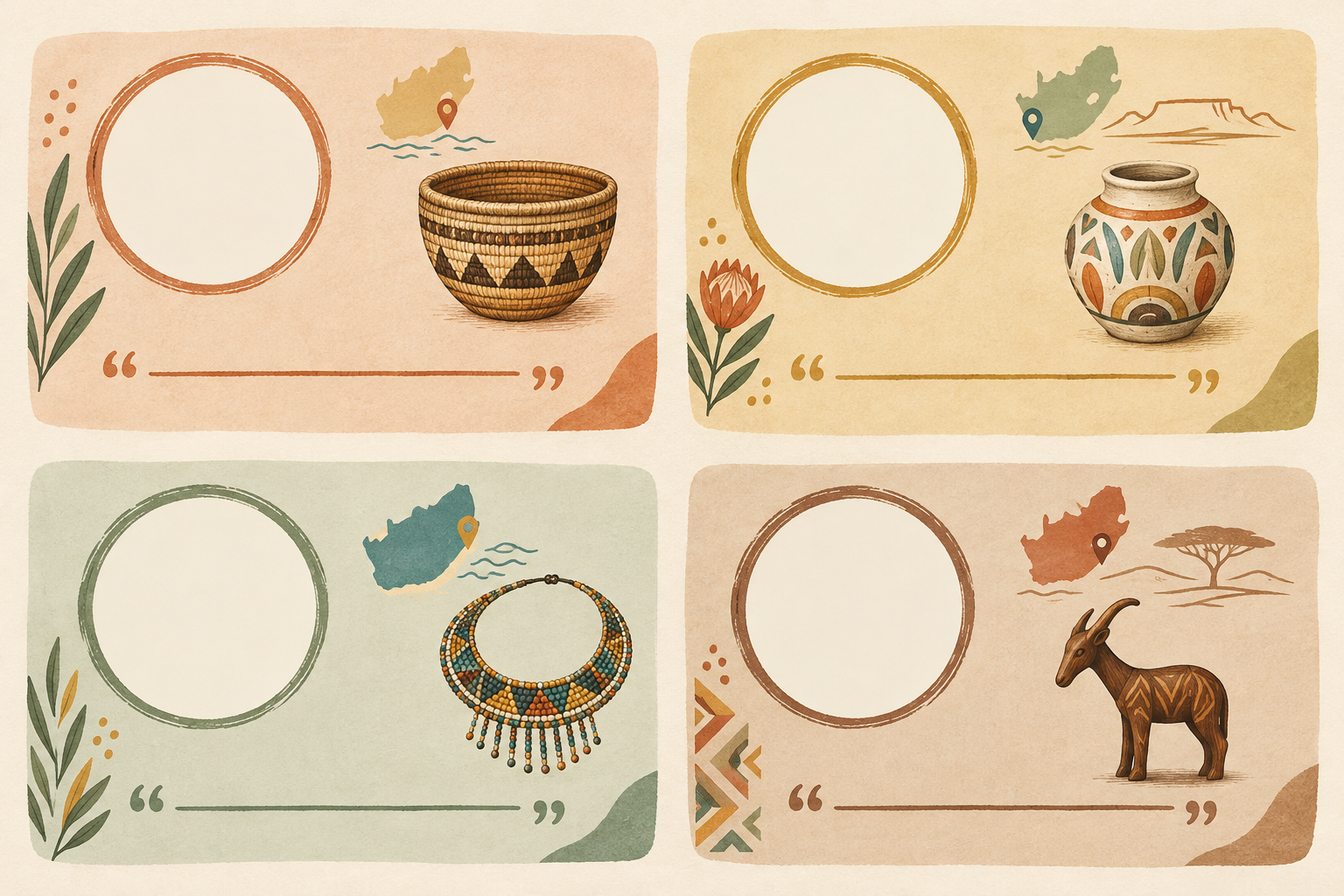
I'd love to share a set of maker interviews here. But any quote or backstory should belong to the maker and be shared with their permission, so I won't put words in anyone's mouth. Below you'll find what is publicly known about two well-loved South African names, plus a 'maker card' you can use to get to know any maker before you add their work to your list. As makers share their stories with us, we'll add their own words.
Mielie: Felt Toys and Nursery Décor
Mielie is a handmade-goods brand whose range includes felt toys and nursery-style décor (Mielie). A felt animal or a small piece of décor can make a nursery feel personal rather than catalogue-bought. Check the age guidance and safety details for each individual item before you add it.
Monkeybiz: Beadwork with a Story
Monkeybiz is a Cape Town-based initiative working with women artisans (Monkeybiz). They make handmade beaded objects, including figures and animals.
For your registry, think keepsakes or display pieces, not baby toys, unless the maker says an item is suitable for babies and provides safety information. A beaded animal on a high nursery shelf is lovely. In a baby's hands, it isn't.
Questions to Ask a Baby Product Maker
Whoever you're considering, a good maker will happily tell you:
- Where they work and how long they've been making
- What materials they use, and how to wash the piece
- The age range the item is intended for
- The lead time for made-to-order pieces, and whether you can personalise colours or names
- Whether they offer repairs or replacements (some do, many don't, so ask)
These are questions to ask, not boxes every brand will tick. Makers worth supporting tend to welcome them.
How Wide Is the Local Network?
At the time of writing, our live example registry on bababloom features 102 gifts from 31 stores, which gives you a sense of the variety on offer. Stock changes, so browse the platform to see what's currently available.
What Sets Handmade Baby Products Apart from Mass-Produced Items?
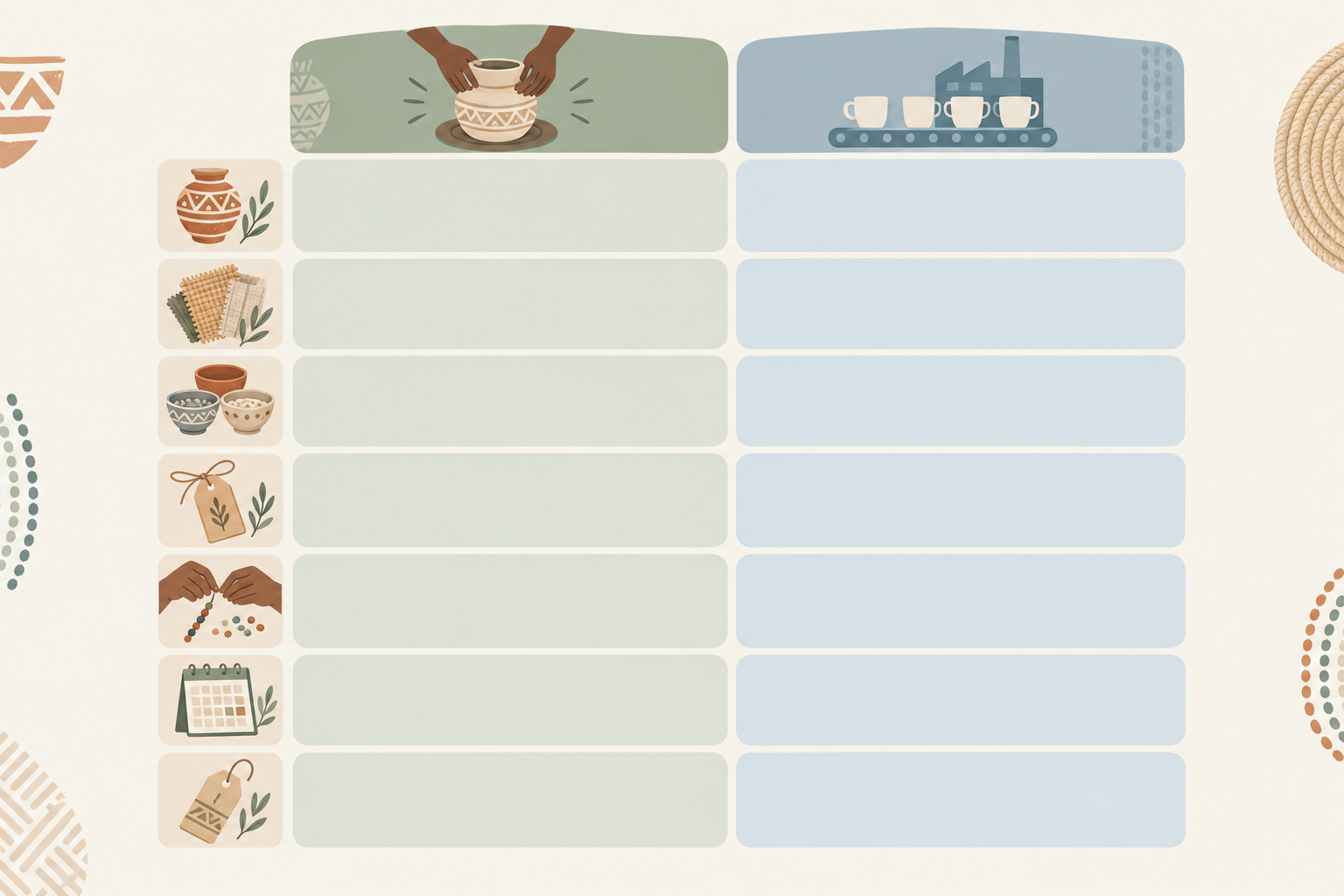
I'm a fan of handmade, but I'm not here to sell it to you, so here's a balanced look. These are general tendencies and individual products vary, so check the specific item.
| Artisan-made | Mass-produced | |
|---|---|---|
| Design | Often original, sometimes inspired by local life | Consistent, trend-led, widely available |
| Materials | Chosen by the maker; details vary, so ask | Standardised; usually listed on the label |
| Batch size | Small batches or made to order | Large production runs |
| Quality checks | Often hands-on, but not automatically tested | Often systematic, though not always |
| Personalisation | Frequently possible | Rarely available |
| Story | Often a named maker and place of origin | Can be harder to trace |
| Lead time | Can be longer for made-to-order pieces | Usually quicker dispatch |
| Price | Often higher per item | Often lower, with regular discounts |
Are Handmade Baby Products Safer or More Durable?
This is the part I'd underline twice. 'Handmade' is not a safety certificate. Durability depends on the materials, the construction and how you care for the item, and small-batch work can be beautifully finished or not. In South Africa, the Consumer Protection Act gives you rights to safe, good-quality goods, but it's still worth checking each product and seller rather than trusting a buzzword.
What to look for:
- Fabric and fill details, plus clear washing instructions
- Neat finishing, with secure seams and no loose threads
- A stated age range
- For toys, no small detachable parts and no long cords or ribbons. If you're in the UK, ask whether a toy carries a UKCA or CE mark.
- For anything near sleep or feeding, clear safety information from the maker
On sleep, please follow safe-sleep guidance over how pretty something is. In the UK, The Lullaby Trust and the NHS advise a firm, flat, clear sleep space, with no pillows, duvets, bumpers or soft toys in the cot. A knitted blanket is still a wonderful gift. Just keep it for the pram, the play mat and awake, supervised cuddles rather than the cot.
Handmade Baby Products: Trade-Offs and Perks
The honest trade-offs are longer lead times for made-to-order pieces and sometimes a higher price per item. The perks are real too. You can often ask the maker a question or request a colour. And you don't have to pick a side, because a mixed registry works beautifully.
Popular South African Artisans’ Baby Products to Add to Your Baby Registry
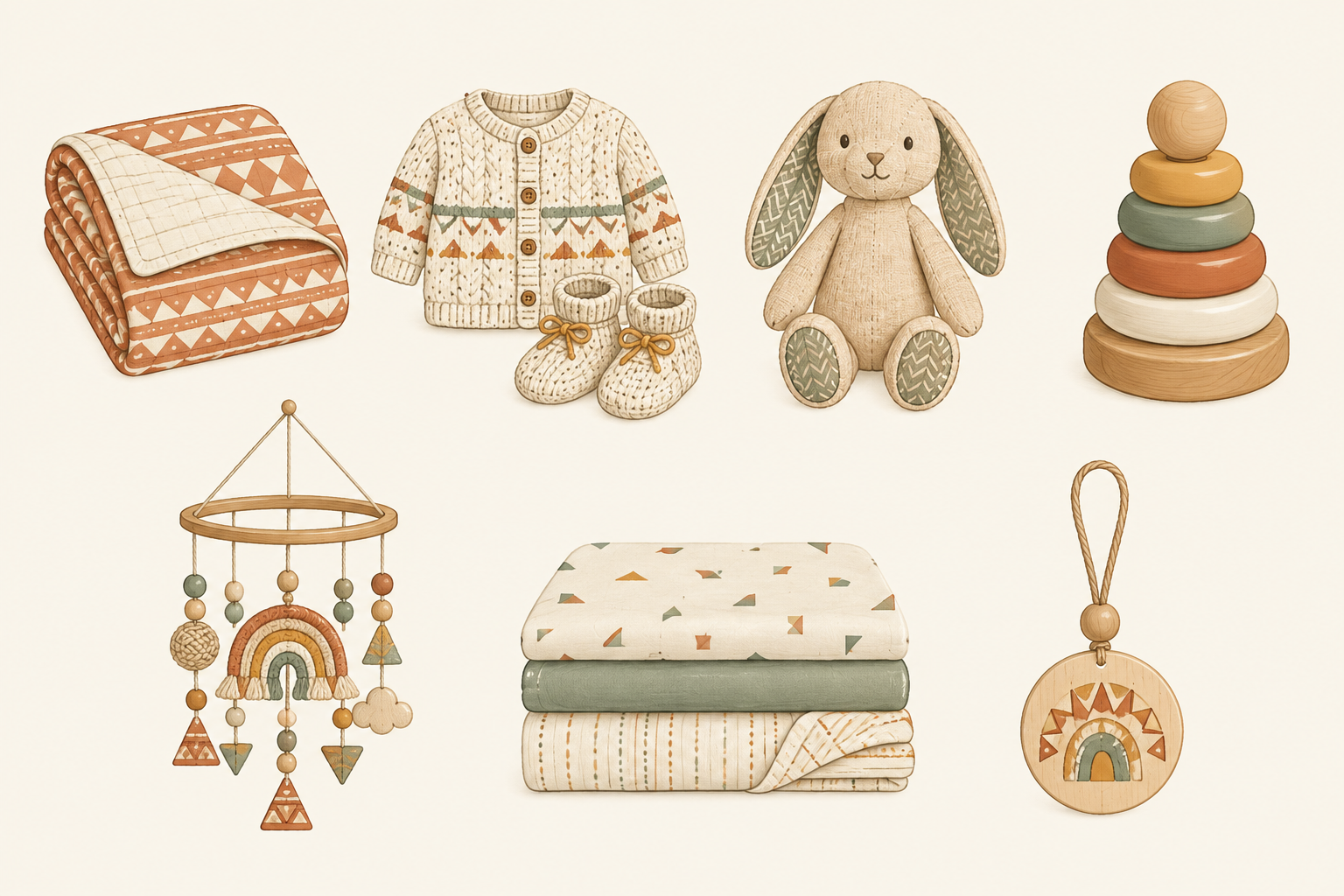
Wondering what handmade baby products are popular on a registry? These are the categories to look for. Availability changes, so browse bababloom to see what our retailers currently offer.
- Soft blankets and swaddles. You'll use them in the pram, on the play mat and for cuddles. Tip: keep loose blankets out of the cot.
- Knitted or crocheted pieces (beanies, booties, cardigans). They're lovely for photos and cooler months. Tip: babies grow fast, so register a few sizes and check yarn content and washing instructions.
- Soft toys and comforters. Tip: look for a stated age range and no small parts or long cords, and keep them out of the sleep space.
- Wooden toys and teethers. Tip: ask about finishes and intended age before you add them.
- Nursery décor (mobiles, wall hangings, name signs). Tip: choose lightweight pieces, fix them securely and keep them well away from the cot.
- Bedding, muslins and bibs in locally designed prints. They're washable and used daily. Tip: check fabric composition and laundering details.
- Keepsakes (memory boxes, milestone cards, hand-printed art). Tip: guests can choose these easily without knowing your style in detail.
A simple rule of thumb: let guests give the sentimental pieces, and choose the high-use items yourself (the swaddles and bibs you'll wash twice a day) so they suit your routine.
How Artisan Baby Products Add Sentimental Value
Here's a scene many parents will recognise, though I'm sketching it rather than quoting anyone. A hand-knitted blanket or small wooden toy becomes the thing a toddler drags from room to room. Years later it comes out of a memory box and you're right back in those first sleepy weeks.
A gift with a maker's story behind it does something mass-produced items rarely do: it starts a conversation. At a baby shower, someone picks up a hand-sewn piece and asks, 'Who made this?' Later, you can tell your child that story. Well-made pieces can also be handed on to siblings or friends, which suits parents who want to buy less but better.
That same giving spirit is behind our partnership with the Hatch Foundation. Guests can add a R500 Hatch Bag of newborn essentials to your registry, and it goes to a mother who needs one. It's a thoughtful option for guests who want to give beyond a physical gift. 🤍
How to Find and Add South African Artisans to Your Registry
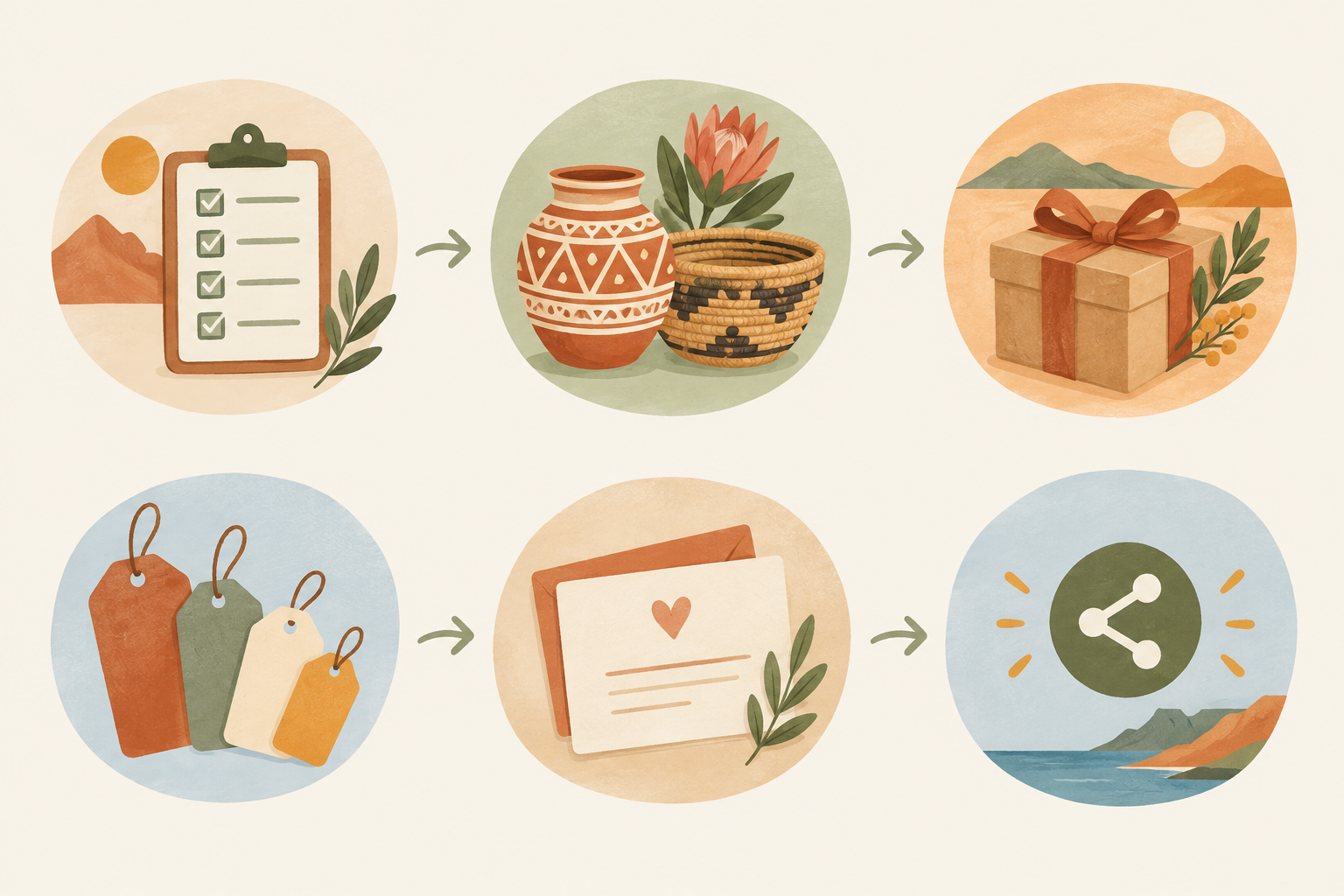
- Decide on your must-have newborn essentials first: nappies, a safe sleep space, feeding bits, clothing. Artisan pieces sit alongside the basics.
- Browse bababloom's curated South African baby stores and artisans. We choose which retailers to feature, which saves you hours of searching. Always check each product page for materials, age range and care details.
- Add items from different makers into one registry. Building it is free, and you pay a one-time fee of R199 when you're ready to share it.
- Mix your price points so guests with different budgets can all find something.
- Add a short personal note about why you chose certain pieces.
- Share your link. Guests are taken to each retailer's own website to check out, and the registry marks purchased items so you're less likely to receive duplicates.
Where to Find Local Artisans Beyond the Platform
If you enjoy a good treasure hunt, try these:
- Online marketplaces such as Hello Pretty, a South African marketplace for locally made goods
- Maker markets, like those run by Kamers/Makers, where you can feel the materials and ask about custom sizing (check dates with the organiser)
- Proudly South African (proudlysa.co.za), which promotes local products. Still confirm that a specific baby item is made locally.
- Social media, where many small makers share their work first
Whichever route you take, check stock, lead time, delivery costs, returns and care instructions, especially for made-to-order pieces or gifts needed by a particular date.
Buying from South African Artisans in the UK or Abroad
Bababloom focuses on South African retailers, and because guests buy directly from each retailer, delivery varies from store to store. I can't promise every store ships to the UK, so here's a quick checklist for you and your guests:
- Does the store ship internationally, and to the UK specifically?
- What currency is the price shown in (usually rand), and what will your card provider charge to convert it?
- What are the delivery costs and estimated times?
- Could import VAT or duties apply on arrival?
- What is the returns process from overseas?
If a store doesn't ship to you, a South African relative may be able to send the gift on your behalf. Handmade items made to order can add extra time, so allow plenty before your due date.
Why Shopping Local Matters Beyond the Gift
A pretty blanket is nice, but there are other reasons to choose local baby brands:
- Your money goes directly to the retailer or maker, which helps South African small businesses keep going.
- Guests deal with the retailer directly, so returns and support information sits with the shop they bought from.
- Local brands design with local life in mind, including South African homes and climates.
- Registries help small businesses reach new customers, which is part of why bababloom works with merchants as a retail marketing partner.
- Hatch Bags provide newborn essentials to mothers in need in South Africa.
And one encouraging note: if your budget means practical basics come first, that's more than okay. One artisan piece, one local store, one Hatch Bag from a generous guest. It all counts, and there's no guilt needed.
FAQs About Artisan Baby Products
What handmade items are popular on baby registries?
Blankets and swaddles, knitted pieces, soft toys, wooden teethers, nursery décor and keepsakes are popular handmade baby products for registries. Many parents choose a few artisan pieces and fill the rest of the list with everyday essentials from local baby stores.
Are artisan baby products more durable than mass-produced ones?
Not automatically. Durability depends on materials, construction and care. Many artisans work in small batches with close attention to finishing, so read care instructions and ask the maker about materials and safety before you add an item.
How do I find local artisans to add to my registry?
The easiest way is to browse a curated platform like bababloom, which brings South African baby artisans and local baby stores together. You can also explore maker markets, marketplaces and social media, then check whether the maker's store can ship to your guests.
Do I have to pay to build a registry on bababloom?
Building your registry is free. You pay a one-time fee of R199 when you're ready to share it.
How does buying from the registry work for guests?
Guests choose a gift and are taken to the retailer's own website to check out. The registry marks purchased items so you're less likely to get duplicates.
I live in the UK. Can my family or I still buy from South African artisans?
Possibly, but it depends on each retailer. Before buying, check whether they ship to the UK, the currency, delivery costs, possible import VAT or duties, and the returns process.
What is a Hatch Bag?
A Hatch Bag is a R500 donation of newborn essentials made through bababloom's partnership with the Hatch Foundation. Guests can add one as a gift in honour of your baby, and it goes to a mother in need in South Africa.
Your Next Step
You don't need to overhaul your whole list. Start with your essentials, then pick two or three artisan pieces that make you smile when you picture them in your home. Start your free registry on bababloom and see how it feels to build a list that is as personal as it is practical. 🌱
Related Articles
Group Gift Ideas for South African Baby Showers: A Guide to Splitting the Cost Thoughtfully
Discover thoughtful baby shower group gift ideas, from nursery essentials to travel systems, plus baby registry etiquette and tips for pooling money fairly.
What Makes a Great Baby Registry Partner? A Retailer Readiness Checklist
Explore baby registry retailer requirements with a practical checklist covering product quality, reliable fulfilment, secure checkout and local baby brands.
Create content like this automatically
Scribe uses AI to generate high-quality blog posts that engage your audience and drive traffic.