Your Ultimate Checklist for Selling Workshop Tickets in South Africa
17 min read
Loading...
Selling workshop tickets comes down to five things: get your details and capacity nailed down, price your tickets sensibly, put them on one clear sales page with built-in payments, collect only the attendee information you need, and follow up with confirmations and reminders. With an online store builder like Shopstar you can do all of this from a single page and get paid into your South African bank account. No developer needed. 🎟️
This is the checklist we wish every first-time host had. It's written for the ceramics teacher in Woodstock, the bookkeeping trainer in Sandton, the sourdough instructor in Durban and the wellness facilitator in Stellenbosch. Work through it from top to bottom, tick things off as you go, and you'll be ready to sell tickets online.
In our experience, first-time hosts usually lose sales because the basics were fuzzy, not because the workshop was bad. Nobody buys a ticket if they can't tell what it's for, where it is or whether there's space. So start with a one-page brief you can print and keep beside you.
Your printable workshop brief (copy this onto one page):
💡 Tip: once this page is filled in, everything later (pricing, the ticket page, reminders) becomes copy-and-paste.
Pricing is where first-timers either undercharge and burn out, or overcharge and sell nothing. Competitor prices are a handy market reference, but they can't tell you whether your numbers add up. So work backwards from your costs.
Split your costs into two buckets:
Payment fees are a different animal because they're a percentage of each ticket. They shrink what you keep from every sale, so build them into the price instead of remembering them at the end.
Here's a worked example. Say Thandi runs a hand-building ceramics morning in Woodstock with 12 seats.
Treat this as a starting estimate, not gospel. Your real costs will shift a bit, so revisit the numbers once your venue and supplier quotes are final.
✅ Sanity check: does the price still work if you only sell your minimum number of seats? If yes, you're safe. If not, adjust now.
We'll be upfront about how Shopstar charges, because surprises are the last thing you need:
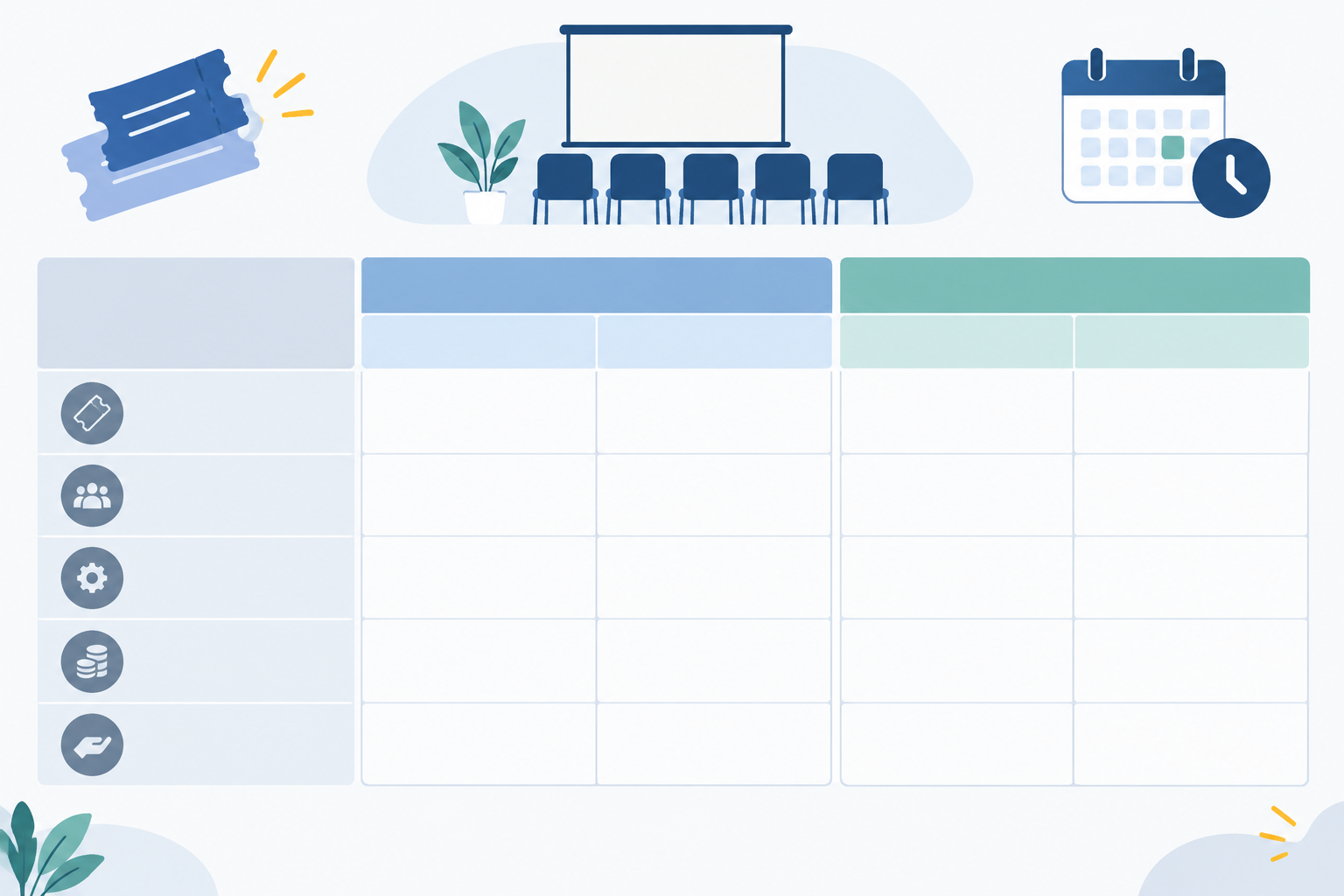
The table below shows a full 20-seat workshop. The Lower Fees column shows the per-sale fee only, so subtract your monthly fee from the amount you receive. Check the current monthly fee on Shopstar's pricing page.
| Scenario | Gross sales | Start Free (6%) | You receive | Lower Fees (2.9%) | You receive, before monthly fee |
|---|---|---|---|---|---|
| 20 seats at R450 | R9,000 | R540 | R8,460 | R261 | R8,739 |
| 20 seats at R850 | R17,000 | R1,020 | R15,980 | R493 | R16,507 |
| 4 workshops a month, 20 seats at R450 | R36,000 | R2,160 | R33,840 | R1,044 | R34,956 |
So what does this mean in practice? For a single workshop, Start Free is the easy choice because you pay nothing if you don't sell. If you run several a month, compare the monthly fee against the per-sale saving you'd actually make.
Keep your tiers few and clearly different:
State what each tier includes and when its price or availability ends.
Under the Consumer Protection Act (CPA), the price you display should be the total price you'll charge. If you're VAT-registered, show it including VAT, which in South Africa is 15%. At the time of writing, SARS requires registration once your taxable turnover passes R1 million in any consecutive 12 months, and allows voluntary registration from R50,000. Thresholds can change, so confirm them on the SARS website or with a tax practitioner. Either way, ticket income is income you have to declare, so keep tidy records.
For a first workshop, one simple page beats a full website. It's faster to build, cheaper to run, and easy to share on Instagram, WhatsApp and your link in bio. Nobody has to hunt through menus to find the Buy button.
That's what an online store builder is for. With Shopstar, you claim a shopstar.page URL (or connect your own domain), add your ticket as a product, and you're live. For local sellers it's a practical way to start taking orders online without wrestling with code.

This is the bit many hosts forget. When you sell a ticket as a product, the buyer gets an order confirmation, and you get an order record with their name and contact details. Don't assume that confirmation is a unique, scannable ticket. Check Shopstar's current documentation for what the confirmation includes and whether QR-style tickets are available.
If they aren't, a manual process works perfectly well for small workshops. Export or print your order list, and tick names off at the door against ID or the confirmation on the buyer's phone. If someone can't attend, ask them to reply with the new attendee's name and update your list. Do a dry run a few days before, so you're not figuring it out while a queue forms.
Shopstar Go handles payment processing, with payouts to your South African bank account. Before you promise anything to a venue, confirm the current payment methods, payout timing and how fees are treated on refunds in Shopstar's documentation. Early payouts can help when you need a deposit, but plan your cash flow around what's confirmed.
Most of your buyers will land on your page from a social post or WhatsApp message on their phone. If the page loads cleanly and checkout takes under a minute on mobile, you've removed the biggest barrier to sales. And if you're not technical, Shopstar offers onboarding support, so a real person can help you get your first ticket live.
How early should I open ticket sales? As soon as your date, venue, price and key terms are confirmed. As a planning guide (not a universal rule), four to eight weeks suits a small local workshop, and eight to twelve weeks suits larger or multi-day events. Go earlier if people have to travel, arrange leave or get employer approval, and around busy periods like the December holidays.
A simple timeline keeps you organised:
It depends. Early-bird pricing helps when you need momentum, or early cash for a venue deposit or materials. It's less useful for tiny workshops that will sell out anyway. Why discount seats you'd fill at full price?
If you do offer it, keep the discount meaningful but modest (around 10 to 20%) and check that it still covers your per-seat costs. Set a clear end date or a fixed number of places, and honour it. Run it only once per workshop so you don't train your audience to wait for deals. A Johannesburg host might announce six weeks out and offer the first 10 seats at R405 instead of R450, then move to the standard price. And spare a thought for the people who miss out: a waitlist or email sign-up means your next workshop starts with warm leads.
What information should I collect from attendees? Less than you think. The Protection of Personal Information Act (POPIA) applies as soon as you handle names, emails and phone numbers, and the golden rule is simple: collect only what you truly need, tell people why, and store it securely. The Information Regulator publishes official guidance if you want to go deeper.
The essentials are a full name, an email address, and a mobile number for day-of updates.
Useful extras, only if they change how you run things: dietary requirements if you're providing food, experience level if you teach mixed groups, and an emergency contact for physical or outdoor workshops.
Keeping ticket buyers and orders together in one store, rather than scattered across spreadsheets and WhatsApp screenshots, makes all of this much easier to manage.
People forget. Life happens. A friendly sequence of messages is the easiest way to protect your numbers, and it builds trust too. The Electronic Communications and Transactions Act (ECTA) also expects suppliers to give clear information about online transactions.

Write these messages once, save them, and reuse them for every workshop. It takes an hour now and saves you dozens later. Someone who loved your ceramics morning is also a great candidate for your next session or a regular studio club.
How do I handle refunds or cancellations? Decide your policy before sales open, and publish it on your ticket page. Clear rules protect you and reassure buyers. A few things to keep in mind:
If you cancel or reschedule, offer a full refund or a transfer to the new date, and tell people quickly. Name transfers are a friendlier alternative to refunds, and they keep your seat filled. Keep a record of requests and decisions so you treat everyone consistently.
📝 This is general guidance, not legal advice. Rules depend on your circumstances, so for bigger or higher-priced events, speak to an attorney, and see the National Consumer Commission for CPA information.
Tick each box before you share your link.

Ready to get started? Set up your first event ticket on Shopstar's free plan, and look at the Lower Fees plan once your workshops start filling up. 🚀
Decide before you sell what happens: confirm, postpone or cancel by your cut-off date, and say so on the ticket page. If you cancel, refund promptly or offer a transfer to a new date.
No. A single ticket page with built-in payments, shared on social media, is often all a small workshop needs.
Only if you're VAT-registered with SARS. VAT is 15%, and registration is compulsory above R1 million taxable turnover in 12 months. If you're unsure, speak to a tax practitioner.
Yes, if your policy allows it. Ask them to email you the new attendee's name and contact details before your transfer deadline, and update your list.
It's easier to keep everything on your ticket page so your attendee list, records and refunds stay in one place. If you do take cash, record it so your income and headcount stay accurate.

Learn how to build recurring revenue in South Africa with memberships and subscriptions. Price in rand, bill automatically, keep members and track chu

Learn how an online store builder helps South African market and pop-up organisers sell entry and vendor tickets, manage stalls, collect details and h

Learn how an online store builder can help you bundle existing digital products, price them in rand, deliver instantly and grow revenue without creati