AI SEO vs Traditional SEO: What Small Businesses Should Know Before 2026
15 min read
Loading...
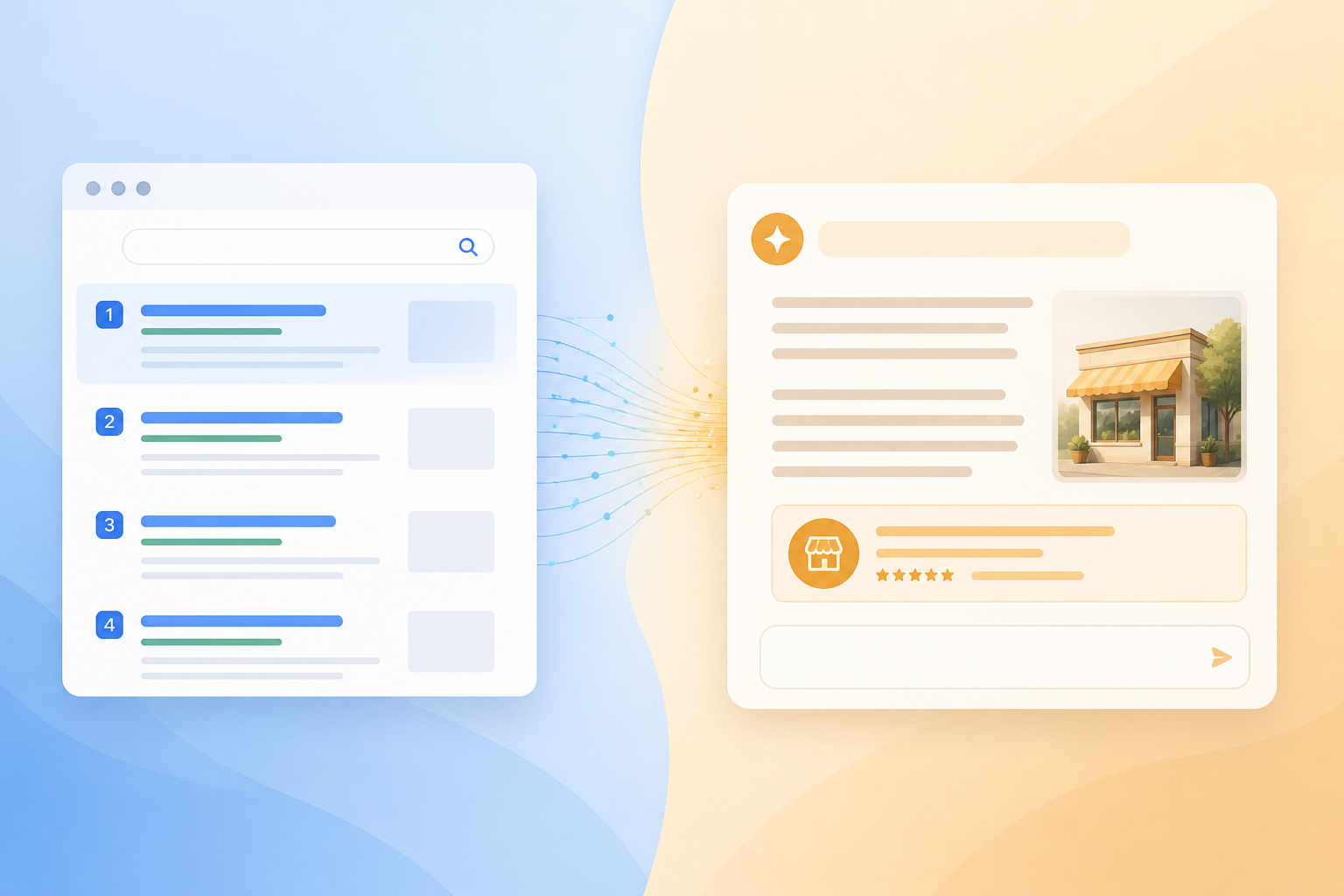
Meta description: A practical UK-focused comparison of traditional SEO and AI SEO, explaining what carries over to ChatGPT, Claude, Gemini and Perplexity, and how small businesses can improve AI visibility before 2026.
If you've spent the last few years building a solid Google ranking and you're now wondering whether that work transfers over to ChatGPT, Claude, Gemini, and Perplexity, here's the direct answer: it transfers partially, not completely. Google rewards keyword relevance, backlinks, and technical crawlability built up over years of algorithmic refinement. Generative engines reward something related but distinct: clear, citable, well-structured content that answers a specific customer question directly, without forcing the reader to click through and dig for it.
A quick note on the evidence in this piece. At MentionOwl, we monitor how a set of UK small businesses across trades, hospitality, and professional services appear in AI-generated answers, checking a rotating list of roughly 40 real customer-style questions per sector each month across ChatGPT, Perplexity, and Gemini (Claude is included where its browsing tools allow retrieval). This is internal, observational monitoring, not a peer-reviewed study, and I won't dress it up with false-precision percentages. Where I reference a pattern from this tracking, I'll say so explicitly, and I'll flag it as directional rather than definitive. Where I cite external data, such as search engine market share, I'll name the source.
I want to walk through where traditional SEO and AI SEO converge, where they diverge, and what that means practically for a UK small business owner trying to figure out whether AI assistants are recommending them, or quietly sending customers to the competitor down the road instead.
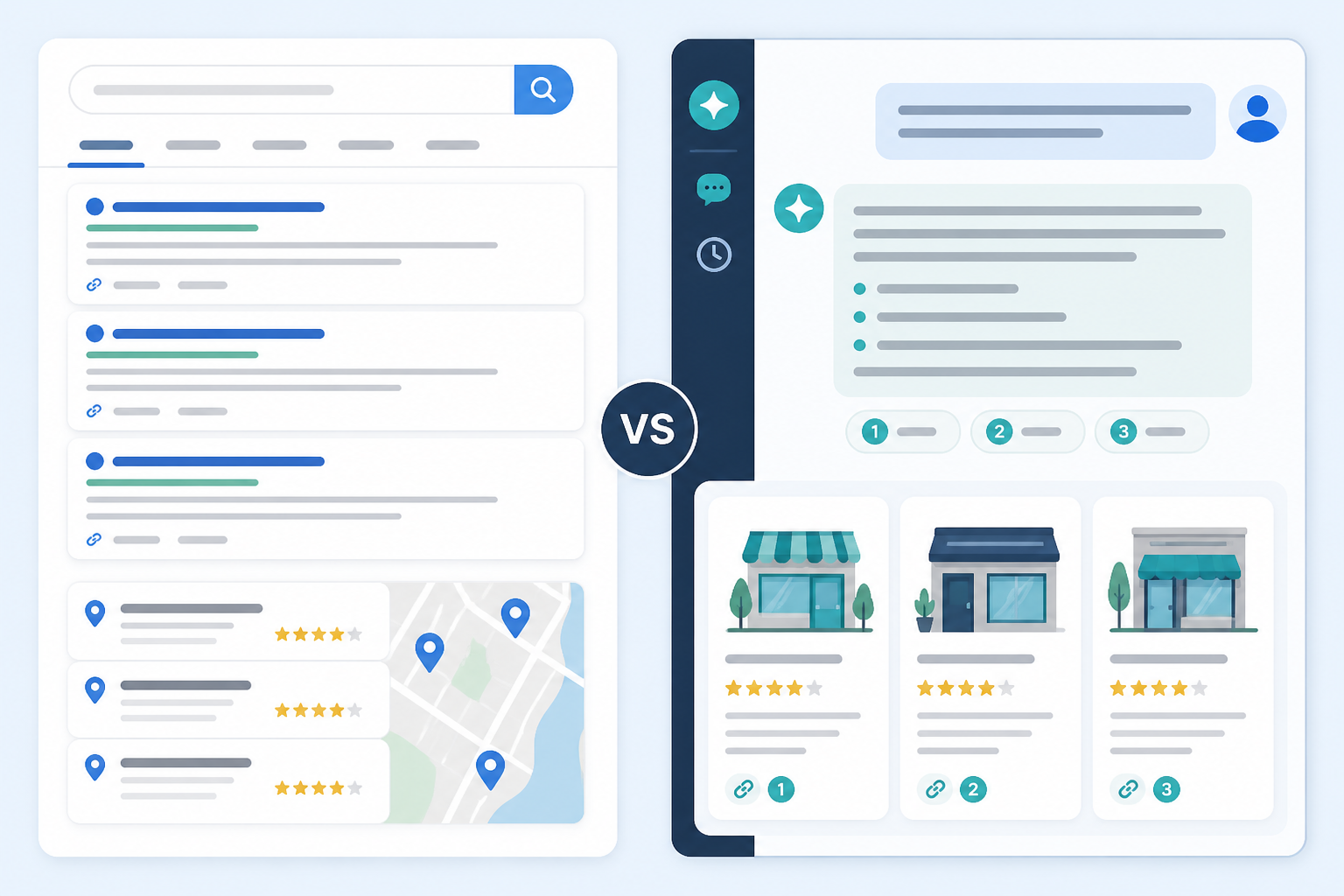
Before writing off traditional SEO as a legacy discipline, it's worth being precise about what it still accomplishes. Google continues to command roughly 90% or more of UK search-engine market share according to StatCounter's ongoing tracking (statcounter.com, accessed 2025), and BrightLocal's 2024 Local Consumer Review Survey found that 98% of people use the internet to research local businesses, with a majority doing so weekly. That volume alone means conventional search visibility isn't optional for a UK business, regardless of how fast AI adoption moves.
The technical foundations traditional SEO insists on also support AI retrieval, even though the two systems don't work identically underneath. Site speed, mobile-friendliness, HTTPS, and crawlability allow automated systems, including browsing-enabled AI tools and Google's AI Overviews, to access your content at all. I'd call this AI legibility: the basic technical readiness that lets a machine fetch, parse, and understand a page, as distinct from whether that machine then chooses to cite it. Being legible doesn't guarantee selection, but it's a precondition. If a page can't be fetched, it can't be cited, full stop.
Several other traditional SEO elements carry forward, though not mechanically:
What traditional SEO doesn't reliably deliver is control over whether an AI system chooses to quote you, summarise you, or ignore you in favour of a competitor with thinner backlinks but a clearer, more directly quotable answer. That distinction is where the next section matters.
First, a working definition: generative engine optimisation (GEO) is the practice of increasing the likelihood that an AI answer engine retrieves, correctly understands, and accurately cites your business when a relevant question is asked. It overlaps with SEO but isn't identical to it.
It's tempting to say large language models are "trained on the same web corpus Google indexes," but that glosses over differences between platforms that change how you should prioritise your time, and these differences shift frequently enough that I'll date this snapshot: as of late 2025, ChatGPT's web-browsing mode blends a trained knowledge base with live retrieval when invoked; Perplexity is built around retrieval-first architecture and shows sources openly; Gemini's answers draw heavily on Google's existing index; and Claude's browsing is more tool-dependent and conservative by default. Each of these can change with a product update, a regional rollout, or a new model version, so treat this as a current-state snapshot rather than a fixed architecture.
Beyond which platform retrieves what, a few working concepts matter for assessing your own AI visibility, even though none of them have an agreed industry measurement standard yet:
What does appear to transfer across platforms, based on our tracking, is this: content that answers a specific question in a self-contained paragraph, states facts plainly, and is attached to a clearly identified business entity performs better than content requiring the reader to piece together an answer across multiple pages. I'd stop short of calling this a universal rule; it's a consistent pattern, observed across a few hundred monthly prompt checks, not a tested algorithmic law.
Consider a UK example. A search for "boiler servicing cost Manchester" on Google returns a results page with links, ads, and a map pack; the user still has to click through. The same question asked of an AI assistant may produce a short answer citing a price range and naming a couple of local providers directly, with no click required. If your website buries pricing three paragraphs into a blog post, or only reveals it after a contact form, you're structurally disadvantaged in the AI answer even if you outrank competitors on Google.
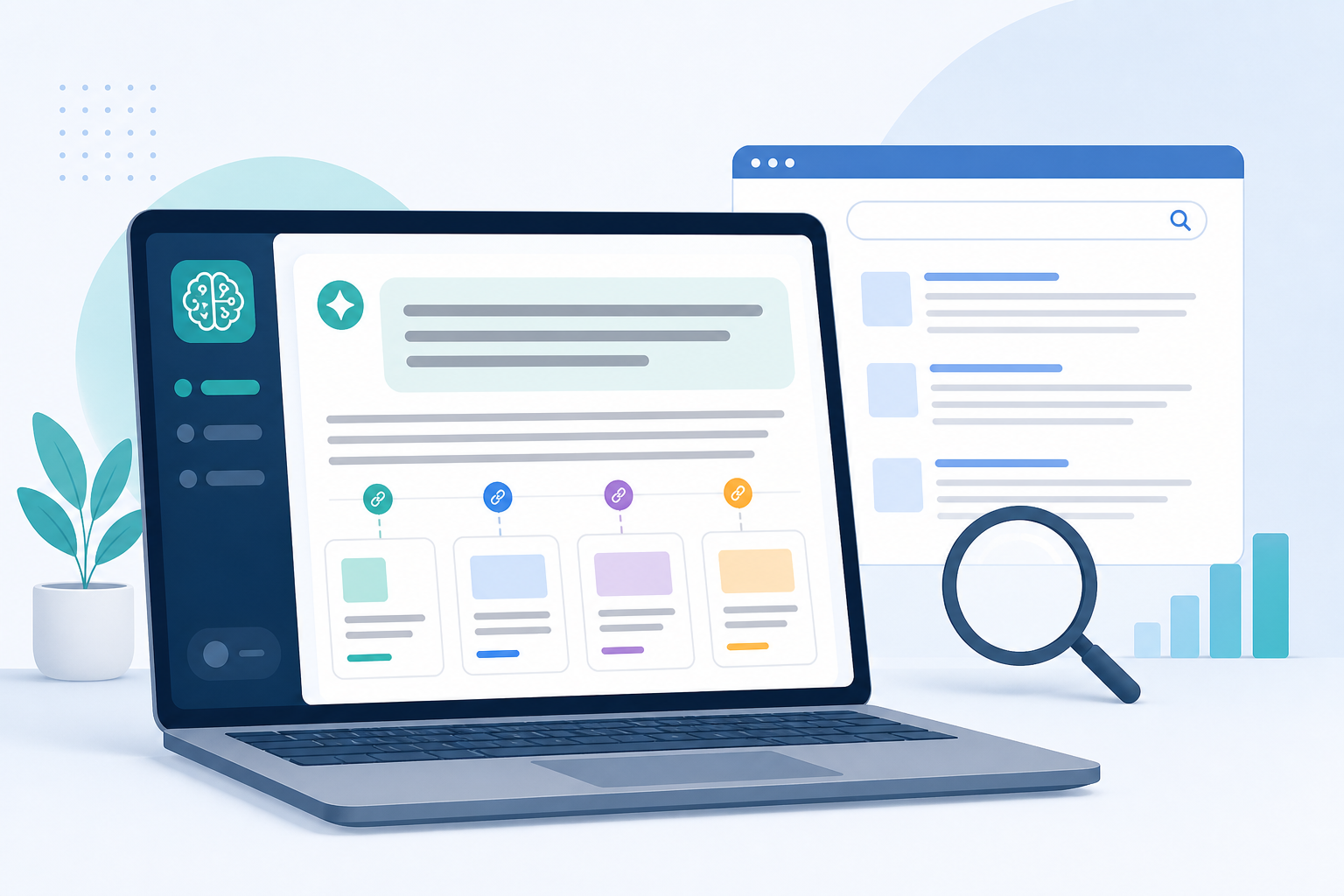
Pro tip: Ask ChatGPT, Perplexity, and Gemini the exact questions your customers ask before they buy, phrased the way a real customer would type them. Note which businesses get named, and run the same prompt two or three times, since answers can vary between identical queries depending on session, region, and model version. If you're not named, that's a diagnostic starting point, not a reason to panic.
In short, yes. I'd push back on any framework claiming a fixed overlap percentage between the two disciplines, because I haven't seen a published, methodologically transparent study measuring this across platforms, industries, and countries. What I can say, based on the patterns above and basic logic about how these systems source information, is that traditional SEO and AI SEO share substantial practical overlap in foundational work: accurate business information, clear written answers, genuine reviews, and crawlable technical infrastructure benefit both.
Where they diverge is content shape. Traditional SEO optimises for ranking position on a page the user will scroll and click through. AI SEO optimises for being the direct, quotable answer inside a conversational response the user may never click away from. A UK small business realistically needs to keep doing the traditional work, since Google still sends the overwhelming majority of commercial search traffic, while also restructuring key pages so a single paragraph can stand alone as a complete, accurate answer to a likely customer question.
You don't need a large team or a six-figure budget to start closing the AI visibility gap. These are the changes I'd prioritise this week if I were running a UK small business.
None of this requires abandoning your existing SEO investment. It requires reshaping a portion of your content so it's consumable in a single, self-contained answer, and tracking it the way you'd track any other channel.
Applying Google Search Console metrics to AI visibility and expecting them to behave the same way is one of the more common mistakes I see. No AI platform currently offers a standardised, publicly documented analytics suite comparable to Search Console, and AI answers are probabilistic, meaning they can vary between identical queries asked minutes apart, by region, or by logged-in status.
| Metric | Traditional SEO | AI SEO (directional observation) |
|---|---|---|
| Primary signal | Ranking position, 1 to 100 | Whether you're named in the answer at all |
| Measurement tool | Google Search Console, rank trackers | Manual prompt testing, emerging AI monitoring tools |
| Consistency | Relatively stable day to day | Can vary between identical queries, sessions, and regions |
| Standardisation | Mature, widely agreed metrics | No industry-standard metric yet |
| What "success" looks like | Page 1, ideally top 3 | Named accurately, with correct details, across repeated prompts |
Given the lack of standardisation, a simple house scorecard beats waiting for a perfect dashboard. Here's an example format I'd use:
This is a house metric, not an industry standard, so don't present it externally as a certified score. I'd also note that Microsoft's Copilot is a meaningful platform for UK users given its integration into Windows and Edge, and it's worth including in this process once you've established a rhythm with the four covered here; I've left it out of the main comparison only because our current monitoring dataset doesn't yet cover it with the same consistency. Track the trend over a full quarter rather than reacting to any single result, since one unusual answer tells you very little.
No, not from scratch. Keep your technical foundation, Google Business Profile, reviews, and backlink profile as priorities. Add, rather than replace, content structured as direct, self-contained answers to specific customer questions. Action: pick one service page this week and rewrite its opening paragraph as a direct answer. Caveat: this won't guarantee a citation, since selection depends on the platform and the competition for that exact question. Check success by re-running your top prompts in 30 days and comparing mention rates.
They help, but they don't guarantee it. In our monitoring, strong Google performance correlates with better AI visibility, largely because both systems reward authority and clarity, but correlation isn't causation. A page can rank well on Google and still be passed over if it buries the direct answer the customer needs. Action: audit your top three ranking pages specifically for whether the key answer appears in the first two sentences. Check success by testing the same question in an AI tool before and after the edit.
Write one plain-language paragraph on your most important service page that directly answers your most common customer question, including a dated price range, timeframe, or location detail. This typically takes under an hour per page. Caveat: always date and qualify prices (VAT status, exclusions) so you're not quoted inaccurately later. Check success by testing the exact customer question in ChatGPT or Perplexity a few days after publishing.
Manually test your top five to ten customer questions across ChatGPT, Perplexity, and Gemini once a month, running each prompt two or three times to account for variability. Note mention rate, citation rate, and accuracy, and compare your share of voice against your top two competitors. Caveat: results can shift between sessions and regions, so judge trends over a quarter, not single checks. It's not as elegant as a Search Console dashboard, but it's honest, repeatable, and free.
Traditional SEO isn't being replaced by AI SEO; it's being extended by it. The technical and authority foundations you've already built still matter, Google still sends the bulk of UK commercial search traffic, and abandoning that work would be a mistake. But the businesses showing up inside AI answers right now are the ones writing direct, specific, quotable answers to the exact questions their customers ask, rather than assuming a strong Google ranking does that job automatically.
Here's a simple 30-day plan: Week 1, run five real customer questions through ChatGPT, Perplexity, and Gemini, and log who gets named. Weeks 2–3, rewrite the direct-answer paragraph on your top five pages, add dates and conditions to any pricing, and publish one original citable asset. Week 4, rerun the same five prompts, compare your mention and accuracy rates against the Week 1 baseline, and note where competitors still outperform you on share of voice. That controlled before-and-after log will tell you more than any single AI answer ever will.
Target keywords: AI SEO, generative engine optimisation, AI visibility, AI search
Discover why AI shopping assistants skip most e-commerce sites. This AI legibility checklist walks UK online retailers through 16 technical checks to

Learn how agencies can turn brand monitoring into an AI visibility retainer with practical deliverables, pricing, tools, and a plan to win clients ear

Turn AI visibility and share of voice data into a leadership-ready QBR narrative with metrics, competitor benchmarks, and next-quarter goals.