Durban Baby Stores: A Suburb-by-Suburb Guide to Local Baby Shower Gifts
15 min read
Loading...
If you're looking for Durban baby stores with something a bit more special than the big chains, here's the short version. Independent boutiques and makers tend to cluster in Umhlanga, Durban North, Westville, Hillcrest and Berea, and many sell through their own websites or Instagram pages. Delivery areas and international shipping policies vary, so confirm the details before you order.
If you're in the UK, you have three main options. You can buy from a retailer that confirms international shipping, ask a South African retailer to deliver straight to the parents, or shop from their baby registry so nobody ends up with six identical muslin sets. I compare these in a table further down.
One thing up front, because it shapes how you should use this post: this is a guide to finding and vetting Durban shops and makers, not a verified directory. Shops open, close and change their shipping policies often, so check each retailer's own website or social pages before you order. Right, let's get into it. ☕
Picture this. Your best friend in Durban is expecting, you're in Manchester (or Cape Town or Joburg), and the shower is three weeks away. You could click "add to cart" on something generic. But you'd rather send a gift that says, "I thought about you and this baby."
Durban is a big place to search. Stats SA's Census 2022 counted about 4.24 million people in the eThekwini metro, up from roughly 3.44 million in 2011 (see the official figures at Stats SA). That tells us there are a lot of households and young families. It doesn't prove how many boutiques or makers there are, so treat it as context, not evidence of a particular shopping scene.
The coast matters when you're choosing a gift. Durban is warm and humid for much of the year, so lightweight, breathable cotton can be a sensible pick. It does depend on the season and the baby, though, so check care labels rather than assuming one fabric suits everyone.
Then there's the buy-local angle. When you buy from a South African maker or small shop, your money goes to the people behind the product, and the gift often comes with a story you can pass on to the parents.
Below, I've grouped the areas where I'd start searching, with the exact search terms I'd use and what to check once you find a shop. Match the area to where the parents live or where you'll be visiting.
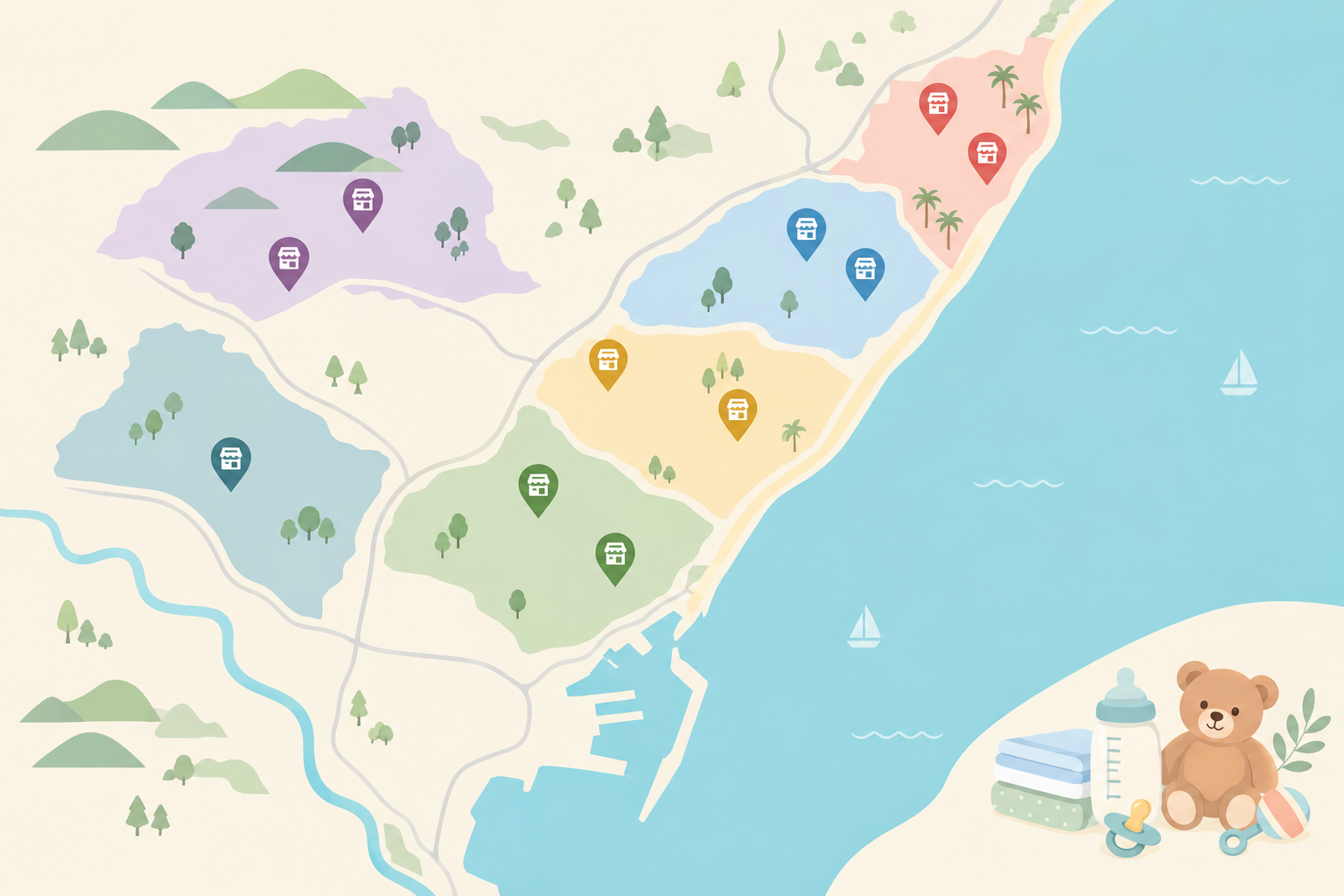
This is a good starting point if you want nursery and gifting boutiques that offer gift-wrapping and curated newborn sets.
These are neighbourhood areas, and smaller shops often mean you can actually talk to the owner. If you're nervous about choosing, that helps. Someone can say, "Honestly, get the 3–6 month size," and save you from a mistake.
The Upper Highway area is where I'd look for concept stores and baby boutiques, plus local crafts. Shongweni Farmers & Craft Market, in the Hillcrest area west of Durban, is worth a visit for locally made gifts if you're in town. Check the market's own pages for current traders and opening days.
This is where I'd go for independent makers and creative pop-ups. I Heart Market is one Durban example for discovering South African designers and makers, though dates, venues and vendors change, so check the organiser's current information.
Here's the routine I'd use for any shop:
I have a soft spot for handmade baby gifts. They often come in small batches, can be personalised, and tend to end up in the memory box. Picture a mum years later, pulling a knitted blanket out of the cupboard and telling her toddler who sent it. (That's a general illustration, not a specific story.)
I'm not naming individual KZN makers here, because I haven't verified their current ranges, materials or safety information. What I can tell you is where makers tend to turn up: local craft markets (Shongweni Farmers & Craft Market and I Heart Market are two Durban-area examples) and their own websites and social pages. If you find a maker you like, run through the checklist below before you buy.
This one matters. The American Academy of Pediatrics recommends a firm, flat sleep surface and keeping soft objects and loose bedding out of a baby's sleep area. A knitted blanket or plush toy can be a lovely gift for supervised cuddles and daytime, but it shouldn't be presented as something to put in the cot. For the nursery, think wall decor or a fitted sheet rather than pillows, bumpers or loose blankets.
If you've ever stood in a shop thinking, "Do they need this, or do I just like it?", you're not alone. The budgets below are rough ballparks, so use them as a guide only.
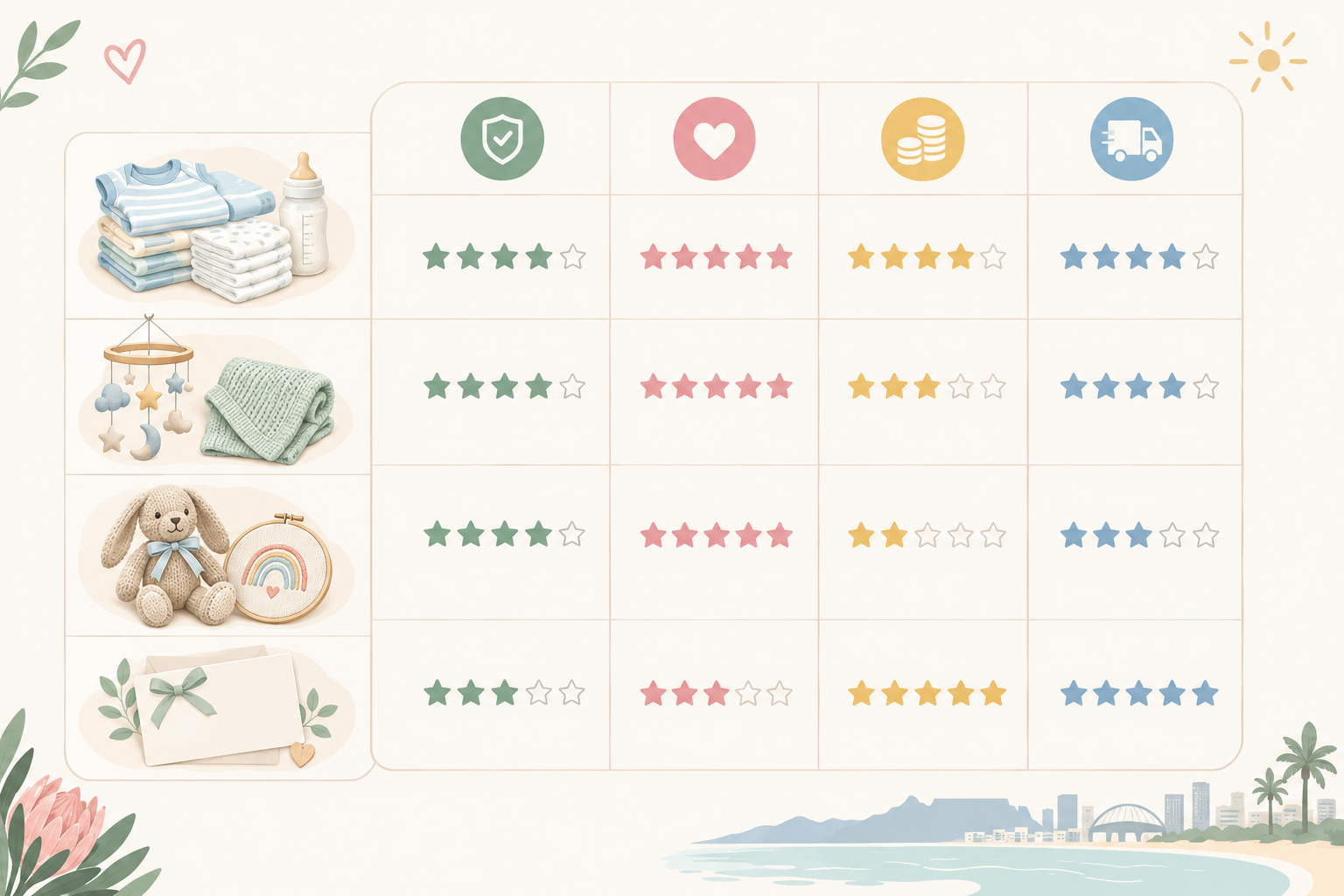
| Gift category | Typical budget | How practical | How personal | How easy to ship |
|---|---|---|---|---|
| Newborn essentials (sleepwear, swaddles, burp cloths) | Low to mid | Very practical | Moderate | Easy |
| Nursery pieces (decor, storage, soft furnishings) | Mid to high | Moderate | Moderate to high | Can be bulky |
| Handmade keepsakes (personalised blankets, knitted items) | Mid | Moderate | Very personal | Easy, but allow lead time |
| Experiences or vouchers | Flexible | Flexible | Lower | Instant (digital) |
One sizing tip: newborn outfits are outgrown in a flash, so consider 3–6 month sizes. Parents are often swamped with tiny newborn clothes and thrilled to get something they can use a few months down the line.
Buying from a Durban shop when you're in another city can sound like a faff, but it's easier than it looks once you know the steps.
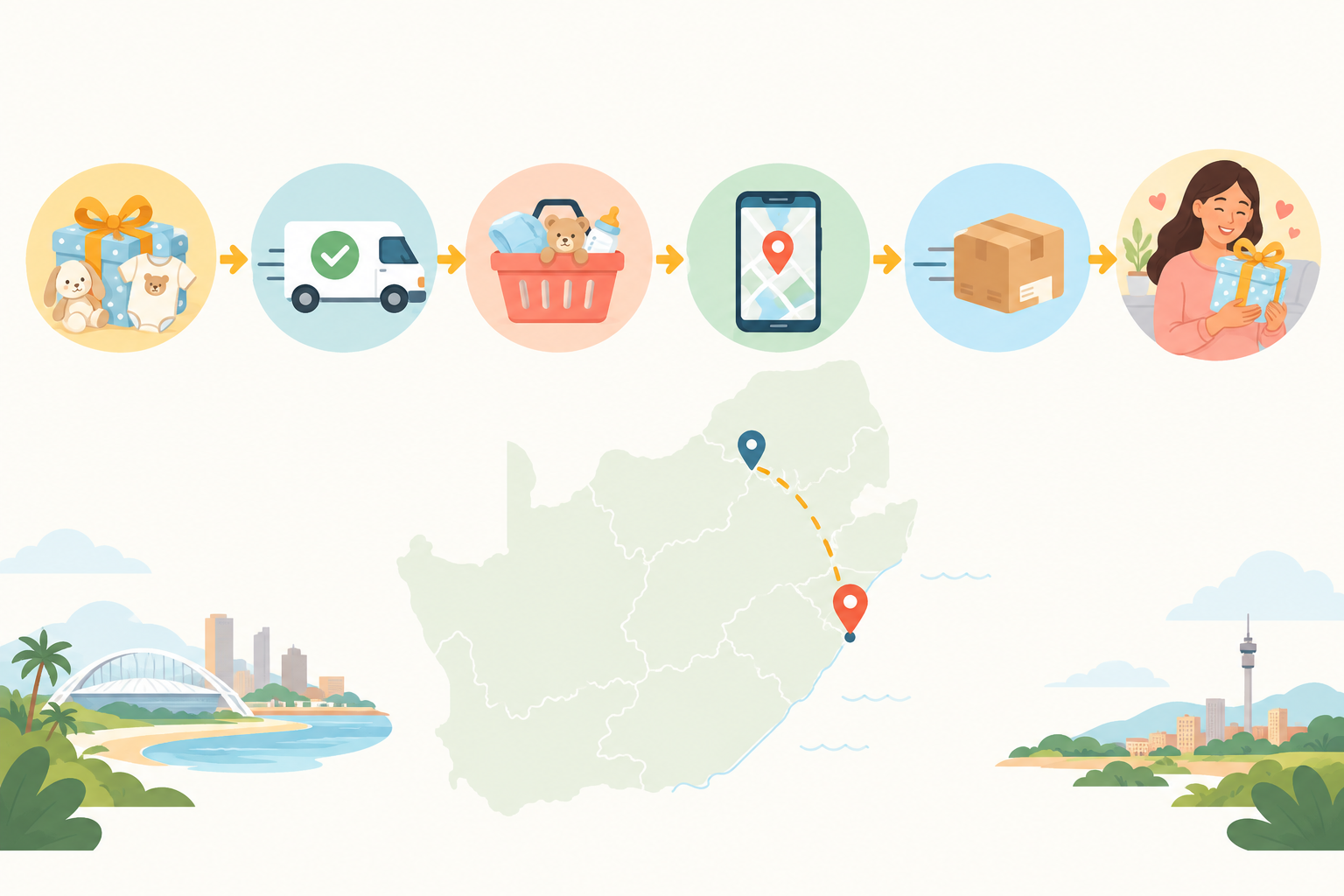
If you're unsure about size, style or timing, a digital voucher is a low-risk fallback. Just check the terms and redemption conditions first.
Many small South African shops sell mainly within the country, so don't assume they ship overseas. Look for an international shipping option at checkout, or email and ask. Here's how the three main routes compare:
| Route | Best when | Watch out for |
|---|---|---|
| Order from a South African shop that ships to the UK | The parents live in the UK and you want a specific Durban item | Higher shipping cost, longer delivery, possible import VAT, duty or courier fees on arrival |
| Order from a South African shop for local delivery to the parents | The parents live in South Africa | Checking the delivery area and timing; you'll need the parents' address and phone number |
| Buy through the parents' registry | You want to avoid duplicates and know the gift is wanted | Confirming which stores the registry links to and their delivery terms |
A few practical points for UK buyers:
A quick disclosure: bababloom is the company behind this blog, so this section describes our own service rather than independent advice. We built a baby registry platform for South African parents that gathers products from local baby stores and artisans into one shareable list. Parents build their registry for free and pay a one-time R199 fee when they're ready to share it. That's correct at the time of writing, so please check our site for current pricing and terms.
For you as a guest, it works like this. You open one link, browse products from several local stores, and click through to buy directly from the retailer's own website. Because the registry tracks what's been chosen, you can avoid the classic duplicate-gift problem. Our example registry has 102 gifts from 31 stores at the time of writing, though those numbers will change as stores are added or removed.
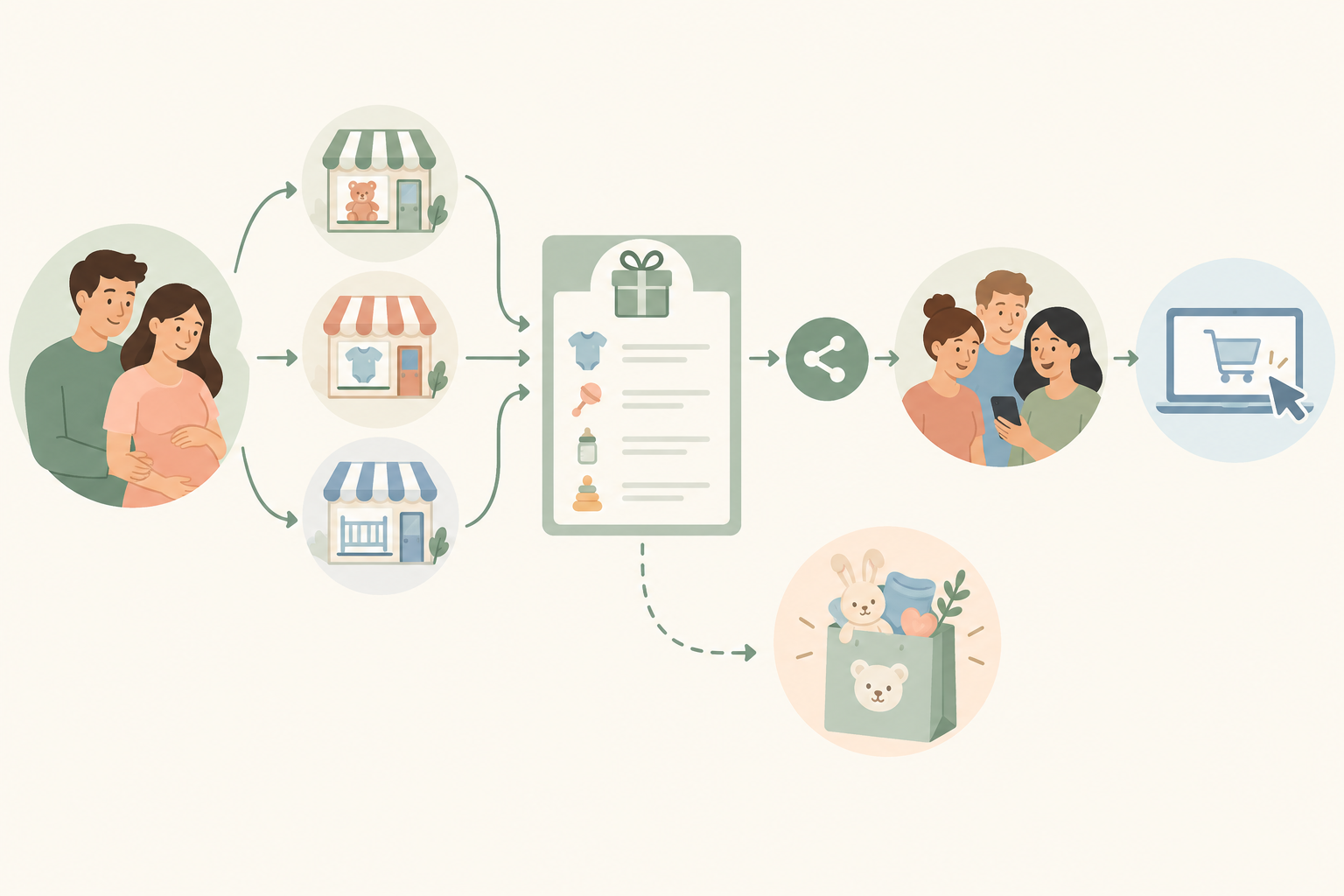
We've partnered with the Hatch Foundation, so registry guests can also donate a R500 Hatch Bag of newborn essentials for a mother in need in South Africa. It's optional. Check our site and the Hatch Foundation's own information for current details on what's included and how donations are delivered.
If that's you, share this guide with family and friends, especially those in other cities or countries, and add the Durban stores and makers you love to your registry.
Start with independent boutiques and gift stores in suburbs like Umhlanga, Durban North, Westville and Hillcrest, and local craft markets such as Shongweni Farmers & Craft Market and I Heart Market. Use the search terms and vetting steps above, and check each shop's or organiser's own pages for current details. A baby registry can also show you products from several local stores in one place.
KZN has small makers and craft markets, and handmade baby products such as knitted blankets, cotton clothing and wooden toys are commonly sold at markets and online. This post doesn't include a verified list of specific brands, so the best route is to browse the markets above and makers' own websites or social pages, then check materials and safety information before ordering.
Many independent stores sell through their own websites and use couriers within South Africa, but policies differ. Confirm delivery areas, times and costs before checkout, and ask about gift-wrapping or direct delivery to the parents. If you're in the UK, check whether the shop ships internationally and what extra costs may apply, or have a South African retailer deliver locally to the parents.
Usually, each store has its own checkout. A baby registry platform like bababloom gathers products from multiple local stores into one shareable list, so you can browse them together and then buy directly from each retailer.
A Hatch Bag is a R500 donation of newborn essentials through the Hatch Foundation for mothers in need in South Africa. Registry guests can add one alongside their gift if they'd like to give a little extra. Check our site and the Hatch Foundation for current details.
That's it from me. Whether you're nipping into a Durban North boutique or ordering from a laptop in London, a little thought goes a long way. Happy gifting! 💛
A practical guide to shopping local in South Africa for your baby registry, supporting makers and choosing safe, thoughtful gifts with confidence.
Discover Pretoria baby stores worth knowing: handmade baby products, nursery decor and baby shower gifts under R500, plus how to add them to one regis
Wondering if it's rude to go off-registry or how much to spend? Our friendly guide to baby registry etiquette answers every baby shower guest question