Why Shopping Local Matters: Supporting SA Baby Artisans When You Build Your Registry
15 min read
Loading...
For first-time moms building a baby registry, the idea behind “shop local South Africa” is simple: your rands stay in local communities, you support the makers behind handmade baby products, and you can find well-made newborn essentials that suit local life. You don't have to give up convenience either. A registry platform that gathers local baby brands in one place lets you build one shareable list, and your guests buy straight from each maker's own site.
That's the short version. Below is the longer, coffee-shop version: why shopping local matters, what to check before you trust a maker, and how to put it all together without losing your mind (or your weekend).
Picture it. It's 3am, the baby is a few weeks away, and you're scrolling through yet another registry checklist. Everything on it has a big international name attached, and honestly, those names feel safe. You've seen them in every parenting magazine. So you tick, tick, tick, and wonder why none of it feels quite like yours.
I've been there in spirit with so many first-time moms, so let me say this first: no guilt here. Nobody is grading you.
Here's what shopping local actually does. When you buy from a small South African business, your money tends to keep moving through the community. It pays the maker's wage, but it also pays the fabric seller, the wood supplier, the courier and the person who designs the packaging. Proudly South African's Buy Local campaign makes the same point: a local purchase can support more than the person who made the item, although how far it stretches depends on how local that business's supply chain is.
Researchers have tried to put numbers on this. A well-known US study of independent retailers in Chicago's Andersonville neighbourhood estimated that independents recirculated about 52% of revenue locally, compared with 14% for national chains. That's an American case study, not a South African figure, so please don't treat it as a promise. It does show how the mechanism works, though.
Then there's the emotional side, which I think matters just as much. A blanket made by someone with a name, a face and a story feels different from one pulled off a mass-produced rack. One day your child will ask where their things came from, and 'a lady in Cape Town knitted it' is a lovely answer.
And here's what I'd gently nudge you to consider: your registry is one of the biggest buying moments of your whole parenting life. Even a handful of local choices puts your values to work in a very real way.
Let's be honest before we go any further. International brands can offer lower sticker prices, and familiarity is comforting. Nobody should be shamed for choosing them, and plenty of parents mix both. But the sticker price isn't always the whole story.
The price displayed on an overseas listing may not be what you actually pay in South Africa. Depending on the item, you may face customs duty, import VAT (our standard rate is 15%), delivery charges and courier clearance fees. SARS notes that the calculation depends on the product, so there's no single rule for every baby outfit or blanket. The sensible move is to compare the landed cost, not just the checkout price.
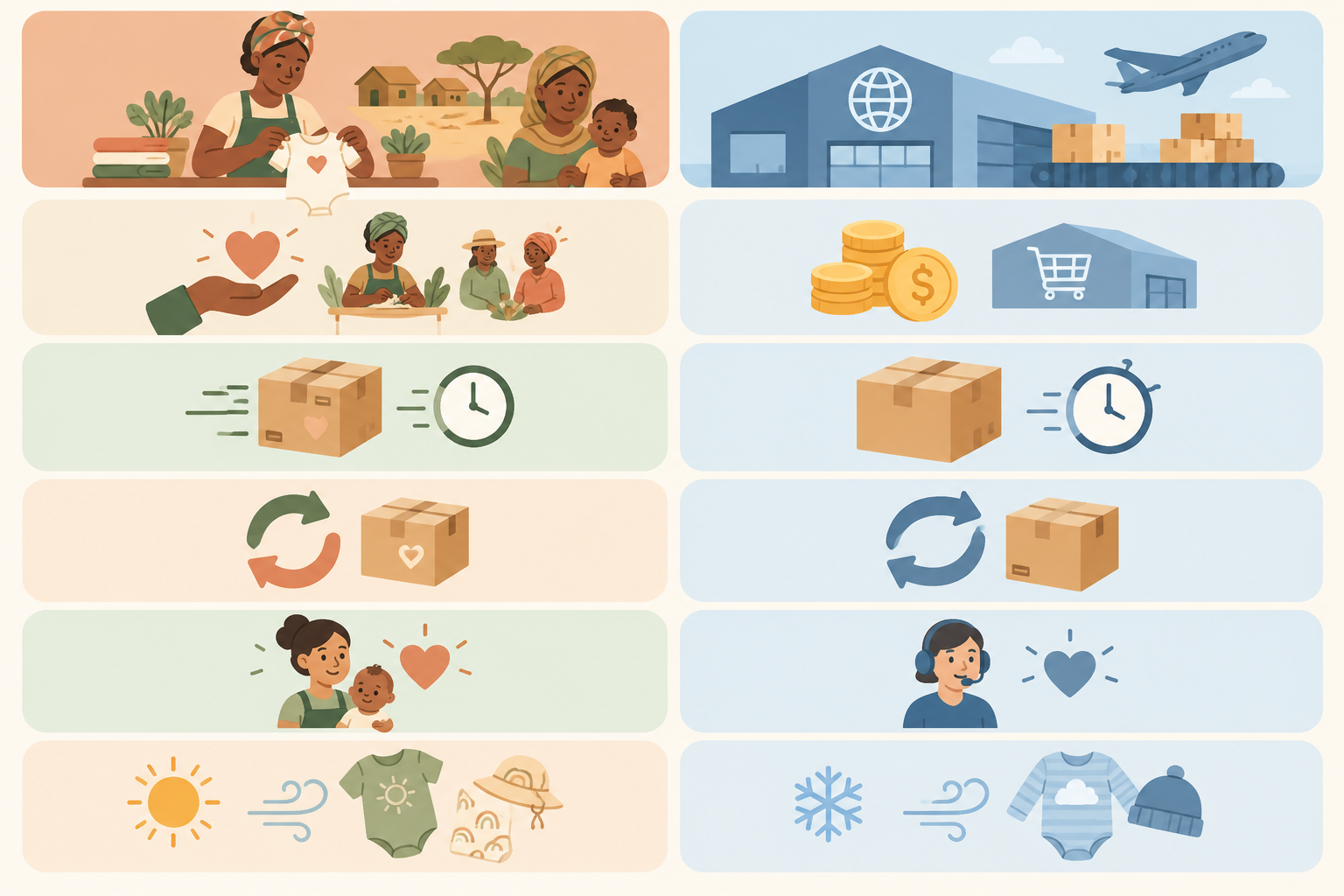
Here's how local baby brands and large international retailers often compare:
| Local baby brands | Large international retailers | |
|---|---|---|
| Where your money goes | Often stays with South African makers, suppliers and service providers | Mostly leaves the local economy |
| Delivery | Usually domestic courier; made-to-order items may need lead time | Can involve shipping, customs and clearance delays |
| Returns and exchanges | Generally simpler to arrange locally; always check the store's terms | May mean international returns or limited options |
| Personal service | Often a real person who can answer questions about sizing and materials | Varies widely, often through large call centres or chatbots |
| Climate suitability | Designed with South African seasons in mind, though always check the item | May be designed for colder climates |
| Price | Can be higher for handmade items; varies by store | Can be lower, but check landed cost |
There's a legal angle worth knowing about too. South Africa's Consumer Protection Act includes an implied warranty of quality (section 56), which generally covers qualifying goods for six months after delivery. It won't solve every complaint, and it applies subject to conditions. Still, dealing with a South African supplier can make asking about a fault or an exchange far less of a headache than chasing an overseas company.
Then there's the cost you can't see on a receipt. When small makers lose out to big players, they can struggle to keep their skills and jobs alive, and craft knowledge is hard to rebuild once it's gone.
So here's a question to sit with: what would you want your baby's first things to say about your family?
When I say 'baby artisans', who do I mean? Think of a mom who started sewing muslins at her kitchen table because she couldn't find the right ones. A woodworker making teethers and play gyms. A knitter working with local wool. A small studio blending natural skincare. A surprising number of local baby stores began exactly this way: the founder was a new parent who couldn't find what she needed, so she made it.
Let me paint a composite picture. It's not one real person, but it's a fair snapshot of how many small studios work. Imagine a maker whose day starts with school drop-off and then a cutting table. She checks each piece of fabric by hand, trims threads, tests seams with a tug, and folds each order with a handwritten note. Next week's batch is small because she'd rather get twelve swaddles right than rush fifty. That level of attention is hard to scale, and it's exactly what you're paying for.
There are real examples to explore, too. Ubuntu Baba is a South African baby-carrier brand whose website describes its carriers as made in South Africa. It's a practical, hard-working registry gift rather than a purely decorative one. Mungo, a textile maker with a mill in Plettenberg Bay, makes woven textiles including baby blankets. As with anything, check each product listing for where it's made, what it's made from and what it's designed for.
One distinction is worth keeping in mind: 'locally designed' doesn't always mean 'locally made'. Neither is bad, but if handmade matters to you, read the product details and ask.
How wide is local choice, really? On bababloom's live example registry, you'll find 102 gifts from 31 local stores, covering clothing, nursery decor, feeding and play. You won't run out of options.
My tip for feeling the connection: read the 'About' page, follow the makers on social media, and watch how they talk about their work. It's the nearest thing to meeting them over a cup of tea.
This is the question I hear most, and it deserves a straight answer. Handmade sounds lovely, but is it safe, and will it last?
Here's the honest truth. Handmade doesn't automatically mean safe, and it doesn't automatically mean unsafe either. Safety depends on the product's intended use, materials, construction and age suitability. 'Handmade' or 'local' isn't a safety certification on its own. The good news is that you can check a lot yourself.
For small toys like rattles, teethers and crocheted animals, look for weak seams, exposed wire, splinters, sharp edges and anything that could become a choking hazard. For a wooden rattle, ask about the finish. For a knitted piece, watch for long loops or loose components.
South Africa has a compulsory safety specification for toys, VC 8055, based on the SANS 8124 series. You can ask a maker whether their toy falls within its scope and what evidence they have of conformity. A friendly assurance or a pretty finish isn't proof of compliance, so be wary of anything that sounds vague about safety.
This one matters. The American Academy of Pediatrics advises keeping soft objects and loose bedding out of an infant's sleep space. So a beautiful handmade blanket may be best as a pram, pushchair or supervised-play gift rather than cot bedding. Cots, mattresses and car seats deserve extra scrutiny whether they're local or international, so confirm the relevant standards before adding them.
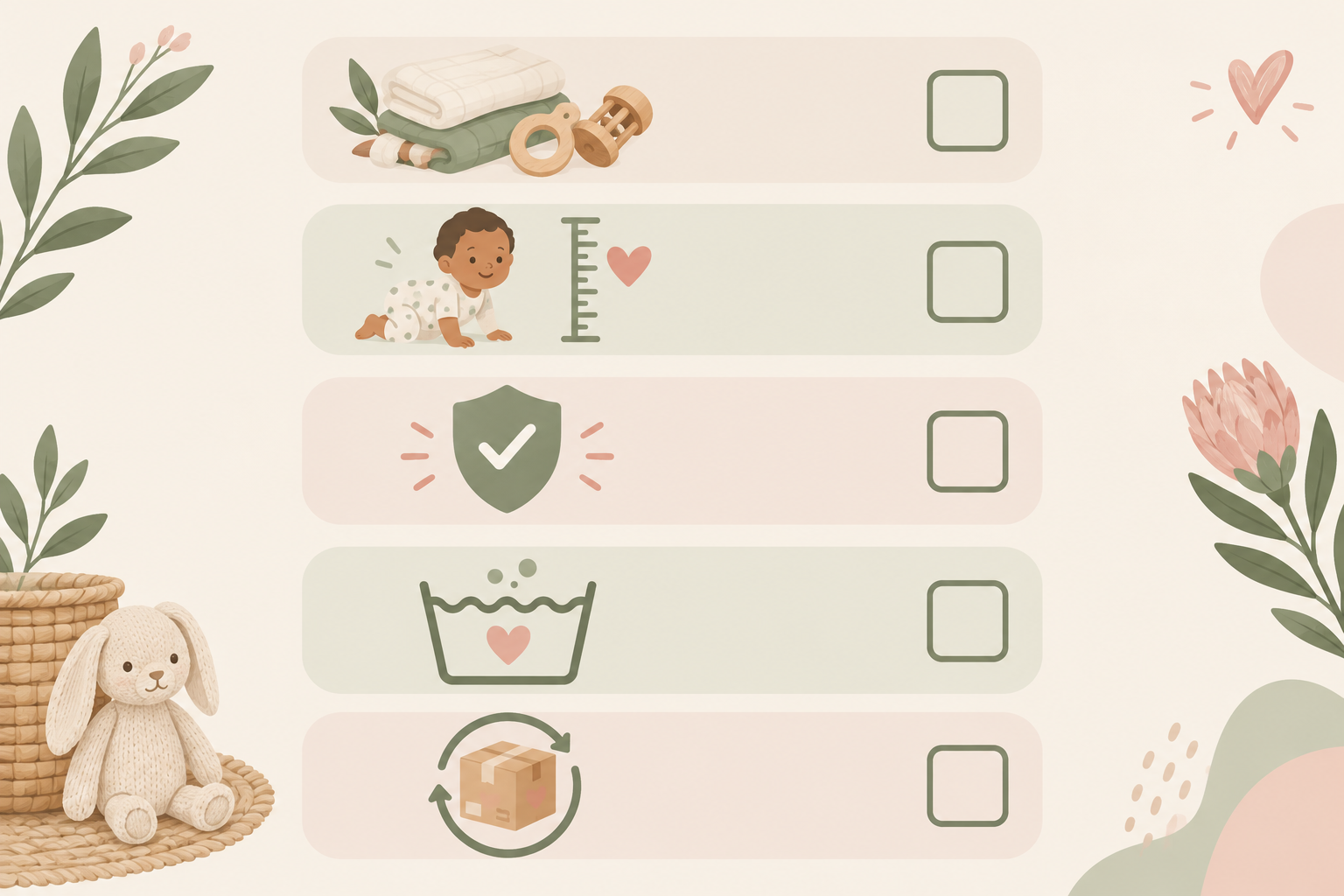
Keep this mini checklist handy:
Most small makers are happy to answer. A warm, detailed reply is one of the best quality signals you'll get.
A registry changes how local businesses get found. Guests who might never have discovered a small maker now have a direct, easy link. A friend who would have defaulted to a gift card might choose a hand-stitched keepsake because it was right there on your list.
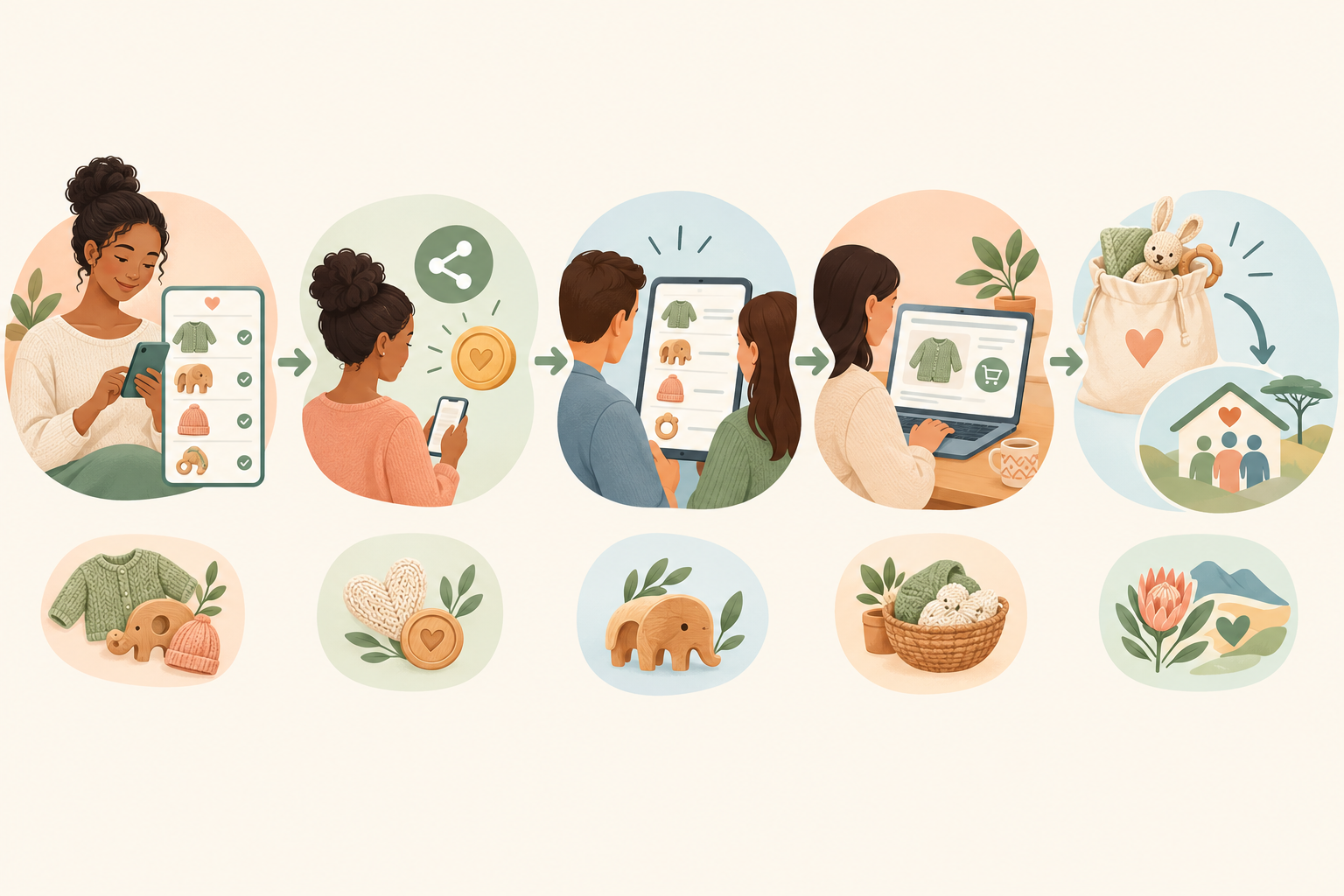
I know the worry: 'But it's too much admin to buy from lots of small shops!' That's exactly the problem bababloom was built to solve. Here's how it works:
Baby shower gifts from artisans also tend to be more memorable. A beautifully made wooden teether or a personalised blanket is the kind of thing you'll pull out years later and say, 'Remember who gave us this?' Mix your price points so every guest can join in, from a small R100-ish treat to a bigger shared gift.
There's a giving-back option too. Through bababloom's partnership with the Hatch Foundation, guests can donate a R500 Hatch Bag of newborn essentials to an underserved mother across South Africa. So your registry can quietly support another mom while you celebrate your own baby.
And a quick reminder about balance: a registry can include a few big-ticket practical items alongside artisan pieces. That's perfectly okay. Going local on some items still makes a difference.
Not sure where to start? Here's the order I'd follow.
There's no rigid rule here, just a sample structure to spark ideas:
Local really shines with handmade baby products, personalised gifts, natural skincare and heirloom-quality pieces. Mix everyday and special items so there's something for every guest budget, and consider adding a Hatch Bag donation for guests who'd love to give back.
And if relatives overseas want to send something? Say yes, gratefully! A registry with local links can help them choose, though shipping and availability depend on each store, so it's worth checking early.
Remember our 3am scroller? She doesn't need to be perfect. She just needs a good place to start.
If you take three ideas away, let them be these: local spending strengthens communities, artisans bring real care to their craft, and a registry is a simple way to share all of that with the people who love you.
So here's my invitation. Start building your free registry, browse the local baby brands, and pick one or two artisan pieces that feel like you. That's enough to begin. 🌸
With love,
Emma
Buying from local baby brands keeps your money in the South African economy and supports small business owners and their suppliers. You also often get more personal service, easier returns and products that suit our climate. Big retailers can be great for certain items, so many parents mix both, but choosing local for some of your registry is a good place to start.
They can be, as long as you check the details. Look for clear information about materials, age suitability, safety testing and care instructions, and don't hesitate to ask the maker questions. For high-risk items like cots, car seats and mattresses, always confirm the relevant safety standards, whether the product is local or international.
Start with a curated platform that focuses on local South African baby stores. Then check for clear contact details, honest product descriptions, real customer reviews and responsive communication. Messaging a maker with a question before you add their product is a good test of how they work.
Not with a registry platform that gathers everything together. On bababloom, guests see one shareable list and then buy directly from each retailer's own site, so checkout feels familiar and secure.
You can build your registry for free and only pay a one-time fee of R199 when you're ready to share it with friends and family.
Through bababloom's partnership with the Hatch Foundation, guests can donate a R500 Hatch Bag filled with newborn essentials to an underserved mother in South Africa. It's a nice option for guests who want to celebrate your baby while helping another family.
Often, yes. Because guests purchase from each retailer's own site, they can check delivery options for themselves. Shipping and availability vary by store, so it's worth checking before the shower.
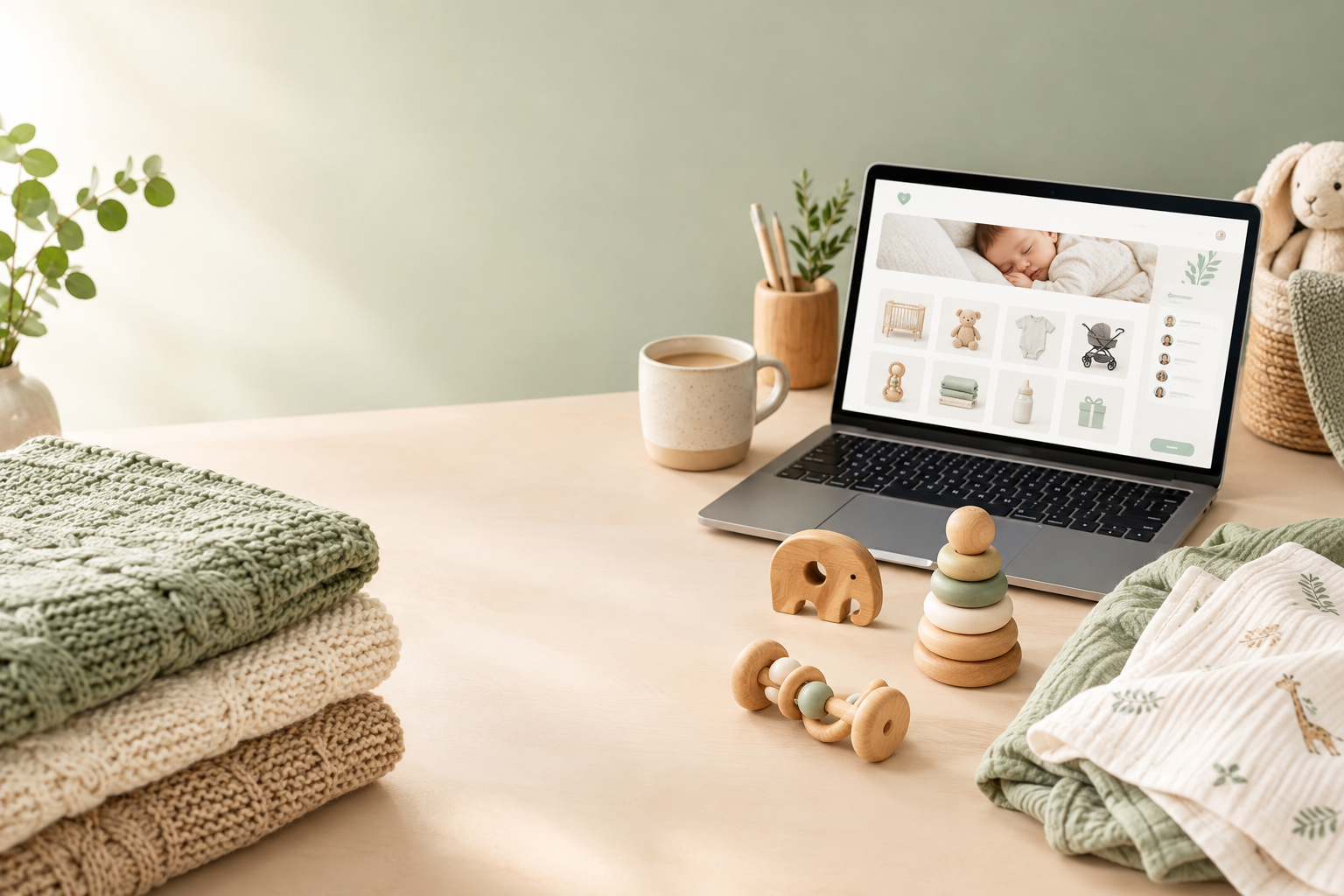
See how a baby registry partnership can help independent retailers reach new customers, grow gift orders and keep checkout on their own site.
Discover Pretoria baby stores worth knowing: handmade baby products, nursery decor and baby shower gifts under R500, plus how to add them to one regis
Discover Durban baby stores, handmade baby products and thoughtful baby shower gifts from KZN makers—with tips for UK shoppers and delivery.