How to Use AI Content Tools for Blogging in 2024: The Complete Guide to Scaling Your Content

How to Use AI Content Tools for Blogging in 2024: The Complete Guide to Scaling Your Content
Let me guess: you're staring at a blank document right now, knowing you should publish more content but dreading the hours it takes to write a single post. I've been there. Most bloggers have.
Here's the reality in 2024: AI content tools have fundamentally changed how we work. These platforms now generate SEO-optimized blog posts averaging 2,000+ words in just minutes. Self-improving AI systems learn from performance data to continuously refine output quality.
For creators struggling to maintain consistent publishing schedules, blog automation tools offer a practical path to scaling content production without burning out or sacrificing the quality your audience expects.
Can AI really handle the nuanced work of creating content that resonates with readers? The short answer is yes, but with important caveats. The most successful content creators in 2024 are treating AI as a powerful collaborator rather than a replacement for human creativity.
Let me walk you through everything you need to know about integrating these AI content tools into your workflow.
The Current State of AI Blogging in 2024: What's Actually Changed
The landscape of AI content generation has shifted dramatically. What started as basic text spinners has evolved into sophisticated content marketing platforms that handle entire workflows from ideation to publication.
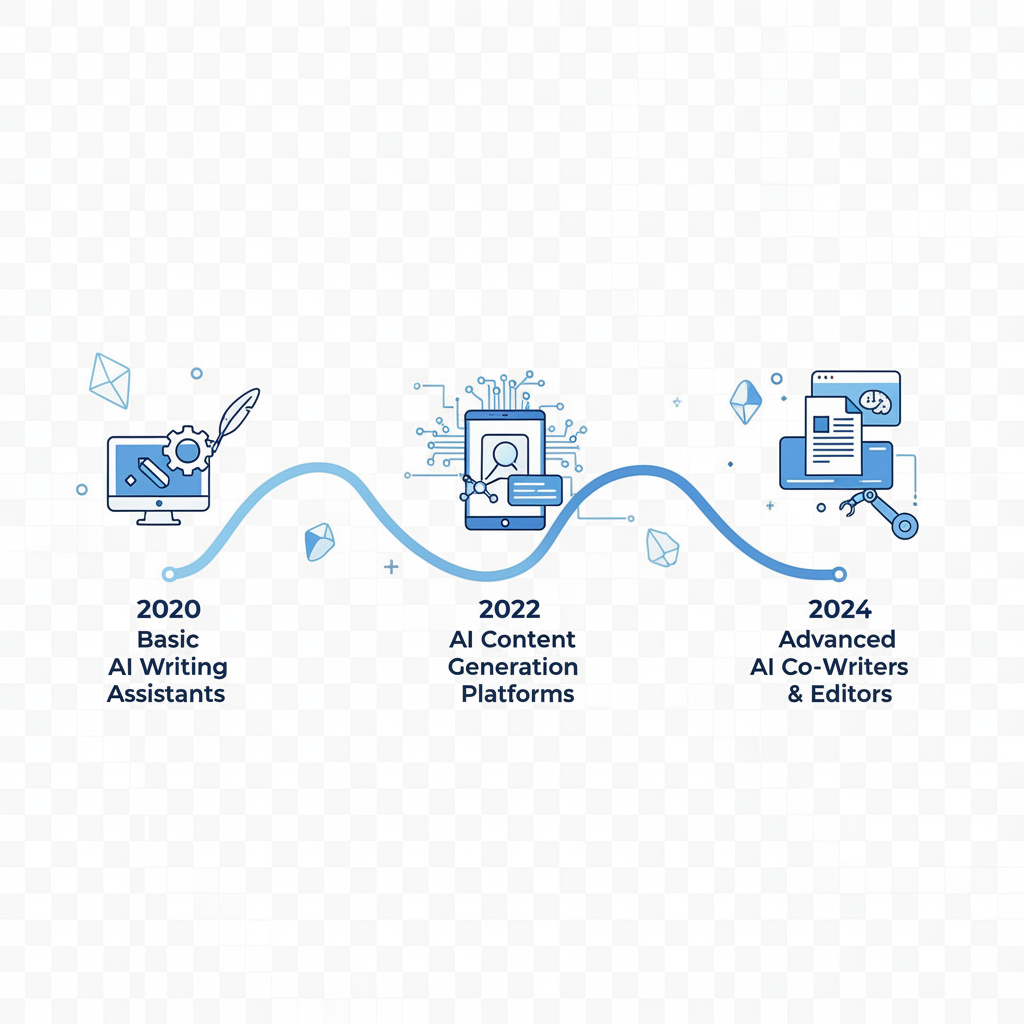
Key Developments in AI Content Tools This Year
Here's what's different about AI blogging in 2024:
AI writing assistants have evolved from simple text generators to sophisticated content marketing platforms. According to the Content Marketing Institute, these tools now produce high-quality, nuanced content across multiple formats including blog posts, social media content, and long-form articles.
Modern tools now handle complete workflows. Research, writing, image generation, and automated publishing all happen within a single platform. This eliminates the need to juggle multiple tools and subscriptions.
Self-improving AI systems analyze quality scores and performance metrics to replicate successful content patterns. At Scribe, we've built our platform around this principle, with algorithms that learn from each published article to continuously refine output quality.
Integration with major platforms like WordPress, Shopify, and Webflow enables one-click publishing. No more copying and pasting or reformatting content between systems.
Content scaling is now accessible to solo creators, not just enterprise teams with large budgets. Tiered subscription plans mean individual bloggers can access the same technology that was previously reserved for large marketing departments.
AI Blogging 2024: The Numbers Tell the Story
A 2024 study found that 62% of content marketers are now using AI content tools for content creation and optimization. Meanwhile, approximately 45% of bloggers report using AI tools specifically to speed up content research and drafting processes.
These aren't early adopters anymore. This is mainstream adoption.
Ethical considerations are also maturing alongside the technology. Many publishers are developing clear guidelines for AI tool usage, recognizing that transparency and authenticity matter to audiences. The shift isn't just about speed—it's about finding the right balance between efficiency and genuine value.
7 Ways AI Content Tools Are Transforming Blogger Workflows
Let me break down the specific ways these tools are changing the game for content creators.
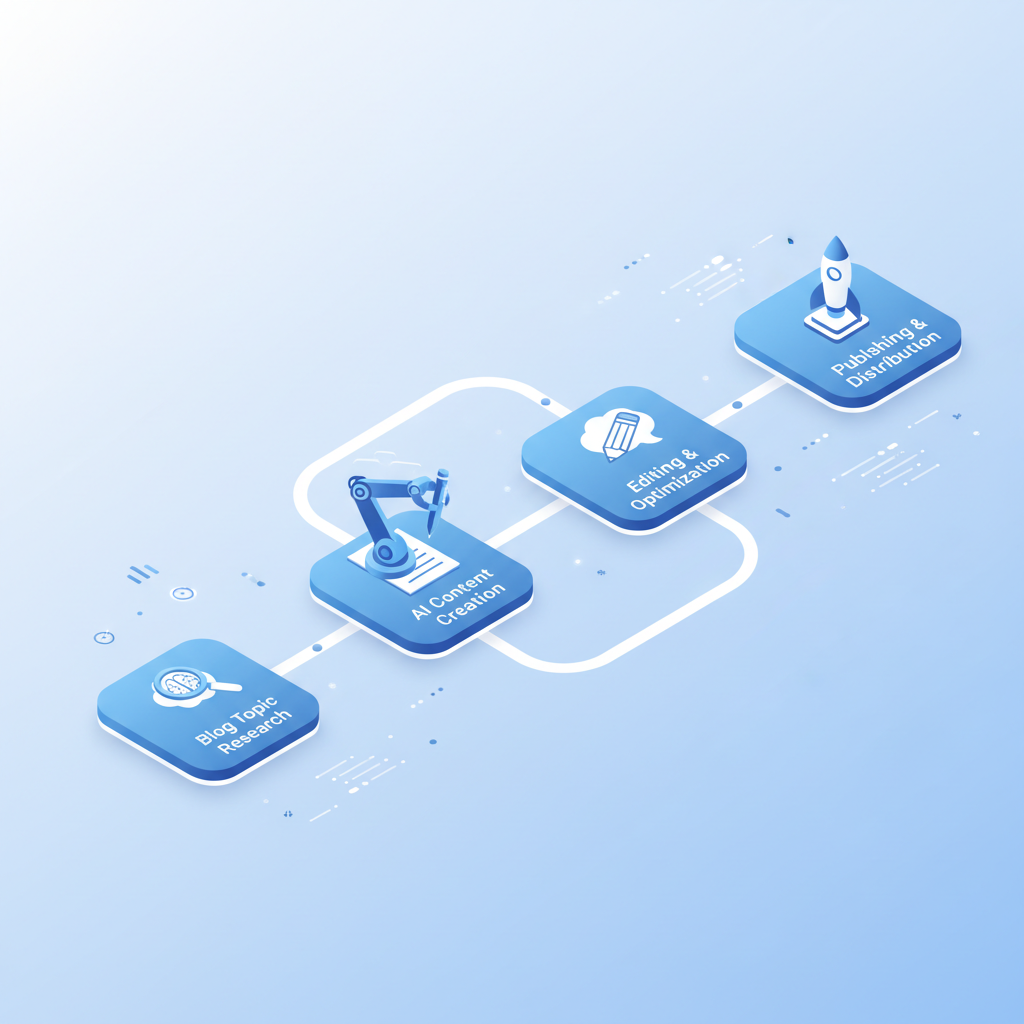
1. Dramatically reduced production time
Complete blog posts that once took 5-10 hours can now be generated in 5-10 minutes. AI content tools are contributing to a 35% reduction in content production time for marketing teams, with some individual creators reporting even greater savings.
This doesn't mean you hit a button and walk away. But the heavy lifting of drafting is handled for you.
2. Consistent publishing schedules
Auto-pilot scheduling ensures regular content goes live without manual intervention. You can plan an entire month of content in a single session, then let the system handle publication timing while you focus on other aspects of your business.
3. Built-in SEO optimization
Keywords, meta descriptions, and content structure are optimized automatically. Rather than spending hours researching search intent and keyword placement, AI handles the technical SEO elements while you concentrate on providing genuine value to readers.
4. AI-generated visuals
Diagrams, charts, and images are created alongside written content. This eliminates one of the biggest bottlenecks in content production. No more hunting through stock photo libraries or waiting on designers.
5. Quality scoring systems
Objective metrics help maintain standards across all published content. At Scribe, our quality scoring feature ensures that even when you're producing more content, you're not sacrificing the standards your audience expects.
6. Data-driven topic selection
AI analyzes performance patterns to suggest high-potential topics. Instead of guessing what might resonate, you get recommendations based on actual engagement data and search trends.
7. Adaptive learning
Systems discard ineffective approaches while amplifying what works. This is where the real magic happens. A self-improving AI doesn't just generate content—it gets better at generating content specifically for your audience over time.
Traditional Blogging vs. AI-Assisted Content Creation: A Complete Comparison
To understand the full impact of AI content tools, let's look at how traditional blogging stacks up against AI-assisted approaches.
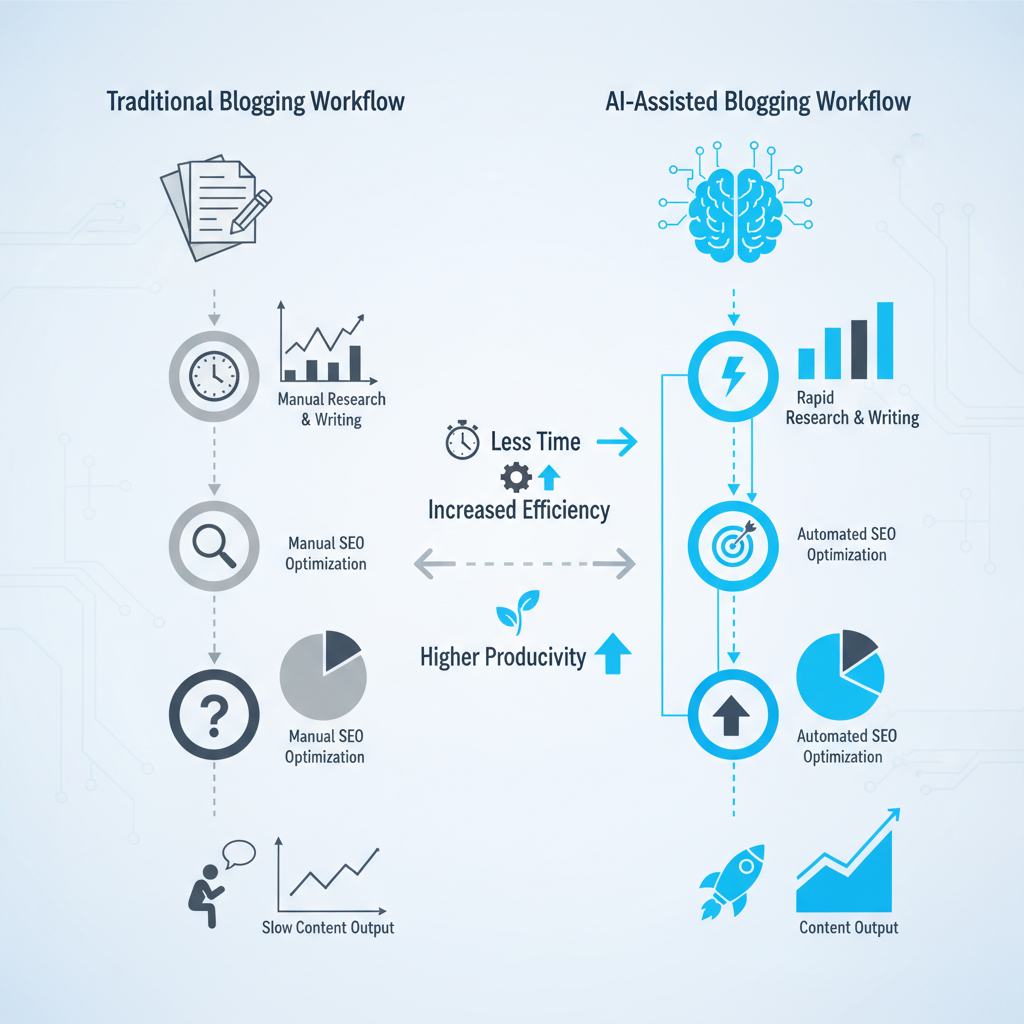
| Factor | Traditional Blogging | AI-Assisted Content Creation |
|---|---|---|
| Time Investment | 4-8 hours per post | 15-30 minutes with AI content generation |
| Publishing Frequency | 2-4 posts monthly | 10-30 posts with automation |
| SEO Consistency | Variable quality depending on expertise | Systematically optimized structure |
| Scalability | Limited by human capacity | Near-unlimited with proper workflows |
| Cost Per Post | High when factoring time | Significantly reduced with blog post generators |
| Learning Curve | Years of experience needed | Accessible to beginners with AI guidance |
What the Data Shows About AI Blogging in 2024
The efficiency gains are striking. AI-generated content can reduce content production time by up to 50%. Blogs using AI-assisted writing tools see an average 35% increase in engagement rates.
That's not just faster content. It's better-performing content.
However, the Forbes Technology Council emphasizes an important point: while AI can generate content quickly, human editing and fact-checking remain crucial for maintaining quality and authenticity. The most successful approach blends AI efficiency with human creativity and subject matter expertise.
Real Creators Making AI Content Tools Work
Take Sarah, a food blogger who was burning out publishing twice a month. After integrating AI tools, she now publishes weekly while spending less total time on content creation. Her secret? She uses AI for recipe research and initial drafts, then adds her personal cooking tips and family stories.
Writers on Medium.com are using AI content tools to generate first drafts and outlines, then personally refining the content. Tech publications like TechCrunch use AI for generating initial research summaries and draft structures. Marketing blogs leverage AI to create data-driven content briefs and initial article drafts.
The common thread? AI handles the time-consuming groundwork, and humans add the insight, personality, and expertise that readers crave.
How to Choose the Right AI Content Tools for Your Blogging Needs
With dozens of options on the market, selecting the right AI writing assistant can feel overwhelming. Here's what I recommend evaluating:
Request sample content in your niche before committing. Any quality platform should be able to show you what output looks like for topics relevant to your audience. If the samples feel generic or off-base, keep looking.
Check integration compatibility with your existing publishing platform. Whether you're on WordPress, Shopify, Webflow, or a custom CMS, seamless connection saves enormous time. One-click publishing should mean exactly that.
Look for self-improving features that learn from your specific content performance. This is what separates basic AI tools from true content marketing platforms. The system should get smarter about your brand over time.
Consider volume limits. Most platforms offer tiered plans ranging from 10-30 articles monthly. Be realistic about your publishing goals and choose accordingly.
Prioritize tools with quality scoring to maintain consistent standards. Without objective metrics, it's easy for quality to slip as you scale production.
Assess the AI's ability to match your brand voice and tone. Look for customization options that let you define style preferences, terminology, and messaging guidelines.
Review analytics capabilities for tracking content performance over time. The best platforms don't just create content—they help you understand what's working and why.
Real Results: What Bloggers Are Achieving with AI Content Tools
Let's talk about actual outcomes. The theoretical benefits of AI content generation are compelling, but what are real creators experiencing?

Case Study: Marcus, B2B Tech Blogger
Marcus runs a SaaS review blog as a side project while working full-time. Before AI content tools, he published one post every two weeks—and even that felt exhausting.
"I was spending entire weekends just writing," he told us. "Now I batch-create a month's worth of content in a few hours on Sunday afternoon."
Six months after adopting AI-assisted content creation, his organic traffic increased by 280%. More importantly, he got his weekends back.
The Broader Picture of AI Blogging 2024 Success
Case studies consistently show impressive results. Bloggers using AI-assisted content strategies are reporting organic traffic increases of 200-340% within six months. One of our Scribe users cited a 340% increase in organic traffic over a six-month period, directly attributing the growth to increased publishing frequency enabled by our platform.
Why does consistent publishing matter so much? Search engines reward fresh, relevant content. When you're publishing 10-30 posts monthly instead of 2-4, you're creating more entry points for organic search traffic. Each piece of content is another opportunity to rank for relevant keywords and capture audience attention.
There's also a compound effect at play. More content means more backlink opportunities, stronger topical authority, and increased domain trust. These factors build on each other over time, creating a flywheel effect that accelerates growth.
The tech blog InnovationToday provides another useful example. By using AI to generate initial article outlines, they reduced research time by 40% and significantly increased their content production frequency. The result? Improved SEO rankings and broader topic coverage.
Quality scoring systems play a crucial role in maintaining reader trust while increasing volume. Without objective standards, it's easy to prioritize quantity over quality. But when every piece of content receives a quality assessment before publication, you ensure that scaling doesn't mean sacrificing what your audience values.
Step-by-Step Guide: Implementing AI Content Tools in Your Workflow
Ready to integrate AI into your content process? Here's a practical roadmap that I've seen work time and again.
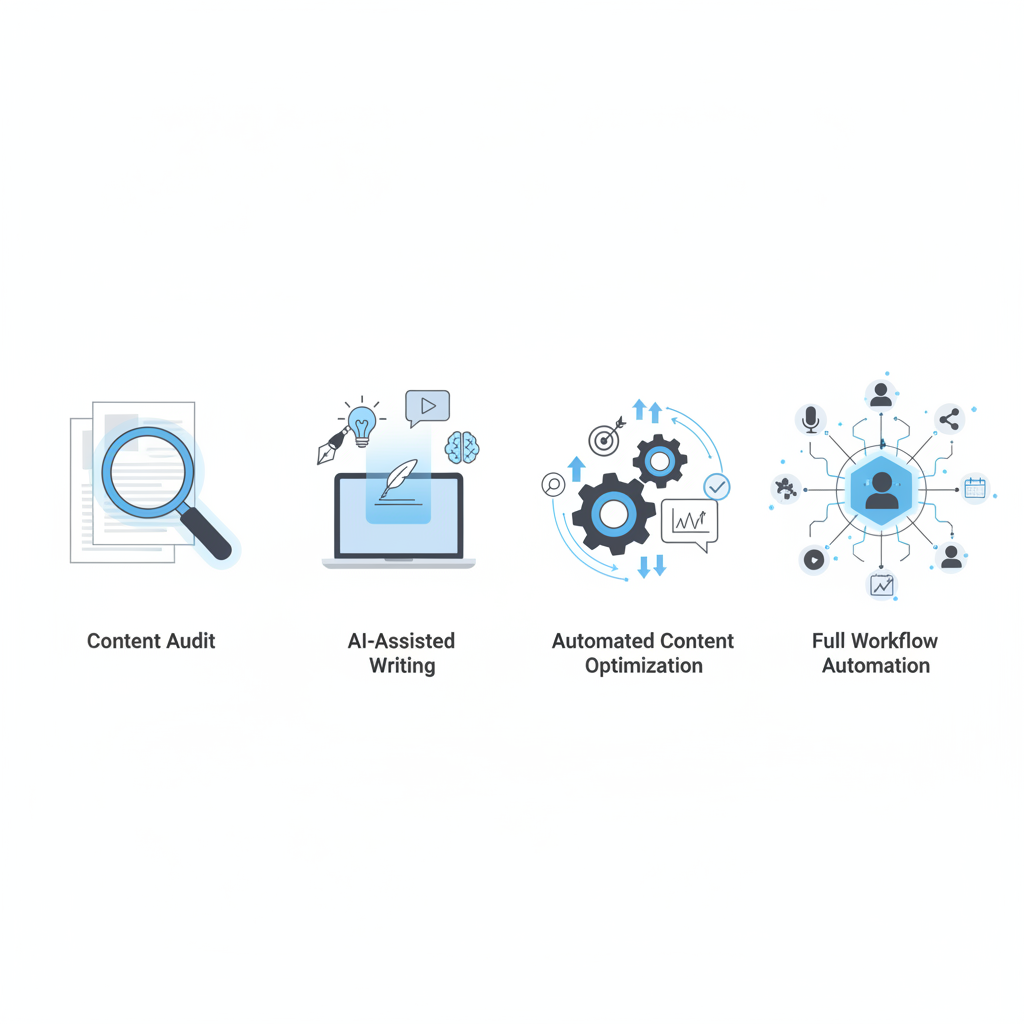
Step 1: Audit your current content process
Identify bottlenecks and time sinks before changing anything. Where do you spend the most time? Research? Drafting? Editing? Formatting?
Understanding your pain points helps you leverage AI content tools most effectively.
Step 2: Define your quality standards and brand voice guidelines
The AI needs clear direction to produce content that sounds like you. Document your preferred tone, key messaging, terminology to use or avoid, and any stylistic preferences.
The more specific you are, the better the output.
Step 3: Start with a pilot program
Generate 5-10 posts before committing to full automation. This gives you a realistic sense of the tool's capabilities and helps you refine your guidelines based on actual output.
Step 4: Set up automated publishing workflows
Connect your AI content generation platform to your CMS. Test the integration thoroughly before relying on it for scheduled posts.
Step 5: Establish a review process
Decide which content needs human editing and how much. Some creators review everything; others focus editing time on high-priority pieces.
Find the balance that works for your standards and capacity.
Step 6: Monitor quality scores and performance metrics weekly
Track both content quality and engagement outcomes. Are readers responding well? Are quality scores consistent? Use this data to inform adjustments.
Step 7: Iterate based on data
Let the self-improving system optimize over time. Feed performance data back into your content strategy and allow the AI to learn from what's working.
Step 8: Scale gradually as you build confidence
Don't jump from 4 posts monthly to 30 overnight. Increase gradually, ensuring quality remains consistent as volume grows.
What AI Blogging 2024 Looks Like in Practice
Imagine your typical Monday morning. Instead of staring at a blank screen wondering what to write about, you open your dashboard to find three drafted posts waiting for review. The AI has already researched trending topics in your niche, structured the content for SEO, and even suggested relevant images.
Your job? Spend 20 minutes adding your personal take, a relevant anecdote from your experience, and a few tweaks to match your voice. Hit publish. Move on with your day.
That's the transformation we're talking about.
Common Mistakes to Avoid When Using AI Content Tools
I've seen creators stumble in predictable ways when adopting AI content tools. Here's what to watch out for:
Publishing without any human review or quality check. Even the best AI makes mistakes. A quick review catches errors, improves flow, and ensures accuracy.
Ignoring the importance of original insights and personal experience. AI can compile information, but it can't share your unique perspective. That's where your value lies.
Over-relying on AI for topics requiring deep expertise or current events. AI knowledge has limitations. For highly technical or rapidly changing subjects, human expertise remains essential.
Failing to customize output to match your established brand voice. Generic AI content sounds like generic AI content. Take time to configure voice and style settings.
Not tracking performance metrics to inform future content decisions. Without data, you're guessing. Measure what matters and let results guide your strategy.
Treating AI as a replacement rather than an enhancement to your process. The most successful creators view AI as a powerful assistant, not an autopilot.
Neglecting to update and refresh older AI-generated content. Content ages. Schedule regular reviews to keep information current and accurate.
The Future of AI Content Tools: What to Expect Beyond 2024
Where is AI content generation headed? Based on current trends and technology developments, here's what we anticipate:
Predictive content intelligence. Systems will move beyond analyzing past performance to forecasting trending topics weeks before they peak—giving you first-mover advantage.
Seamless analytics integration. Expect AI content tools to automatically adjust your content strategy based on real-time performance data, without manual intervention.
Hyper-personalized content variants. AI will generate multiple versions of the same piece tailored to specific audience segments, improving relevance and engagement across different reader profiles.
Built-in fact verification. As concerns about accuracy grow, AI tools will incorporate real-time source checking and citation verification.
Multimedia content creation. Text is just the beginning. AI will increasingly support video scripts, podcast outlines, and even audio generation within the same workflow.
Near-perfect voice matching. Customization will become sophisticated enough that AI output is virtually indistinguishable from your own writing.
The AI content generation market is projected to reach $5.5 billion globally by 2025. That investment will drive rapid innovation, and creators who master these tools early will have a significant competitive advantage.
Frequently Asked Questions About AI Content Tools
Will AI content tools replace human bloggers entirely?
No, AI content tools are best viewed as powerful assistants rather than replacements. They excel at handling time-consuming tasks like research, drafting, and SEO optimization, but human creativity, expertise, and authentic voice remain essential for building genuine audience connections. The most successful approach combines AI efficiency with human insight.
How do I maintain my authentic voice when using AI content generation?
Start by providing detailed brand voice guidelines to your AI tool. Most quality platforms allow you to customize tone, style preferences, and key messaging. We recommend reviewing and lightly editing AI output to inject personal anecdotes, unique perspectives, and your distinctive writing style before publishing.
Is AI-generated content penalized by search engines?
Search engines like Google have stated they focus on content quality rather than how it's produced. The key is ensuring your AI-generated content provides genuine value, demonstrates expertise, and meets user intent. Using AI content tools with built-in SEO optimization and quality scoring helps maintain the standards search engines reward.
How much time can I realistically save with AI blogging tools?
Most users report reducing content creation time by 80-90%. A blog post that previously took 5-8 hours can often be generated in under 10 minutes. However, factor in time for review, editing, and adding personal touches. Even with these additions, most creators save 4-6 hours per post.
What's the learning curve for AI content tools?
Modern AI writing assistants are designed for accessibility. Most users become comfortable with basic functions within their first few posts. Mastering advanced features like automated publishing workflows and quality score optimization typically takes 2-4 weeks of regular use.
Getting Started with AI Content Tools for AI Blogging in 2024
The evidence is clear: AI content tools have moved from experimental technology to essential business tools for serious content creators. With 62% of marketers already using these platforms and adoption accelerating, the question isn't whether to integrate AI into your workflow—it's how quickly you can do it effectively.
Start small. Focus on quality. Let the self-improving nature of modern AI systems work in your favor.
Whether you're a solo blogger looking to increase publishing frequency or a growing business ready to scale content marketing, the AI content tools available in 2024 make it possible to achieve results that were simply out of reach just a few years ago.
The creators who thrive will be those who embrace AI as a collaborator while maintaining the human elements that readers value most: authenticity, expertise, and genuine connection.
Ready to transform your content workflow? The technology is here. The results are proven. The only question is whether you'll take the first step.
Related Articles

How AI Content Tools Are Reshaping Blogging in 2024: What Every Blogger Needs to Know
Explore AI content tools and AI writing assistants in 2024—what UK bloggers need to know about SEO, benefits, risks and the future of blogging.

AI Content Tools in 2024: How They're Reshaping Blogging (And What It Means for You)
Discover how AI content tools transformed blogging in 2024—from AI writing assistants to blog automation—and what the shift means for UK bloggers.
Create content like this automatically
Scribe uses AI to generate high-quality blog posts that engage your audience and drive traffic.