How bababloom Vets and Onboards South African Baby Brands: A Guide for Local Retailers
13 min read
Loading...
If you run a South African baby store or make handmade baby products, here's the short version. bababloom partners with local baby artisans and South African baby brands that parents can trust, including independent makers. We check each one for product quality, reliable fulfilment and a secure checkout on their own site. Applying is simple: you tell us about your brand, we review your products and shop experience, and once you're approved your products can be added to parents' registries. Guests still buy directly from you.
That's the whole idea. The rest of this guide is the longer, coffee-shop version, so you know what we look for, what the process feels like and what you get out of it. ☕
Picture an expecting mum, seven months along, scrolling on her phone at 11pm. She has a dozen tabs open: international sites she's not sure will deliver, a couple of local shops she half-remembers, and a wish list screenshot from a friend. She doesn't know who's reliable. Her mother-in-law has asked 'what should I buy?' for the third time, and she knows two aunts will probably end up buying the same sleep sack.
Now picture the alternative. One shareable baby registry, full of local baby stores and makers she can feel good about, where guests see what's already been chosen and buy straight from the shop.
That's the problem we're here to solve. Without one central list, duplicate baby shower gifts are almost guaranteed. Parents end up juggling links across lots of shops. And gift-givers can't always tell which shop is reliable, so they either hesitate or gamble on delivery when all they wanted was to buy something lovely.
Here's the part that matters most to you as a retailer. A curated network protects everyone in it. If one shop on a registry delivers late or has a confusing checkout, the guest doesn't only blame that shop. They blame the whole registry. So our standards aren't gatekeeping for its own sake. They protect your reputation too.
That's also why we only work with South African brands. bababloom is built for local baby stores, small businesses and local baby artisans, not international giants. Our live example registry has 102 gifts from 31 stores, so a curated list can still offer real variety, from practical newborn essentials to nursery décor.
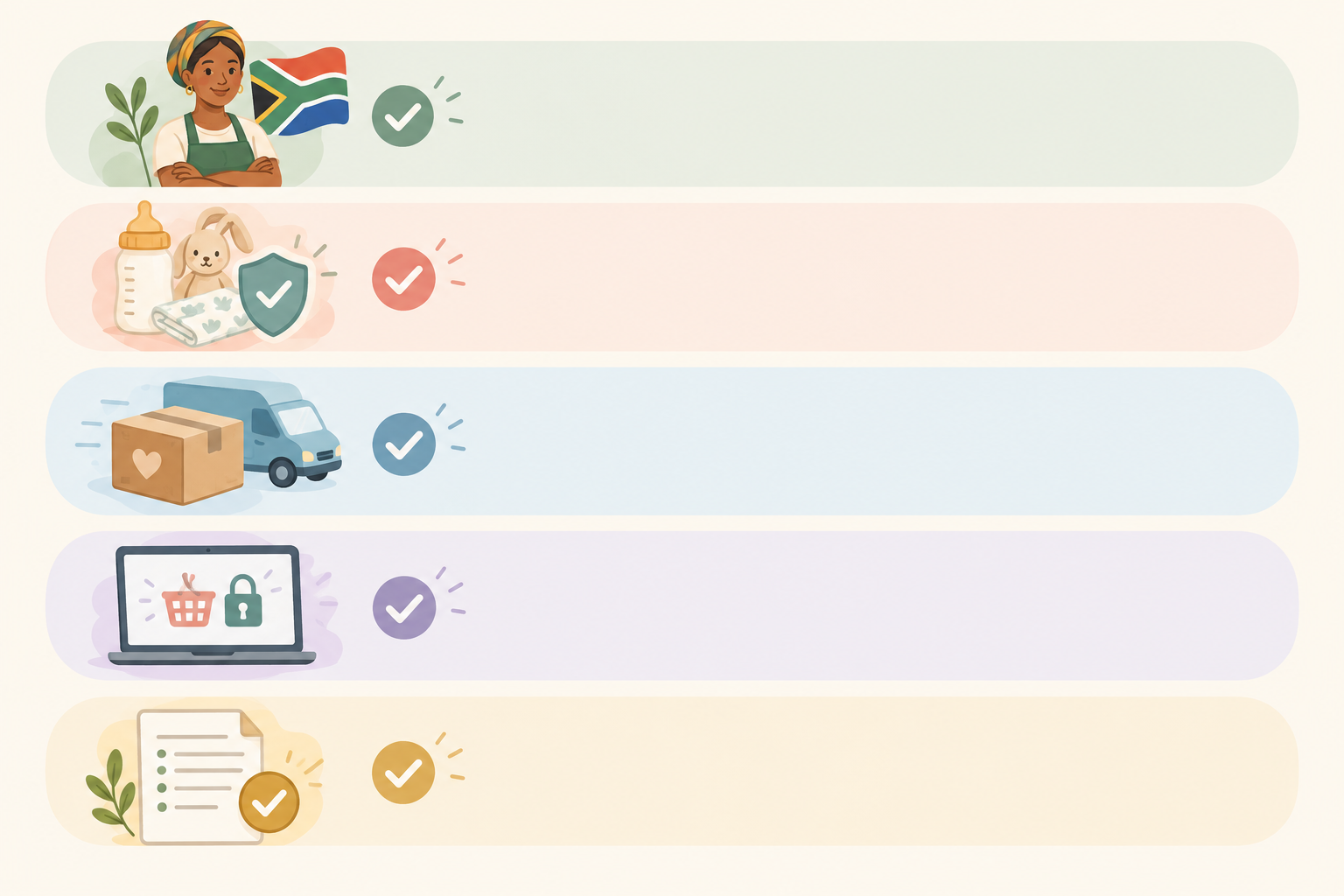
I'd rather be upfront than mysterious, so here's what we look at when a brand applies. We're reviewing the whole experience a parent or guest would have with you, not just your products.
Let me be honest here, because it saves everyone time. A brand usually isn't ready yet if:
None of that is a forever no. Most of it can be fixed in an afternoon. Tidy it up and you're welcome to reapply.
Here's what applying looks like, from first hello to going live.
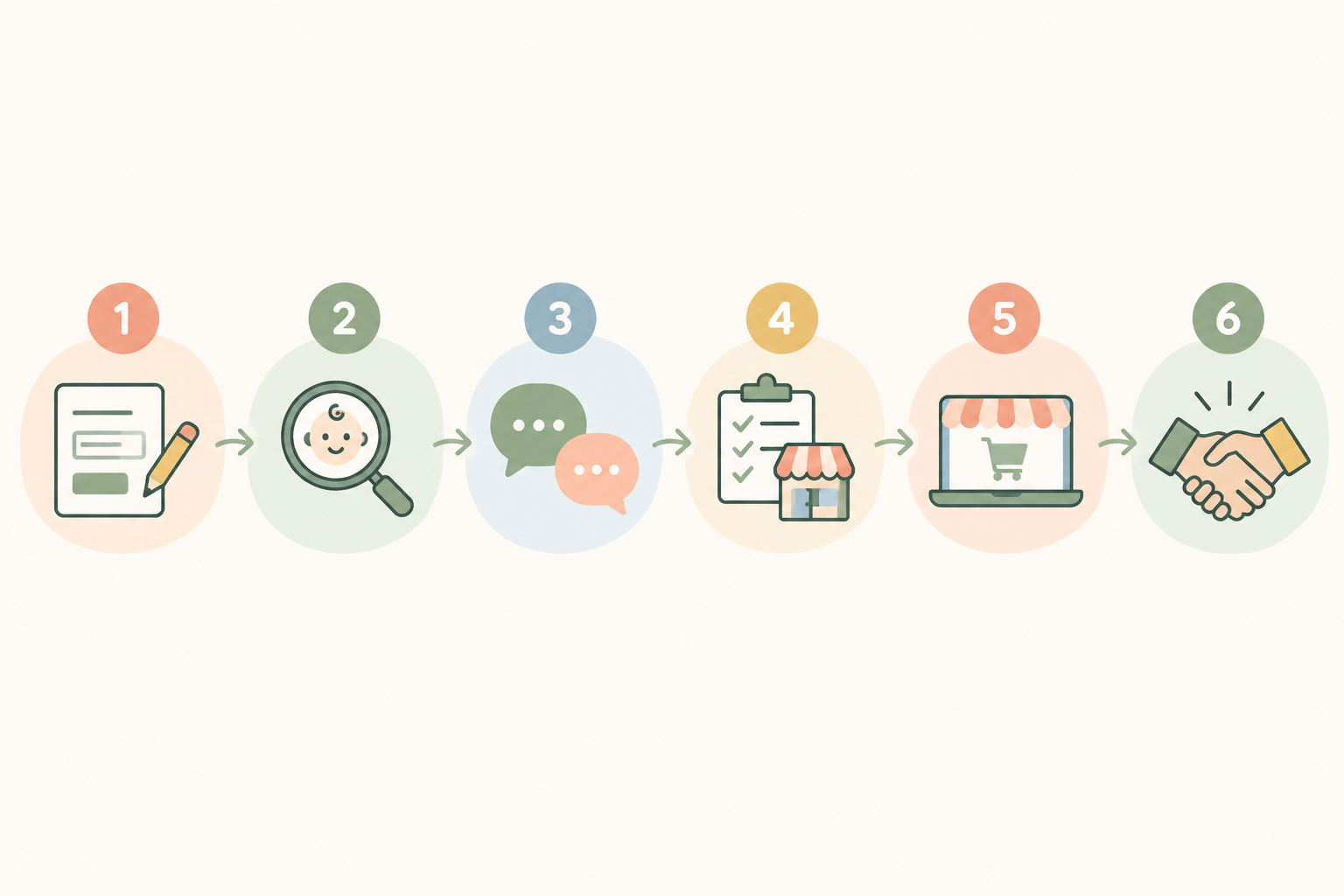
I don't want to quote you a number of days I can't stand behind, so when you get in touch, ask us for a realistic timeframe for your situation. The biggest factor is usually how quickly we can see what we need: your website link, your product range, your policies and a sense of your delivery process. If you have those ready, things move more smoothly.
And a bit of reassurance from me: you don't need a huge team or a perfect website. Some of the best baby artisans I've come across are one or two people with a beautiful product and a very tidy order process. What we need is a genuine, dependable business.
Think of a registry partnership as one more retail channel. It sits beside your social media, your email list and your existing sales rather than replacing any of them. Here's what it adds:
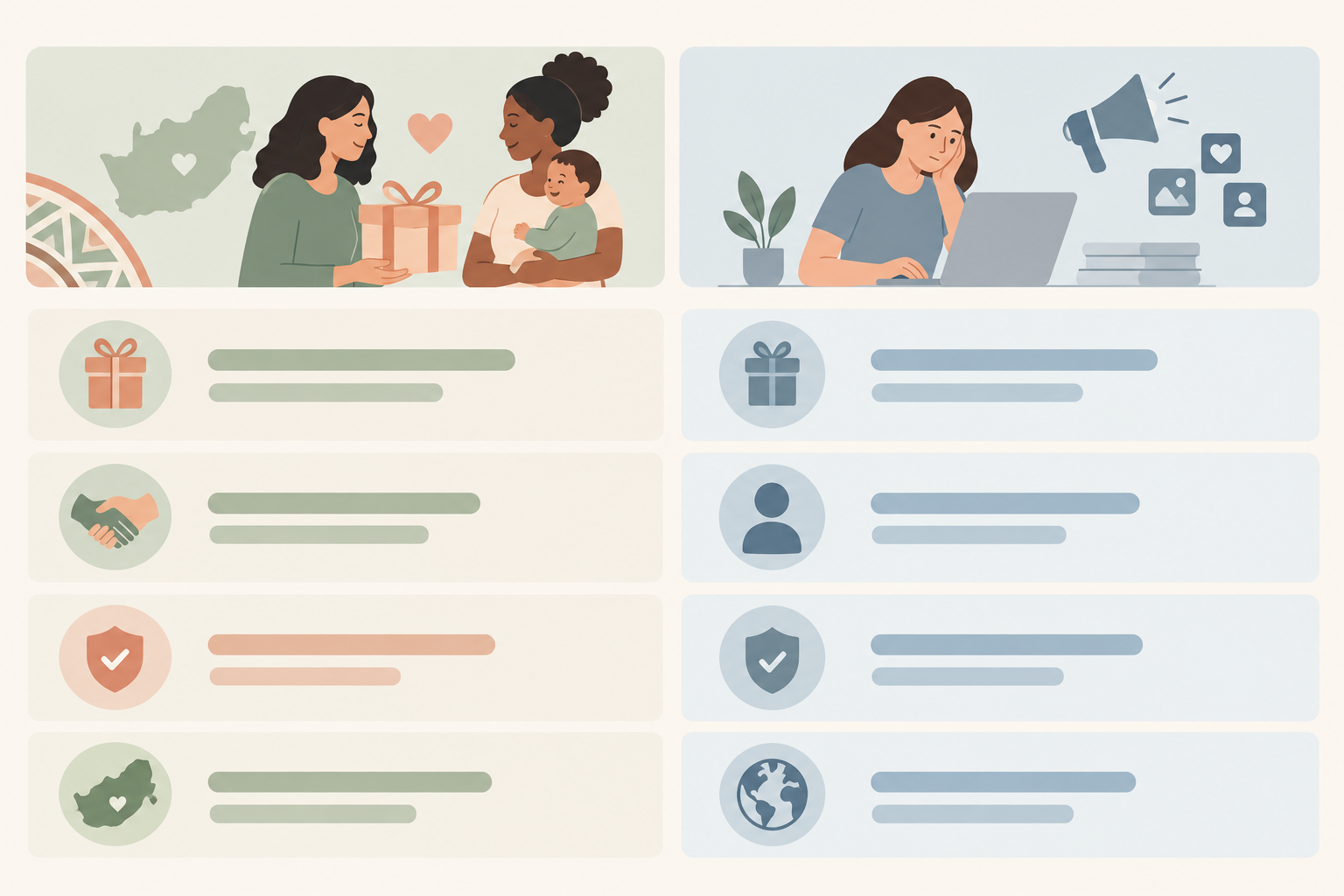
Here's how I think about it. Your Instagram builds awareness, your email list builds loyalty, and a registry meets parents at the point of purchase. Different jobs, same goal.
It helps to picture your products in context, so let's walk through it from the other side.
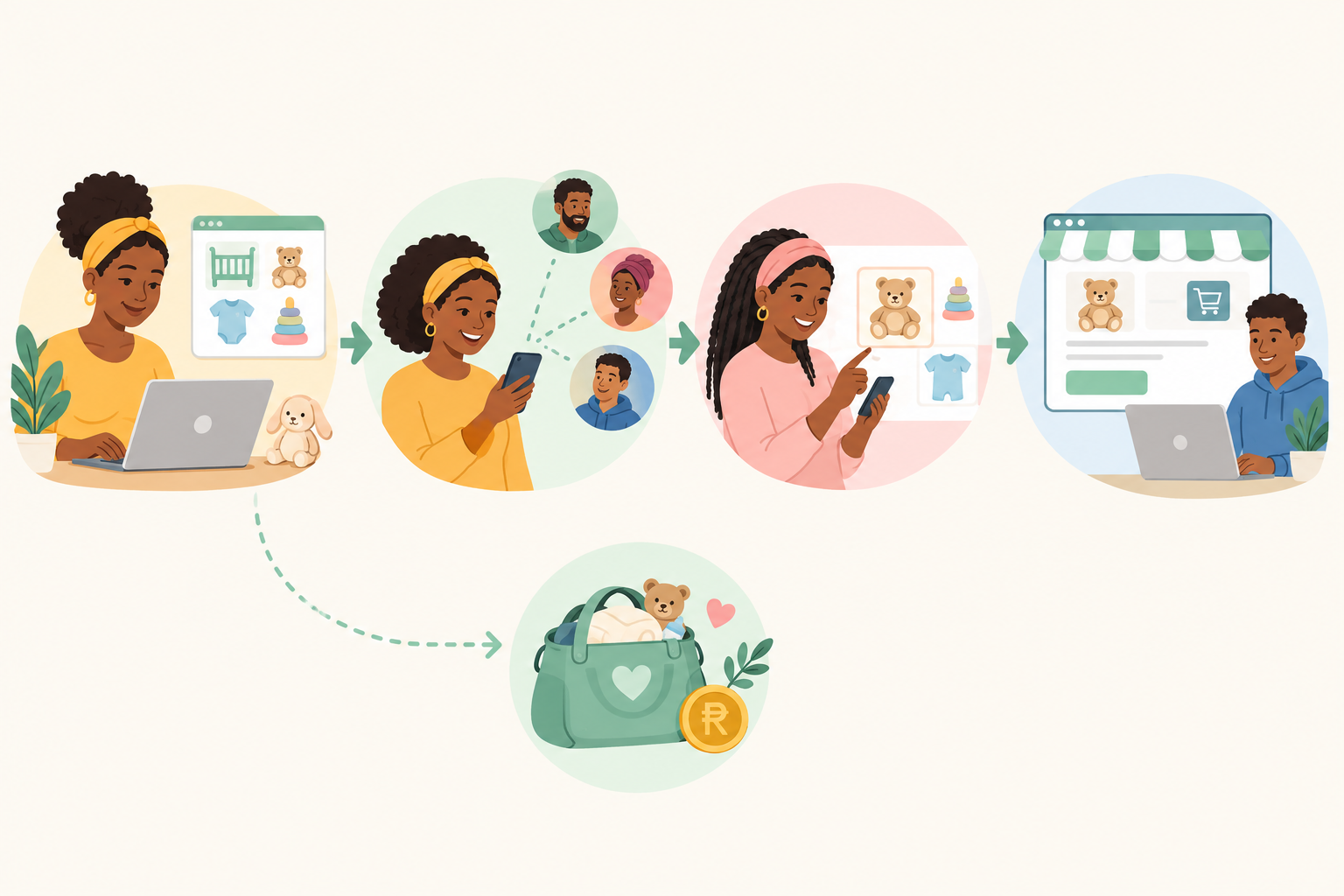
Parents build their registry for free. They only pay a one-time R199 fee when they're ready to share it with guests, so there's no pressure while they're still dreaming up the nursery.
Once it's shared, a guest opens one registry link and browses gifts from different local shops. They choose something, and then they're sent to the retailer's own website to buy it. Your site, your payment page, your brand. If a guest feels like adding a R500 Hatch Bag donation to help a mum in need, they can do that too.
Because the registry tracks what's been chosen, duplicate gifts are avoided. That matters to your customers: guests can be confident they're buying something wanted, and parents aren't left with three identical swaddles. Confident guests are far more likely to finish the purchase.
You'll notice I haven't filled this section with brand names and quotes. I'd rather not put words in anyone's mouth, so brand spotlights will go up once the brands themselves have approved them. In the meantime, here are the kinds of businesses that tend to do well, and the lesson I'd pass on from each.
Think of a maker of knitted booties, hand-sewn clothing or nursery décor, working from a small studio. What stands out in a review is usually a clear story: who makes the product, where, and from what. The practical lesson is to keep a simple record of your materials and suppliers, and be honest about your capacity. Telling us 'I can make ten a week' is far better than overpromising.
This might be someone making wooden toys, muslin swaddles or baby skincare. Safety matters most here, because 'handmade' and 'local' don't automatically mean safe. The practical lesson: have your product details, care instructions and any testing or safety information to hand. Avoid claims you can't back up, and be clear on what's handmade, locally designed or locally manufactured.
A store with a broad range and a busy warehouse has different strengths: stock volume, delivery systems, a proper returns process. The practical lesson is that accurate stock matters just as much when you're bigger. A registry gift that's out of stock is a disappointing moment for a guest, so keep your listings current.
Good news: you probably have most of this already.
If you have them, a one-page overview of your brand, a short note on your production capacity and typical delivery times, and any safety or compliance paperwork relevant to your products all help. Think of it as a tidy folder you'd be proud to hand over.
If you care about quality and local parents, we'd love to hear from you. Truly. Every brand in our network started with someone sending a hopeful, slightly nervous message. 💛
We work only with local South African baby stores, small businesses and artisans. We look at product quality, dependable fulfilment, clear policies and a secure checkout on your own website, so parents and guests can buy with confidence.
Your business needs to be South African, sell quality baby or children's products, deliver reliably and offer a trustworthy buying experience on your own site. We also look for clear returns and support information. If you're unsure whether you qualify, just ask us.
Get in touch through bababloom's merchant enquiry route with your website and a short introduction to your brand. We'll review your shop and products, chat with you and let you know the next steps.
On yours. Registry guests choose a gift on the registry and are sent to your own site to complete the purchase, so you keep your checkout experience and your customer relationship.
Yes. Local baby artisans and makers of handmade baby products are a big part of why bababloom exists. What matters is that you're reliable, upfront about timelines and proud of your quality.
Parents build their registry for free and pay a one-time R199 fee when they're ready to share it with guests.
Registry guests can donate R500 Hatch Bags of newborn essentials to underserved mothers across South Africa, so a gift can help families beyond the registry.