How One E-commerce Brand Grew Organic Traffic 340% in 6 Months Using AI Content Generation
How One E-commerce Brand Grew Organic Traffic 340% in 6 Months Using AI Content Generation
An e-commerce brand increased organic traffic by 340% in six months by using AI to consistently publish SEO-optimized blog posts. The real breakthrough wasn't speed—it was building a system that learned from what worked and kept getting better.
The problem: Most e-commerce brands can't keep up with content
Content marketing works for e-commerce. We all know this:
- Organic visitors convert better than paid traffic
- Good blogs build trust with customers
- SEO content catches people actively searching to buy
But most brands struggle to actually do it because:
- Running a business takes all your time
- Writing good content is slow and expensive
- Staying consistent feels impossible
What they did: Built an AI content system that learns
The numbers
- Blog posts published: 26 articles in 6 months
- Time per post: 35 minutes (including review and publishing)
- Organic traffic increase: 340%
- First-page Google rankings: Multiple keywords now rank on page 1
How it played out month by month
Month 1: Research and setup
They found buyer-intent keywords their competitors weren't covering well.
Month 2: Started publishing weekly
Set up an AI system to write posts automatically. Published every Tuesday.
Month 3: Watched what worked
Started tracking which posts got traffic and rankings. The AI began learning patterns.
Month 4: Let the AI improve itself
This is where it got interesting. The AI started copying the structure and approach of their best-performing posts.
Month 5: Expanded the topics
Added more top-of-funnel content to catch earlier-stage searchers.
Month 6: Mostly hands-off
The system was running itself. They spent maybe 30 minutes a week reviewing posts before they went live.
Why self-improving AI is different
Regular AI writing tools just spit out content. Self-improving AI actually watches what performs well and gets better over time. It learns which headlines work, which content structures rank, and which topics drive traffic.
That's what made the difference here.
How to copy this approach
- Find your content gaps: Use tools like Ahrefs to see where competitors rank but you don't
- Pick a schedule and stick to it: Weekly works well for most brands
- Choose AI that learns: Not all content AI is the same—you want one that improves based on your results
- Make publishing easy: Set up workflows so posts go from AI to your site with minimal friction
- Track everything: You can't improve what you don't measure
- Scale gradually: Start with one post per week, then increase as the system proves itself
Content marketing compounds
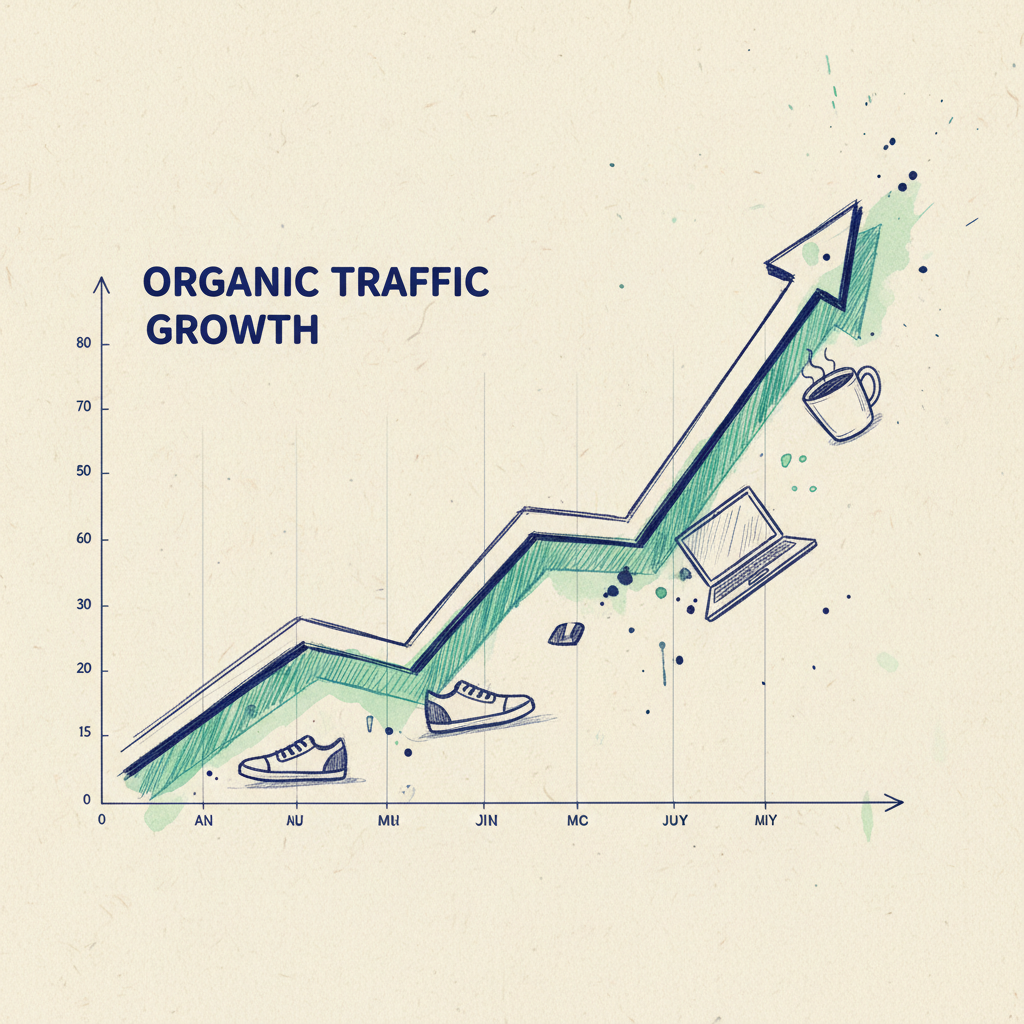
Here's what I found interesting about their results: growth wasn't steady. The first two months were slow. Month three picked up. Then months four through six took off.
That's how content marketing works. Google needs time to trust your site. Your topical authority builds slowly, then suddenly you're ranking for everything in your niche.
Common questions
How much time did this actually take?
About 30 minutes per week reviewing the AI-generated post before publishing. That's it.
Does Google really rank AI content?
Yes, if it's helpful to readers. Google cares about usefulness, not who wrote it.
Will this work for my niche?
The basic approach works across industries, but your mileage may vary depending on competition and how people search in your space.
The takeaway
340% traffic growth in six months is impressive, but here's what matters more: they built a system that works without them.
Most e-commerce brands know they should blog. Few actually do it consistently. AI that learns and improves gives you a way to finally stay consistent without burning out your team.
The future isn't about creating more content faster. It's about creating better content that gets smarter over time.
Related Articles

Create content like this automatically
Scribe uses AI to generate high-quality blog posts that engage your audience and drive traffic.