How Solo Founders Can Get Cited by ChatGPT and Claude (Without an Enterprise Budget)

How to Get Cited by ChatGPT and Claude: A Solo Founder's Low-Budget Playbook
If you're wondering how to get cited by ChatGPT, Claude and other AI search tools, focus on three things: answer your customers' actual questions in plain, factual language; make those pages technically easy for crawlers to read; and track your visibility with a repeatable method instead of guessing from memory. Do those three well, and you're doing everything a solo founder can realistically do — no content team or enterprise GEO budget required.
Start here:
- Rewrite your highest-value page (usually pricing or a comparison) in direct Q&A format with real numbers.
- Confirm that page is crawlable and readable without requiring JavaScript to render the core text.
- Build a small spreadsheet of real customer questions and check it weekly, not daily.
A quick note on where this comes from: I run MentionOwl, a tool that tracks AI citation visibility, so some observations below come from patterns across client accounts rather than a published study — I'll say so wherever that's the case, and I'll give you the free version of the method before mentioning the paid one.
What Does Getting Cited by ChatGPT Actually Mean?
"Getting cited" covers at least four different mechanisms, and mixing them up is the most common mistake I see solo founders make.
| Type of mention | What's happening | Can on-site changes influence it? | How to test for it |
|---|---|---|---|
| Training-data mention | The model recalls your brand from pre-training, no live web access | Rarely, and only over months, when a newer model version trains on fresher data | Ask with web search switched off; note the model version |
| Live web citation | The model fetches a current page and links to it | Yes — this is what your content and crawlability work targets | Ask with search enabled; check for a source link and which URL |
| AI Overview inclusion | Google's AI Overview pulls from its own index, separate from ChatGPT or Claude | Indirectly, through normal SEO signals | Run the query in Google and check for an Overview with your page linked |
| Unsourced recommendation | The model names your brand with no link | Hard to isolate | Note whether a citation accompanied the mention |
Everything in this post targets the second row — live web citations — because that's the one you can realistically move in weeks rather than months. If a non-browsing ChatGPT session shows no change after you rewrite your pricing page, that's expected: you're testing the wrong mechanism, not failing at the right one.
At the time of writing, ChatGPT's consumer app often grounds queries in live search and shows source links when it does, but can still answer from training memory depending on the query — so test both modes and log which one you used. Claude's web search is a toggle you switch on per session; leave it off and you'll only ever see training memory, never a live citation. Interfaces and defaults change quickly on all these platforms, so treat this as a snapshot rather than a permanent spec, and re-check the toggles periodically.
On crawlers: OpenAI's OAI-SearchBot fetches pages for live search, while GPTBot is used separately for training-data collection — blocking one doesn't affect the other. Anthropic runs ClaudeBot for its crawling needs. Allowing these bots in robots.txt makes a page retrievable; it doesn't guarantee it's retrieved and cited for any given query.
Why AI Citations Matter Alongside Google Rankings
The evidence for this shift is mostly US-based, so treat the figures below as directional for a UK audience rather than exact.
Pew Research Center's July 2025 analysis found that when Google shows an AI summary, users click a traditional result in roughly 8% of visits, versus roughly 15% when no summary appears. SparkToro and Datos' 2024 zero-click research found 58.5% of searches ended with no click at all that year. Adobe Analytics' 2024 holiday report found AI-referred retail traffic grew roughly 1,300% year-over-year, with those visitors viewing about 12% more pages and bouncing 23% less. Three different datasets, three different methodologies — cited here as evidence of direction, not as UK fact.
This doesn't mean AI citations matter more than rankings. Organic search still drives most traffic for most small businesses, and AI systems draw on the same web signals when grounding an answer. What's changed is that for comparison and "best for X" queries, a growing share of searchers now get an answer without visiting any site. Ranking third for "best invoicing software for freelancers" is worth less if you're absent from the AI answer a chunk of those searchers read instead.
Think of it as a share-of-voice problem layered on your rankings problem: you're still fighting for the blue links, and separately competing for mention frequency in an answer that might cite only three or four sources. That second arena is smaller — and often more winnable for a solo founder than page one for a competitive keyword.
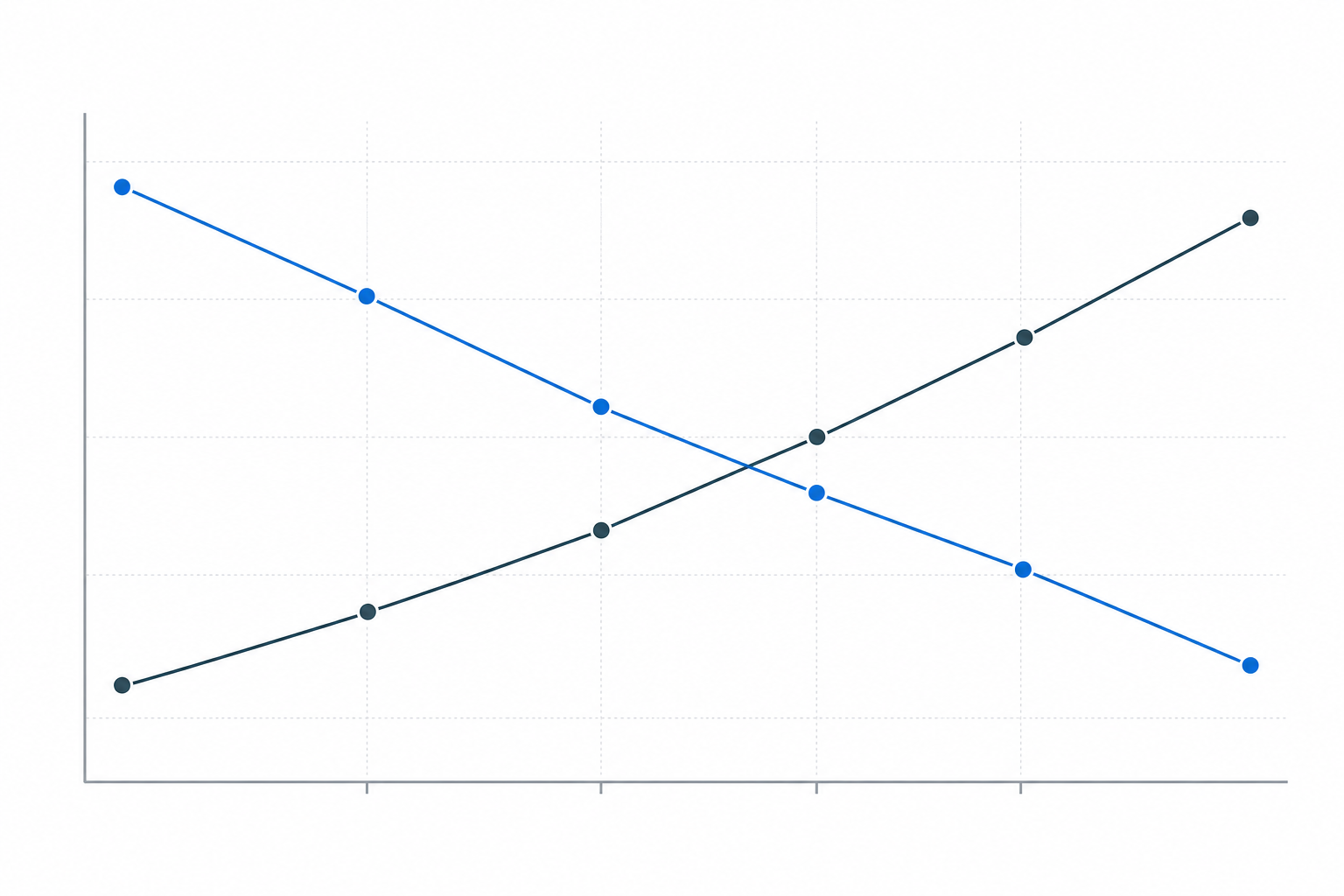
Illustrative only — these are separate Pew and Adobe datasets with different methodologies and time windows, not one combined time series.
How to Structure Content for ChatGPT and Claude Citations
None of the major labs publish exactly how their systems select and extract a source, so what follows is accessibility best practice with a plausible — not confirmed — effect on citation odds.
- Answer in the words customers actually use — "how much does X cost," not "Unlocking Value: Our Pricing Philosophy."
- Use literal H2/H3 headings that state exactly what's below them.
- Put facts — pricing, features, comparisons — in plain text near the top. A fact buried in a hero image or under three paragraphs of brand narrative is functionally invisible to something trying to extract it quickly.
- Lead with the fact, then explain. Marketing framing before the answer just means a system may use a competitor's faster answer instead.
- Repeat your clearest answers across every page that could plausibly be cited — pricing, comparisons, "best for X" — rather than concentrating your best content on one page.
- Use tables and lists for comparisons, which are harder to misquote than an equivalent paragraph.
A quick template:
H2: How much does [product] cost?
[Product] costs £X/month, billed [monthly/annually], and includes [core features]. A free trial of [length] is available.
H2: Who is [product] for?
[Product] is built for [specific customer type] who need [specific outcome]. It isn't a fit for [excluded case], because [honest reason].
Before: "Our industry-leading platform delivers best-in-class value for growing teams." Nothing extractable.
After: "Pro costs £39/month, billed monthly, and includes unlimited projects, 5 team seats, and email support. A 14-day free trial is available, no card required." I haven't isolated this exact rewrite in a controlled test, so I won't claim it drove a specific citation lift — but it's the direction every clearer case I've reviewed has moved in.
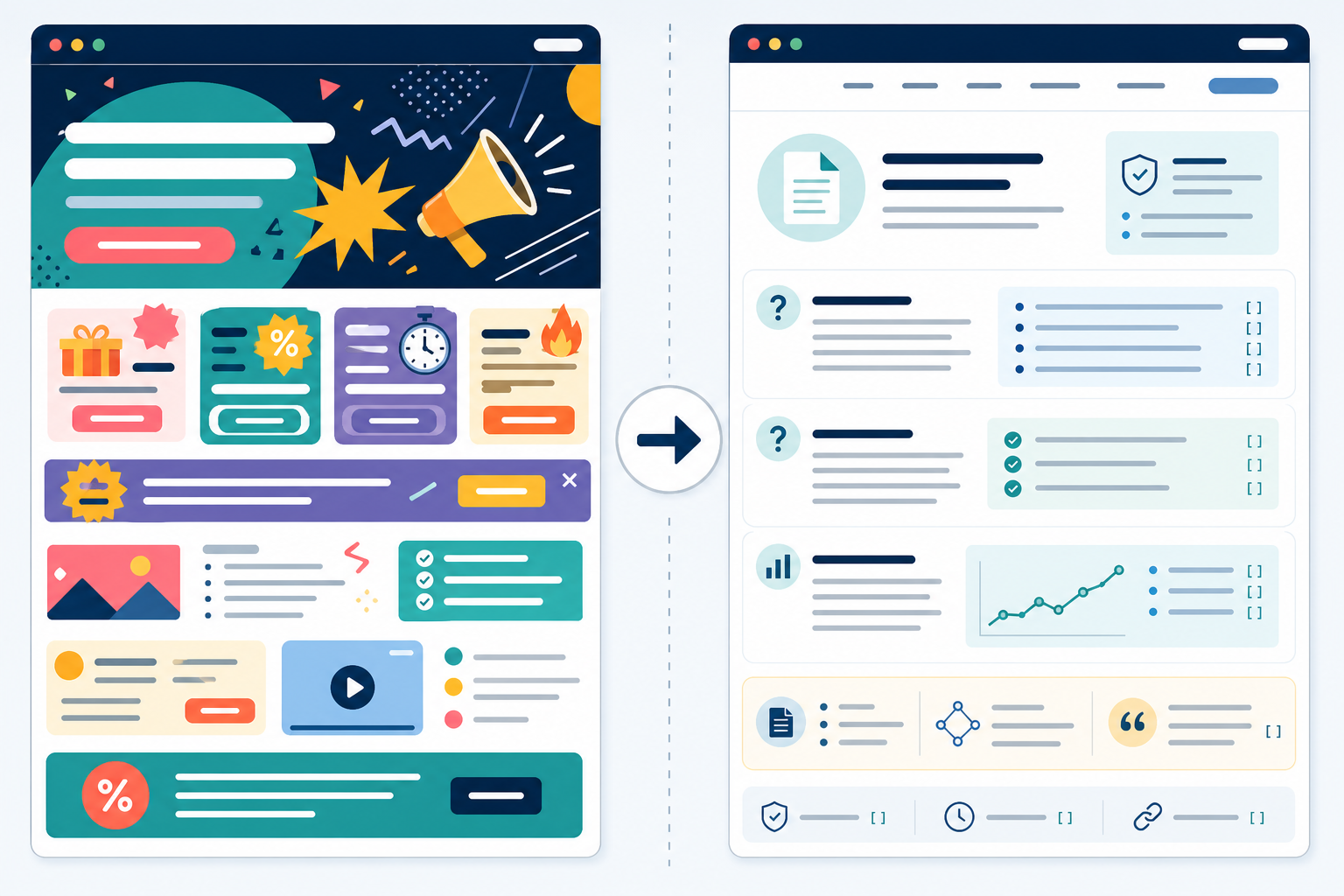
Illustrative diagram based on the template above, not a screenshot of a real audited site.
A few habits that make this stick: state pricing plainly, including currency and billing period. Name features by their real names, not marketing labels. Say who the product isn't for, as well as who it is — a clear scope statement helps place you correctly in a comparison answer. And add a visible "last updated" date near factual claims, since inconsistency between your own pages (pricing page says £29, homepage says £25) gives anyone — human or system — reason to doubt both numbers.
In my own audits, one clear, well-written comparison page tends to outperform ten thin blog posts for citation purposes. Precision beats volume here.
How Clear, Factual Answers Help AI Citation Visibility
Clear factual answers give ChatGPT and Claude information that is easier to understand, verify and potentially cite. This does not mean writing for machines instead of people. It means removing ambiguity so both readers and AI systems can quickly identify the answer to a specific question.
Prioritise:
- Current pricing, with the currency and billing period.
- Specific features using their real names.
- Accurate comparisons with named alternatives.
- A clear description of your ideal customer.
- Honest limitations and examples of who your product is not suitable for.
- Consistent claims across your homepage, pricing page, comparison pages and FAQs.
Avoid making unsupported claims such as "the best" or "industry-leading" unless you can define and substantiate them. A factual statement such as "supports five team members on the Pro plan" is more useful than a broad promotional claim and gives an AI system something specific to repeat.
How to Use FAQs and Structured Data for AI Search
This doesn't require a developer. Writing useful FAQ content and adding schema markup are two separate things, though — the first has clear value for readers and any system parsing your page; the second is a clarity signal with no public confirmation that it increases how often ChatGPT or Claude cites you.
- Collect every question a real prospective customer has asked — from emails, DMs, sales calls, support tickets. This beats anything brainstormed from a keyword tool.
- Write each answer in 2–4 plain sentences, leading with the direct answer before context.
- Mirror your clearest answers across every page that could plausibly be cited — pricing, comparison, "best for" — rather than putting your best content in one place.
- Optionally, add FAQPage schema using a free generator, pasted as JSON-LD in the page head. Only add Product schema where a page genuinely describes one purchasable product with a fixed price.
- Validate with a free structured data testing tool, and separately confirm the page's core text is readable without requiring JavaScript to render.
One honest caveat: Google restricted FAQ rich-result eligibility in 2023, mostly to government and health sites, so don't expect the markup to win you a search snippet. Its remaining value is giving any system parsing your page an unambiguous structural signal about what it answers — worth doing because it's nearly free, not because it's guaranteed to move your citation numbers.
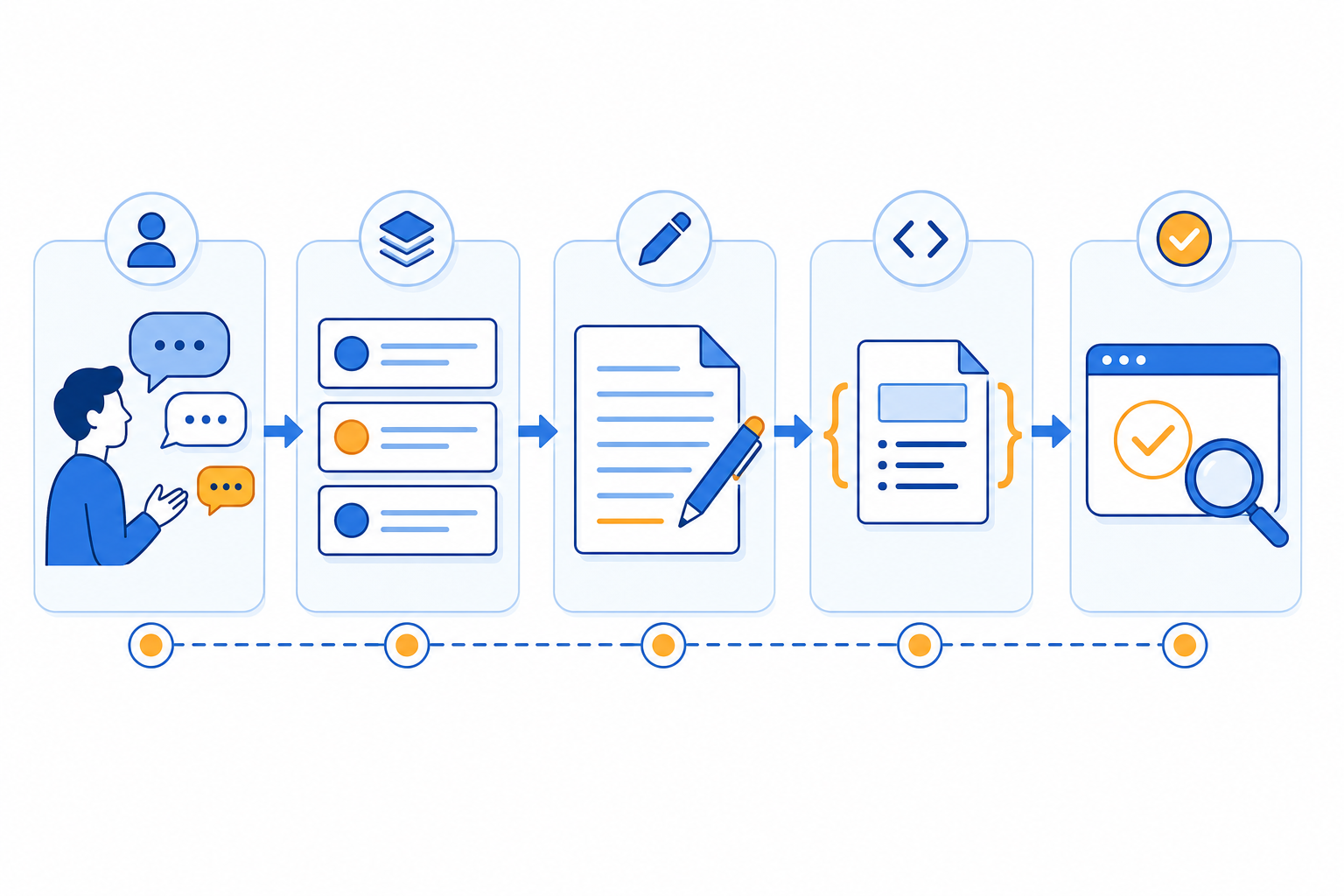
Illustrative process diagram summarising the five steps above.
How to Track Whether Your AI Citations Are Increasing
Most solo founders manually type a few queries into ChatGPT or Claude each morning and eyeball whether anything's different. That tells you almost nothing — AI answers vary by session, phrasing, personalisation, and model version, so a single check can't separate a real shift from noise.
A free method with an actual protocol:
- Build a spreadsheet of 20–30 realistic customer questions from the same sources as your FAQ content.
- Fix your conditions each week: similar time of day, logged out where possible, and record the exact model version shown.
- For ChatGPT and Claude, run each query with search on and off, and log both separately — they're different mechanisms, covered above.
- For each result, record: brand mentioned (yes/no), source link shown (yes/no), which URL, and rank relative to named competitors.
- Repeat weekly for at least four rounds before drawing a conclusion. Report your citation rate and your linked-citation rate separately, rather than one blended score — with 20–30 queries you have directional evidence, not statistical proof, and a single week's change is still noise.
| Manual spot-checking | Weekly spreadsheet | Automated monitoring | |
|---|---|---|---|
| Time cost | 15–30 min daily | 30–60 min weekly | Runs automatically |
| Consistency | Easy to forget | Systematic, with discipline | Systematic by default |
| Historical record | None | Manual log | Automatic trend line |
| Coverage | A handful of queries | As broad as you build | Broad, auto-generated |
The spreadsheet method costs nothing but time and is enough for most solo founders. If you outgrow it, this is the kind of thing MentionOwl (my own tool, disclosed) automates — running the same checks daily across ChatGPT, Claude, Gemini, and Perplexity, and logging results so you're not maintaining the sheet by hand. That's the only mention of it in this piece; the free method above works on its own.
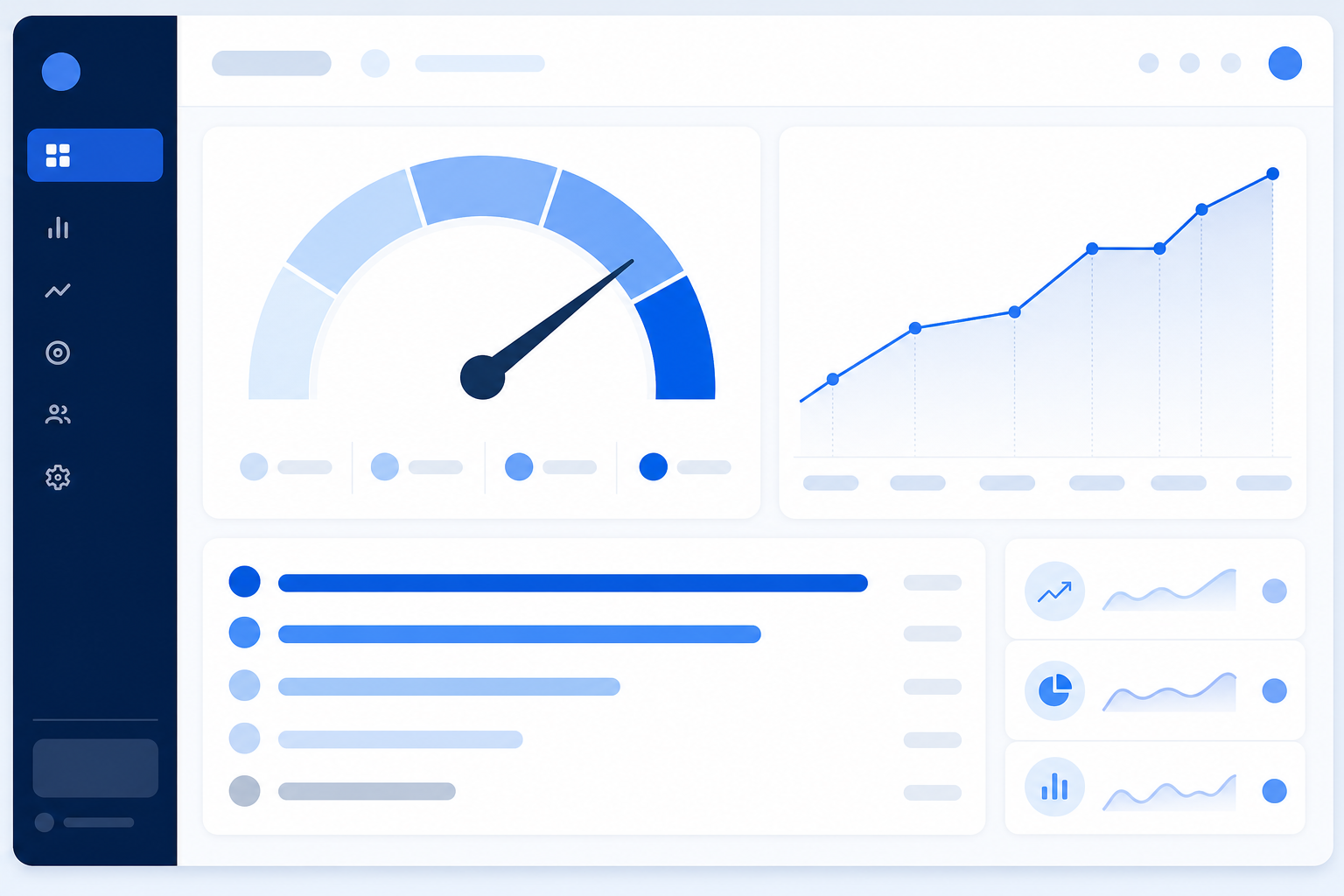
Illustrative mockup, not a live client account.
A Low-Budget 4-Week Plan to Get Cited by ChatGPT
Days 1–2 — Baseline:
- Build your 20–30 question spreadsheet from real customer language.
- Run week one of tracking across ChatGPT (search on/off), Claude (search on/off), Gemini, and Perplexity, before changing anything.
Days 3–5 — Fix content:
3. Rewrite the top third of your most important page in plain, factual Q&A format.
4. Fix any pricing or feature inconsistency between that page and your homepage.
Days 6–7 — Fix access:
5. Confirm the page reads correctly without requiring JavaScript, and isn't blocked to OAI-SearchBot or ClaudeBot in robots.txt.
6. Optionally add FAQPage schema and validate it with the Rich Results Test.
Then keep tracking weekly and compare against your baseline after four weeks, not after seven days — one week of movement in either direction is still noise.
Frequently Asked Questions About AI Citations
What content changes actually help with AI citations?
Plain, factual, question-shaped answers near the top of the page — real pricing, real feature names, a clear statement of who the product is and isn't for — repeated consistently across every page that could plausibly be cited. Vague marketing language ("industry-leading," "best-in-class") has no citation value because there's nothing in it to extract or repeat.
Do I need structured data markup to get cited by ChatGPT?
No. FAQPage schema is a low-cost clarity signal, not a proven citation lever — there's no public confirmation it increases how often ChatGPT or Claude cites you. It's worth adding because it's free and takes an afternoon, not because it's guaranteed to move your numbers. Only add Product schema where a page genuinely describes one purchasable product with a fixed price.
How long until I see results from changes designed to improve AI citations?
I've seen solo founder accounts show a measurable shift in their weekly tracking score within four to eight weeks, but that's an observation from the accounts I've reviewed, not a guaranteed timeline — and it's a measurement window, not a promise of causation. Training-data mentions won't change on any timescale you control. Live citations are the ones that can move, and four weekly tracking rounds is the minimum before you can tell a real change from noise.
How can I tell if it's working without asking ChatGPT every day?
Build the 20–30 question spreadsheet described above and check it weekly, not daily, under fixed conditions — same rough time, logged out where possible, search on and off logged separately. Track citation rate and linked-citation rate as two separate numbers. A consistent direction across four to six weekly rounds is a signal; any single week's result on its own is not.
Related Articles
Create content like this automatically
Scribe uses AI to generate high-quality blog posts that engage your audience and drive traffic.