How to Get Cited by ChatGPT, Claude, and Perplexity: A Tactical Guide to Generative Engine Optimization
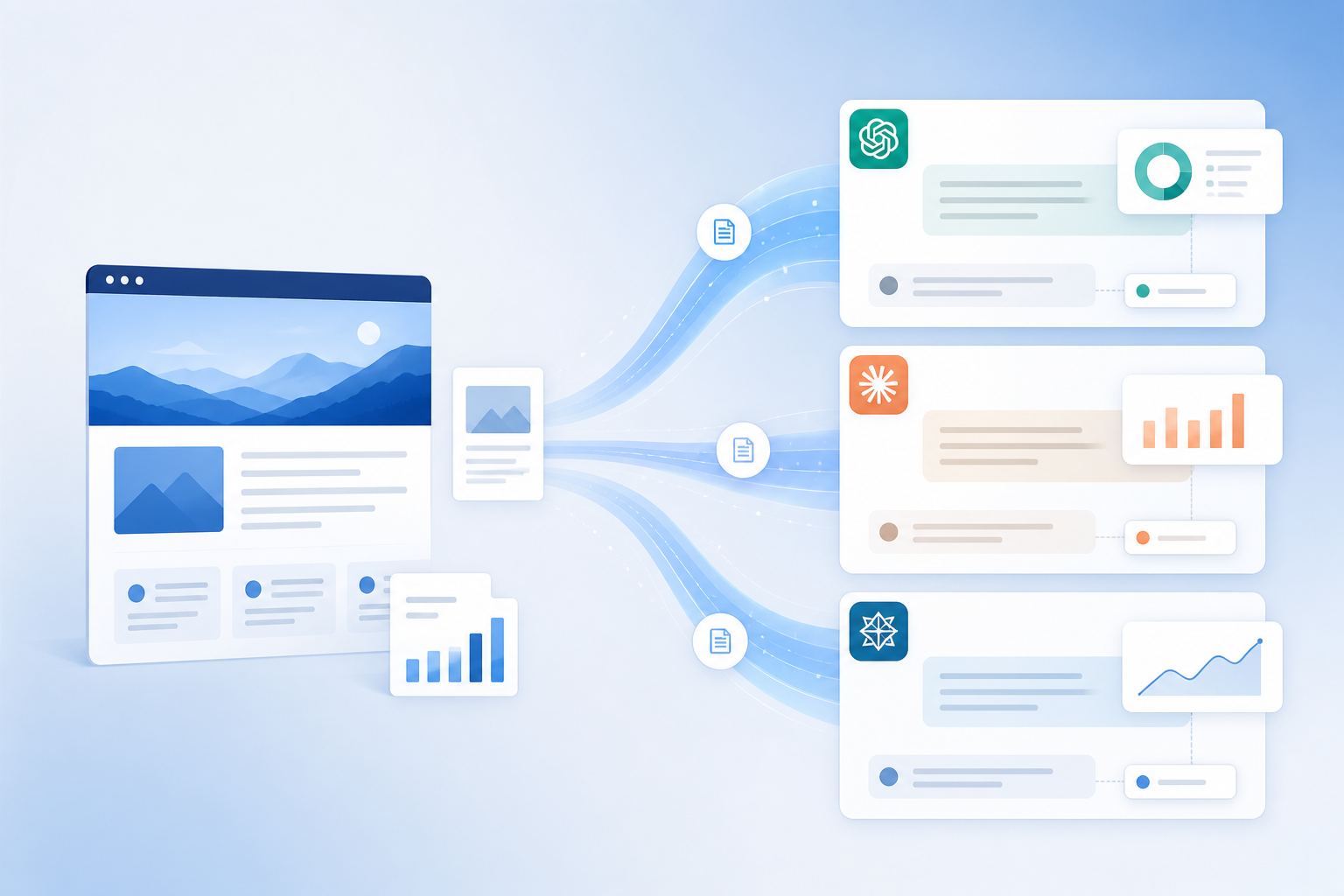
How to Get Cited by ChatGPT: A Practical Guide to Generative Engine Optimisation
If you're a UK-based SaaS or DTC brand trying to work out how to get cited by ChatGPT, Claude and Perplexity, the answer comes down to three things working together: content structured for extraction, technical accessibility and authority signals. In practice, that means publishing clear answers and comparisons, keeping your pages crawlable with clean semantic markup and schema, and building consistent third-party mentions, reviews and brand facts across the web.
I write this as a data analyst at MentionOwl, an AI visibility tracking tool, so I want to flag that relationship upfront. Some of the anecdotal examples below come from client accounts I monitor there. I'll try to be clear about the difference between what I've observed in those accounts and what's actually been published as research, because the two get blurred together far too often in this space.
Before going further, it's worth defining four terms precisely rather than using them interchangeably, because the biggest analytical mistake I see brands make is treating them as one metric:
- Mention rate: how often your brand name shows up in an AI-generated answer, with or without a link.
- Citation rate: how often that mention comes with an attributable source, such as a link, named source or numbered citation.
- Citation accuracy: whether the information attributed to you in that citation is actually correct.
- AI-referred sessions: clicks or visits to your site that originate from an AI platform. This is the only one of the four that connects directly to traffic and revenue.
These are related but distinct outcomes. Conflating them is how teams end up celebrating a vanity metric while actual referral traffic sits flat.
Why Getting Cited by ChatGPT Matters More Than Rankings
The behavioural data on AI-mediated search is mostly US-based, but it points in a consistent enough direction to matter for UK brands too, with a few caveats worth stating upfront. Search behaviour, index composition and AI adoption can all differ by geography and language, and I haven't found UK-specific equivalents to every study below. So treat the regional extrapolation with some caution.
Pew Research Center's 2025 analysis of Google users in the US found that when an AI-generated summary appeared above the results, users clicked a traditional organic link in only 8% of visits, compared with 15% when no summary was present. Users also ended their browsing session entirely after seeing an AI summary in 26% of visits, versus 16% without one. Read narrowly, this tells us something specific about US Google users and AI Overviews, not necessarily about ChatGPT, Claude or Perplexity as standalone destinations. Still, it's useful evidence that being present without being cited increasingly means being invisible.
Bain & Company's 2024 research found that 80% of the US consumers it surveyed already used AI-generated search results for at least 40% of their searches, and 79% expected to use AI search even more the following year. Separately, SparkToro and Datos found that 58.5% of US Google searches in 2024 ended without a click to an external result at all. That suggests zero-click behaviour predates generative AI, and AI summaries may simply be accelerating a trend that was already underway rather than creating it from scratch.
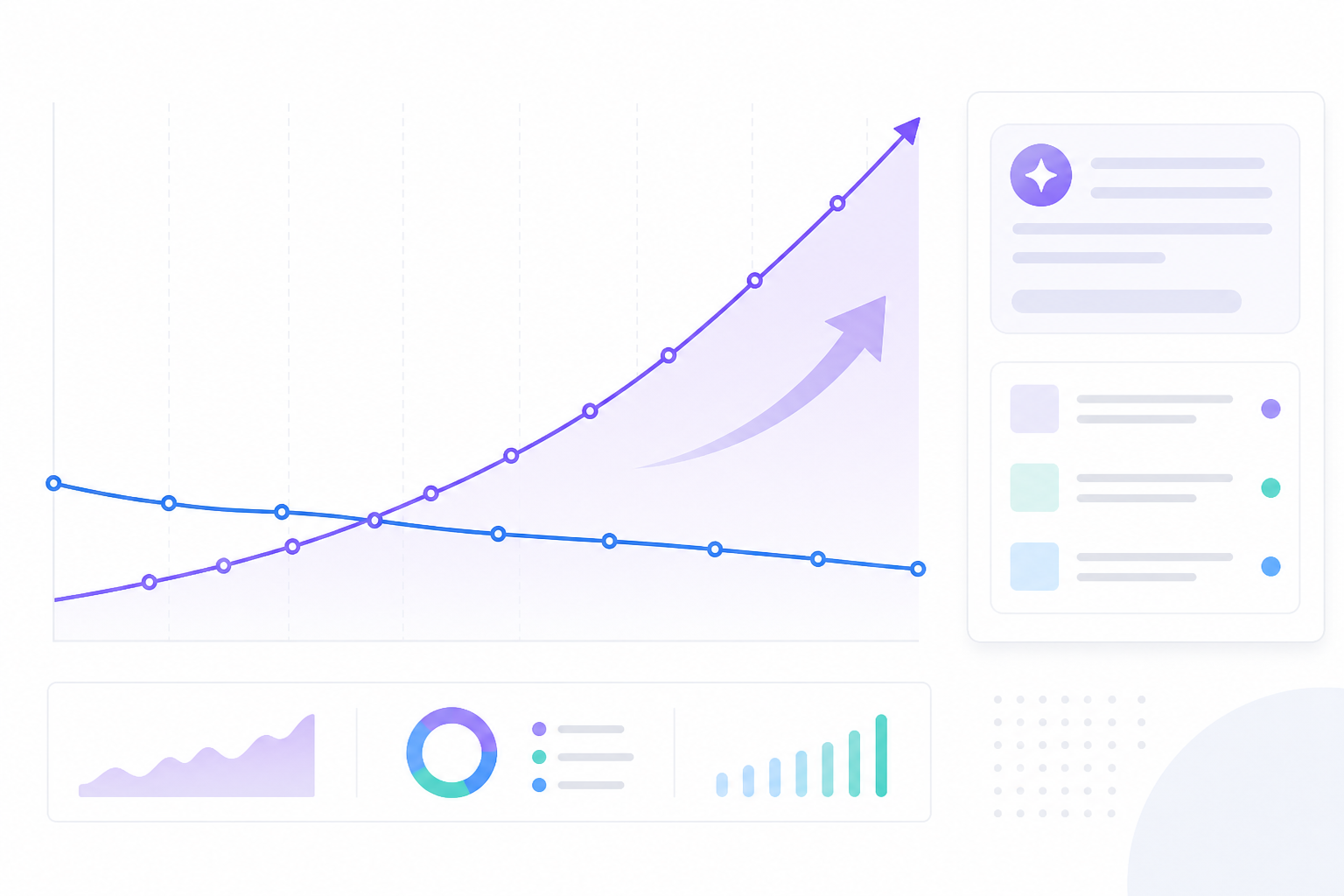
Citation presence and citation accuracy are not the same thing, and it's worth sitting with that distinction for a moment. The Tow Center for Digital Journalism tested eight generative search tools against 200 news-quotation queries in 2025 and found the systems gave an incorrect answer or misidentified the source in more than 60% of cases. That reframes the goal somewhat: you're not just trying to get mentioned by ChatGPT or another AI engine. You're trying to become the source that gets cited correctly, which requires clear, well-attributed evidence that models can actually interpret without garbling it.
This is also why I treat generative engine optimisation (GEO) as its own discipline rather than a rebrand of classic SEO. ChatGPT, Claude and Perplexity don't share a single retrieval system, ranking algorithm or citation convention. Brands need to be crawlable, attributable and quotable across several different systems at once. Share of voice (your visibility relative to competitors across AI platforms) is often a more useful measure than where you sit on one traditional results page.
Across the client accounts I monitor at MentionOwl, brands that treated GEO as its own discipline and tracked citation-specific metrics tended to see measurable AI visibility movement within roughly four to eight weeks of prioritising the fixes below. I want to be upfront that this is an observed pattern from a limited, non-random sample, not a controlled study. Your results will depend on your starting point, your category and how crowded your competitive set is.
How to Structure Content for AI Extraction
The academic research behind AI content structure is more concrete than a lot of marketers realise, though it still comes with caveats. The paper that coined the term "Generative Engine Optimization," produced by researchers at Princeton, Georgia Tech, the Allen Institute for AI and IIT Delhi, tested roughly 10,000 queries across nine generative engines. It found that adding clear quotations, statistics and readable structural presentation could increase a source's visibility in generative answers by as much as 40% in some domains. Results varied significantly by domain and engine, so treat 40% as a best-case figure rather than something to expect on average.
Here's what applying that principle looks like in practice:
Before: "We are an industry-leading platform trusted by thousands of businesses worldwide for AI search visibility."
After: "MentionOwl tracked AI citation rates for 40 SaaS clients between January and June 2025; 68% saw at least one measurable increase in citation frequency within eight weeks of implementing schema markup and FAQ restructuring." (Illustrative example, always use your own verified figures.)
The second version gives an AI engine a subject, a timeframe, a sample size and a named mechanism. Those details make the claim easier to understand and attribute than vague language like "industry-leading."
Content Formats AI Engines Prefer to Cite
The following reflects the research along with patterns I've watched play out across AI visibility monitoring:
- Lead with a direct answer. Put the answer in the first two or three sentences instead of opening with several paragraphs of brand background.
- Use explicit comparisons. Phrases such as "X is better for Y, while Z suits W" map naturally to buyer questions about which tool or approach to choose.
- Write FAQ headings as literal questions. Use the wording buyers are likely to search for or ask aloud. Question-based headings create self-contained retrieval units.
- Use scannable structures. Numbered steps for processes, tables for comparisons, short paragraphs of three or four sentences.
- Replace vague superlatives with specifics. Numbers, named comparisons and stated mechanisms do more work than unsupported claims like "best-in-class."
- Support claims with evidence. Link to original research, identify the source, and include dates, sample sizes and methodology where relevant.
Technical SEO Fixes That Improve AI Crawlability
These are ranked roughly by evidence and likely impact, not by how easy they are to implement.
- Implement Organization and Product schema markup. Google's structured-data guidelines state plainly that markup doesn't guarantee inclusion, ranking or citation. It does, however, give crawlers unambiguous facts instead of forcing them to infer meaning from prose. A minimal Product schema example:
{
 "@context": "https://schema.org",
 "@type": "Product",
 "name": "Example Product",
 "description": "A clear, factual one-sentence description.",
 "brand": { "@type": "Brand", "name": "Your Brand" },
 "offers": { "@type": "Offer", "priceCurrency": "GBP", "price": "49.00" }
}
- Check crawler permissions. Verify bot names and syntax against each provider's current documentation before publishing or relying on a robots.txt configuration. OpenAI runs OAI-SearchBot for ChatGPT Search separately from GPTBot, which is used for model training, so blocking one doesn't block the other. Anthropic separates ClaudeBot from Claude-SearchBot, while Perplexity uses PerplexityBot.
A sample robots.txt fragment that allows search-facing bots while blocking a training-only crawler might look like this:
User-agent: OAI-SearchBot
Allow: /

User-agent: GPTBot
Disallow: /

User-agent: PerplexityBot
Allow: /
Always verify current crawler names and policies, since these change fairly often.
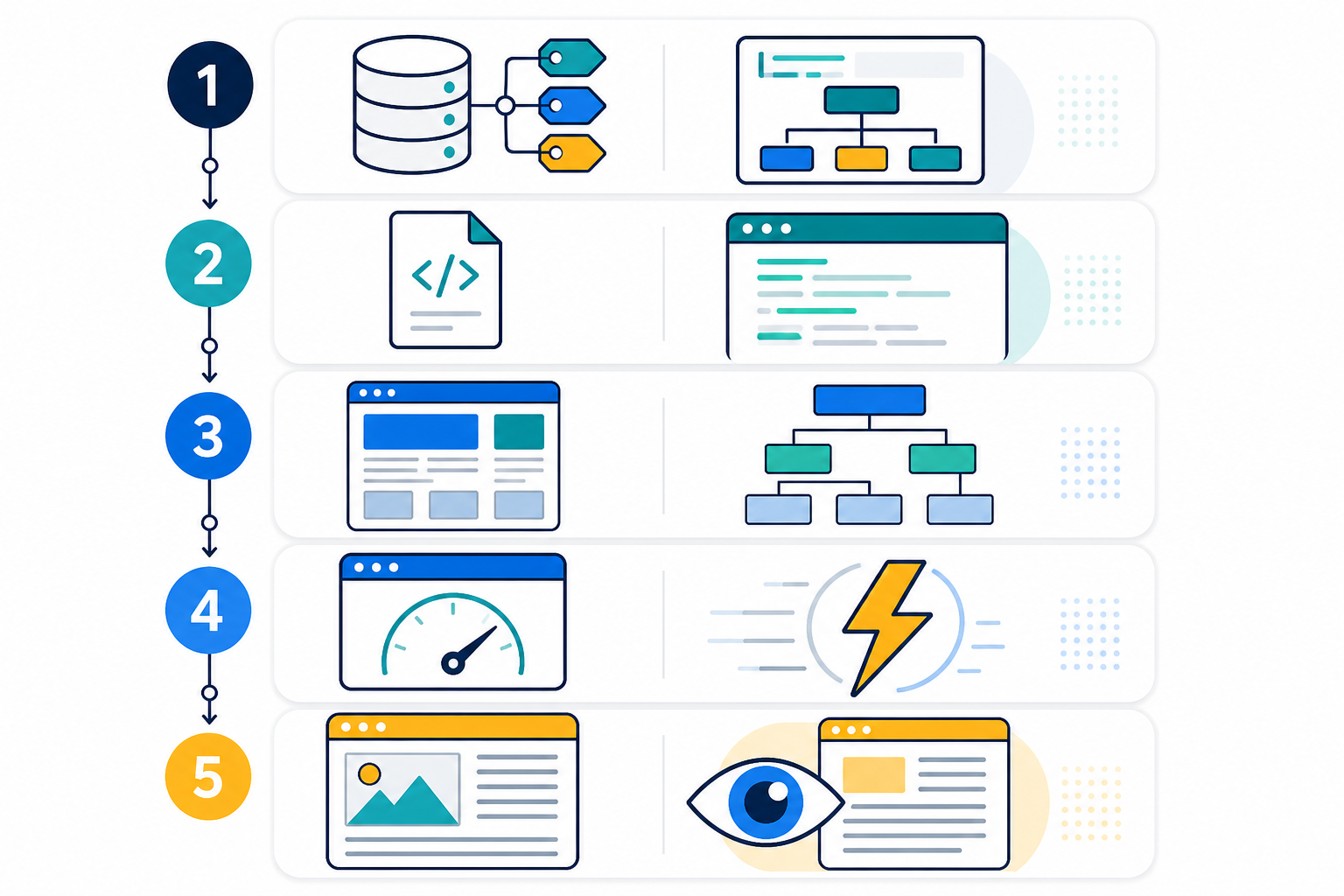
Audit semantic HTML. Use a logical heading hierarchy, descriptive alt text and real HTML text for key answers. Don't bury important information exclusively inside JavaScript-rendered components, images or PDFs that some crawlers struggle to parse.
Improve page speed and reliability. Check mobile rendering, time to first byte, persistent redirects, soft 404s and server availability. Technical problems can stop crawlers from fully retrieving and indexing a page in the first place.
Consider publishing an llms.txt file. This convention is still emerging and isn't universally adopted or standardised. Don't treat it as equivalent to established crawler controls such as robots.txt and XML sitemaps, but it's a reasonable supplementary signal to add.
Run a technical legibility audit. Compare the HTML a crawler retrieves with what a human sees in a browser. Check rendered HTML versus source HTML, schema validation and redirect chains. Tools like Google's Rich Results Test and a headless browser diff help here.
Building Authority Signals AI Engines Trust
It's worth being precise about how AI systems actually use information here, because the mechanism is more layered than "models were trained on the internet, therefore third-party mentions equal backlinks." Large language models combine several inputs: static training data absorbed during pretraining, live retrieval from search indexes and web crawls at query time, and increasingly, structured entity information about who you are and what you claim to do.
Third-party mentions on review sites, comparison blogs and communities like Reddit, G2 and Capterra matter because they feed that retrieval layer and reinforce entity consistency. They're not a simple one-to-one stand-in for backlink equity in classic SEO, even if they rhyme with it conceptually.
Inconsistent facts across the web, different pricing, positioning or category claims, appear to reduce how confidently a model cites a brand. That lines up conceptually with Google's Quality Rater Guidelines, which describe trustworthiness as the most heavily weighted component of E-E-A-T, though those guidelines evaluate human raters' judgement rather than generative model behaviour directly.
Practical Authority-Building Priorities
- Owned signals: Keep pricing, positioning and category claims consistent across your website, app store listings and syndicated content.
- Earned signals: Pursue digital PR and comparison-blog placements on the sources already cited when competitors appear in AI answers. Use competitor tracking to find these sources rather than guessing where authority exists.
- Community signals: Track soft mentions, references without a direct link, alongside hard citations. A soft mention can still contribute to share of voice.
- Original data: Publish research, benchmarks and proprietary findings. Original data gives models specific statistics and quotable claims they can attribute accurately.
- Entity consistency: Use the same brand name, description, founders, products, locations and category terminology across reputable third-party profiles.
ChatGPT vs Claude vs Perplexity: Platform-Specific GEO Tips
The table below reflects practical observations from monitoring citation behaviour across client accounts, not published platform documentation. Treat it as a working model and revalidate it regularly, since these products keep changing.
| Platform | Source behaviour observed | Citation volume | Best optimisation approach |
|---|---|---|---|
| ChatGPT | Combines OAI-SearchBot retrieval with training data; technical SEO fundamentals such as indexation, schema and page authority appear relevant | Moderate, with a visible Sources panel | Prioritise crawlability, structured data and traditional authority signals |
| Claude | Uses a dedicated web-search tool that returns titled, cited passages; appears to reward source credibility over sheer volume | Fewer sources per answer, more selective | Focus on passage-level clarity and third-party authority |
| Perplexity | Shows numbered inline citations transparently in real time | High and easy to observe | Use it to test whether content and authority changes are being cited |
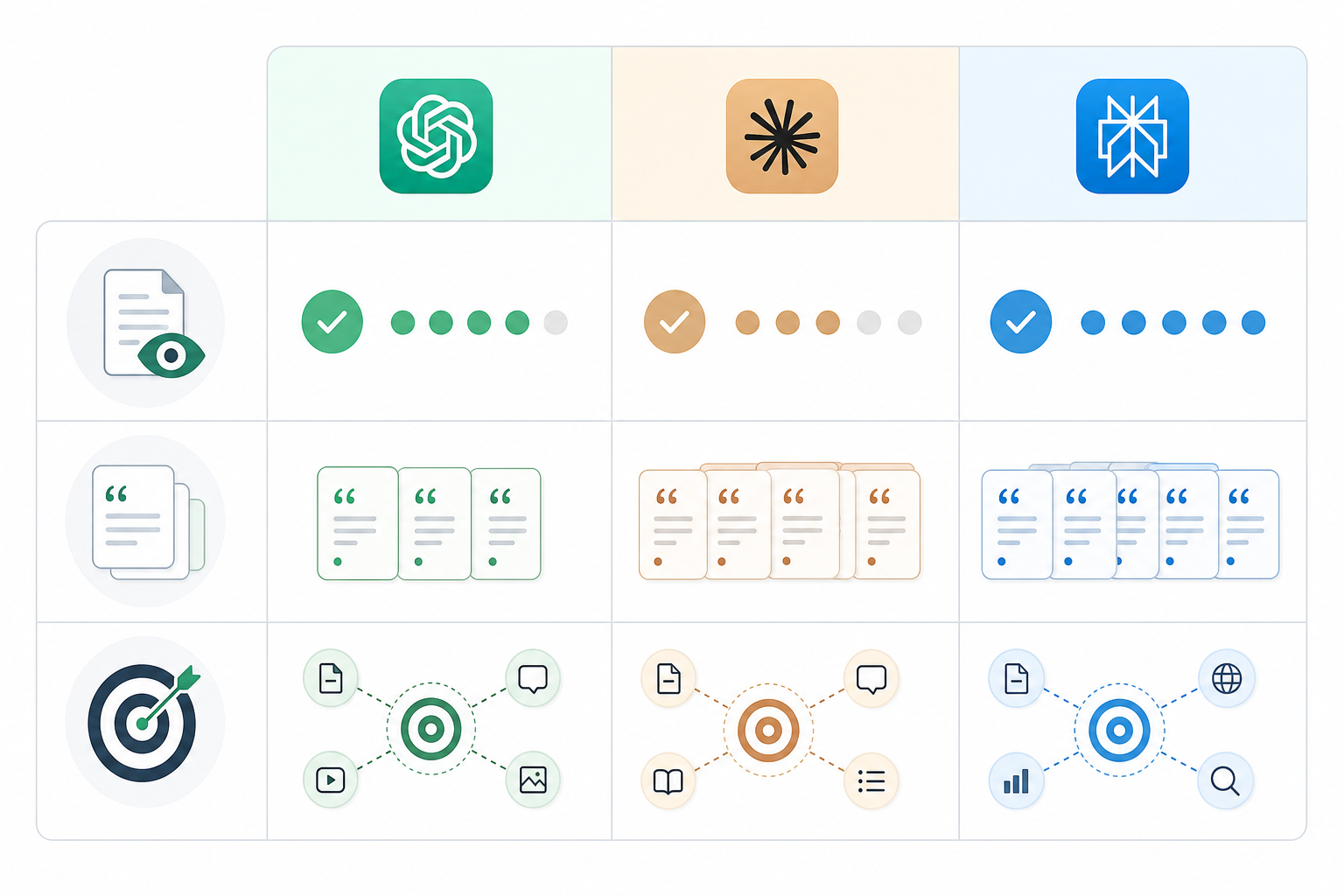
Start testing on Perplexity, not because there's solid evidence it's easier to get cited on (there isn't), but because its inline, numbered citation display makes citation behaviour highly visible. You can tell whether a structural or authority change is having an effect within days rather than weeks, then carry that learning over to ChatGPT and Claude, where citation behaviour is much harder to observe directly.
How to Track AI Citations and GEO Performance
Set a baseline before you make any changes. Record your mention rate, citation rate, citation accuracy and share of voice against the same set of realistic buyer queries. Without a baseline, it's genuinely hard to tell whether anything you did actually caused the movement you're seeing versus normal noise.
MentionOwl's "AI visibility score" is a proprietary composite metric based on query coverage and position-weighted citations. I'd treat it as one useful lens rather than an industry-standard benchmark. If you want independently reproducible metrics, the four raw measures defined at the start of this guide are a better starting point.
A 30/60/90-Day Generative Engine Optimisation Plan
- Days 1–30: Fix technical accessibility, including schema, semantic HTML, crawler permissions and page speed. Run five to ten realistic buyer queries daily across ChatGPT, Claude, Gemini, Copilot and Perplexity to establish a baseline.
- Days 30–60: Restructure priority pages with answer blocks, comparison tables and question-based FAQ headings. Re-run the same query set to check for movement.
- Days 60–90: Build authority through PR placements, review-site profiles and original research. Compare citation rate and accuracy against your day-one baseline.
Technical fixes have tended to show up in citation behaviour faster than authority-building work, often within a few weeks as crawlers re-index pages. Authority-based changes seem to take longer, sometimes a couple of months, to influence citation frequency. These are rough planning assumptions rather than guarantees; results vary by site authority, crawl frequency, platform and how competitive your queries are.
Pair your visibility metrics with AI-referred session data in your analytics. That's how you confirm whether citations are actually generating visits rather than just improving a dashboard score. Published evidence on how AI-referred visitors convert compared with organic search visitors is still thin, and the client observations I've seen are too inconsistent to generalise from with any confidence.
Frequently Asked Questions About Getting Cited by ChatGPT
What content format do AI engines prefer to cite?
Based on the GEO research and the patterns I've watched, AI engines appear to favour content that states the answer plainly in the first few sentences, uses contrastive comparisons, and organises supporting detail into short paragraphs, numbered steps or tables. This is an observed tendency rather than a documented rule from every platform.
Does schema markup help with AI citations?
Schema markup can help indirectly by giving crawlers unambiguous structured facts to extract. Google's guidance is explicit that schema doesn't guarantee inclusion or citation. Treat it as removing friction rather than creating demand. FAQPage markup also doesn't guarantee a particular AI extraction outcome.
How long does it take to see AI citation improvements?
Technical changes such as schema and improved crawlability may show movement within a few weeks as crawlers revisit pages. Authority improvements, including new third-party mentions, often take longer, potentially a couple of months, to affect citation frequency. Timelines vary by platform, crawl frequency, competition and site authority.
Which platform is easiest to get cited on?
Perplexity is easiest to observe citation behaviour on because it displays inline sources in real time. That doesn't prove it's easier to get cited on than ChatGPT or Claude. It simply gives you faster feedback on whether a content or technical change is working.
How can I improve citation accuracy?
Use clear, self-contained claims supported by named sources, dates, figures and methodology. Keep pricing, product descriptions and positioning consistent across your website and third-party profiles. Monitor not only whether your brand is cited, but whether the information attributed to it is actually correct.
Sources referenced: Pew Research Center (2025), Bain & Company (2024), SparkToro/Datos zero-click study (2024), Tow Center for Digital Journalism (2025), and the "Generative Engine Optimization" paper (Princeton, Georgia Tech, Allen Institute for AI and IIT Delhi). Figures are drawn primarily from US-based studies; UK-specific equivalents weren't available at the time of writing, so treat regional extrapolation with appropriate caution.
Related Articles

How to Optimise Product Pages So AI Assistants Recommend Them
Learn how AI SEO helps e-commerce teams improve product pages for shopping assistants with clear schema, descriptions, credible reviews and visibility
A Technical Guide to AI Legibility Audits for SaaS Sites
Learn how to run an AI legibility audit on your SaaS site. Fix SPA rendering, gated docs and structured data so AI crawlers can read your product and

Create content like this automatically
Scribe uses AI to generate high-quality blog posts that engage your audience and drive traffic.