How to Reverse-Engineer a Competitor's Ad Strategy (Step by Step)
18 min read
Loading...

Yes, you can build a useful picture of a competitor's ad strategy from their ads alone. Start by mapping which platforms they use, then catalogue their hooks and angles, follow the ad links to landing pages, match offers to funnel stages, and track changes week by week. Finish by condensing it all into a one-page strategy read your team can act on. Most of this is patient note-taking, and the rest of this post walks through each step.
One caveat up front, which I'll lean on throughout rather than repeat: you can't see spend, targeting, or conversion rates. Everything below gives you informed hypotheses, not facts. Step 4 shows you how to label them honestly.
Disclosure: this guide comes from the Rival Ads team. I mention our tool in one section near the end, and the product details there are vendor claims, so check them against the current site.
You know the scene. A competitor's new campaign lands, someone drops it into Slack, and your team spends an afternoon screenshotting ads and arguing about what they mean. Is it a brand push? A pricing test? Are they panicking? Everyone has an opinion and nobody has a system.
Ads are the public tip of a funnel. Every one leaves a trail: copy, creative, a link, and an offer waiting on the other side. Follow that trail and you can reconstruct a surprisingly detailed picture without ever touching their ad account.
Three signals are worth watching, but treat them as clues, not proof:
The strongest reads come when several clues point the same way.
To keep this concrete, I'll follow a made-up UK invoicing software company, LedgerLark, through all six steps.
Before you look at a single creative, work out where the competitor is advertising. The question you're answering is: which platforms are they prioritising?
LedgerLark example: Observed: nine live ads on LinkedIn, five on Meta, one on Google Search, none on TikTok. Hypothesis: they're selling to finance managers at small firms. I'd label that likely, not observed, and I wouldn't read anything into budget.
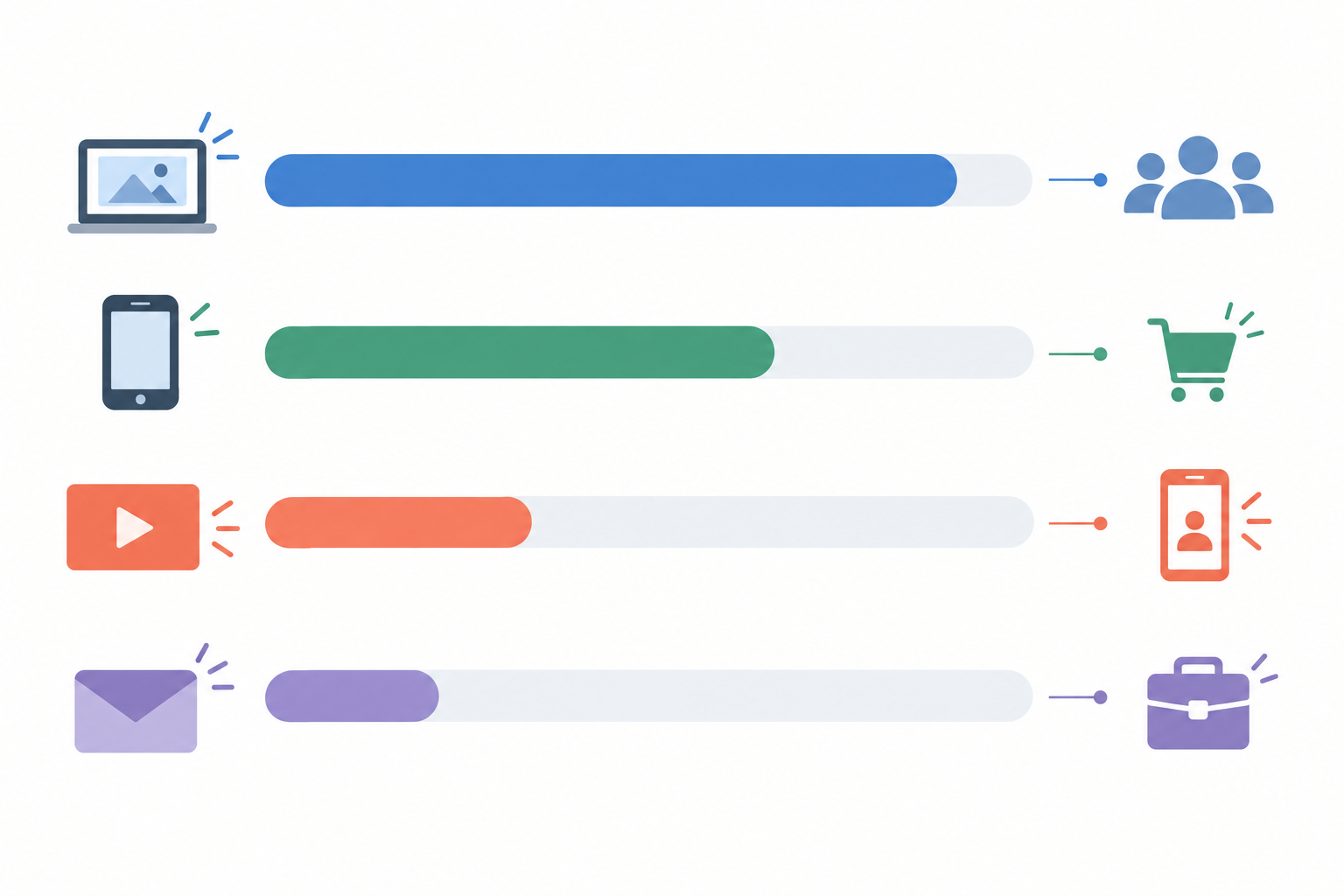
Now for the fun part: what are they actually saying? First, get your team using the same vocabulary. I've watched whole meetings go sideways over this.
One angle can have many hooks and formats. Keeping them separate stops you confusing 'they changed the video' with 'they changed the strategy'.
Create a spreadsheet with one row per ad and tag each with an angle. This starter set covers most situations:
For every ad, capture the exact copy, the CTA, the format, the first date you saw it, and the opening line or first three seconds of video. That's where the hook lives, so don't paraphrase it. Save the real creative too, not just a screenshot in a folder. Ads get switched off, files get misnamed, and nobody remembers the date.
Here's what one finished row looks like:
| Ad ID | Hook (exact) | Angle | Format | CTA | First seen | Notes |
|---|---|---|---|---|---|---|
| LL-07 | 'Still chasing invoices manually?' | Pain point | Video, 15s | Start free trial | 3 March | Still live at week 3; no variations |
If 12 of their 20 live ads lean on the same angle, that's probably the bet they're making. If one lonely ad uses a founder story while everything else is social proof, it may be a test, or just a one-off for a specific audience.
LedgerLark example: three angles are running side by side. There's a pain-point video ('Still chasing invoices manually?'), a social proof carousel ('Trusted by 2,000 UK finance teams'), and a comparison static ('Why teams are switching from Spreadsheet X'). Three weeks later:
So I'd tag it likely a priority, not proven winner.
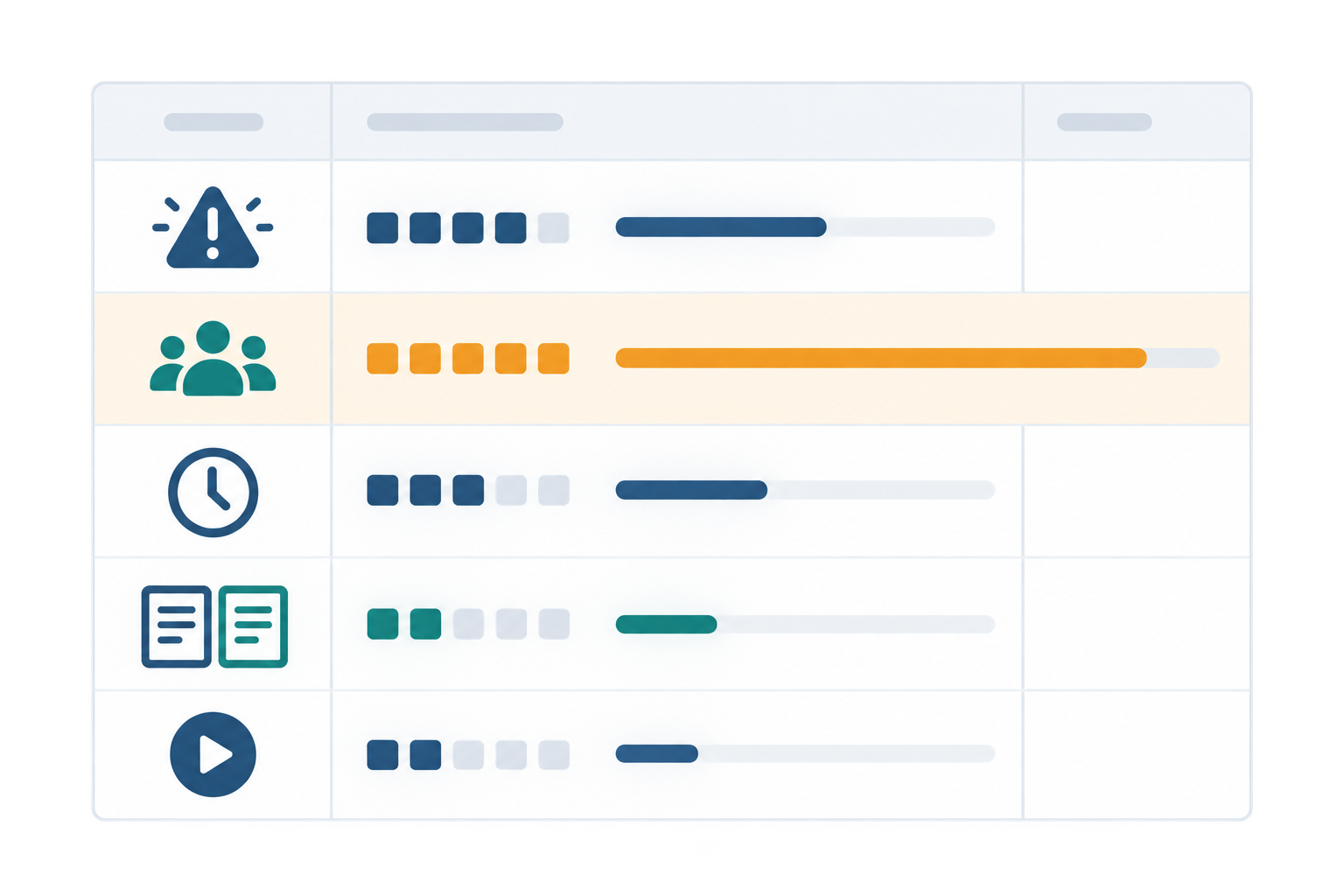
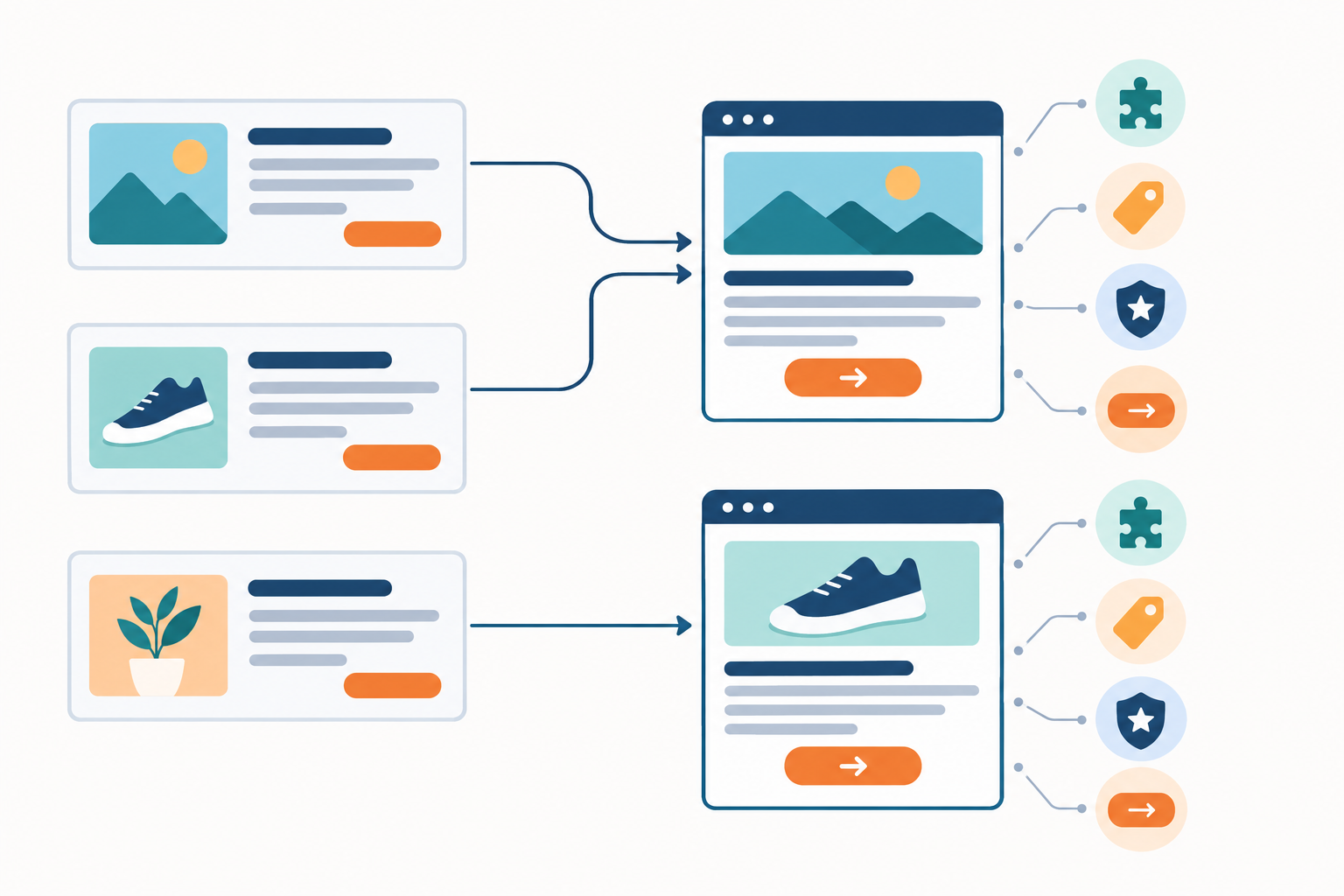
Creative tells you what they promise. The landing page tells you what they do with the attention. Skipping this step is the biggest gap in most competitor reviews.
So, how do you follow ad links? Like this:
If the link redirects or varies by location:
LedgerLark example: Observed: the comparison ads all point to a dedicated 'LedgerLark vs Spreadsheets' page with a short form and a visible £ price, while the pain-point video goes to the homepage. Hypothesis: more landing-page effort has gone into the comparison angle. That's effort you can see, not proof it converts.
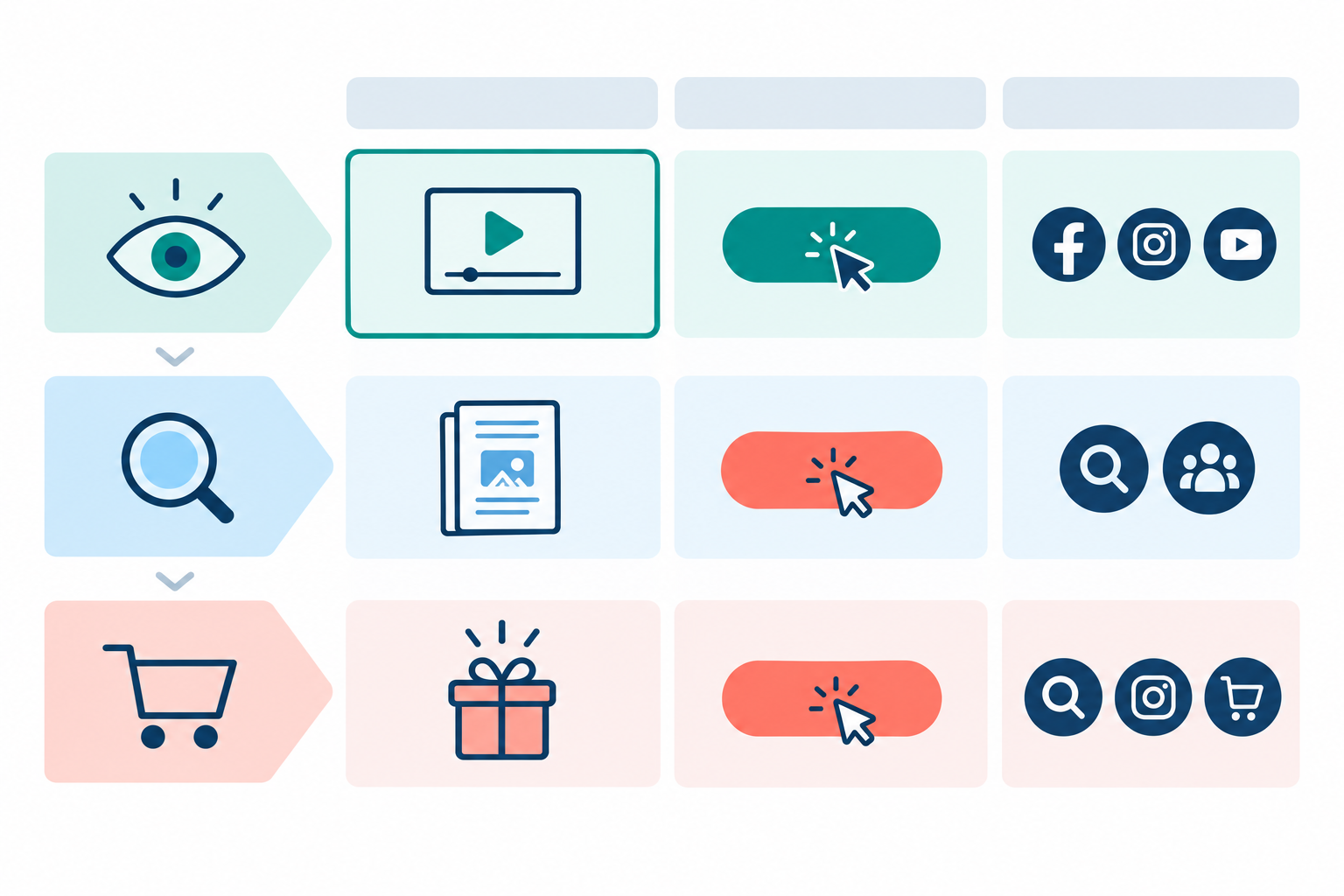
This is where the pieces become a funnel. Sort the offers you've gathered by the stage they serve. So, can you figure out a competitor's funnel from ads? Partly, yes. You can usually see the shape of it, but not the numbers or the audiences.
| Funnel stage | Example offer | Typical CTA | Where it tends to appear |
|---|---|---|---|
| Top of funnel | Educational guide, short explainer video, brand awareness spot | Learn more, Watch now, Download | TikTok, Meta, YouTube, LinkedIn |
| Mid funnel | Webinar, comparison page, case study, free tool | Register, See how it works, Try the tool | Meta, LinkedIn, Google Search |
| Bottom of funnel | Free trial, demo, discount, limited-time pricing in £ | Start free trial, Book a demo, Shop now | Google Search, Meta retargeting, LinkedIn |
Once you've sorted them, look for these things:
This habit will save you from embarrassment in a meeting. Tag every finding:
LedgerLark example: 'Entry offer is a free invoice template' is observed. 'They retarget template downloaders with a trial offer' is likely. 'Their trial converts well' is speculative.
A one-off snapshot misleads. You might catch a competitor mid-test, or between campaigns, and draw the wrong conclusion. The real insight is in the movement.
Each week, track three things:
An ad that appears and disappears within days was probably a short test or a quick fix, though it could also be a flash promotion. Don't copy it, and don't lose sleep over it.
Seasonality changes how you read the diffs. A burst of new urgency ads in November is probably Black Friday, not a strategy shift. Watch for:
Compare like with like where you can. This January against last January tells you more than this January against last October.
Keep it small enough that it actually happens:
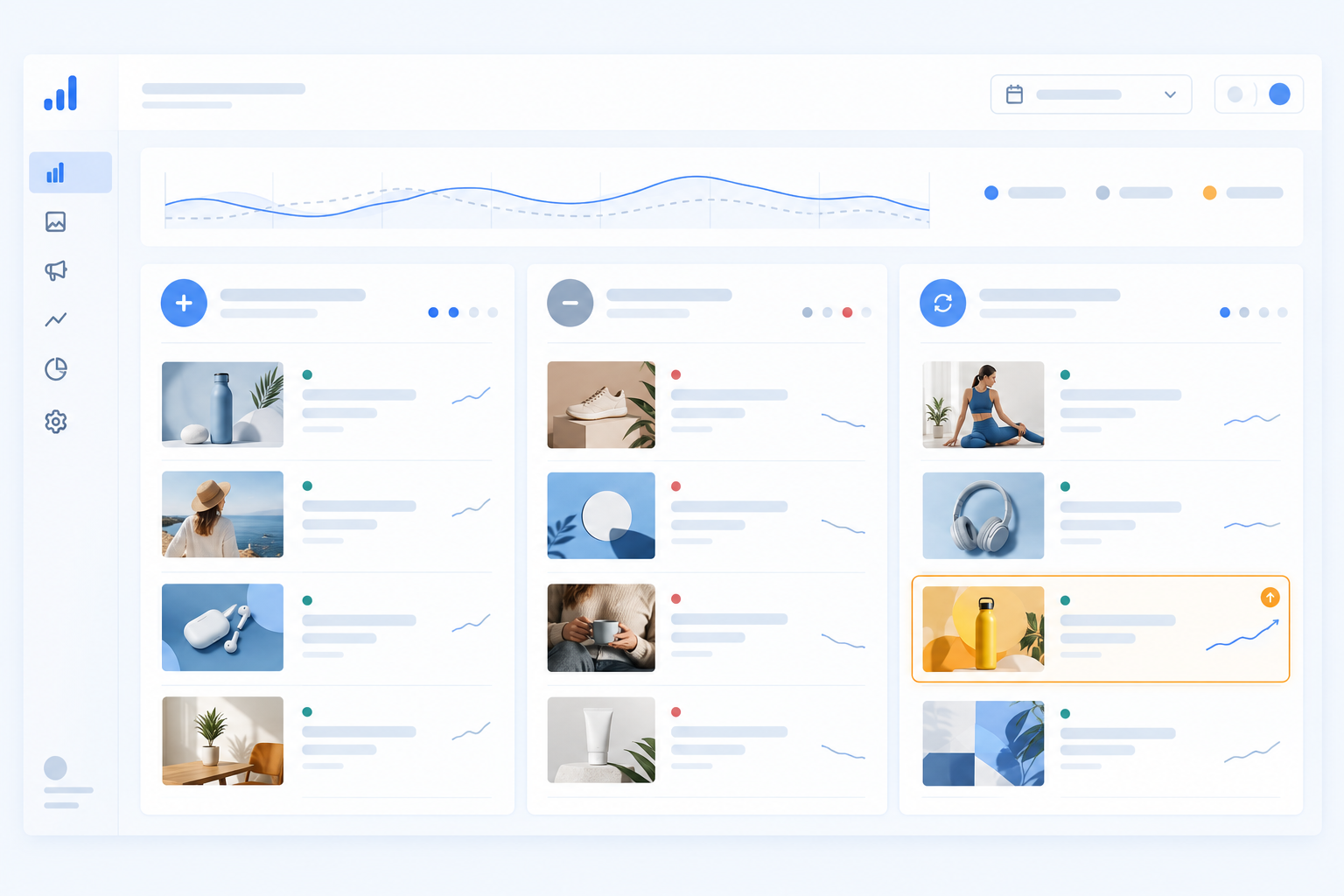
All that research is worthless if nobody reads it, so condense it. How do you summarise everything? Use a template and stick to one page.
Add a 'so what' to every finding. Here's a compact, filled-in extract for LedgerLark, so you can see how short and evidence-led it should be:
Target (likely): finance managers at small UK firms. Evidence: nine of fifteen live ads are on LinkedIn; copy mentions 'finance teams'.
Top angle (likely a priority): comparison against spreadsheets. Evidence: three variations still live after three weeks; dedicated landing page with a short form and visible £ pricing.
Entry offer (observed): free invoice template. Retargeting with a trial offer (likely); trial conversion (speculative).
Gap (observed): no TikTok presence and no webinar or case-study ads aimed at mid-funnel.
Our response (hypothesis to test): run a comparison-angle ad using our own customer proof, and test a mid-funnel case-study offer. Review after four weeks.
Look at what it does. Every claim carries a label, the evidence sits right next to it, and the page ends with something your team can actually test. Other 'so whats' work the same way: 'Every competitor is leaning on urgency, so try a different message.' Or: 'Nobody is advertising a free tool, so there may be a gap.'
If you want a second pair of eyes, an AI assistant can help you draft the summary from your notes. Treat the result as a first draft and sanity-check it against what you know of the market.
I've seen smart teams trip over the same few things:
Manual research is genuinely useful. Free ad libraries are good for validating what a competitor actually ran, and going through ads by hand builds a real feel for the creative. The trade-off is time. Each library covers one platform, history is whatever you saved, and week-to-week comparison means a lot of spreadsheet work.
That's where dedicated ad intelligence tools come in. Rival Ads is ours, so take this with the appropriate pinch of salt. By its own description, you enter a competitor's website and it collects their ads across Meta, Google, TikTok, and LinkedIn, archives creatives and copy, and shows weekly changes. It doesn't need access to your ad accounts. The vendor states pricing starting at $29 a month, scaling with the number of competitors. I haven't independently verified how coverage or features differ by plan, and prices and capabilities change, so check the current pricing page before you decide. That goes for any tool you evaluate.
The table below compares manual research with a tool that does what Rival Ads says it does. It's not a comparison of every tool on the market.
| Manual research | Dedicated ad tool (as Rival Ads describes itself) | |
|---|---|---|
| Setup | Low at first, grows with each competitor | Add a competitor's website |
| Coverage | One library at a time | Meta, Google, TikTok and LinkedIn in one place |
| History | What you saved yourself | Archived creatives and copy |
| Weekly changes | Compared by hand | Automated comparison |
| Cost | Free, plus your time | Paid subscription |
If you're tracking one or two competitors on one or two platforms, manual works fine. A reasonable rule of thumb: once you're tracking three or more competitors, or spending more than an hour a week on collection rather than analysis, consider automating the collection so your time goes on the thinking.
You can get a good picture of its shape: angles, offers, and the pages they send people to. The numbers behind it stay hidden, so use the confidence labels from Step 4 and treat the rest as a hypothesis.
Looking at publicly visible ads, including through platform ad libraries, is different from accessing someone's private ad account, and the former is a normal part of market research. What you do next can raise separate issues, though. Copying a rival's creative or copy may infringe copyright. Scraping data in ways that breach a platform's terms could cause problems with that platform. And any ads you run yourself, including comparisons with competitors, need to follow the ASA's CAP Code. This isn't legal advice, so if you have a specific concern, speak to a qualified solicitor.
There's no fixed rule, and public data can't prove performance. Treat several weeks of runtime as a modest signal at best, and look for it alongside repetition across platforms and supporting landing-page evidence.
Weekly suits most teams. It's frequent enough to catch new tests and stopped ads without becoming a time sink. Check more often around major sales periods.
No. Public ad libraries work without any account connection, and so do tools that start from a competitor's website, though it's worth confirming this for any tool you try.
Understanding a competitor's ad strategy isn't about finding a secret dashboard. You gather the public trail, tag it consistently, follow the links, and watch how things move over time. Do that and the afternoon of screenshot arguments turns into a 15-minute weekly habit and a one-page read your team can act on. 🎯
My suggestion: pick one competitor, spend an hour on Steps 1 to 3, then write a three-line strategy read in the LedgerLark format, with evidence and a confidence label on every line. You'll be surprised how much you can learn from ads alone.