How to Turn One Blog Post Into a Week of Powerful Content Marketing (Proven Repurposing Strategy)

How to Turn One Blog Post Into a Week of Powerful Content Marketing (Proven Repurposing Strategy)
You know that feeling when you publish a great blog post and then... nothing? You move on to the next piece, leaving all that research and insight to collect digital dust. Meanwhile, you're scrambling to create new content for every platform, wondering why you're always behind.
I used to do this too. Then I learned that the smartest creators don't work harder—they repurpose strategically. Here's how to turn one solid blog post into seven different pieces of content without losing your mind.
Why Most Content Creators Are Making This Expensive Mistake
Walk into any coworking space and you'll find someone hunched over their laptop, frantically creating "fresh" content for Instagram, LinkedIn, Twitter, and their newsletter. Different content. Every. Single. Day.
This approach burns people out fast. I've watched talented creators quit because they couldn't keep up with the demand for original content across multiple platforms.
The math is brutal:
- 5 platforms × unique content daily = 35 pieces per week
- Average creation time: 2-3 hours per piece
- Weekly time commitment: 70-105 hours
No wonder people burn out.
There's a Better Way
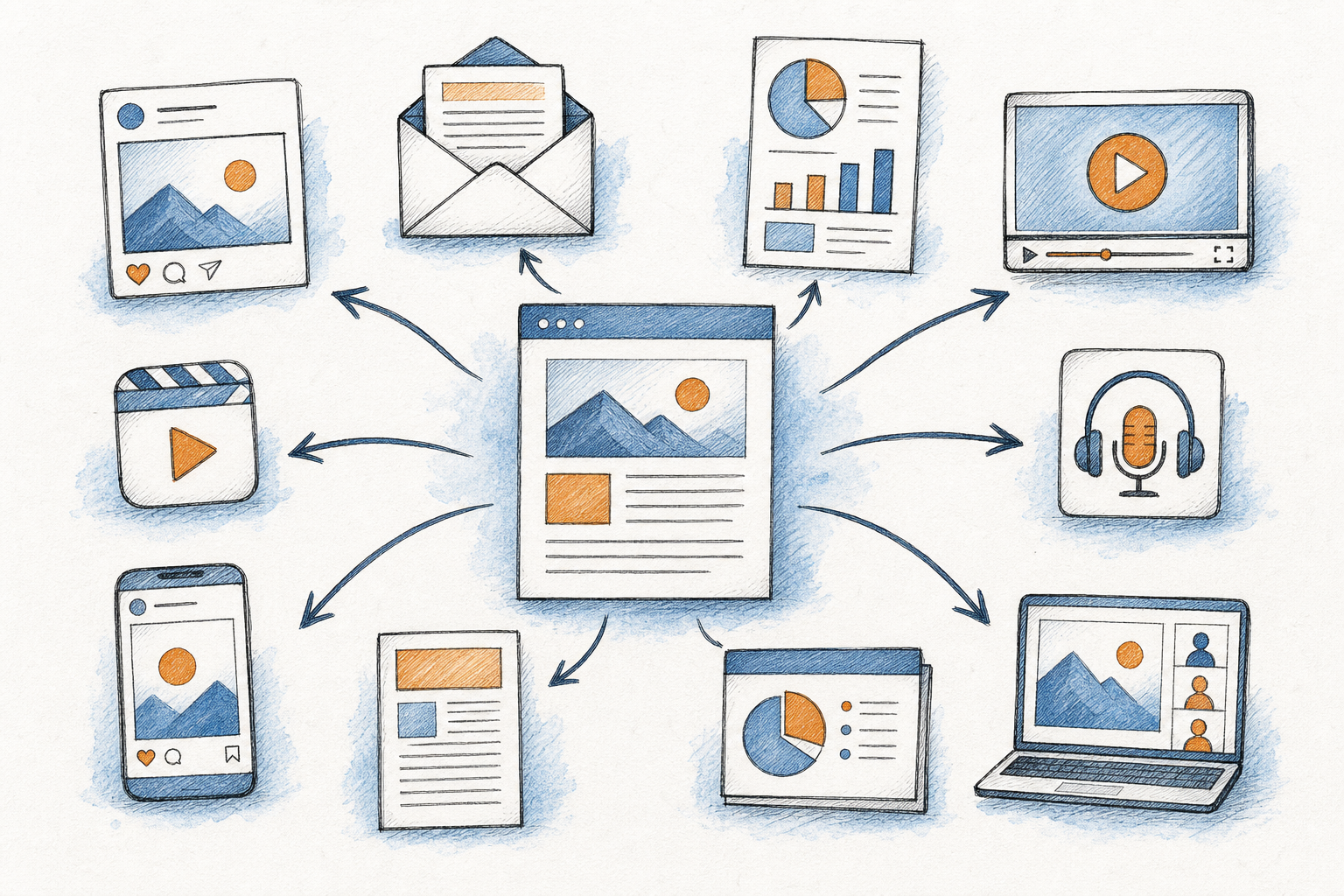
Content repurposing isn't lazy—it's strategic. You're taking your best ideas and adapting them for different audiences and platforms. Each version serves a different purpose while building on the same core insight.
How to Structure a Blog Post for Maximum Repurposing
Not every blog post works for this. You need to write with repurposing in mind from the start.
Here's what works:
Break it into sections that stand alone. Each major section should make sense even if someone only reads that part. Think of them as mini-articles within your main piece.
Include real numbers. "Traffic increased" doesn't grab attention. "Traffic jumped 340% in six weeks" does. These stats become your social media hooks.
Write quotable lines. Craft sentences that work as pullquotes or tweet-sized insights. I keep a running list as I write.
Make it actionable. Vague advice doesn't translate well across platforms. Specific steps do.
Include a story or example. Stories expand beautifully into longer-form content and resonate across all platforms.
Your 7-Day Repurposing Schedule
Day 1: Blog Post + Twitter Thread
Publish your main piece, then immediately create a thread. Pull out 5-7 key insights, lead with your strongest stat or claim, and link back to the full post.
Day 2: LinkedIn Deep Dive
Pick one section from your blog post and expand it with your professional perspective. LinkedIn readers want context—how does this apply to their industry? What's your experience been?
Day 3: Visual Content
Turn your framework, process, or key stats into a carousel or infographic. Canva templates work fine. Don't overthink the design—clear beats pretty.
Day 4: Video Explanation
Record a 5-minute video expanding on one concept from your post. I use my phone, no fancy setup. People connect with authentic explanation more than polished production.
Day 5: Newsletter Summary
Pull the best insights for your email list. Add some behind-the-scenes commentary—what didn't make it into the blog post? What surprised you during research?
Day 6: Community Sharing
Join conversations in relevant communities (Reddit, Facebook groups, Slack communities). When someone asks a question your post addresses, share specific excerpts that help.
Day 7: Review and Plan
Look at what performed best. Which format got the most engagement? What topics resonated? Use this data to plan next week's content.
Platform-Specific Adaptations
Each platform has its own language and expectations:
Twitter/X: Lead with controversy or surprising stats. Number your threads (1/7, 2/7...). Keep it punchy.
LinkedIn: Add professional context. Share what you learned, what worked, what didn't. People want the real story behind the success.
Instagram: Focus on visual storytelling. Use your carousel to walk through a process step-by-step.
Email: Get personal. Your newsletter readers opted in—they want the unfiltered version.
YouTube: Expand naturally. What didn't fit in the blog post? What questions might viewers have?
Tools That Actually Help
I've tried dozens of content tools. Here's what I actually use:
- Buffer or Later for scheduling across platforms
- Notion for content templates and tracking
- Canva for quick visual content
- Loom for easy screen recordings
- Google Sheets for performance tracking (nothing fancy)
Skip the AI content generators for now. They're getting better, but authentic voice matters more than speed.
Mistakes That Kill Repurposing Efforts
Copy-pasting identical content. Your LinkedIn audience isn't your Twitter audience. Adapt the message.
Spreading too thin. Start with 2-3 platforms you understand well. Master those before adding more.
Ignoring what works. Track performance. If your videos flop but your carousels take off, lean into carousels.
Perfectionism. Done beats perfect. Consistency builds audiences, not perfection.
Start Small, Build Momentum
Don't try to master all seven days immediately. Pick one additional platform and get comfortable with that rhythm first.
I started by turning blog posts into Twitter threads. Once that felt natural, I added LinkedIn posts. Then video. Then email.
Batch the work when possible. After publishing your blog post, spend an hour creating the week's variations. You'll stay in the same headspace and work more efficiently.
Common Questions
Won't people notice I'm repeating myself?
Most people consume content on one primary platform. Your Twitter followers probably don't read your newsletter. Your LinkedIn connections might not follow you on Instagram. Plus, repetition helps ideas stick.
How do I know which posts are worth repurposing?
Start with your best performers. Check your analytics—which posts got the most comments, shares, or backlinks? Those proven winners are your best candidates.
What if I run out of content to repurpose?
You won't. Most creators underestimate how much content they've already produced. Scroll through your last six months of posts. You'll find gems you forgot about.
The Real Benefit
Content repurposing isn't just about efficiency—though saving 20+ hours per week is nice. It's about getting your best ideas in front of more people.
Your blog post might reach 500 people. But when you adapt it across platforms, that same insight reaches 2,000+ people in formats they prefer consuming.
Start with your next blog post. Write it with repurposing in mind. Then watch how much further your ideas travel.
Your future, less-stressed self will thank you.
Related Articles
How to Repurpose One Blog Post Into Ten Content Pieces (Without Losing a Weekend)
Learn how to repurpose blog content into ten useful assets, from social posts to email newsletters, and improve content marketing efficiency.

How to Maximize Content Repurposing: Turn One Blog Post Into a Week of Engaging Social Media Content
Master content repurposing: Transform a single blog post into a week of social media gold and save time for solopreneurs and content creators.
Create content like this automatically
Scribe uses AI to generate high-quality blog posts that engage your audience and drive traffic.