Is Your Store Missing From AI Shopping Recommendations? How to Check and Fix It

AI Visibility for E-commerce: How to Get Your Store Recommended in AI Search
If you haven't actually tested whether ChatGPT, Gemini, Copilot, or Perplexity recommend your store when someone asks a relevant buying question, there's a good chance you're invisible in a growing slice of product research that never touches Google at all. The only way to know for sure is to run the real questions a customer would ask and track whether your brand shows up, where it lands, and how it's described next to competitors. That's the specific gap tools like MentionOwl were built to close.
I want to be precise about why this matters right now rather than in some hypothetical future. Capgemini's Research Institute found that 58% of consumers had already used generative AI for product or service recommendations in 2024, and Salesforce's Connected Shoppers Report put comfort with AI-assisted product discovery at 53%. Those aren't fringe numbers. Adobe's holiday-shopping analysis for 2024 measured something even more striking: traffic to US retail websites from generative-AI sources grew by roughly 1,300% year over year during that period, and visitors arriving via those AI referrals converted at a rate approximately 9% higher than visitors from other channels. The absolute volume is still small relative to total retail traffic, but the growth curve and the conversion quality together tell me this is not a channel any UK e-commerce brand can afford to ignore while it's still cheap to establish a foothold.
How AI shopping assistants are changing product discovery
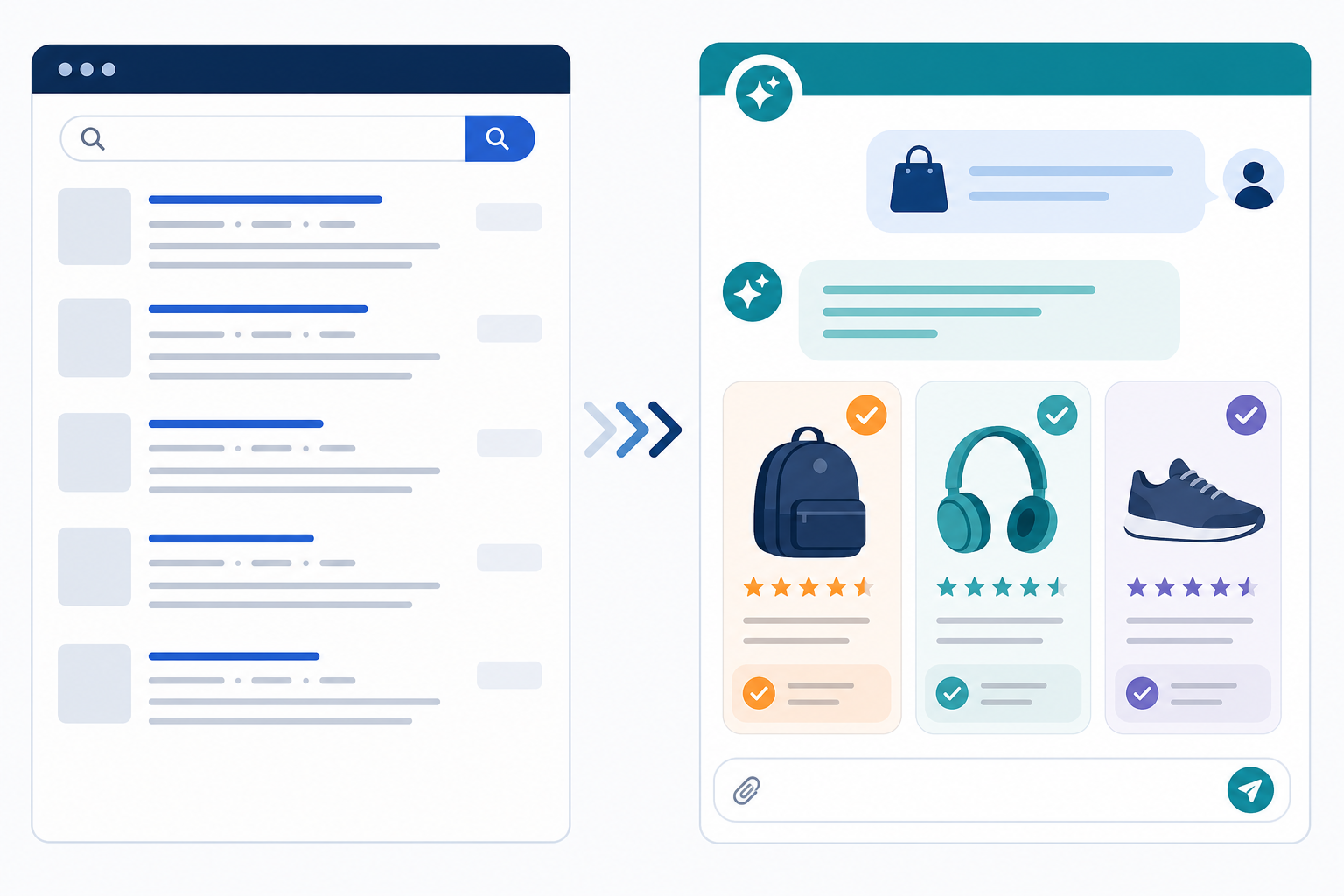
The mechanics here matter more than most retailers appreciate. When OpenAI introduced its shopping research capability inside ChatGPT in 2025, it didn't simply bolt a search box onto an existing chat window. It built a system that asks clarifying questions about budget, use case, and preferences, then synthesises a shortlist of specific products with stated reasons for the recommendation. Google's AI Mode and AI Overviews, now live across more than 100 countries and territories according to Google's own 2024 announcements, work on a similar principle: rather than returning ten blue links for the shopper to evaluate independently, the system does the evaluation itself and presents a conclusion.
This is a fundamentally different competitive mechanism than traditional search ranking, and I think it's worth sitting with that distinction for a moment. In classic SEO, you're competing for position on a page that still contains dozens of results. Being ranked eighth instead of third is disappointing, but you're still visible, still clickable, still in the game. In AI-generated shopping answers, there typically is no page eight. The assistant names three to five brands and stops. You are either in that list or you functionally do not exist for that query, regardless of how strong your underlying product or price point might be.
What's equally important, and less intuitive, is that each AI platform builds its shortlist from a different mixture of sources. Google draws heavily on Merchant Center feeds and product structured data layered on top of its existing search index. Amazon's Rufus works almost entirely within Amazon's own marketplace catalogue, customer reviews, and fulfilment data, which means your performance there depends on your Amazon listing quality, not your standalone website at all. Perplexity and Microsoft's Copilot blend conversational querying with their own product card systems and retailer partnerships. The practical implication for UK retailers is that AI assistants tend to pull from a narrower, more selectively validated pool of sources than a Google search would surface organically, and that pool differs meaningfully from one assistant to the next. Bain & Company's 2024 research on generative AI's reshaping of shopping makes a similar point: retailers should treat each AI surface as a distinct discovery channel requiring its own testing, not assume that strong conventional SEO automatically carries over.
Why some products never make the AI shortlist
Having looked at how these systems actually generate recommendations, I can point to six recurring reasons a perfectly good product fails to appear in AI search results:
- Thin or inconsistent product descriptions. If an AI model can't confidently extract material, sizing, use case, and pricing from your page, it won't risk citing you. These systems are built to avoid stating facts they can't verify.
- Lack of third-party validation. Few reviews, no press mentions, no comparison articles elsewhere on the web. LLMs cross-reference claims against external sources, and a product that exists only on its own brand page looks unverified next to one with a visible trail of independent corroboration.
- Poor technical legibility. Slow-loading pages, JavaScript-rendered content that crawlers can't parse, or blocked bots prevent AI systems from reading your product data accurately in the first place, no matter how good the content actually is.
- Weak share of voice relative to competitors. Even an objectively comparable or superior product loses out if a rival is simply cited more frequently and more prominently across the queries that matter in your category.
- Category saturation. Verticals like electronics, fashion, and beauty are already dominated by heavily-optimised incumbents, which raises the bar for a new or mid-sized brand to break into the shortlist at all.
- Missing structured data. Without Product, Review, or FAQ schema, AI engines have to infer specs, pricing, and availability rather than extract them with confidence. Inference introduces exactly the kind of uncertainty these systems are designed to avoid.
Google's own Search Central documentation is explicit on this last point: structured data can make a page eligible for richer results, but eligibility never guarantees inclusion, and Google specifically recommends pairing on-page Product schema with a Merchant Center feed because the two reinforce each other rather than duplicating the same signal.
How to check your store's AI visibility
This is the part most retailers skip, usually because it sounds more laborious than it needs to be. Here's the process I'd actually follow:
- Write down 10–15 realistic buying questions. Think in terms of how a real customer phrases a need, not how you'd phrase a keyword. "Best sustainable running shoes UK" or "where to buy affordable standing desks" rather than your own product category name.
- Run each question manually across ChatGPT, Gemini, Copilot, and Perplexity. Log whether your brand appears at all, where it sits in the list, and the exact language used to describe it.
- Note which competitors appear instead. Pay close attention to how the AI characterises them versus you. Tone and framing matter as much as mere presence.
- Repeat this regularly. AI answers aren't static. Models retrain, crawl new content, and update their source weighting on a rolling basis, so a single check only tells you what was true on that specific day, not what will be true next month.
- Consider automating it. Manually testing a few dozen realistic queries once is manageable over a weekend. Doing it daily, across five platforms, with consistent logging of position and sentiment, is not realistic for most small teams. That's precisely the problem MentionOwl's daily query tracking and 0–100 visibility score were built to solve, by auto-generating the relevant customer questions from your own site and running them automatically rather than leaving it to manual spot-checks.
Optimizing product pages for AI search citations
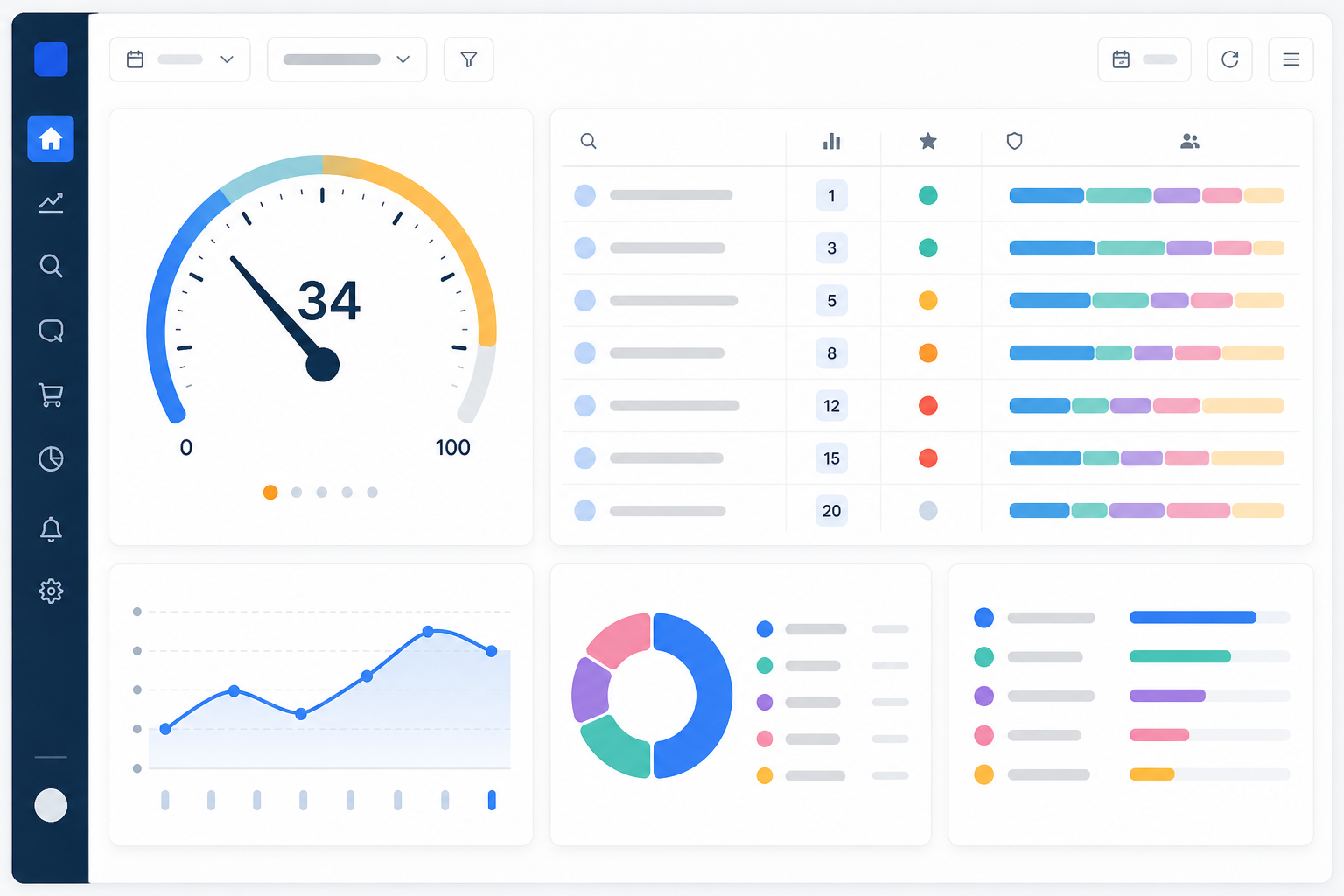
Once you know where you stand, the fix is less mysterious than it sounds. It's largely a discipline of making your site easy for a machine to trust, which is what I'd call AI legibility:
- Write factual, specific descriptions rather than marketing copy. AI models favour extractable facts, materials, dimensions, compatibility, pricing, over adjectives like "premium" or "innovative," which carry no verifiable content for a model to cite.
- Implement structured data properly. Product schema, Review schema, and FAQ schema give AI crawlers a parseable, unambiguous source for specs, pricing, and availability rather than forcing them to infer these from prose.
- Build genuine third-party signal. Reviews, comparison articles, press coverage, and forum discussions all function as corroborating sources an LLM can cross-reference, which directly addresses the trust gap thin, single-source brand pages suffer from.
- Fix the technical basics. Slow pages, blocked crawlers, JavaScript-only rendering, and missing alt text are all forms of AI illegibility. The content might be excellent, but if a crawler can't reliably read it, none of that excellence registers.
- Answer the actual questions customers ask, on-page. FAQ sections and comparison tables structured as Q&A are frequently lifted near-verbatim by AI engines generating conversational answers, because the format already matches how the assistant needs to present information.
- Keep information consistent everywhere. Contradictory prices, specs, or availability between your site, your marketplace listings, and third-party review sites actively erodes the confidence an AI model needs before it will cite you as a reliable source.
Tracking competitors' AI visibility in product search
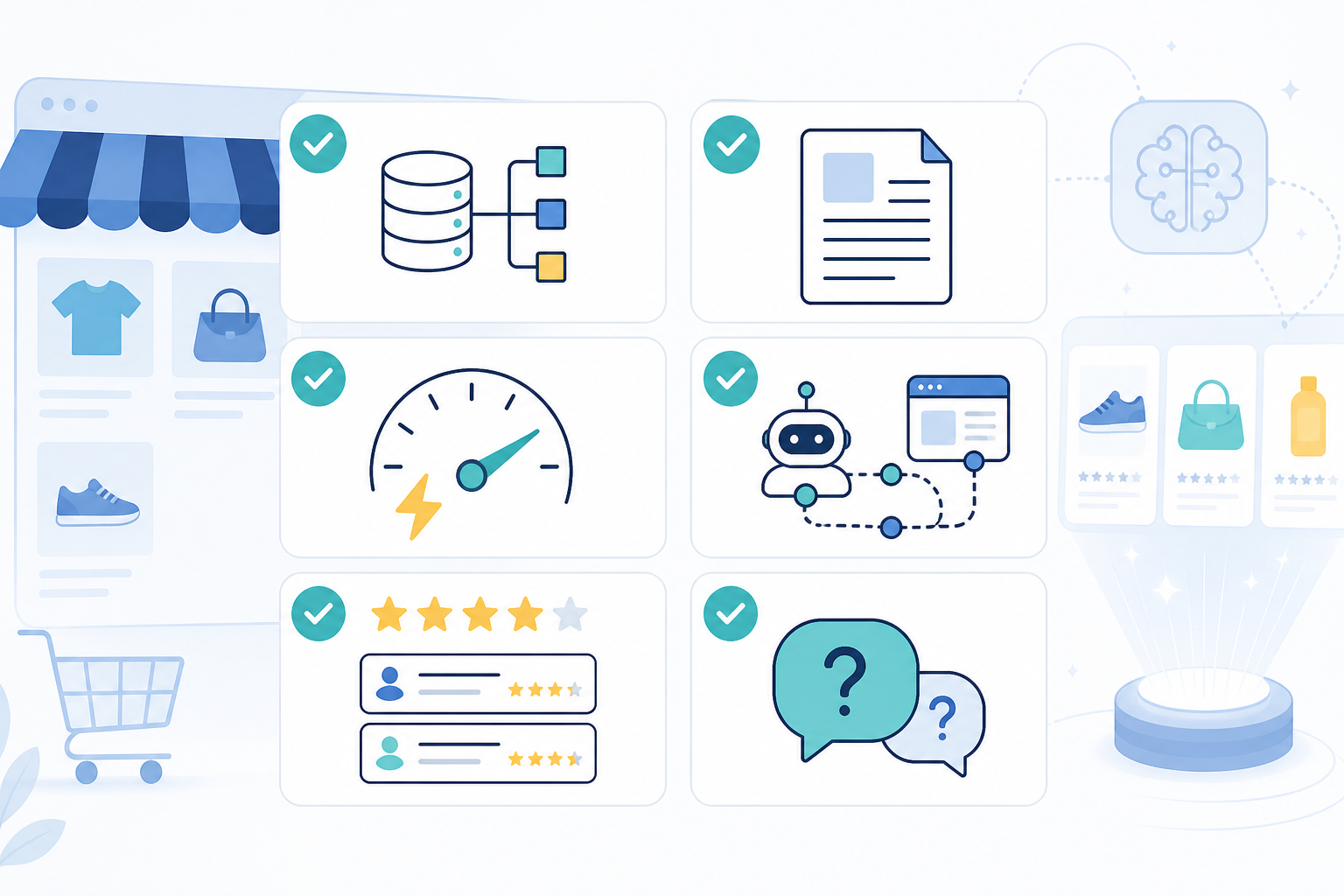
I'd stress one point here that's easy to underweight: AI visibility is inherently relative, not absolute. A decent-looking visibility score means very little in isolation if a single competitor dominates share of voice across the queries that define your category. Appearing in four out of five relevant answers while you appear in one tells a much more useful story than either number alone.
What I'd specifically watch for in ongoing competitor tracking:
- How often competitors appear across your core query set versus how often you do
- What sentiment and framing they're described with ("affordable and reliable" carries different weight than a bare name-drop)
- Which specific queries they consistently own that you don't appear in at all
This needs to be continuous rather than a one-off audit, because competitors optimise, new entrants arrive, and AI models update their source weighting on their own schedule. A snapshot from three months ago tells you almost nothing about your position today. This is why I think a measurable visibility score, built from query coverage, position-weighted citations, and share of voice, is more useful to a UK retailer than a vague sense of being "left out." It converts an abstract worry into a concrete number you can track over time and actually move. That's the entire premise behind how MentionOwl scores and reports on brand performance against named competitors, week over week.
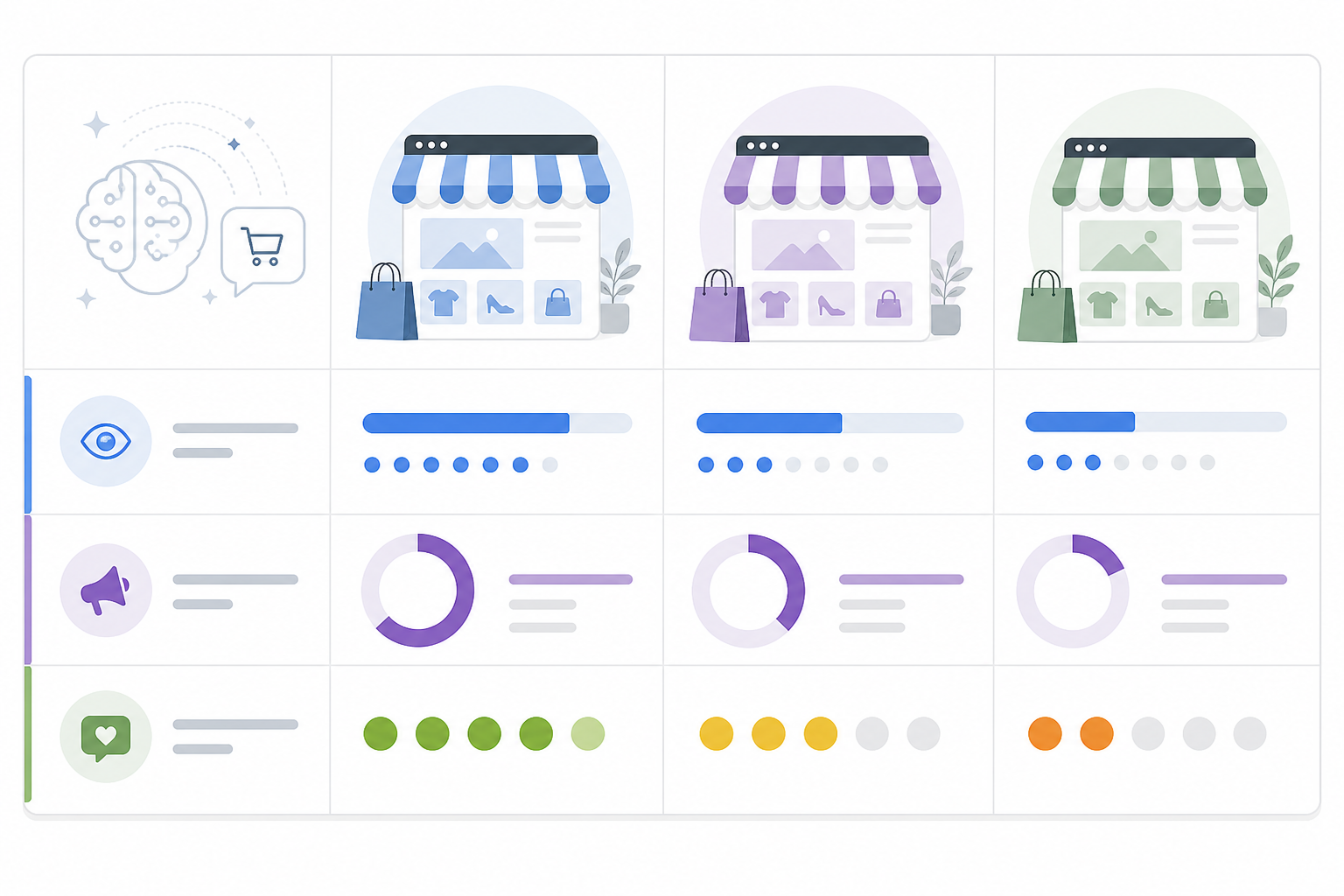
Frequently asked questions about AI visibility and AI search
What are AI shopping assistants exactly?
AI shopping assistants are the conversational AI tools, ChatGPT, Gemini, Copilot, Perplexity, and similar platforms, that customers now ask directly for product recommendations instead of, or alongside, a Google search. Rather than returning a list of links for the shopper to evaluate themselves, these tools synthesise an answer, often naming 3–5 specific brands or products they consider the best fit for the query.
How do I know if ChatGPT recommends my store?
The only reliable way is to ask it directly, using the kinds of questions real customers would type, and check whether your brand is named, in what position, and how favourably. Doing this manually once will give you a snapshot; doing it daily across multiple AI platforms is what tools like MentionOwl automate, so you get a consistent, trackable visibility score rather than a one-off guess.
What makes a product page more AI-friendly?
AI engines favour pages with clear, factual, specific descriptions; proper structured data (Product and Review schema); fast, crawlable technical performance; and genuine third-party validation like reviews and external mentions. This is essentially the discipline of AI legibility, making sure both the content and the underlying technical structure of a page are easy for an AI model to read, trust, and cite accurately.
Should I worry about AI search now or wait?
Given that AI-driven product research is growing and the pool of brands AI engines choose to cite tends to be narrower and more entrenched than traditional search rankings, waiting generally means letting competitors establish a citation advantage that becomes harder to dislodge later. A low-cost first step, like running a short trial check of your current AI visibility, costs very little time or money and gives you a clear baseline to decide whether more urgent action is needed.
Related Articles
Why Being Mentioned by AI Isn't Enough: How Sentiment Shapes Your Real AI Visibility Score
Mention counts tell leadership nothing about brand perception. Learn how sentiment analysis across ChatGPT, Gemini, and Perplexity reveals whether AI
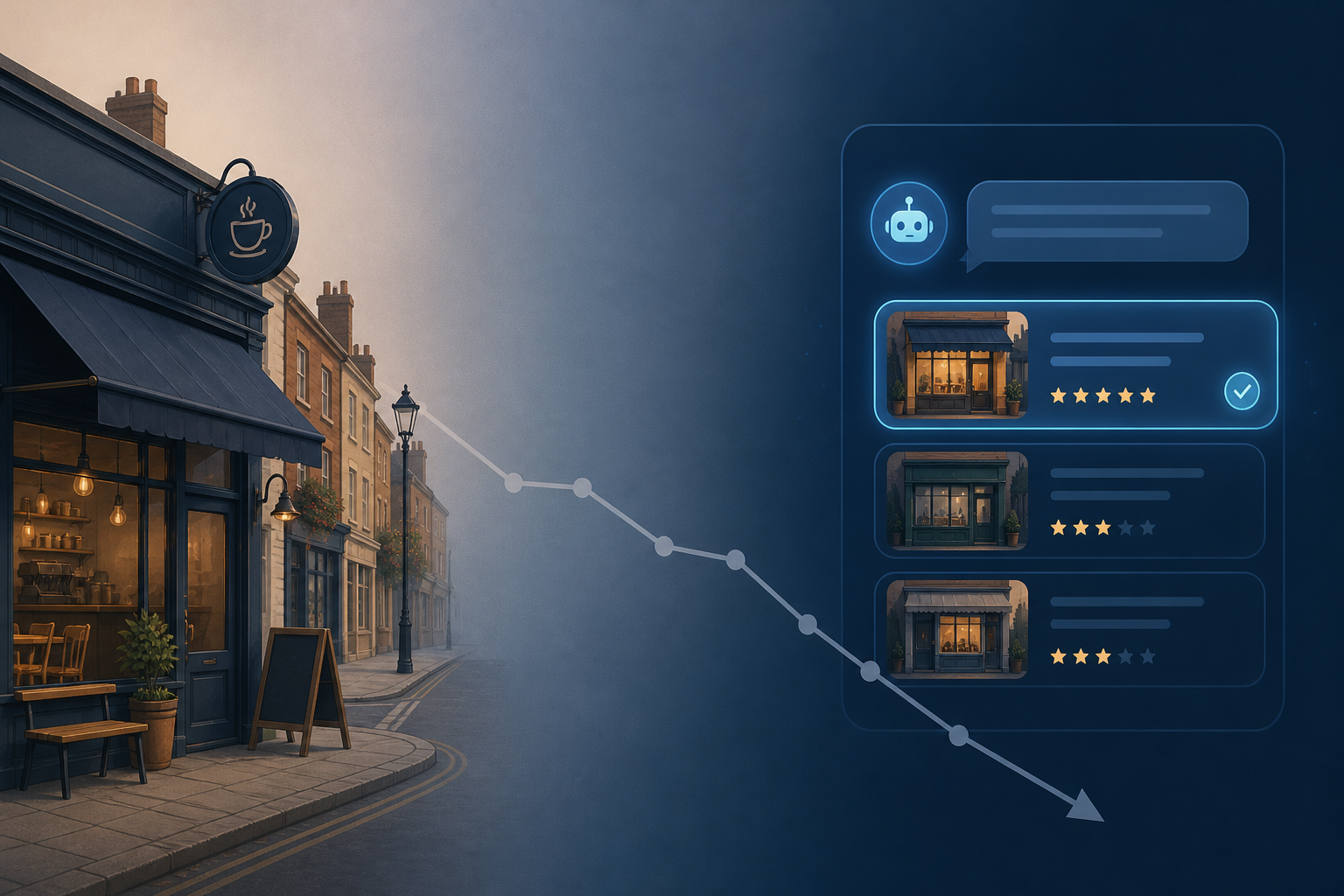
Case Study: How a Local Brand Quietly Lost Ground in AI Answers (And What the Data Finally Showed)
A real-world case study on AI visibility decline: how a UK small business lost customers to a competitor in ChatGPT and Gemini answers—and the data th
Create content like this automatically
Scribe uses AI to generate high-quality blog posts that engage your audience and drive traffic.