Uptime Monitoring Pricing Compared: What Should You Pay in 2026?
15 min read
Loading...

Most small businesses and startups end up paying somewhere between £10 and £40 per month for uptime monitoring that covers websites, APIs and a handful of background jobs. That's the range this guide focuses on. You'll find plans as cheap as £8 and others creeping toward £50, but £10-£40 is where most small teams settle once they've actually sized their setup.
What pushes the price up isn't the monitoring itself. It's how many monitors you need, how often they check, and whether you're paying for regions and features you'll never touch. Free uptime monitoring is genuinely fine right up until you have something customer-facing or revenue-generating on the line. This guide is about figuring out where that line sits for you.
Pricing pages don't make this easy. Every vendor structures plans differently, throws around terms like "checks" and "locations" without explaining them, and tucks important features behind higher tiers. So let's break down uptime monitoring pricing the way I'd explain it to a friend who just asked me, "How much should I actually be paying for this?"
Quick disclosure before we go further: I work with Moonitor, one of the tools mentioned below. I've tried to keep these comparisons genuinely useful rather than turning this into a sales pitch, and I'll flag it clearly whenever I'm using Moonitor as an example instead of making a market-wide claim.
Before comparing prices, it helps to know that monitoring tools charge in a few different ways. Once you know which model you're looking at, the headline price actually starts to make sense.
In my experience, flat-tier pricing tends to suit small teams best once they've got more than a handful of things to monitor. It's predictable, and you won't get hit with surprise overage charges. If you're only tracking one or two endpoints, though, a per-monitor plan might still be your cheapest option. Do the sums for your specific setup rather than assuming one model wins for everyone.
The number on a pricing page rarely tells you the whole story. What you actually end up paying comes down to your monitor count, check frequency, monitoring locations and the types of checks you need.
Each website, API endpoint, cron job or SSL certificate you track usually counts as a separate monitor, though vendors define this differently. Some bundle an SSL check into the website monitor it's attached to; others bill for it separately.
Always check a vendor's definition of a "monitor" before assuming your count will match what you'd expect elsewhere.
Checking every 30 seconds costs a vendor more to run than checking every 5 minutes, and that cost usually gets passed on through higher plan tiers. If your uptime commitments are tight, you'll likely need faster checks, and faster checks generally mean paying more.
Multi-region checks verify downtime from several locations before firing off an alert. This cuts down on false alarms caused by one flaky network connection on the monitoring side. It won't catch every genuine global outage, but it does mean you're not getting paged at 3am because of a hiccup in one data centre.
Some providers include this in their standard plans; others treat it as a premium add-on. Check specifically whether it's included at the tier you're looking at.
Basic HTTP checks are cheap across pretty much every provider. Keyword monitoring, port and ping checks, DNS monitoring, and heartbeat monitoring for cron jobs often get reserved for higher tiers, even though these are exactly the checks that catch problems a basic availability ping would miss.
Here's a planning example that trips people up: if you're monitoring 5 websites, 3 APIs and 2 nightly cron jobs, you're already at 10 monitors before you've added SSL expiry checks (assuming your provider counts those separately). Throw in two DNS records and you're closer to 13 or 14.
It's easy to underestimate this number when you're picking a plan, and then feel blindsided a few weeks later when you hit the monitor limit.
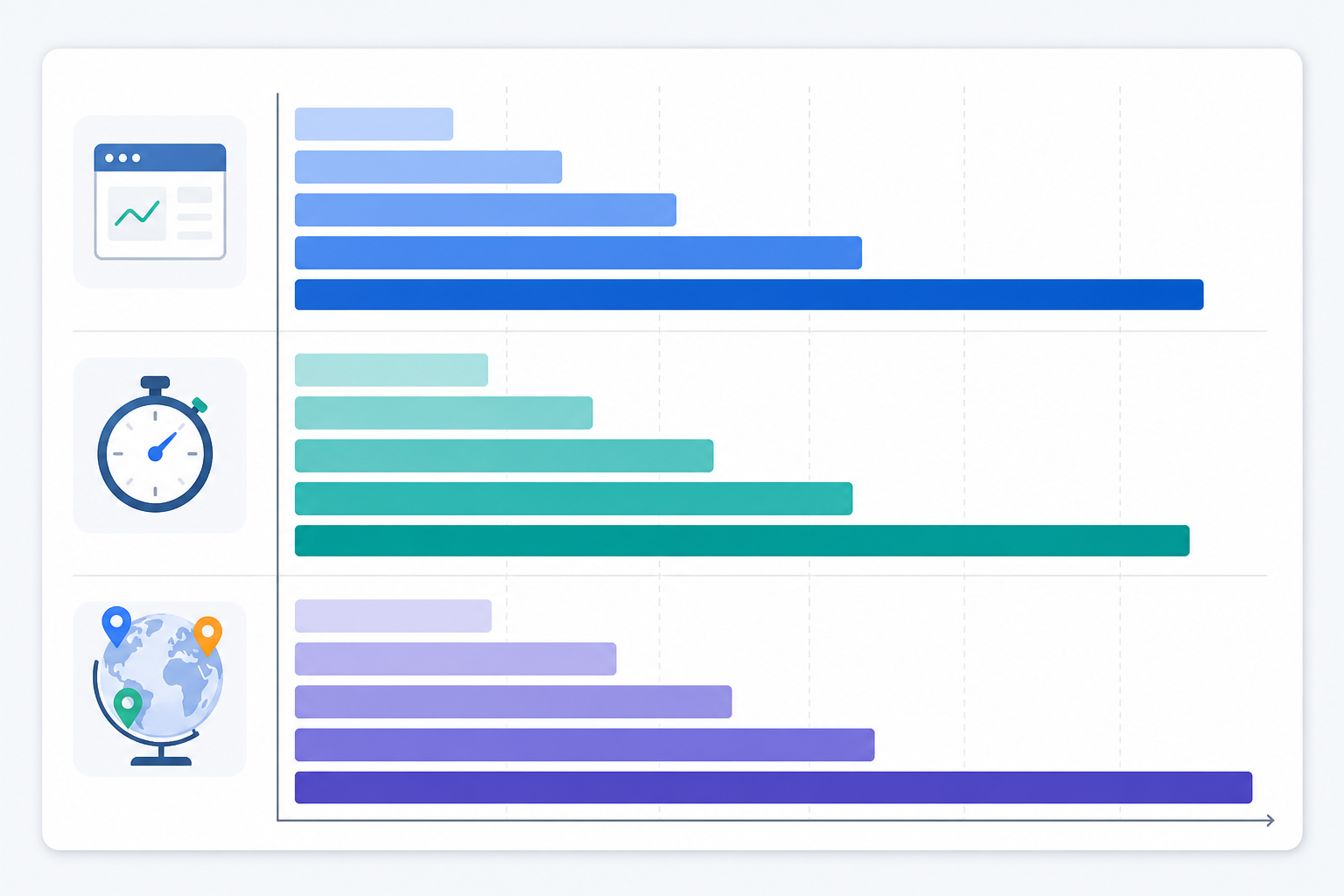
The table below shows how several mainstream uptime monitoring tools were priced in early 2026, based on publicly listed monthly billing. Prices change, exchange rates move around, and most providers quote in US dollars, so treat these numbers as directional rather than gospel. Always check the current pricing page before you budget.
| Vendor | Entry Paid Plan | Monitors Included | Fastest Check Interval | Status Page | Notes |
|---|---|---|---|---|---|
| UptimeRobot | ~$7-8/mo | 50 | 1 minute on paid tiers | Included on paid plans | Generous free tier with 5-minute checks |
| StatusCake | ~$20/mo | 20-40 depending on tier | 1 minute | Included | SMS alerts often cost extra |
| Better Stack | ~$29/mo | Varies by tier | 30 seconds on higher tiers | Included | Combines monitoring with incident management |
| Pingdom | ~$15-25/mo | 10-50 depending on tier | 1 minute | Add-on on lower tiers | Owned by SolarWinds; suited to larger teams |
| Uptime.com | ~$20-30/mo | 10-50 depending on tier | 1 minute | Included on most tiers | Strong multi-region coverage as standard |
| Moonitor (disclosure: I work with this one) | $14/mo | 20 | 30 seconds | Included | Flat-tier structure across all plans, scaling to unlimited monitors on the $49/mo top plan |
A couple of caveats worth flagging. These prices don't include VAT, which UK buyers will typically pay on top depending on the vendor's billing entity. Most providers also knock off 15-20% if you pay annually instead of monthly, so what you actually pay may end up lower than the headline figure.
Because most of these vendors are US-based, you'll often be billed in USD too, which means your real cost in pounds shifts with the exchange rate.
The pattern that holds across the market: entry-level paid plans typically fall in the £8-£20 per month range. Mid-tier plans with more monitors and stronger alerting land around £15-£30 per month, and top-tier plans with unlimited or near-unlimited monitors and broader monitor-type coverage can reach £40-£50 per month.
That's why £10-£40 is the headline range I keep coming back to. It's where most small businesses actually end up once they've sized their real requirements, not the cheapest or most expensive extremes on the market.
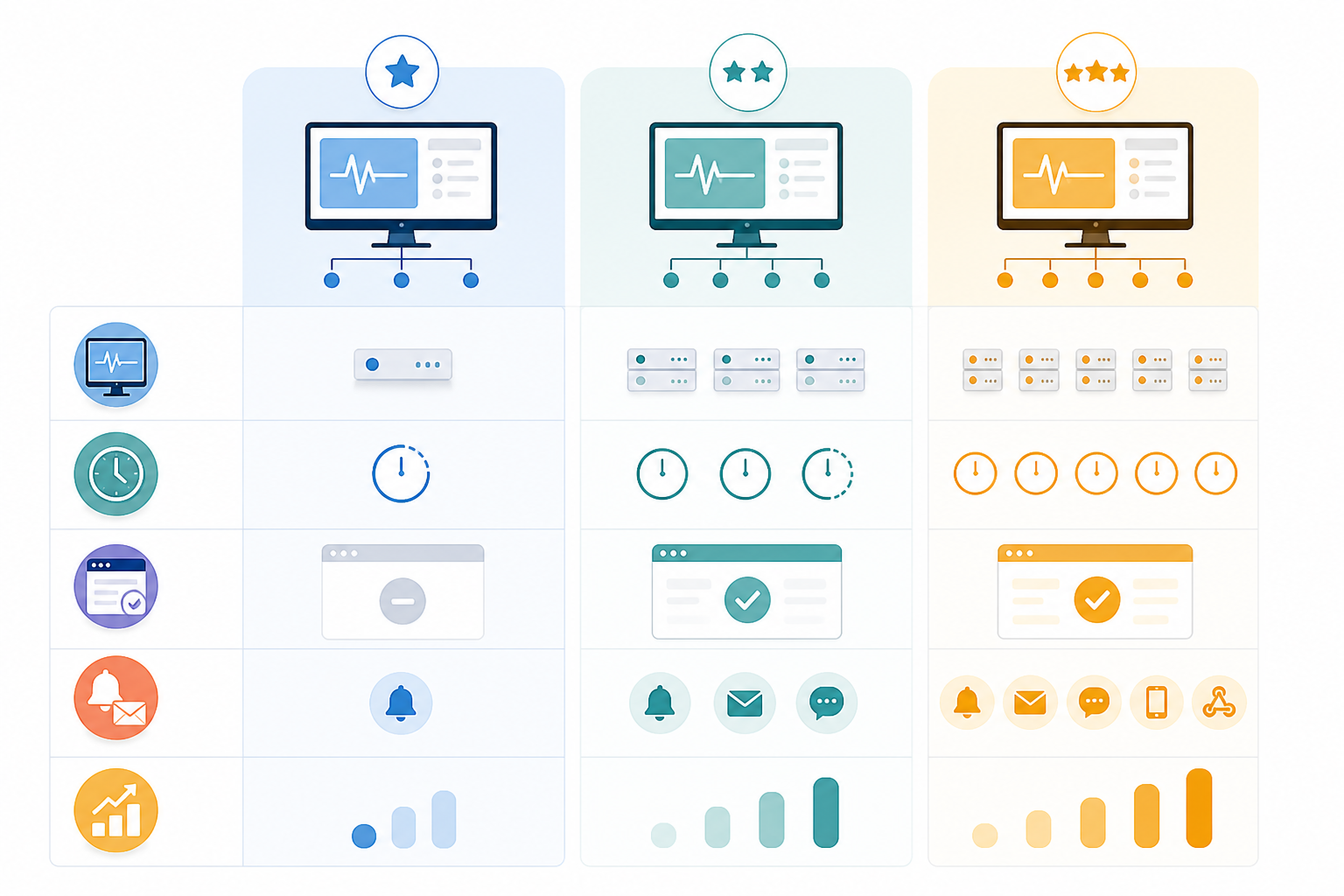
Numbers land better with context, so here are three setups I see a lot, and roughly what each one costs to monitor properly.
One website, one API, a couple of DNS records. A free plan with 5-minute checks is usually enough here. Nobody's waiting on an SLA, so a slower alert doesn't cost you anything real yet.
Think several websites, APIs your clients actually depend on, cron jobs and SSL checks. This is mid-tier territory. You'll probably want 1-minute checks, a branded status page and Slack alerts, which typically puts you around £15-£25 per month depending on the provider.
Multiple products or client sites, background jobs that matter, and a support team who needs to know before customers do. This usually means 30-second checks, multi-region verification and broader monitor-type coverage.
This setup tends to land around £30-£50 per month, depending on your monitor count and whether you need SMS escalation on top.
If one of these sounds like you, you've already got a working budget before you even open a pricing page.
A cheap plan can turn expensive fast if it's missing something you need, or charges separately for a feature you assumed was included. Check these before you commit.
Free plans work well for personal projects, early MVPs and side projects with no paying customers. If you only need a handful of monitors and don't mind slower checks (often 5-10 minutes instead of 30 seconds), a free plan will do the job just fine.
The gap shows up the moment something breaks and you find out from a customer email instead of an automated alert. That delay, more than any single missing feature, is the real cost of free monitoring.
A decent way to think about whether paying is worth it: weigh the cost of one missed outage against the cost of monitoring. Lost sales, refunds, support time, the dent to your reputation, versus £15-£20 a month for faster, more reliable alerts.
If your business makes meaningful revenue, paying for monitoring usually makes sense. If it's a project with no customers yet, free is probably fine.
You've probably outgrown free uptime monitoring if:
If two or three of these sound familiar, it's probably time to move to a paid plan. £10-£20 a month is usually enough to fix most of these.
Rather than guessing, here's the process I'd actually walk through.
Once you've run through this, £10-£40 stops feeling like a random range and starts feeling like a budget tied to your actual setup.
As one example: Moonitor's Solo plan runs $14 a month for 20 monitors and scales up to $49 a month for unlimited monitors on the Max plan, which lines up roughly with the mid- to top-tier bands in the table above. Whichever provider you land on, use a free trial where one's offered to test the plan against your real monitor count before you commit to annual billing.
Most startups and small businesses should budget £10-£40 a month. That usually covers 10-50 monitors across websites, APIs and background jobs, with sensible check intervals and basic email or Slack alerts. Enterprise observability platforms can run into hundreds of pounds a month, but that's rarely necessary unless you're operating at real scale.
The big ones are monitor count, check frequency, and whether multi-region verification is included or billed separately. Branded status pages, SMS alerts, longer data retention, and extra monitor types like SSL, DNS, cron or keyword monitoring also tend to separate the cheaper plans from the pricier ones.
For a side project or early MVP with no paying customers, free is usually fine. It matters more once your website or API starts generating revenue or serving real users, since free tiers tend to use slower checks and skip features like status pages or multi-region verification. At that point, weigh the cost of a missed outage against the price of a paid plan.
How the provider defines a monitor, the fastest check interval at your price point, whether a status page is included, which alert channels are free, how long incident data is kept, whether the price includes VAT, and whether billing happens in GBP or USD. Also worth checking: annual billing discounts, API access, and any charges for extra regions or SMS alerts.
Not really. A higher price often just means more monitors or faster checks, not better reliability. What actually matters is whether the plan includes multi-region verification, supports the monitor types you need, offers the right alert channels, and gives you data export or API access in case you switch later.
If your website, API or service generates revenue or serves real customers, yes, paid monitoring is usually worth it. Even a low-cost plan gets you faster alerts, more monitors and a status page, which means you find out about problems before your customers tell you about them. Free monitoring still makes sense for personal projects or anything where downtime doesn't really cost you much.