What Is AI Visibility and Why It Matters for Your Brand (A Solo Founder's Guide)
19 min read
Loading...
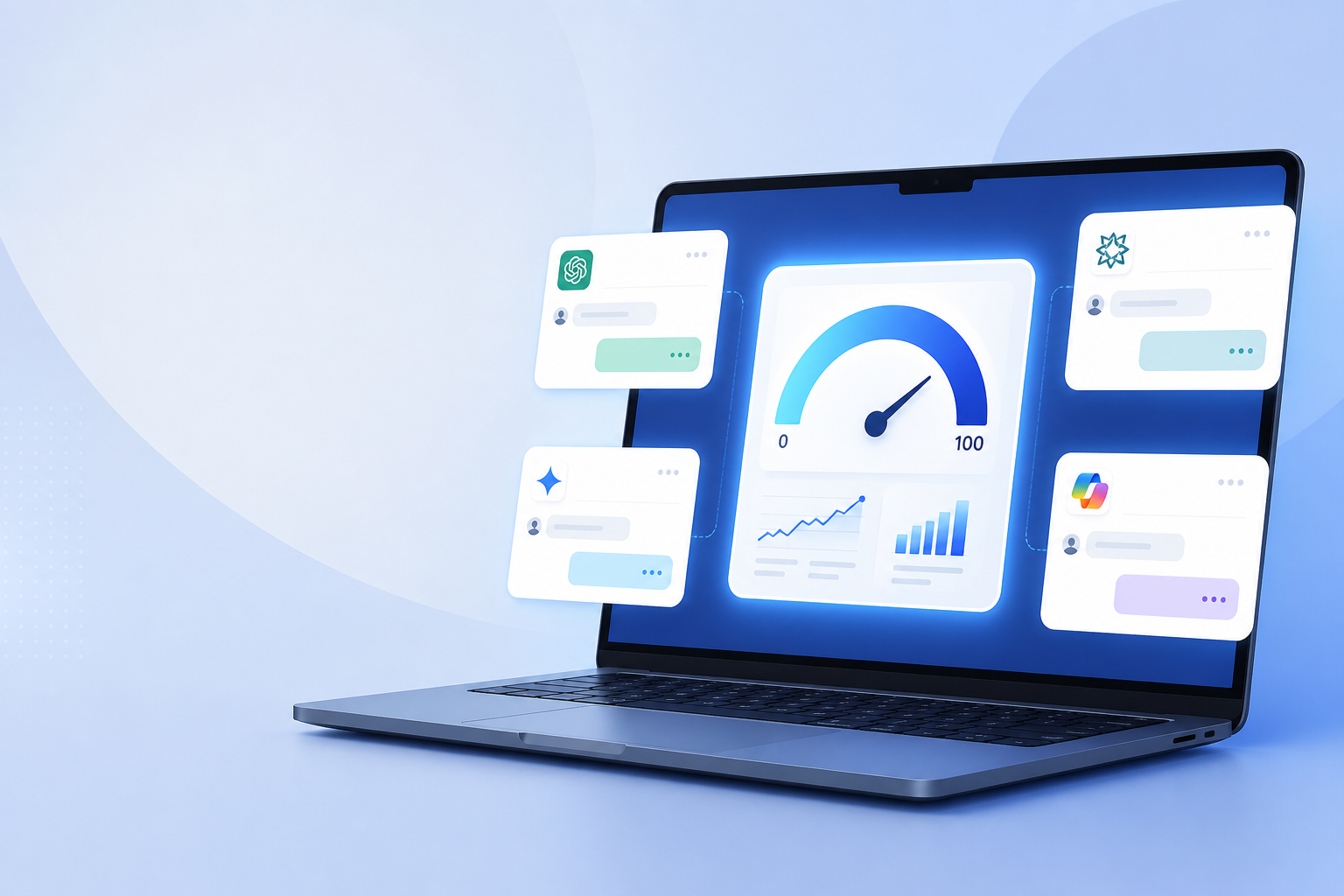
AI visibility measures how often, how favourably, and how accurately generative AI engines such as ChatGPT, Gemini, Perplexity, and Copilot mention, cite, or recommend your brand when someone asks a purchase-decision question.
For solo founders, this matters because a growing share of product research now happens inside AI chat interfaces rather than traditional search results. If your brand is not showing up there, you may be invisible to buyers at the exact moment they are deciding who to trust.
I want to be upfront about something before we go further: there is no single, universally agreed way to measure AI visibility yet. The term is used inconsistently across the industry, and the scoring model I will walk you through below is one specific framework — the one we built at MentionOwl — rather than an established benchmark like Google’s PageRank once was. Treat it as a useful lens, not gospel.
I have spent considerable time analysing how generative engines retrieve, synthesise, and present brand information, largely because I needed to understand it for my own work before trusting any tool to measure it. What follows is what I have learned: what AI visibility means, why AI search is becoming harder to ignore, what the data can and cannot tell you, and how to start tracking your brand without creating another unpaid job on top of running your business.
At its core, AI visibility describes whether, how often, and how favourably AI engines mention your brand in response to the real questions your customers are asking. Google’s Search Central documentation on AI features frames this broadly: a brand can be discovered, described, recommended, and cited across systems such as ChatGPT, AI Overviews, Copilot, and Perplexity.
This is fundamentally different from conventional search ranking because an AI answer typically synthesises information from several sources at once rather than displaying a single ranked list of links. Understanding this distinction is central to both AI visibility and generative engine optimisation.
I see founders conflate “ranking” with “visibility” constantly, and they genuinely are not the same thing. Ranking is positional — you occupy slot three on a results page. AI visibility is compositional — you might be cited once, referenced implicitly through what I will call a “soft mention”, or entirely absent while a competitor is named three times in the same answer.
There is also a representation problem that is easy to miss. A brand can technically be mentioned and still have poor AI visibility if its description is inaccurate, outdated, or missing the details that actually win customers. Microsoft’s Copilot and Bing Webmaster Guidelines make a similar point: being present and being represented well are two separate problems, and fixing one does not automatically fix the other.
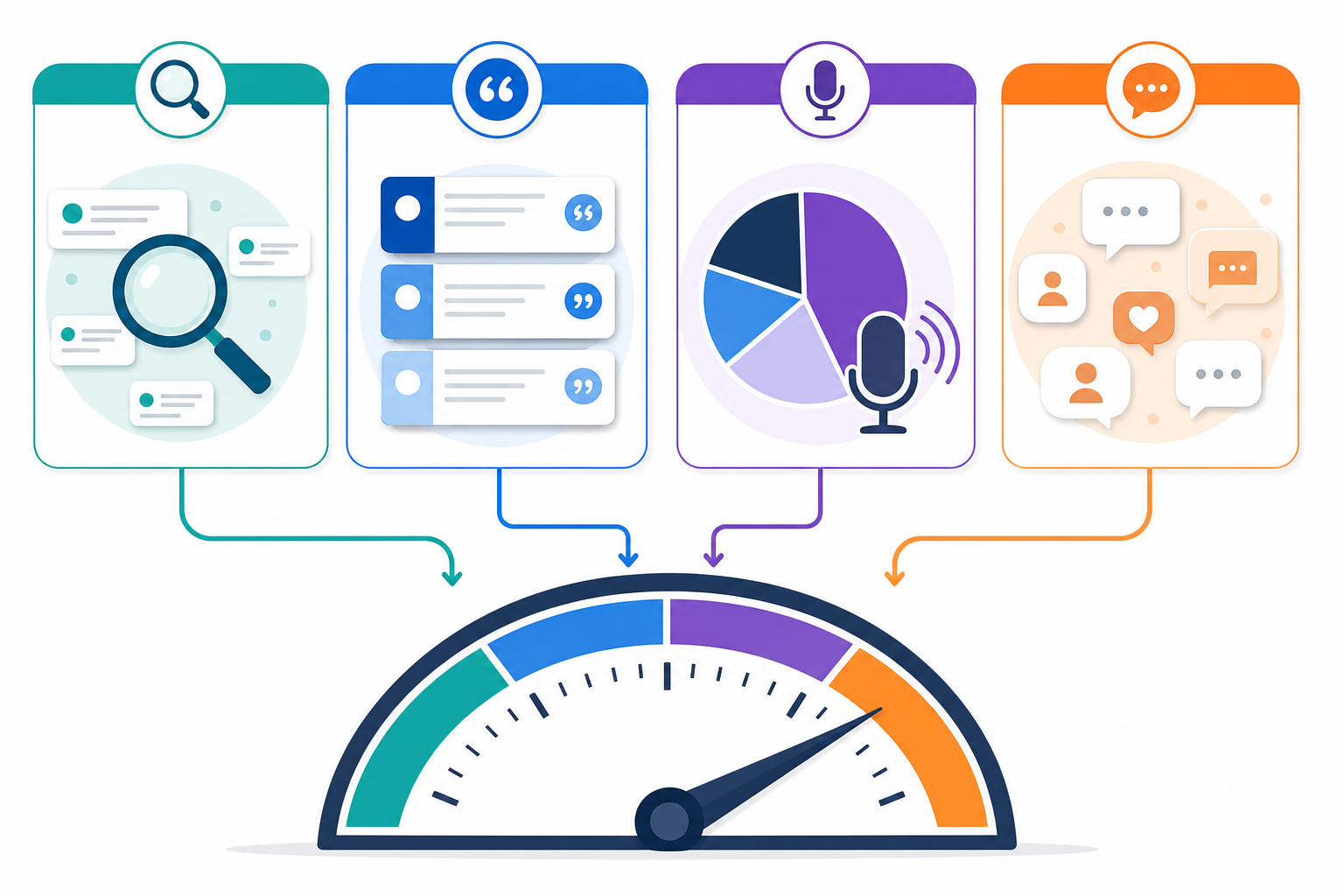
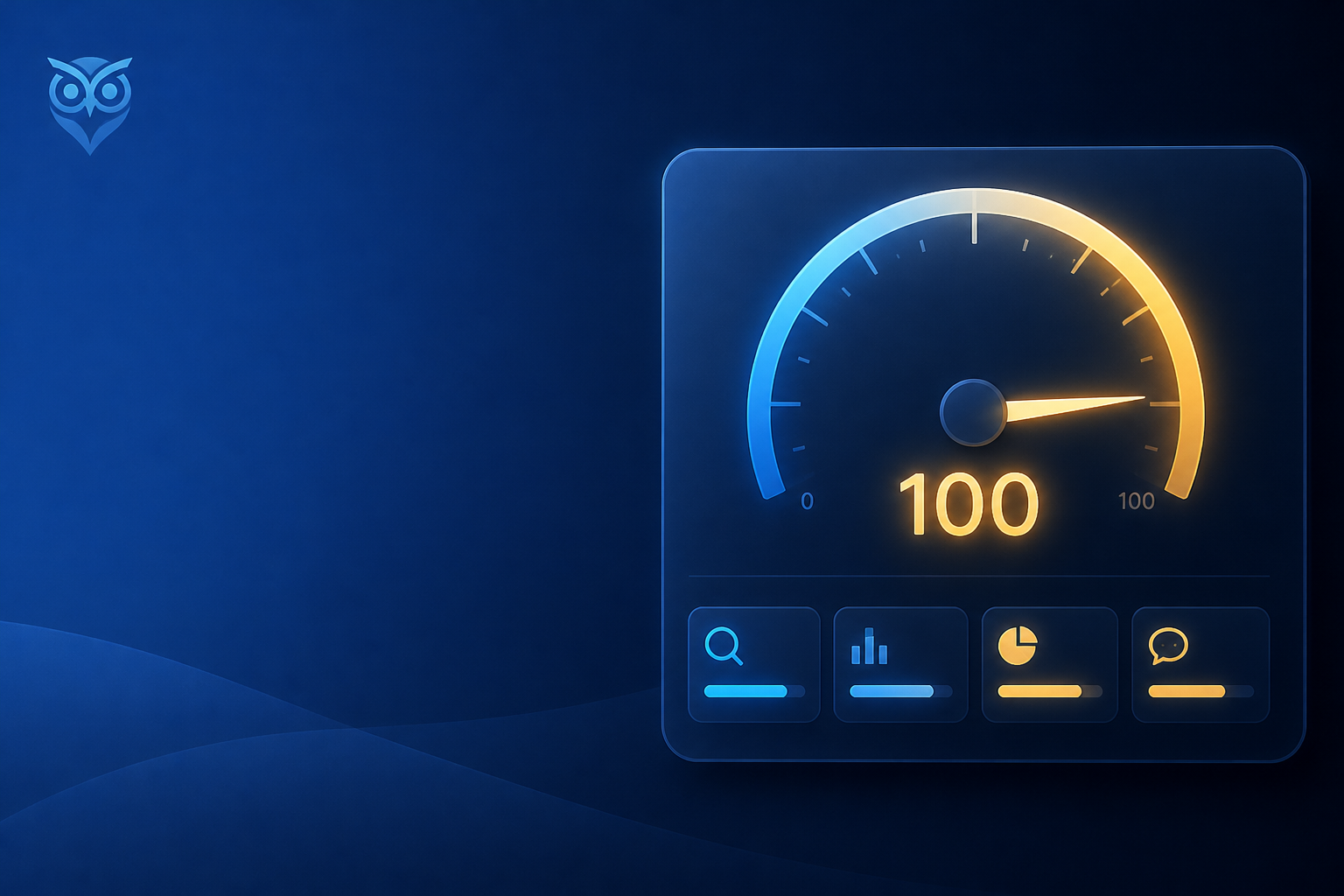
Because this is genuinely hard to quantify just by reading chatbot answers, we built a four-part AI visibility scoring model at MentionOwl. I want to show you how it works with a concrete example rather than just naming the components in the abstract, because the components on their own do not mean much without a worked case.
Say a UK-based freelance bookkeeper asks, “What’s the best invoicing software for a UK sole trader?” across ChatGPT, Perplexity, and Copilot. Here is how one brand’s presence might actually be scored:
Run that same logic across dozens of realistic questions, average it, and you get a single number out of 100. I will say plainly that the 0–100 score is MentionOwl’s own construction. It is useful for tracking whether your visibility is trending up or down week over week, but it is not a market-wide standard you can compare with another tool’s score.
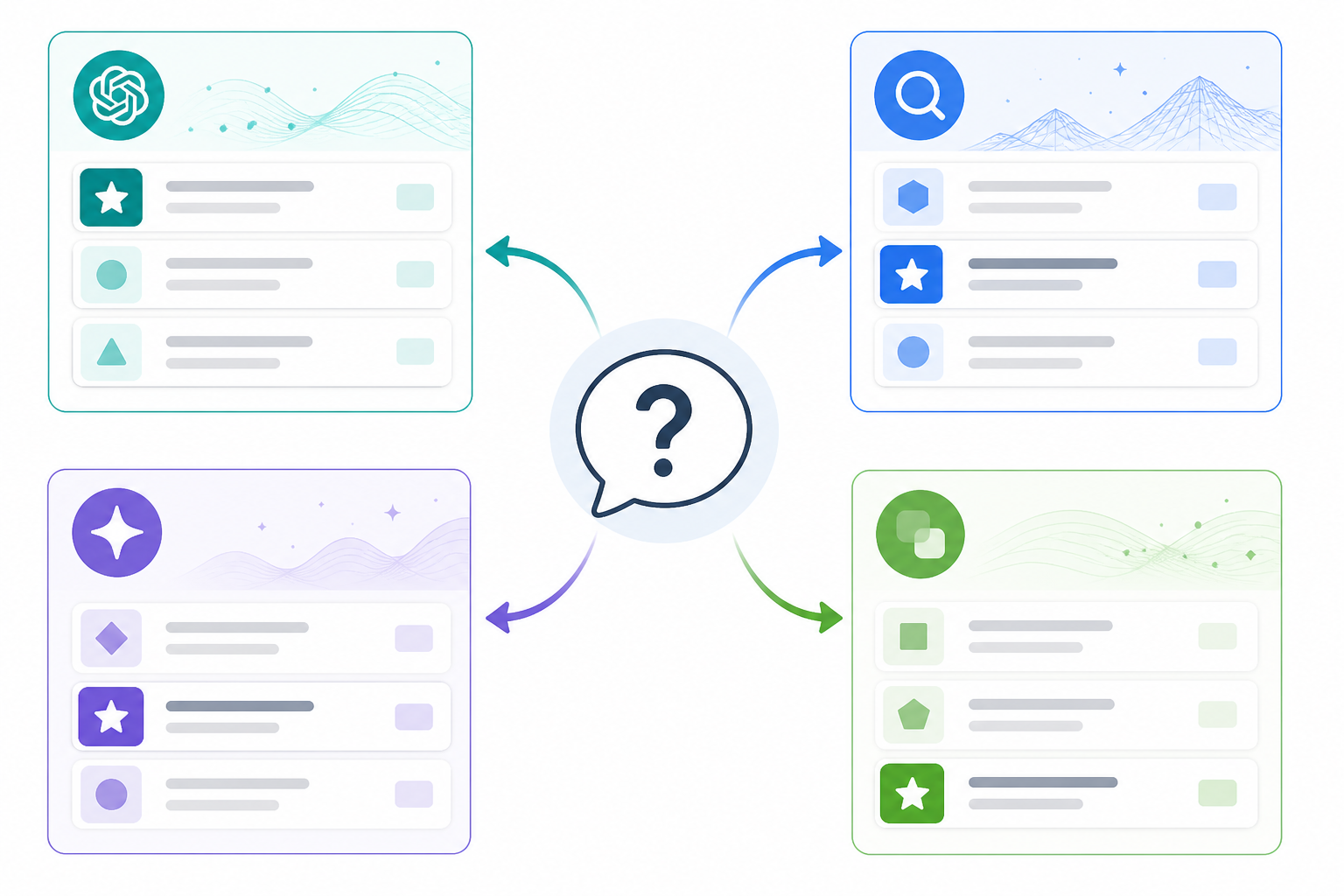
A few caveats are worth naming honestly because they affect how much confidence to put in any single reading. Answers vary by prompt phrasing, whether you are logged in, geographic location, which model version is running that day, and whether the AI tool has live web access or is relying on older training data.
A single check tells you almost nothing reliable. A pattern across dozens of queries, repeated over several weeks, tells you considerably more. Even then, treat the number as directional rather than as a precise market-share figure.
I will come back to how AI visibility relates to, and differs from, traditional SEO further down, because the overlap and the distinction both matter to how you spend your limited time.
The scale of adoption here is not a fringe trend, although I want to be careful about what the following figures actually prove versus what they merely suggest.
I flag the US-centric nature of this data deliberately. If you are running a UK business, the honest position is that comprehensive, publicly available UK-specific adoption figures for generative AI search are still thin on the ground.
What we can say with more confidence is that AI Overviews and chat-based search have both rolled out in the UK, that the underlying platforms — ChatGPT, Gemini, Copilot, and Perplexity — are used by UK consumers too, and that the qualitative shift from lists of links to synthesised answers applies regardless of geography, even where the exact percentages differ.
Collectively, these figures describe a move away from the “ten blue links” model towards a single synthesised answer that concentrates attention on far fewer sources than a traditional results page ever did. That has a knock-on effect on visibility economics: when an AI engine names two or three brands instead of ten organic listings, competition for those two or three places becomes fiercer, and the cost of being left out becomes higher.
The most consequential data point I have seen, though, comes from Pew’s behavioural research. When an AI summary appeared in Google results, users clicked a traditional search result in only 8% of visits, compared with 15% when no summary appeared. They clicked a link inside the AI summary itself in just 1% of visits.
Around 26% of those sessions ended entirely after the summary appeared, compared with 16% when it did not. Put simply, a growing share of AI search sessions never produces a click at all. For many queries, the AI answer effectively is the customer journey. The user forms an impression of your brand, or a competitor’s, inside the chat window and may never visit a website.
I want to be precise about the framing: AI search is not a replacement for Google. It is a parallel discovery channel running alongside it, with its own retrieval logic and blind spots. Treating AI visibility as “basically the same as SEO, so I do not need a separate approach” is a costly assumption because AI answers can change daily and are not reflected in any conventional rank tracker.
Generative engines do not retrieve information randomly. They tend to favour sources that are easy to find, easy to parse, and easy to corroborate against other sources.
It is worth distinguishing between two kinds of systems because the mechanics genuinely differ. Retrieval-augmented tools such as Perplexity or Copilot actively search the live web and cite sources in real time. A model such as ChatGPT’s default mode may lean more heavily on patterns learned during training, with web browsing added depending on the version and settings in use.
This matters because being crawlable helps more with retrieval-based tools than with a model recalling something it learned months ago.
With that caveat in place, solo founders and small businesses do tend to face a structural disadvantage. I would stop short of saying larger competitors dominate purely “by default rather than merit”. It is more accurate to say that larger competitors typically accumulate more corroborating evidence over time: more comparison pages, independent review coverage, press mentions, directory listings, and consistently repeated facts about their business across the web.
That gives an AI model more signals to draw from when constructing an answer. A solo founder with a single, thin About page and no third-party coverage simply has less retrievable, verifiable evidence available, even when their product may be the better fit for the query.
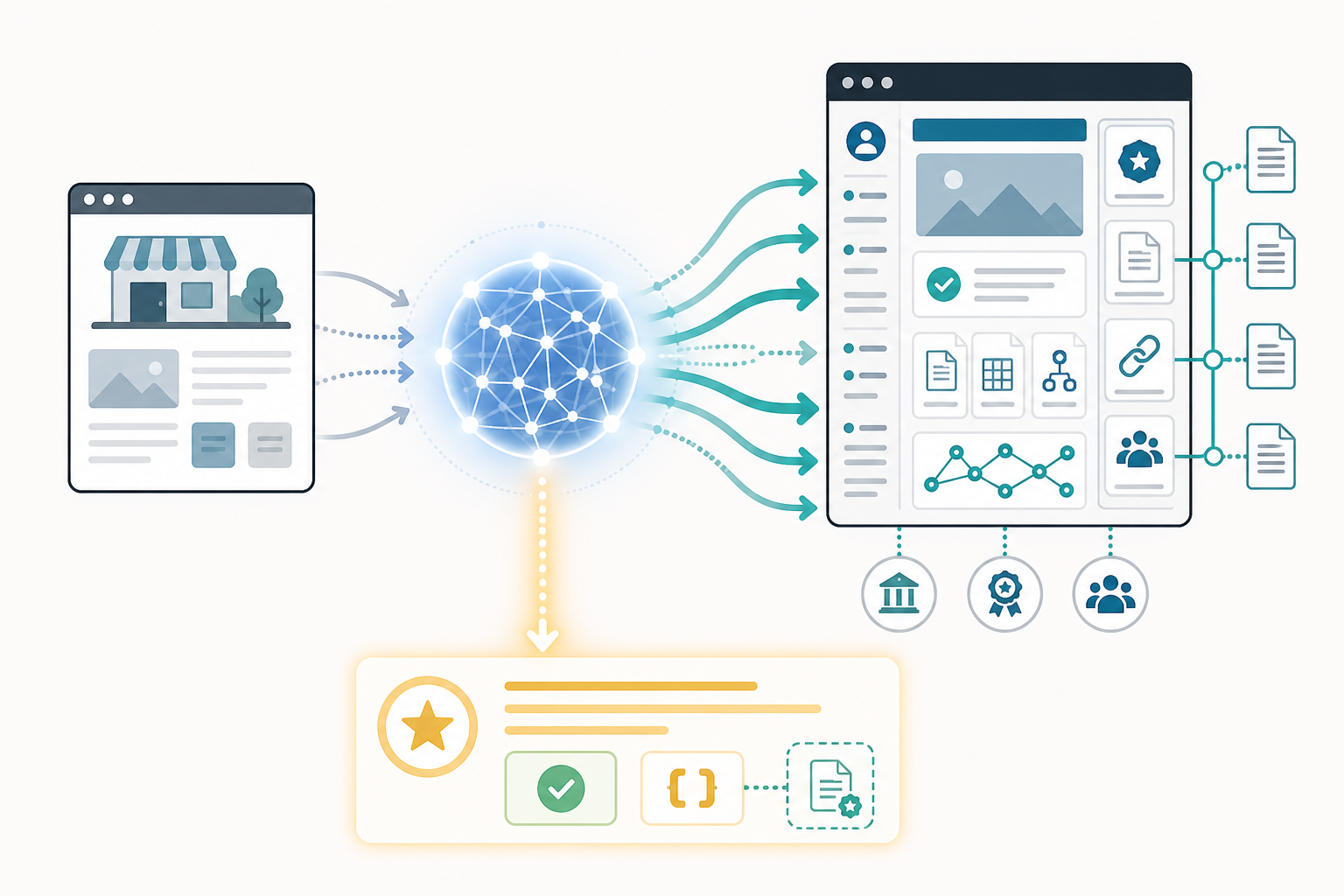
This is where the concept of AI legibility becomes useful. AI legibility refers to the technical and content factors that affect whether a generative model can parse and cite your site. These include:
Research from Princeton, Georgia Tech, the Allen Institute, and IIT Delhi on generative engine optimisation found that content optimisation techniques — including adding clear citations, statistics, and unambiguous language — improved visibility in their generative engine benchmark tests by as much as 40%.
I would note two things about that figure. First, it comes from a specific benchmark setup rather than live commercial traffic. Second, it demonstrates that legibility can move the needle; it does not mean any single fix guarantees inclusion. Correlation with better retrieval is not the same as a promise of citation.
The practical problem is often discovering the gap in the first place. Without ongoing brand monitoring, most founders have no idea this is happening until it surfaces in the worst possible way: a customer mentions, almost in passing, “Oh, I asked ChatGPT and it recommended [competitor] instead.”
By the time that feedback reaches you, you may already have lost that sale, and possibly others you never heard about.
Before assuming you are fine, run through this list honestly. These are common patterns I have noticed while looking at visibility data for small businesses. They are practical rules of thumb rather than a scientifically validated checklist, so use them as prompts for further investigation rather than as a diagnosis:
If several of these sound familiar, it is worth investigating further. I would stop short of saying they prove you are losing sales, though. AI visibility and revenue are related but not identical. A strong AI presence helps at the discovery stage, but plenty of other factors determine whether that discovery converts.
This distinction trips up more founders than any other part of the AI visibility conversation, so I want to lay it out plainly.
| Dimension | Traditional SEO | AI Visibility |
|---|---|---|
| Primary goal | Rank in search engine results pages | Be cited or recommended inside a generated AI answer |
| Core metrics | Rankings, clicks, organic traffic | Citation frequency, share of voice, sentiment, position-weighted mentions |
| Key inputs | Backlinks, keyword targeting, page authority | Structured, clearly parsable content; entity consistency across the web; third-party reviews and references; topical authority signals a model can extract with confidence |
| Measurement tools | Rank trackers, analytics platforms | Manual prompt testing or dedicated LLM monitoring across ChatGPT, Gemini, Claude, Copilot, and Perplexity |
| Volatility | Generally more stable, although algorithm updates can shift rankings meaningfully | Highly volatile — answers can shift by prompt wording, model version, retrieval source, location, and even time of day |
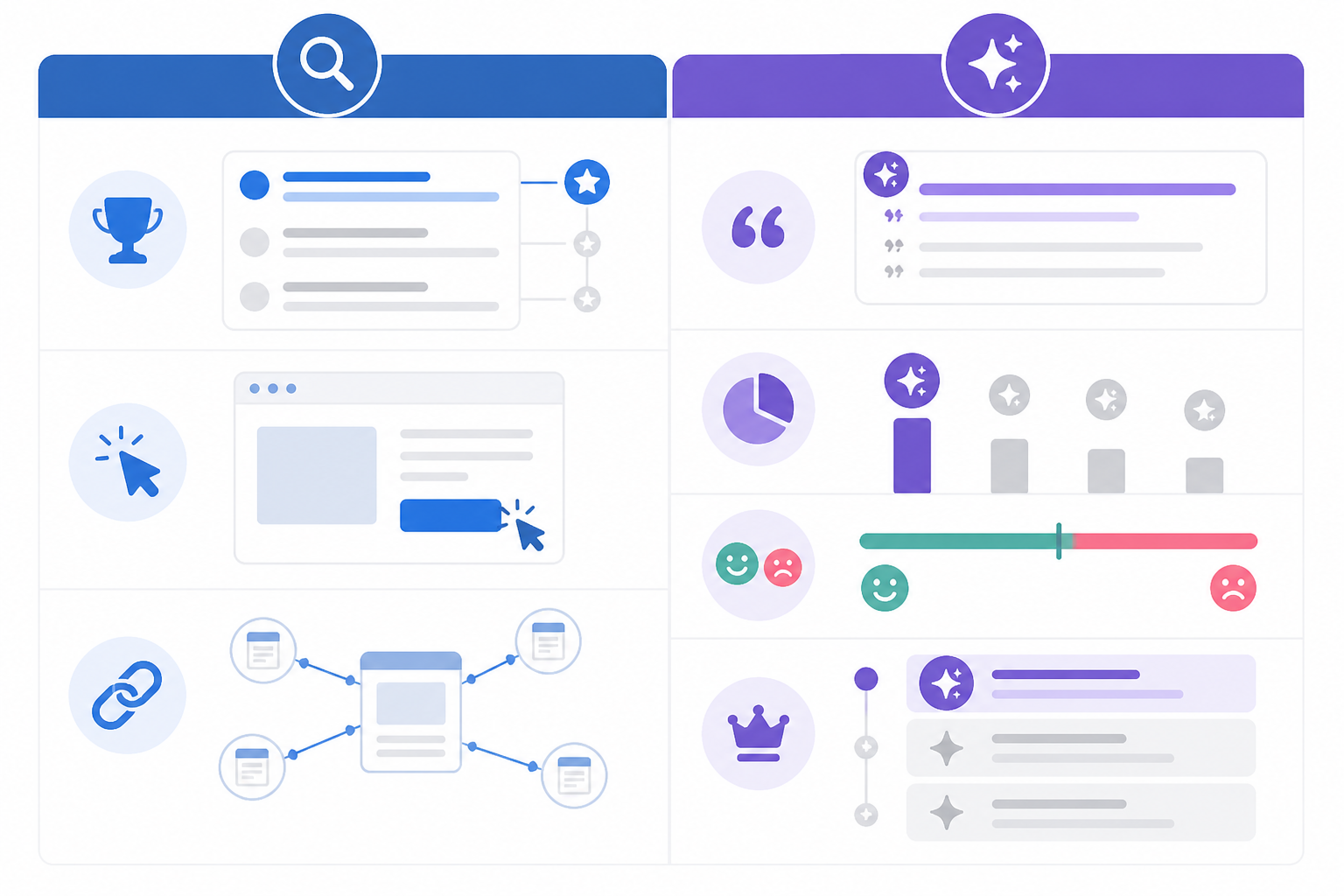
Google’s own Search Central guidance is worth noting: there is no special technical markup required to appear in AI Overviews. The fundamentals of crawlability, indexability, and genuinely useful content still apply.
That is exactly why traditional SEO and AI visibility overlap. Strong technical SEO and clearly structured content tend to improve AI legibility as a by-product.
But this is the part founders underestimate: AI visibility still needs its own tracking. Generative answers change day to day and are not reflected in any standard rank tracker. A page can hold position one in Google for months while being completely absent from every AI-generated comparison answer for the same query.
You will not know that gap exists unless you measure it directly.
Here is the practical path I would recommend, moving from a manual baseline to a repeatable process, with a clear decision point about when automation earns its cost.
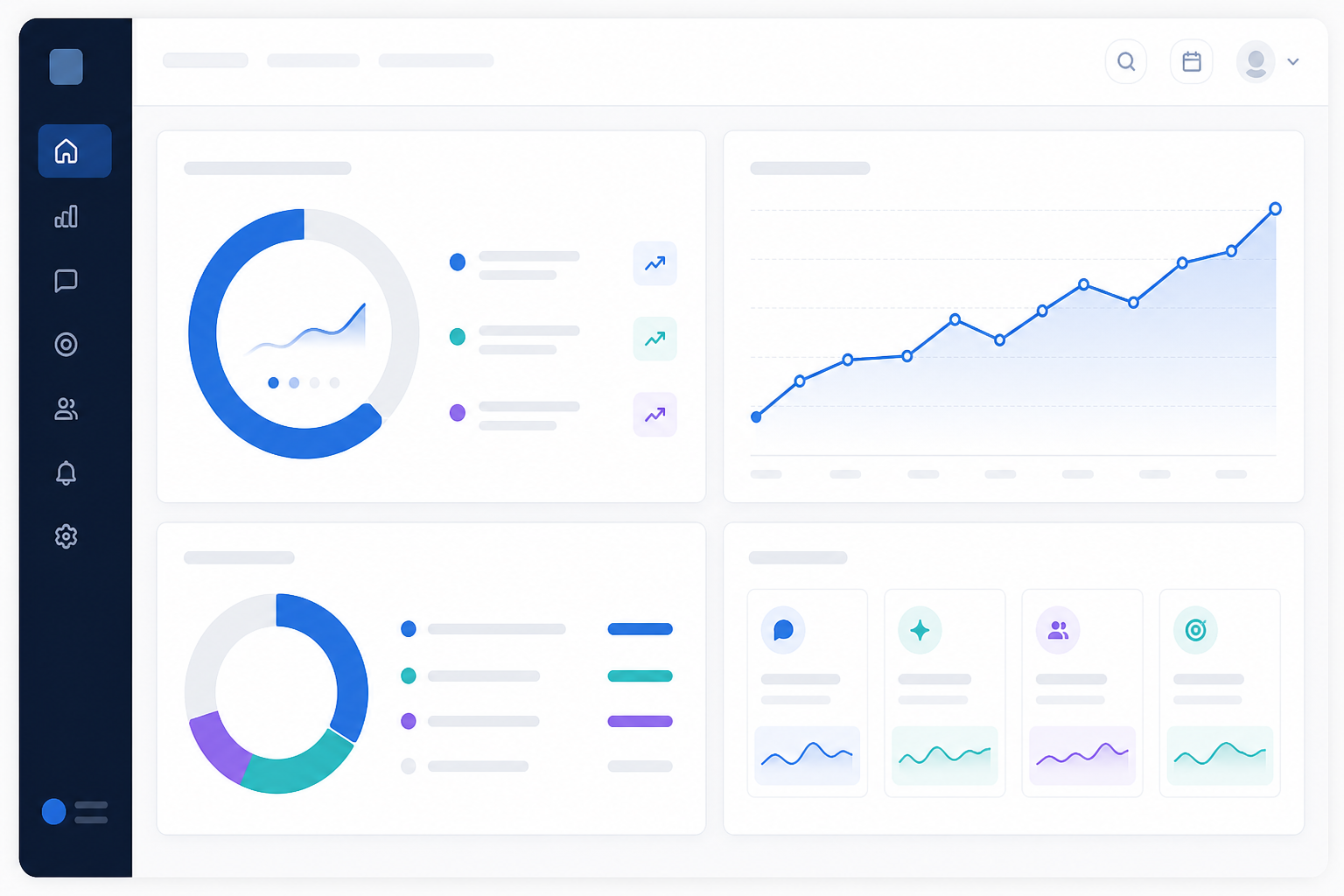
Because the same prompt can produce different answers depending on wording, location, and model version, a one-off manual check will always give you an incomplete picture. Continuous tracking — whether manual and occasional or automated and daily — is what turns a guess into an actual trend line.
AI visibility means understanding whether ChatGPT, Gemini, Perplexity, and similar tools mention your brand favourably, or at all, when a potential customer asks a question you would expect to win — such as “best [your category] for [use case]”, phrased the way a UK customer actually would.
If competitors show up and you do not, you may be missing a discovery channel you did not know you were competing in. Checking this yourself first is a sensible starting point before considering any paid monitoring tool.
The most direct way is to ask ChatGPT the exact questions your customers might ask and repeat the checks over time, since answers can shift from day to day. Do not only search for your brand name. Test category, comparison, use-case, location, and recommendation questions where your brand should be relevant.
Doing this manually across every relevant query and platform becomes time-consuming once your question set grows beyond a handful. At that point, dedicated monitoring tools, including MentionOwl, can run the same checks regularly and compile the results automatically.
Yes, although the two are related. SEO focuses on ranking in search results pages, while AI visibility focuses on being cited or recommended inside a generated AI answer. AI visibility is commonly measured through citation frequency, share of voice, sentiment, and position-weighted mentions rather than rankings and click-through rate.
Strong technical foundations tend to help both disciplines, but each needs its own tracking because AI answers can change independently of Google rankings.
Yes, up to a point. Manual spot-checks work well for an occasional check-in. If you need daily coverage across multiple platforms and a growing question set, that is difficult to sustain by hand. This is the specific gap automated AI visibility and brand monitoring tools are designed to close.
MentionOwl, for instance, auto-generates realistic customer questions and runs them daily against major AI platforms. However, the underlying principle — repeatable, dated, comparable checks — matters more than which specific tool you choose.
Sources referenced: OpenAI usage announcements and Reuters reporting (November 2023–February 2025); Gartner press release (February 2024); Adobe Analytics holiday shopping data (2024, US retail); Pew Research Center analysis of Google AI Overviews (March 2025, US sample); generative engine optimisation benchmark research from Princeton, Georgia Tech, the Allen Institute, and IIT Delhi; Google Search Central and Microsoft Bing Webmaster Guidelines on AI features.
Mention counts tell leadership nothing about brand perception. Learn how sentiment analysis across ChatGPT, Gemini, and Perplexity reveals whether AI
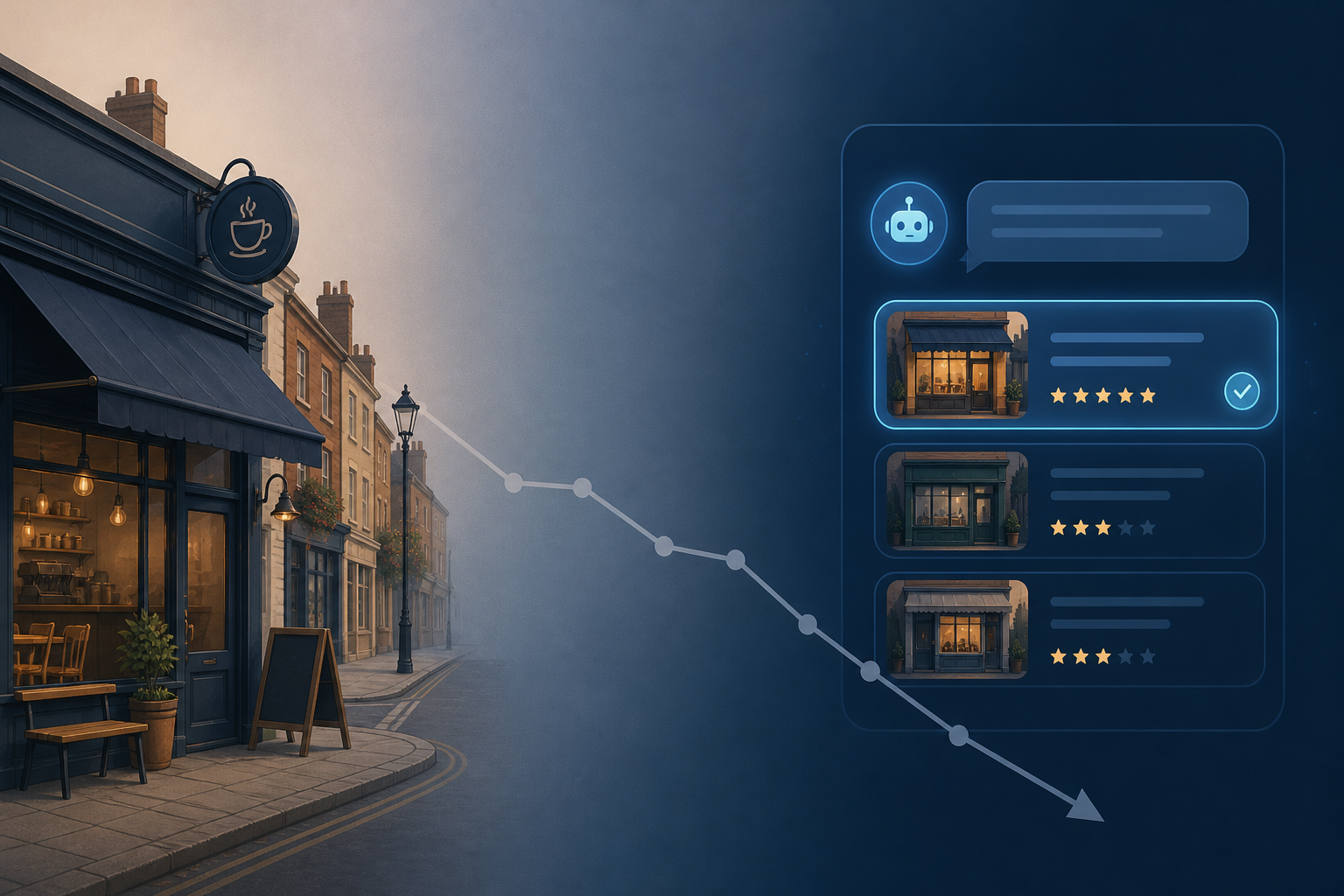
A real-world case study on AI visibility decline: how a UK small business lost customers to a competitor in ChatGPT and Gemini answers—and the data th
A plain-language breakdown of the AI visibility score—query coverage, position-weighted citations, and share of voice—so founders know exactly what to