Why Agencies Should Offer AI Visibility Monitoring in 2025: The Business Case for a New Retainer

Brand Monitoring in the AI Era: Why Agencies Need an AI Visibility Retainer Now

Brand monitoring has always meant tracking where and how a client's name shows up — press mentions, review sites, social listening, and search rankings. That discipline now has a new surface to cover: AI search and answer engines. Agencies that treat AI visibility monitoring as a natural extension of the brand monitoring work they already do, rather than a separate specialism to build from scratch, are likely to be better positioned over the next 12 to 18 months.
This post makes the practical case for launching an AI visibility retainer: what's changing in search behaviour, what client demand looks like right now, what a retainer could include, how much it might cost, and how to pilot the service without overcommitting resource.
I want to be upfront about the limits of the evidence here. Some of the statistics below come from vendor and analyst reports whose full methodology isn't publicly available, and I've tried to flag that rather than present every number as settled fact. Gartner's analysts have projected that traditional search engine volume could fall by around 25% by 2026 as more consumers turn to AI assistants for answers — a forecast, not a measured outcome, and one Gartner itself frames as directional. Bain & Company's 2024 consumer research reported that a majority of the US consumers it surveyed were already seeing AI-generated summaries in a meaningful share of their searches, with a notable proportion of searches ending without a click through to a website at all; Bain hasn't published the full survey instrument, so I'd treat the precise percentages as indicative rather than exact. Adobe Analytics, drawing on its own retail traffic data, recorded generative-AI referral traffic to US retail sites increasing sharply year over year through 2024, with those visitors showing stronger on-site engagement than traffic arriving from most other channels — again, this is Adobe's own client data set, not an independent industry-wide study.
None of this means Google is disappearing. It means a second discovery layer has formed alongside it, and most agencies aren't yet monitoring that layer in the same way they monitor rankings, mentions, or reputation.
Why AI Visibility Is Becoming Part of Brand Monitoring
The Growing Client Demand for AI Search Reporting
Here's how I'd define the extension plainly: AI visibility monitoring is brand monitoring applied to a new set of channels — ChatGPT, Claude, Gemini, Copilot, and Perplexity — where the questions aren't just "is the brand mentioned" but "is the brand recommended, accurately described, and favourably positioned against named competitors inside an AI-generated answer?"
That's a materially different measurement problem from tracking a press mention or a star rating, because the answer can change based on how a question is phrased, which model answered it, and when the underlying training or retrieval data was last refreshed.
The pattern I keep seeing across finance, SaaS, and professional services clients — categories where buyers naturally compare options before committing — is a client asking some version of: "Why isn't my brand showing up when someone asks ChatGPT for recommendations in our category?"
That question is usually triggered by a founder or marketing director testing their own brand in ChatGPT, Perplexity, or Gemini out of curiosity and not liking what they see. I don't have a published survey measuring how common this question has become across UK agencies specifically, so I'd describe it as an early but consistent signal from client conversations rather than a proven market-wide trend.
This matters because AI visibility is genuinely not the same thing as conventional SEO visibility. A brand can rank on page one of Google for every commercial keyword that matters and still be omitted, mischaracterised, or quietly replaced by a competitor inside an AI-generated answer.
Academic work on generative engine optimisation — including published research from teams at Princeton, Georgia Tech, and the Allen Institute for AI — has found that these answer engines draw on a different mix of signals than classic ranking factors, and that outputs are sensitive to prompt wording, user location, model version, and how recently source content was updated. That research generally used specific benchmark query sets rather than live commercial traffic, so the exact magnitudes shouldn't be assumed to transfer directly to every industry.
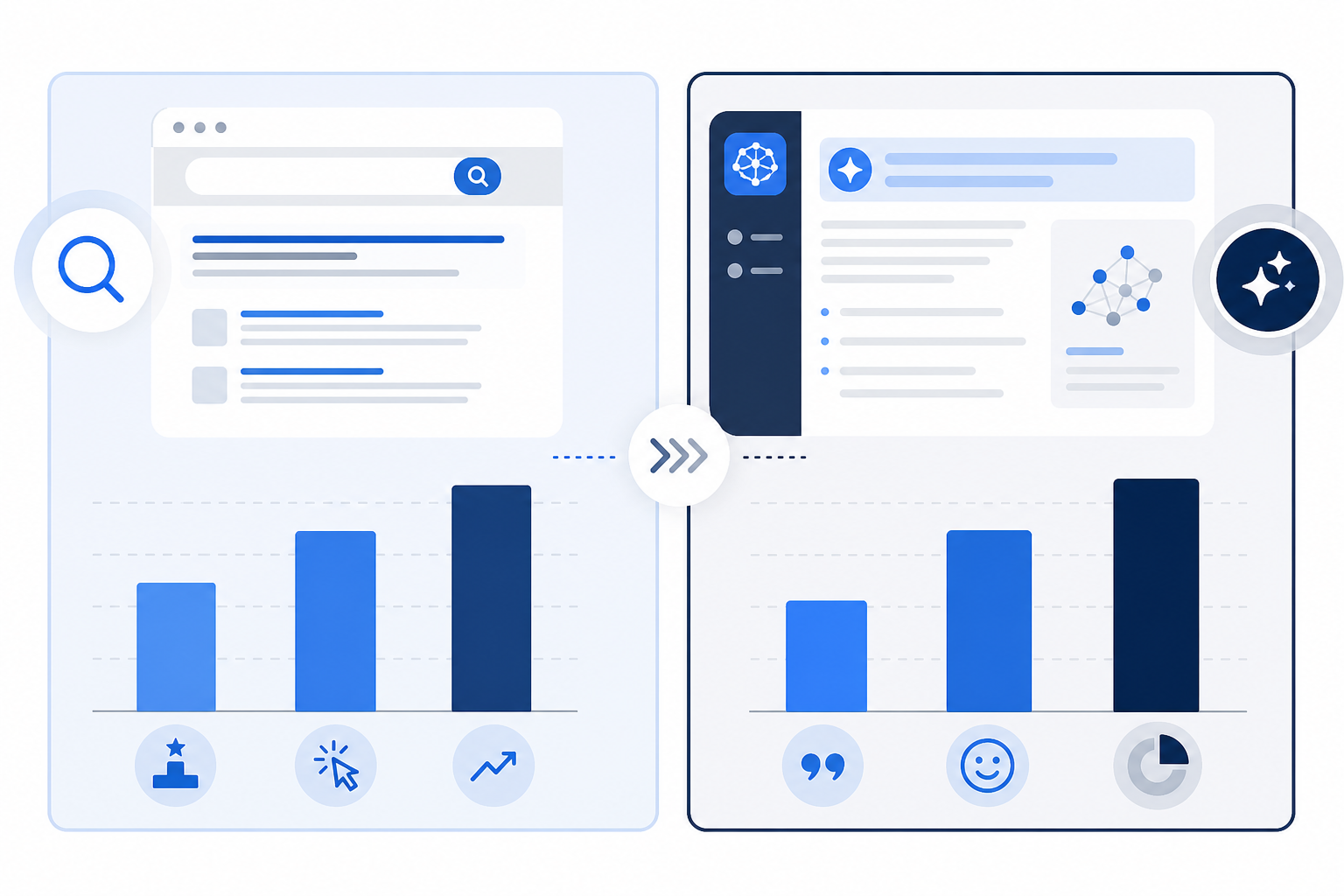
Traditional SEO reporting answers questions like "where do we rank" and "how much organic traffic did we get?" Clients now also want to know whether they're cited inside an AI answer, what sentiment surrounds that mention, and how their share of voice compares to named competitors.
If a monthly report doesn't touch any of that, a client who's spent five minutes testing their own brand in ChatGPT is going to notice the gap, even where the underlying technical SEO work is excellent. Being good at the old metric doesn't protect an agency from looking out of touch on the new one.
What an AI Visibility Monitoring Retainer Could Include
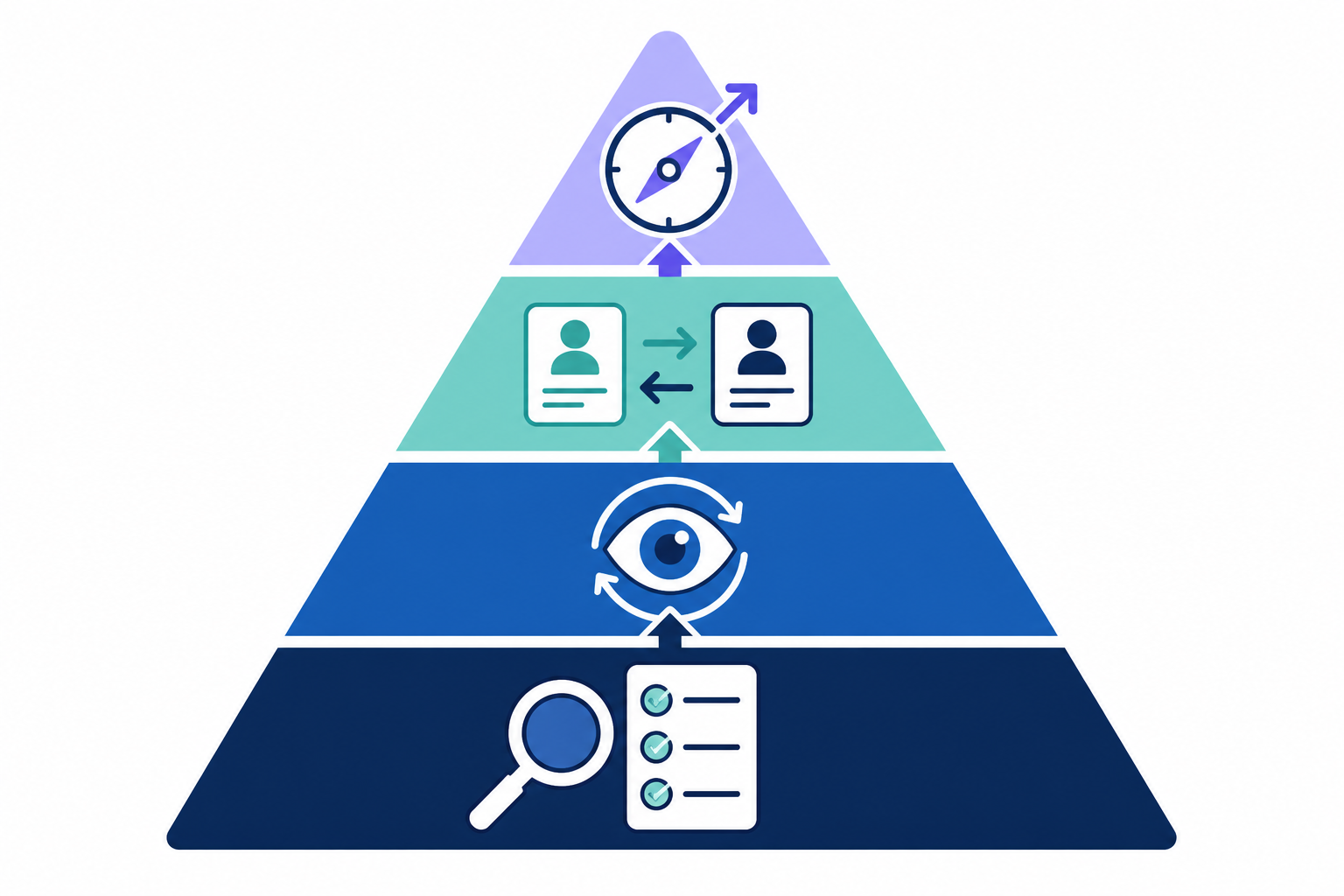
I'd structure this as a layered service rather than a single flat deliverable, because the work genuinely builds on itself. A defensible AI visibility retainer tends to include five components:
- Baseline AI visibility audit — AI legibility checks covering schema markup, crawlability, and content structure, to establish how readable a client's site is to AI crawlers before measuring anything else. This matters because a site a language model can't parse easily is a site it's less likely to cite with confidence, though passing an audit doesn't guarantee inclusion in any specific answer.
- Ongoing LLM monitoring — repeated tracking of query coverage, citations, position-weighted mentions, and sentiment across the major LLMs, built on a consistent prompt set rather than occasional manual spot checks. I'd caveat this: because generative answers can vary between identical queries run minutes apart, a single day's result is noise, not signal. The value comes from the trend across weeks, not any one snapshot.
- Competitor tracking — share-of-voice comparisons against named competitors answering the same query set, so clients see not just whether they're mentioned but who's being recommended instead.
- Weekly or monthly reporting — a visibility score trendline clients can read at a glance, paired with a short written narrative explaining what moved and why, because a number alone rarely tells a client what to do next.
- Strategic recommendations — content and technical changes tied to movements in the score, closing the loop between measurement and action.
Example AI Visibility Retainer for a UK Accountancy Firm
Picture a mid-sized UK accountancy firm with three service lines and five regional competitors. A realistic starting point is a prompt set of 40–60 queries, split roughly 60/40 between branded prompts ("is [firm] a good choice for R&D tax credits?") and non-branded, category-level prompts ("best accountancy firm for R&D tax credits in Manchester"), run across the five major platforms weekly.
Branded prompts tell you whether the AI's facts about the client are accurate — pricing, services, and reputation. Non-branded prompts tell you whether the client gets recommended at all when nobody mentions their name. Both are necessary for a complete picture; most agencies I've spoken with are currently only informally tracking the first, through founders manually testing their own brand name.
Over a 90-day pilot, I'd expect roughly 3–5 hours a month of agency time once the prompt set and reporting template are built: an hour reviewing flagged changes, an hour drafting the narrative, and the rest on any recommended content or schema fixes.
Tools Agencies Need for Scalable LLM Monitoring
Manually checking ChatGPT and Claude answers client by client works for exactly as long as an agency has two or three accounts and a lot of patience. Past that, it becomes impractical, because the value of LLM monitoring comes from running a consistent prompt set repeatedly over time across multiple platforms.
Generative answers shift with model updates, location, and the freshness of underlying data. A one-off manual check tells you almost nothing about trend, and it's worth being honest that even automated daily querying doesn't eliminate the stochastic nature of these outputs — it manages it by giving you enough data points to separate noise from a genuine shift.
There are a few capabilities I'd treat as genuinely necessary, and a few I'd treat as helpful but not essential.
Must-Have AI Visibility Monitoring Features
- Realistic customer questions, generated from how real buyers actually phrase queries rather than a list an account manager guesses at over coffee.
- Repeated automated querying across at least ChatGPT, Gemini, and Perplexity as a baseline, since coverage of a single model tells you little about how a brand is represented across the platforms a client's customers are actually using. Claude and Copilot coverage add value but matter more in some sectors than others.
- A consistent, comparable scoring method built from query coverage, citation frequency, and share of voice, so a client's visibility this month can be sensibly compared with last month and with a competitor's — while being transparent with clients that this is a proprietary index, not a standardised industry metric.
- Exportable reporting, ideally via API, so the data can sit inside a dashboard a client already trusts rather than forcing a second disconnected login.
Helpful but Non-Essential Features
Sentiment scoring is useful, but less reliable than citation counting, since sentiment classification on short AI-generated text is inherently noisier. "Soft mention" detection can also be helpful in cases where a brand is implied or described without being named outright, although I'd treat it as a secondary signal rather than a headline metric.
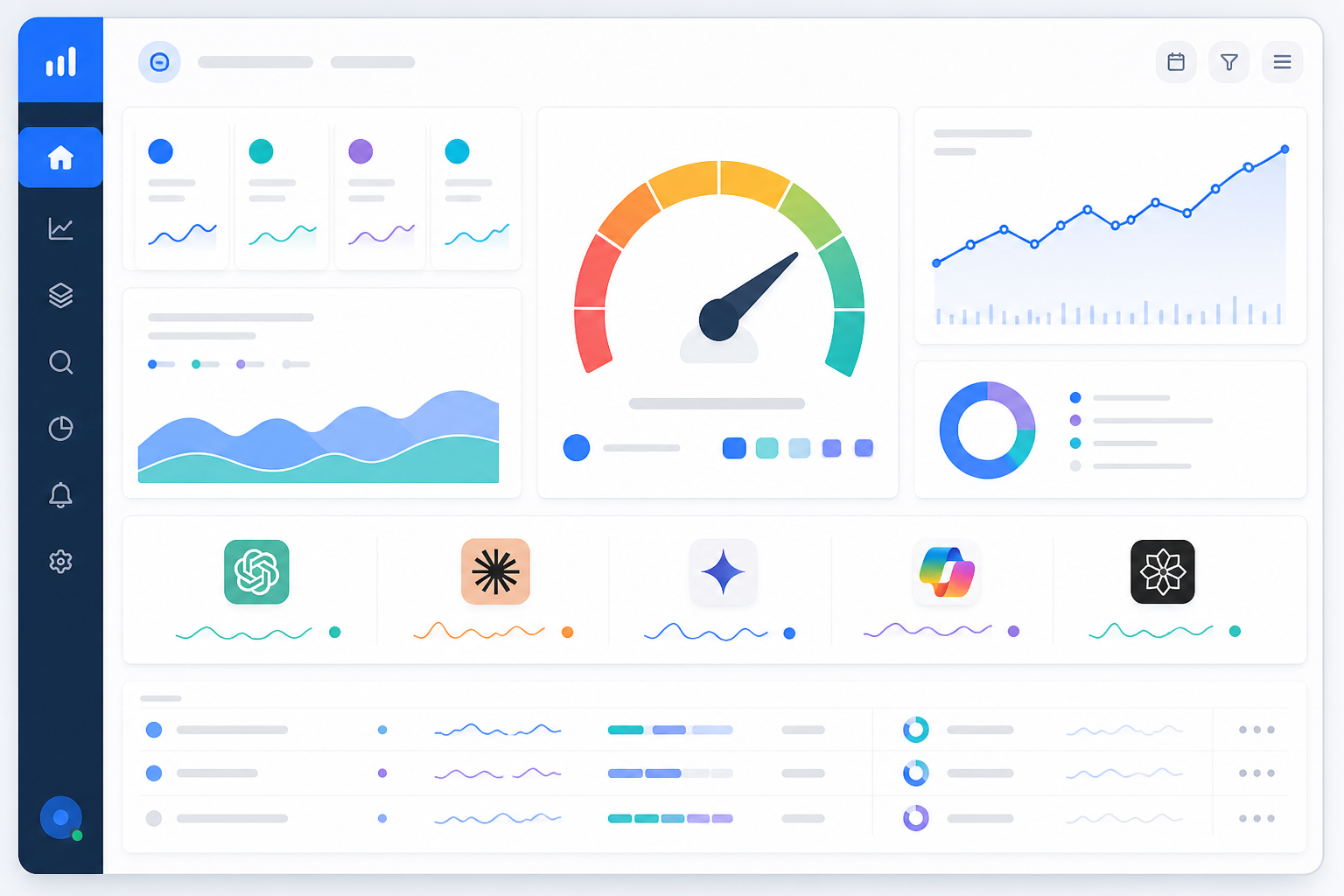
I should disclose here that I work on a tool in this category called MentionOwl, so take the following as an example from someone with a commercial interest in the space rather than an independent review. It crawls a client's site, generates a customer-question set, and runs those questions on a recurring basis against the major AI platforms to log citations, sentiment, and competitor mentions, producing a 0–100 visibility score and a technical legibility audit.
I'm describing it because it illustrates the shape of the tooling requirement concretely, not because it's the only credible option. Profound, Otterly, and a handful of other platforms are building toward similar capability, and any agency evaluating this space should compare at least two or three before committing, since prompt-set quality and platform coverage vary meaningfully between vendors.
AI Visibility Retainer Pricing and Packaging Ideas
I wouldn't invent a new pricing logic from scratch here. Anchoring AI visibility monitoring to existing SEO or brand monitoring retainer pricing gives UK clients a familiar frame, and a tiered structure lets an agency test appetite before overcommitting delivery resource.
The numbers below are indicative starting points based on typical UK agency retainer bands for comparable reporting-led services, not guaranteed margins. Actual pricing should reflect local market rates and delivery cost.
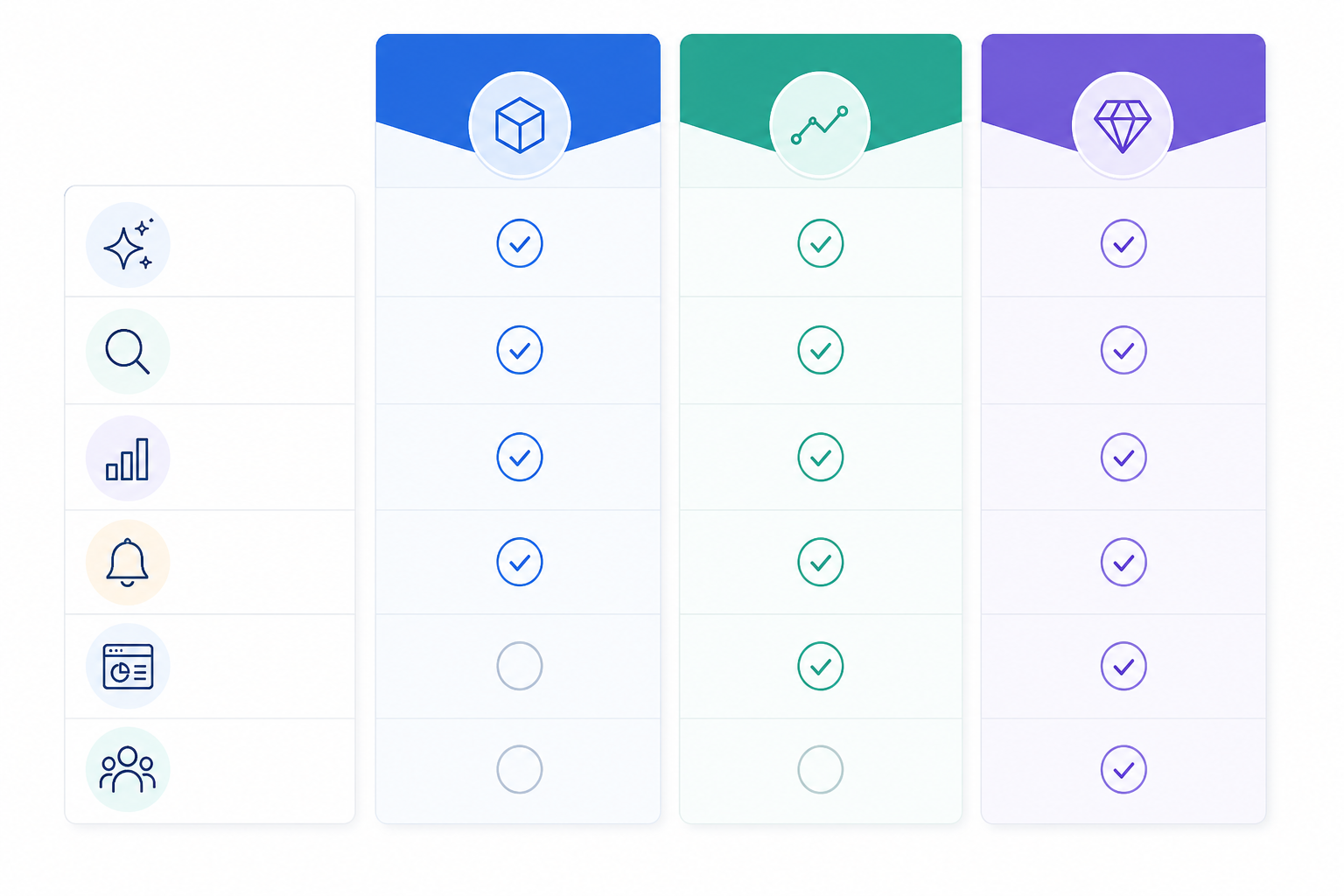
| Tier | Core Deliverables | Indicative Monthly Price (GBP) | Estimated Delivery Hours/Month | Best Fit |
|---|---|---|---|---|
| Starter | Monthly visibility score tracking, quarterly AI legibility audit | £250–£450 | 2–3 | Add-on to existing SEO retainers; low-commitment entry point |
| Growth | Weekly reporting, competitor share-of-voice tracking, sentiment monitoring | £600–£1,200 | 4–6 | Clients actively trying to win AI recommendations in competitive categories |
| Full-Service | Visibility monitoring bundled with content and technical implementation | £1,500–£3,500+ | 10–15 | Clients who want someone acting on the data, not just reporting it |
Estimating AI Monitoring Tool Costs and Margins
On tooling cost, a platform charging in the region of £50–£150 per client per month leaves reasonable gross margin once delivery hours are billed at a typical UK agency rate of £40–£75 an hour. Agencies should run their own numbers against actual headcount cost rather than treating these as universal.
The practical way to de-risk this internally is to start on a low-cost or trial tier of whichever platform you choose, run it against two or three existing clients for a genuine 4–6 week period, and use that real trendline data as the pitch for the retainer. This is more credible than selling a service that hasn't been tested on live data first.
On the value side, I'd frame the pitch around this: being recommended inside an AI answer and ranking on page one of Google both represent the same underlying thing — discoverable intent capture at the moment a buyer is deciding.
If a client already pays for the latter, there's a reasonable case they'll pay for the former, particularly once they understand that a meaningful share of searches in some categories are ending without a click at all. In those cases, the AI answer may be the only impression a brand gets.
Why Agencies Should Get Ahead of Competitors Now
I'll resist repeating the urgency argument from the opening and instead offer a concrete plan, because I think a plan is more useful than another version of "move fast." If I were running an agency evaluating this service, I would:
- Audit your own brand first. Run 20–30 branded and category prompts about your own agency across three platforms. This costs nothing but time and gives you a live example to show prospective clients.
- Pilot with three existing clients for 60–90 days, ideally from categories where buyers compare options — finance, SaaS, and professional services — rather than trying to sell it cold to the full client list.
- Set a baseline in week one and report changes against it monthly, being explicit with clients that early data establishes a reference point rather than proving a trend.
- Review retention and upsell impact after 90 days before deciding whether to productise the service formally and price it into new client proposals.
McKinsey's 2024 State of AI survey reported that 65% of the organisations it surveyed were regularly using generative AI in at least one business function, close to double the prior year's figure. Salesforce's own research reported that around three-quarters of the marketers it surveyed had adopted or were experimenting with AI tools.
Both are self-reported, vendor-adjacent surveys rather than independent audits, so I'd treat them as evidence of direction rather than precise prevalence. Taken together with the search-behaviour data earlier in this piece, the pattern is consistent even if individual figures carry caveats: client-side awareness of AI as a discovery channel is rising.
A client who discovers an AI visibility gap on their own is more likely to go shopping for a specialist agency instead of raising it with the one they already pay.
I think of generative engine optimisation as the next layer of search marketing in roughly the way mobile and voice search were: not a replacement for what came before, but a parallel discipline where agencies that build real expertise early tend to own the narrative in their vertical before the service becomes commoditised.
Most agencies don't need to start from zero here. If you're already running brand monitoring and reputation management, you have the analytical habits and client trust to extend into AI visibility. It's a new data source added to a discipline you already practise, not an entirely new skill.
FAQ: AI Visibility, Brand Monitoring and LLM Monitoring
Are UK clients actually asking about AI visibility yet, or is this too early?
I'm seeing early but consistent signals, particularly among clients in competitive, comparison-heavy sectors like finance, SaaS, and professional services, where buyers naturally ask AI assistants for recommendations.
I don't have a published UK-specific survey to quantify how widespread this is yet, so I'd describe it as an emerging pattern rather than a universal demand. Agencies raising it proactively tend to control the conversation, rather than reacting once a client has already noticed a competitor being recommended instead of them.
How should I price an AI visibility monitoring service?
Anchor it to existing SEO or brand monitoring retainer pricing rather than inventing a new logic. As a rough UK starting point, charge £250–£450 a month for a monitoring-only add-on, £600–£1,200 for weekly reporting with competitor tracking, and £1,500+ where implementation work is bundled in.
Build your price around tool cost plus delivery hours at your normal billing rate, then test it on two or three existing clients before rolling it out formally.
What deliverables should be included in an AI visibility retainer?
At minimum, include a visibility score with a clear trendline, citation tracking across at least three major LLMs, and a competitor share-of-voice comparison. Build the programme on a prompt set of 40–60 queries split between branded and category-level questions.
Pair the numbers with a short written narrative, since the score alone rarely tells a client what to do next. I'd report monthly at minimum and weekly for clients in highly competitive categories.
How do I differentiate my agency from competitors offering AI visibility services?
The underlying data and tooling will increasingly look similar across agencies, since most are drawing on comparable platforms. I'd focus differentiation on the strategic layer: how quickly you translate a dip in share of voice into a concrete content or technical fix, and how clearly you can explain to a client what the score does and doesn't prove.
Agencies that pair AI visibility monitoring with fast, informed action will outperform those simply forwarding a dashboard screenshot to the client.
Related Articles
The AI Legibility Checklist Every E-commerce Site Needs (And Why Most Fail It)
Discover why AI shopping assistants skip most e-commerce sites. This AI legibility checklist walks UK online retailers through 16 technical checks to

Turning AI Visibility Data Into a Winning QBR Presentation: A Marketing Team's Guide
Turn AI visibility and share of voice data into a leadership-ready QBR narrative with metrics, competitor benchmarks, and next-quarter goals.
Create content like this automatically
Scribe uses AI to generate high-quality blog posts that engage your audience and drive traffic.