AI SEO for Small Business: A Weekend Plan to Get Found by ChatGPT

AI SEO for Small Business: A UK Weekend Plan to Get Found in AI Search
AI SEO for small business comes down to five practical things you can do in a weekend: make your website legible to AI crawlers, answer the exact questions customers ask before recommending a business like yours, keep your business details consistent everywhere online, check how you currently appear in AI answers, and track your local AI visibility over time.
I've worked through this sequence with small businesses across the UK — from a Leeds accountancy firm to a Manchester boiler engineer. Results vary by category, competition, and how thoroughly each step is completed, but the pattern is consistent: businesses treating AI SEO as a structured weekend project make faster, more measurable progress than those who dabble at it over months.
I want to be upfront about one thing before we start: AI-generated answers are inherently variable. The same question can produce different results depending on the platform, the time of day, whether you're logged in, and even how the question is phrased. Nothing in this guide guarantees a citation or recommendation.
What follows is a five-step AI SEO plan for small businesses, with the reasoning behind each step so you understand why it works rather than simply following instructions. I've also included a realistic weekend schedule so you know what to do first, what can wait, and roughly how long each task should take.
What Is AI SEO for a Small Business? (No Jargon)
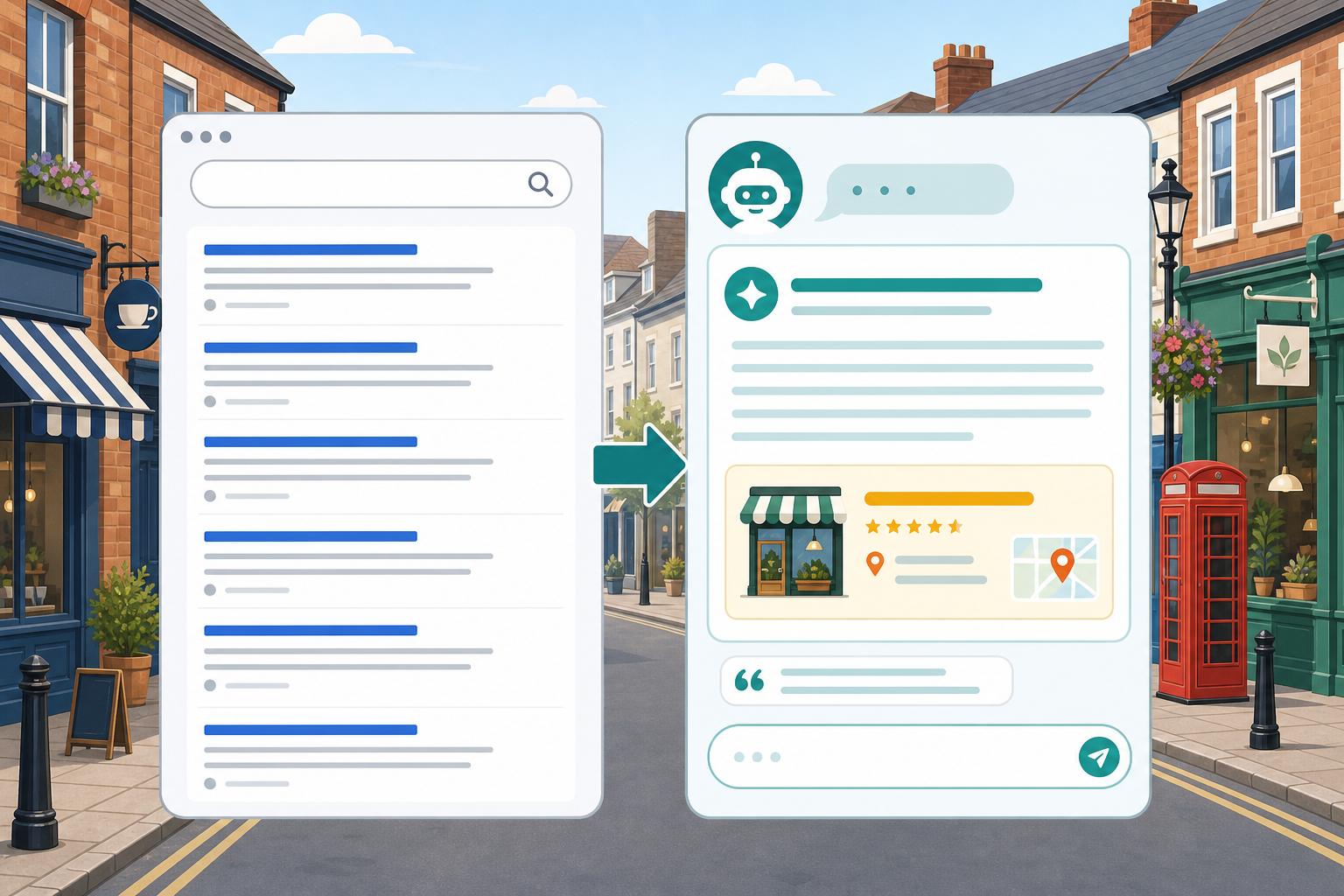
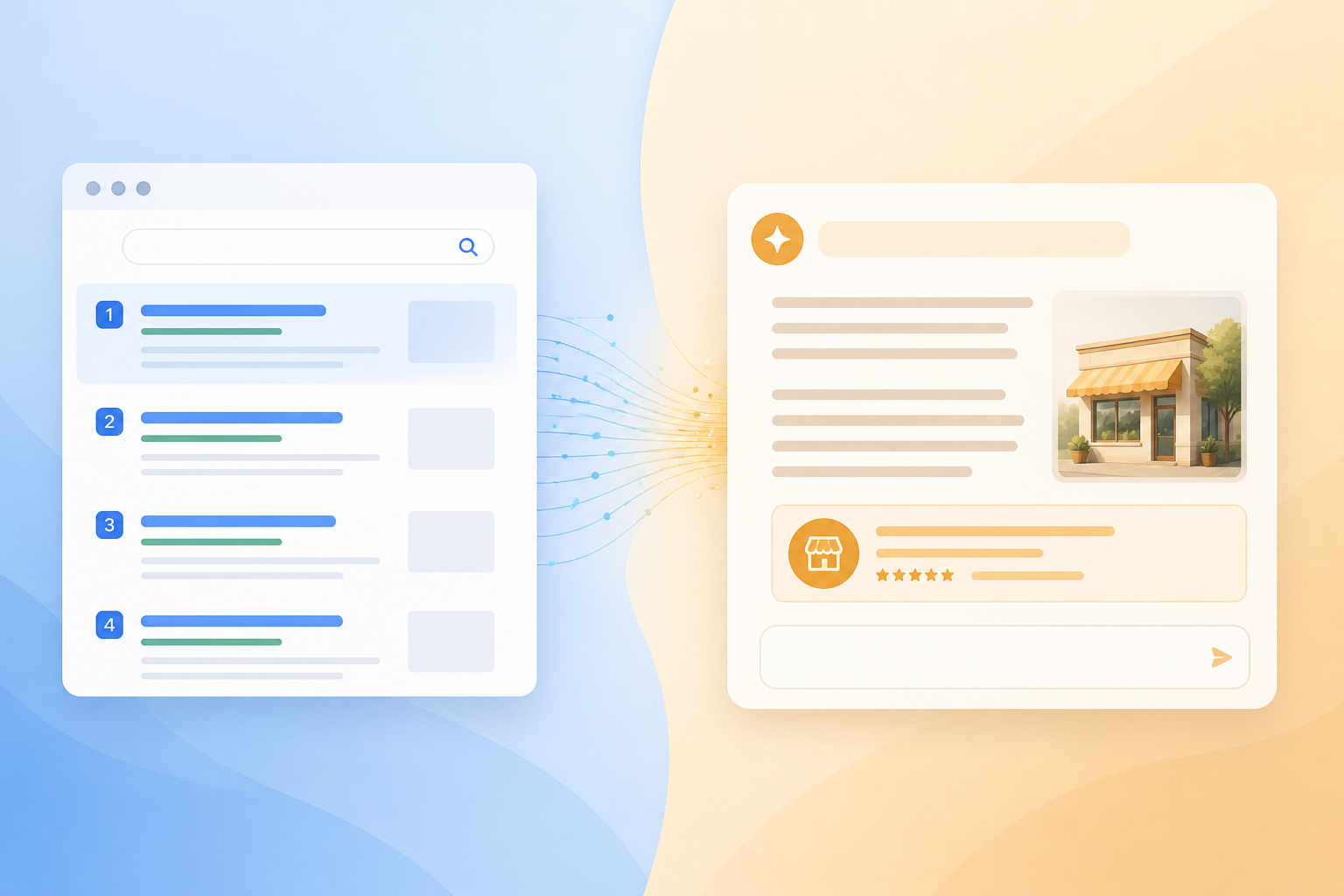
Traditional SEO optimises for a ranking position in a list of ten blue links — keywords, backlinks, meta descriptions, and the mechanics you've probably spent years getting comfortable with. AI SEO, sometimes called generative engine optimisation, works differently because it focuses on being the answer itself, or being cited within it, rather than occupying a slot on a results page that a human scrolls through.
It's worth being precise here because not all AI systems work the same way. Retrieval-based tools — Perplexity, Microsoft Copilot, Google's AI Overviews, and ChatGPT when browsing is switched on — pull live content from the web at the moment of a query and can cite sources directly. A base language model without live retrieval, by contrast, draws only on what it learned during training. That information may be months or years out of date, and the model won't reference your site unless your business happened to feature in its training data.
This distinction matters to a small business. You have real influence over retrieval-based answers through the steps below, but far less control over what a model “remembers” from training.
Where retrieval is involved, the AI system synthesises a response from crawled content, structured data, review signals, and third-party mentions, then presents that synthesis as a confident, conversational answer. Based on the AI-generated answers I've reviewed for clients, share of voice — how often your business appears relative to competitors across a consistent set of questions — is a more useful practical metric to track than keyword density. It isn't an official ranking factor published by any AI company; it's a tracking concept I use to make progress measurable, and I'd suggest treating it that way.
This is why local AI visibility is emerging as a discipline distinct from local SEO as most business owners currently understand it. A business can rank well in Google Maps and still be largely absent when someone asks an AI assistant for a recommendation in the same category. Google's local pack and an AI-generated answer draw from overlapping but meaningfully different sets of signals. Strong Google Business Profile performance does not automatically transfer to strong AI search visibility.
Your Weekend AI SEO Schedule
To make this genuinely doable in a weekend, rather than an open-ended list of good intentions, here's roughly how I'd allocate the time. Adjust it for your own business, but treat these as realistic targets, not a race to finish early.
Saturday morning (2–3 hours): Step 1, technical legibility
- Check robots.txt and basic crawler access (20 minutes)
- Check for noindex tags, login walls, and sitemap issues (30 minutes)
- Spot-check how your top three pages render without JavaScript (30 minutes)
- Add or fix headings and structured data on your homepage and top two service pages (1 hour)
- Minimum viable version if you're short on time: just the robots.txt check and the headings fix.
Saturday afternoon (2–4 hours): Step 2, customer questions
- Pull real questions from sales calls, emails, autocomplete, and competitor FAQs (1 hour)
- Draft plain, factual answers to 15–20 questions (1–2 hours)
- Publish them as an FAQ page or embed them within service pages (1 hour)
- Minimum viable version: ten questions answered plainly beats twenty half-finished ones.
Sunday morning (1–2 hours): Step 3, consistency audit
- List every place your business is listed online (30 minutes)
- Fix mismatches on your five highest-authority listings first (1 hour)
- Minimum viable version: fix your Google Business Profile, your website, and one trade directory.
Sunday afternoon (1–2 hours): Steps 4 and 5, measurement and tracking setup
- Run your top ten questions across ChatGPT, Gemini, Perplexity, and Copilot, logging results in a simple table (1 hour)
- Repeat two of those questions to sanity-check consistency (20 minutes)
- Set a recurring weekly reminder to repeat this check (5 minutes)
By Sunday evening, you should have a more legible site, a genuine FAQ section, cleaner business listings, a documented AI search baseline, and a habit in place to keep measuring. That's the realistic version of “done” for a weekend project — not perfection, but a structured start you can build on.
Step 1: Make Sure AI Search Can Read Your Website
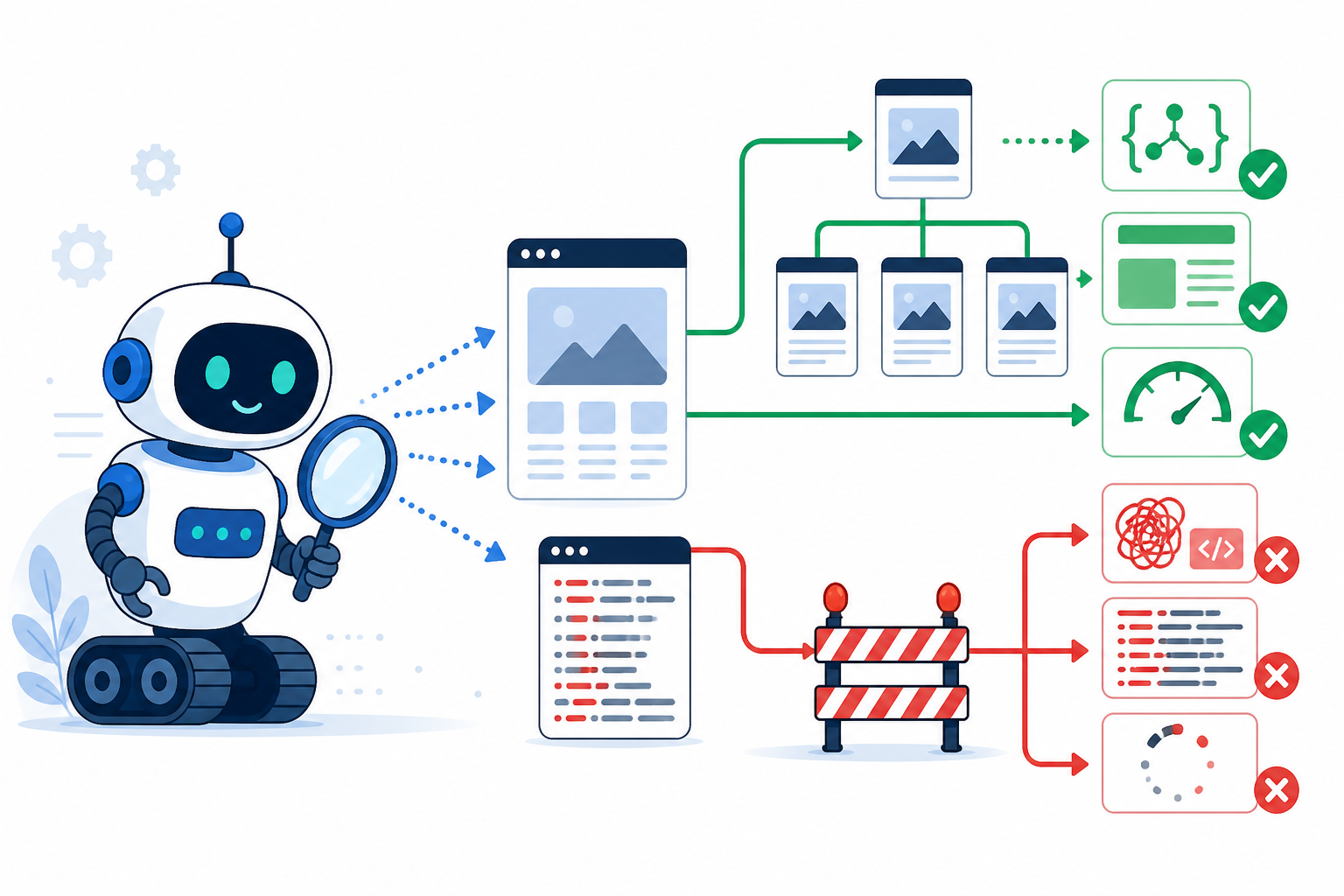
Before you can appear in an AI-generated answer, the underlying systems need to be able to crawl and parse your website in the first place. Allowing a crawler onto your site doesn't guarantee that your content will be used, trusted, or cited; it simply removes one barrier. I've audited enough small business sites to know that many are unintentionally blocking or confusing the crawlers they would actually want visiting.
- Check your robots.txt file for directives blocking AI crawlers such as GPTBot, ClaudeBot, PerplexityBot, and Google-Extended. These aren't identical in what they do — Google-Extended, for example, controls whether Google can use your content for certain generative features rather than acting as a general-purpose indexing crawler. Crawler names and policies also change as platforms evolve, so check current documentation rather than relying on a fixed list. Some site builders and plugins add blanket blocks by default, often without the business owner realising.
- Confirm your core service pages are accessible. Check for accidental “noindex” tags, password protection on pages that should be public, server or firewall rules blocking bot traffic, and a working XML sitemap. Also check whether key content loads without heavy JavaScript rendering, since some AI crawlers still struggle with content that only appears after scripts execute. A “view source” check will show you roughly what a crawler receives, which may be very different from what a browser displays.
- Add clear, direct headings and short factual sentences near the top of key pages. In my experience, AI systems extract meaning more reliably from direct statements than from marketing prose. A heading such as “Emergency Plumber in Manchester, Available 24/7” does more work than three paragraphs of brand storytelling before you get to the point.
- Add structured data for your business type, services, and location. Schema markup is a well-documented way to give AI systems and search engines an explicit, machine-readable description of what you do. It isn't a guarantee of citation, but it removes ambiguity that could otherwise work against you, and it costs nothing to implement correctly.
- Run a basic AI legibility check yourself, using the four points above as your checklist. A thorough manual pass will catch the majority of common technical blockers I typically encounter on small business websites, even without specialist tooling. Automated tools exist to do this on an ongoing basis, including ours at MentionOwl, but the manual version is a genuinely complete starting point.
Step 2: Answer the Questions Customers Ask Before Buying
If I had to rank these five steps by likely impact for most small businesses, this is the one I'd put first. It requires no technical skill, only honesty and a bit of legwork.
Start by building a genuine list of questions a prospective customer might type into ChatGPT, Perplexity, or a search engine's AI overview before choosing a business in your category. Don't guess from your desk. Good sources include your last twenty sales calls or enquiry emails, the objections customers raise before booking, Google's autocomplete suggestions and “People also ask” boxes for your services, and the FAQ pages of two or three competitors.
A worked example for a boiler engineer might include:
- “How much does a boiler service cost in Manchester?”
- “Is it worth getting a boiler service every year?”
- “Should I call a plumber or a boiler engineer for a leak?”
- “What's the difference between a combi and a system boiler?”
Aim for 15 to 20 questions that reflect the real range of what runs through someone's mind before they commit.
- Write dedicated, honest answers to each question directly on your website — ideally as a proper FAQ page or within relevant service pages, rather than burying them inside a blog post.
- Avoid vague marketing language wherever possible. In my review of cited versus ignored content, AI systems more often repeat plain factual statements. “We charge £45 for a standard boiler service in Manchester” is easier for a model to lift and restate confidently than “competitive rates”, which gives it nothing concrete to work with.
- Cover comparison-style questions, even uncomfortable ones. If customers ask whether a plumber or specialist boiler engineer is better for a leak, address that directly rather than avoiding the topic.
- Start manually. Answering 15 to 20 core questions in a focused afternoon will give most small businesses a strong foundation. Tools such as ours can automate ongoing question discovery and testing, but the manual version is a complete starting point on its own.
Step 3: Keep Your Business Information Consistent Online
AI systems appear to cross-reference multiple sources before stating a fact with confidence, and inconsistency across those sources can quietly undermine that confidence. Consistency alone won't make an AI recommend you; it removes friction rather than creating a reason to choose you.
- Audit your core business details: business name, address, phone number, website URL, opening hours, and service description. Check them across your website, Google Business Profile, relevant directories, and social profiles. Even small mismatches can become a problem when a model is trying to corroborate who you are.
- Prioritise your effort. Not all directories carry equal weight. Your Google Business Profile, your own website, and one or two authoritative industry-specific listings — a trade body directory, for instance — matter more than a long tail of low-quality or duplicate listings. If you find old, abandoned, or duplicate listings on minor directories, it is often better to remove or consolidate them than maintain them indefinitely.
- Update outdated citations on directories such as Yell and Bing Places, as well as any industry-specific listing sites relevant to your trade. These may feed into sources some AI systems draw from. I've seen AI SEO gaps trace back to a directory listing left untouched for years, although I'd stop short of claiming a single fix moves the needle on its own; the effect is cumulative.
- Treat consistency as a trust foundation. It removes a reason for an AI system to hesitate or omit you, rather than actively pushing you to the top of an answer. The businesses I've seen do well combine clean, consistent information with genuinely useful content and real customer reviews.
Step 4: Check How Your Business Appears in AI Answers
You can't improve what you haven't measured, and this step gives you your first real data point. A single query run once tells you very little, however. AI outputs vary between runs and platforms, and they can also depend on location settings, login status, and how the question is phrased. Treat any one check as a data point, not a verdict.
- Ask ChatGPT, Gemini, Perplexity, and Copilot the exact questions your customers would ask, phrased naturally rather than as SEO keyword strings. For each question, log the date, platform, login status, location setting, exact wording, whether your business appeared, its position in the answer, whether it was cited with a link, and the general sentiment. A simple table works well:
| Date | Platform | Question | Mentioned? | Position | Cited? | Sentiment | Competitor mentioned |
|---|
- Repeat each question two or three times across different sessions before drawing a conclusion. One run where you don't appear isn't evidence of absence, and one run where you do appear isn't evidence of a stable win.
- Run the same questions for two or three direct competitors to establish a starting share of voice. This baseline matters more than most business owners expect. I've had clients assume they were doing reasonably well who discovered, after checking properly, that a competitor appeared consistently across the same questions while they rarely did.
- Recognise that this gets tedious at scale. Repeating these checks across several platforms, with multiple runs for reliability, several times a week is hard to sustain by hand. Tools such as MentionOwl are designed to automate this monitoring. That said, even a simple version of the table above, updated weekly, will tell you more about your genuine AI SEO progress than a traditional ranking report can, because it measures what actually matters: what AI search systems say about your business, not just where you rank.
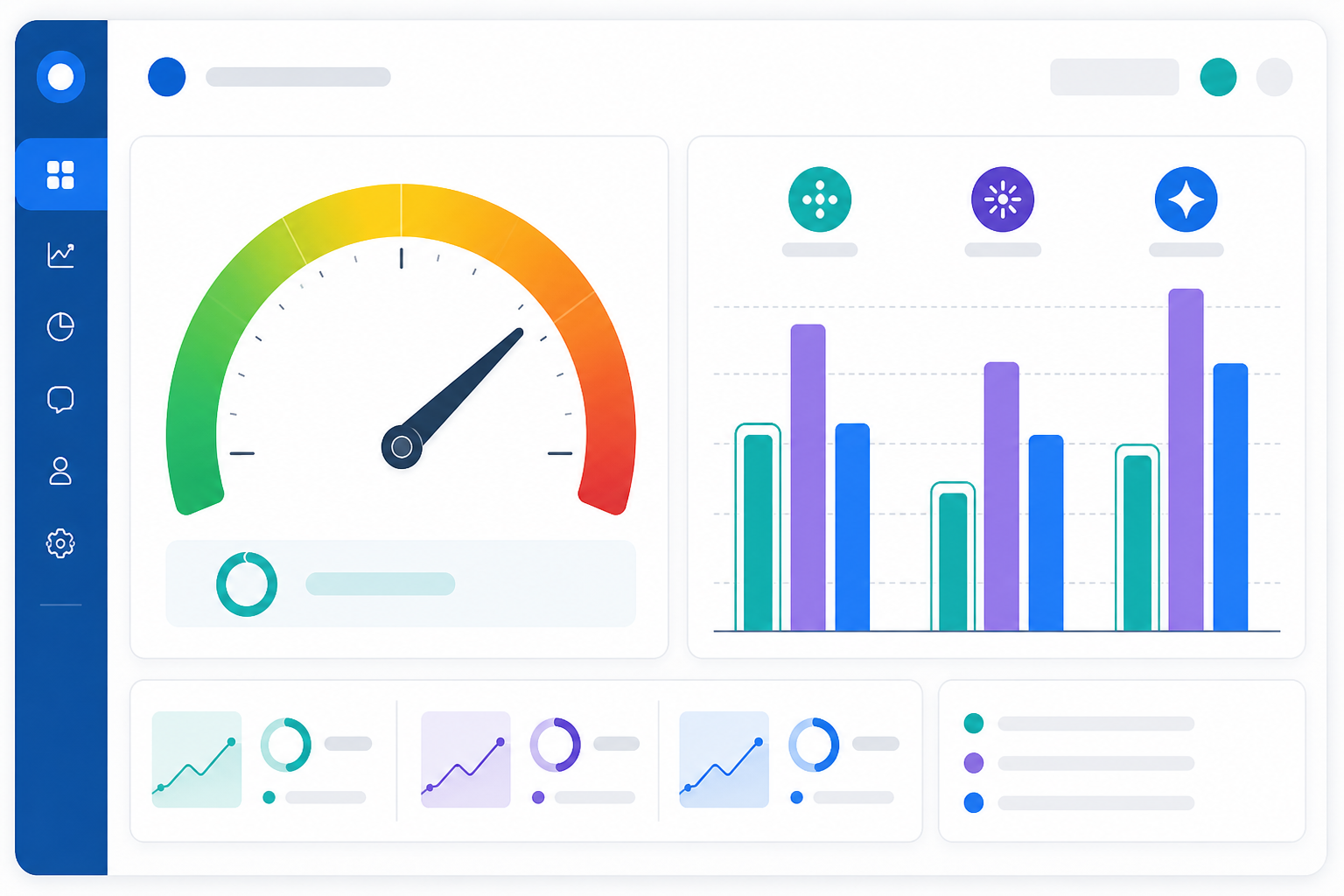
(Illustrative example only — visibility scoring methods vary between tools and there is no single official metric published by any AI platform.)
Step 5: Track Local AI Visibility Over Time
Here's a distinction that trips up many small business owners coming from traditional SEO: Google rankings tend to move gradually, giving you time to notice and adjust. AI-generated answers can shift week to week as models update, retrieval sources change, or platforms adjust which citations they trust for a category of question.
This volatility is why a single check, however thorough, isn't enough. Re-run your core question set weekly using the same table format from Step 4. Pay close attention to sentiment and citation position rather than simply whether you appear at all. A business mentioned last in a lukewarm tone is in a genuinely different position from one recommended first and enthusiastically, even though both technically “appear”.
Add two columns to your tracking table over time: what changed on your website or listings that week, and what changed in the AI answer. This is the closest thing to cause-and-effect evidence you'll get, since AI platforms rarely publish ranking explanations in the way Google occasionally does through its own documentation.
Competitor tracking matters here too. A competitor updating their FAQ page, fixing a technical issue, or gaining fresh reviews can shift an AI recommendation away from you within days, often without any visible warning sign on your end. Tools can automate this ongoing monitoring, but the underlying discipline matters more than any specific tool: consistent tracking, not a one-off fix, is what separates businesses that stay visible in AI search from those that get a brief bump after a website update and quietly fade back into obscurity.
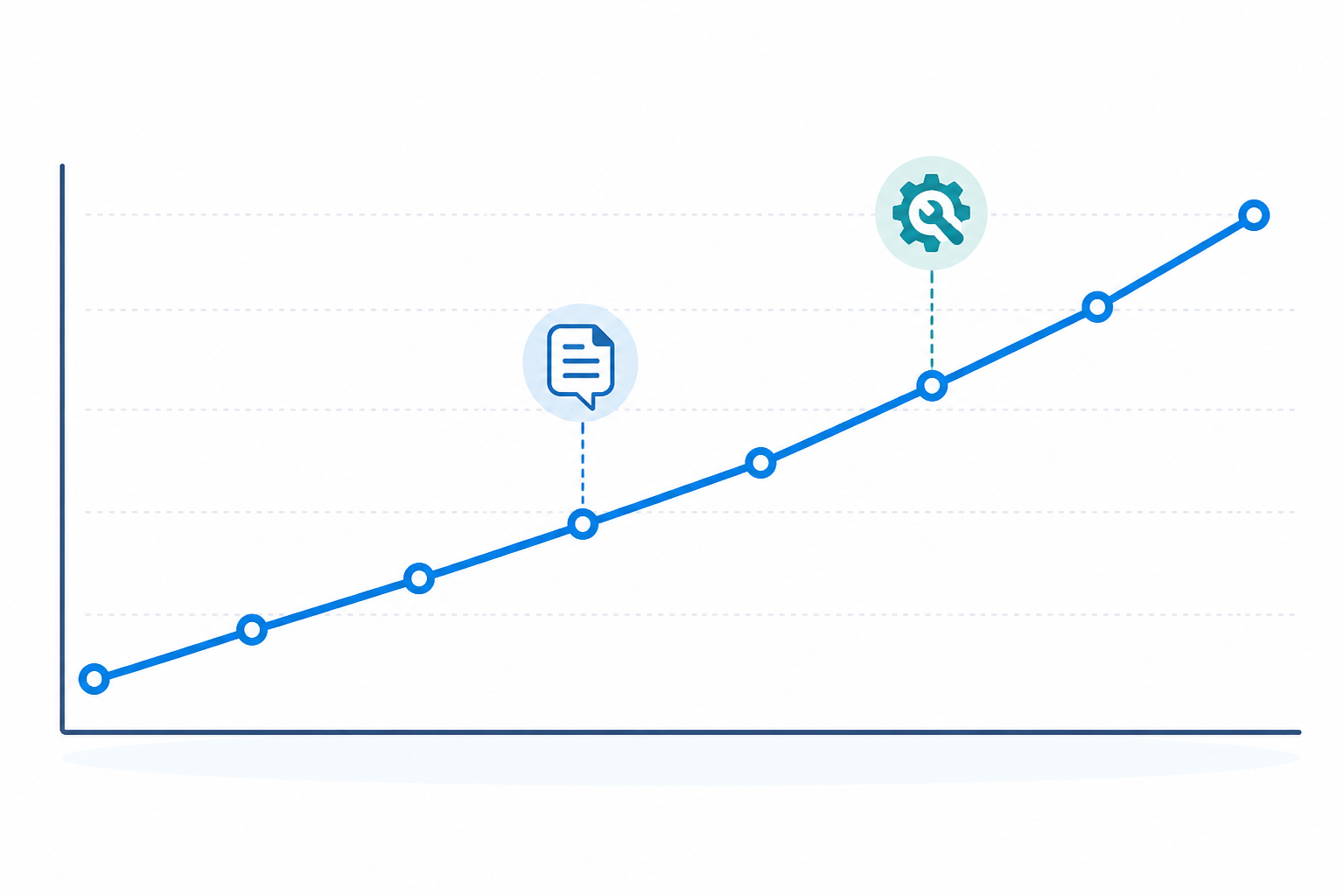
(Illustrative example only; real progress is rarely this linear, and dips are normal as competitors also make changes.)
Frequently Asked Questions About AI SEO for Small Business
Do I need a big budget to do AI SEO for my small business?
No. The five steps in this plan — website legibility, FAQ content, consistency audits, manual AI checks, and basic tracking — cost nothing but time. Paid tools, including ours at MentionOwl, can automate ongoing monitoring so you're not manually querying several AI platforms every week, but the foundational work is entirely doable over a weekend without agency fees. If you consider paid tools, check current pricing and trial terms directly, since these can change.
Where should I start as a small business owner with no technical background?
Start with Step 2, not Step 1. Writing plain, honest answers to the questions your customers actually ask requires no technical skill and, in my experience, often produces the most noticeable early improvement. It directly feeds the content AI systems have to work with. Save the more technical legibility checks for when you're ready to look at your site's code or bring in a developer for an hour or two.
How is AI SEO different from what I'm already doing for Google?
Traditional SEO optimises for a ranked list of links that a human clicks through. AI SEO optimises for being part of the answer an AI system states directly, often without the user ever visiting your site. Structured data, direct factual statements, and cross-source consistency tend to matter more here, while backlink volume and keyword density matter comparatively less. They have not disappeared, however, since Google's own AI features still draw partly on traditional ranking signals.
Do I need to let every AI crawler access my website?
No, and allowing crawlers does not guarantee that your business will be recommended. AI systems weigh a wide, sometimes opaque mix of signals, and allowing crawlers simply removes a barrier rather than creating an advantage. That said, blocking major AI crawlers outright generally makes it harder for retrieval-based systems to find and cite you. Check your current settings even if you later decide, for competitive or content-licensing reasons, to restrict some deliberately.
How long before I see AI recommending my business?
This varies significantly by category, competition, and how thoroughly each step is completed, so treat any timeline as a rough guide rather than a promise. In the small businesses I've tracked, some early signal — appearing in an answer where you previously didn't — has often shown up within a few weeks of fixing legibility issues and publishing direct-answer content.
Meaningful, consistent share-of-voice gains against established competitors typically take longer, often two to three months of sustained effort, particularly in competitive local categories. Results can also plateau or dip as competitors respond in turn.
Related Articles
AI SEO vs Traditional SEO: What Small Businesses Should Know Before 2026
Confused about AI SEO vs traditional SEO? I break down the data on how ChatGPT, Gemini and Perplexity recommend businesses differently from Google, pl

Is Your Store Missing From AI Shopping Recommendations? How to Check and Fix It
Improve AI visibility for your e-commerce store. Learn how AI search recommends products, test ChatGPT, and keep your UK brand on shopping shortlists.
Create content like this automatically
Scribe uses AI to generate high-quality blog posts that engage your audience and drive traffic.