How DTC Brands Time Launches Using Competitor Ad Data: A Practical Framework

How Ad Intelligence Helps DTC Brands Choose Smarter Launch Windows
The smartest DTC brands don't pick launch dates in a vacuum. They check what competitors are actively ramping up, testing, or scaling in their ad accounts first. By watching week-over-week changes in competitor ad volume, creative testing, and spend signals, you can tell the difference between a quiet window worth entering and a crowded moment when a rival is about to flood the market with a bigger budget than you can match.
I've seen this play out more times than I can count: a brand spends months perfecting a product, picks a launch date based on internal readiness, then watches its carefully planned campaign get buried because a bigger competitor happens to be scaling a promotion that same week. It's not bad luck. It's a blind spot, and it's one you can avoid with the right ad intelligence in place.
This post lays out a practical framework for using competitor ad data to time your launches better. Instead of guessing, you read the signals competitors are already putting out across their ad accounts.
Why launch timing shouldn't happen in a vacuum
Most brands plan launches around internal factors: inventory readiness, marketing calendars, seasonal hooks, or simply when the creative team finishes the assets. That all makes sense on paper. The problem is that your customer's attention isn't just competing with your own history. It's competing with every other brand fighting for the same feed space that week.
A launch that looks perfectly timed on your calendar can land in the middle of a competitor's biggest promotional push of the quarter. You might have the better product, sharper creative, and stronger offer, but none of that matters as much if you're bidding into an auction where a rival has just tripled its budget and flooded Meta, Google, and TikTok with fresh creative.
Ad intelligence gives you the missing half of the picture: what the market is actually doing while you're planning. This isn't about copying competitors or chasing every small move. It's about making sure your launch date reflects what's happening in the market, not just what's on your internal roadmap.
Reading competitor ad ramp-up as a launch-timing signal
Competitor ad activity rarely comes out of nowhere. Before a major campaign goes live, there are usually tells, small trackable signals that show up in the weeks beforehand. The trick is knowing what to look for and tracking it consistently, rather than checking once and treating that snapshot as the full picture.
A few patterns worth watching:
- A sudden jump in active ad count. If a competitor typically runs 5–8 ads and that number climbs to 20 or more, something is likely brewing. It's often an early sign of a bigger campaign on the way.
- New creative variants appearing in quick succession. This usually means a testing phase, where the brand tries different hooks, offers, or angles before putting more budget behind a winner.
- Ads that stay live and unchanged for weeks. Counterintuitively, this can be a stronger scaling signal than constant creative churn. If a competitor found an ad that works, they may leave it running while quietly increasing spend behind it.
- Week-over-week changes. Tracking what's new, paused, and still running turns competitor monitoring into an actual pattern you can follow, instead of a guess based on what you happened to notice on a Tuesday afternoon.
A real example: if a competitor quietly builds up 15 new ad variants over three weeks, that's rarely a coincidence. It's likely pre-launch testing meant to validate messaging before they commit real spend. The main campaign, and the attention spike that comes with it, could be right around the corner.
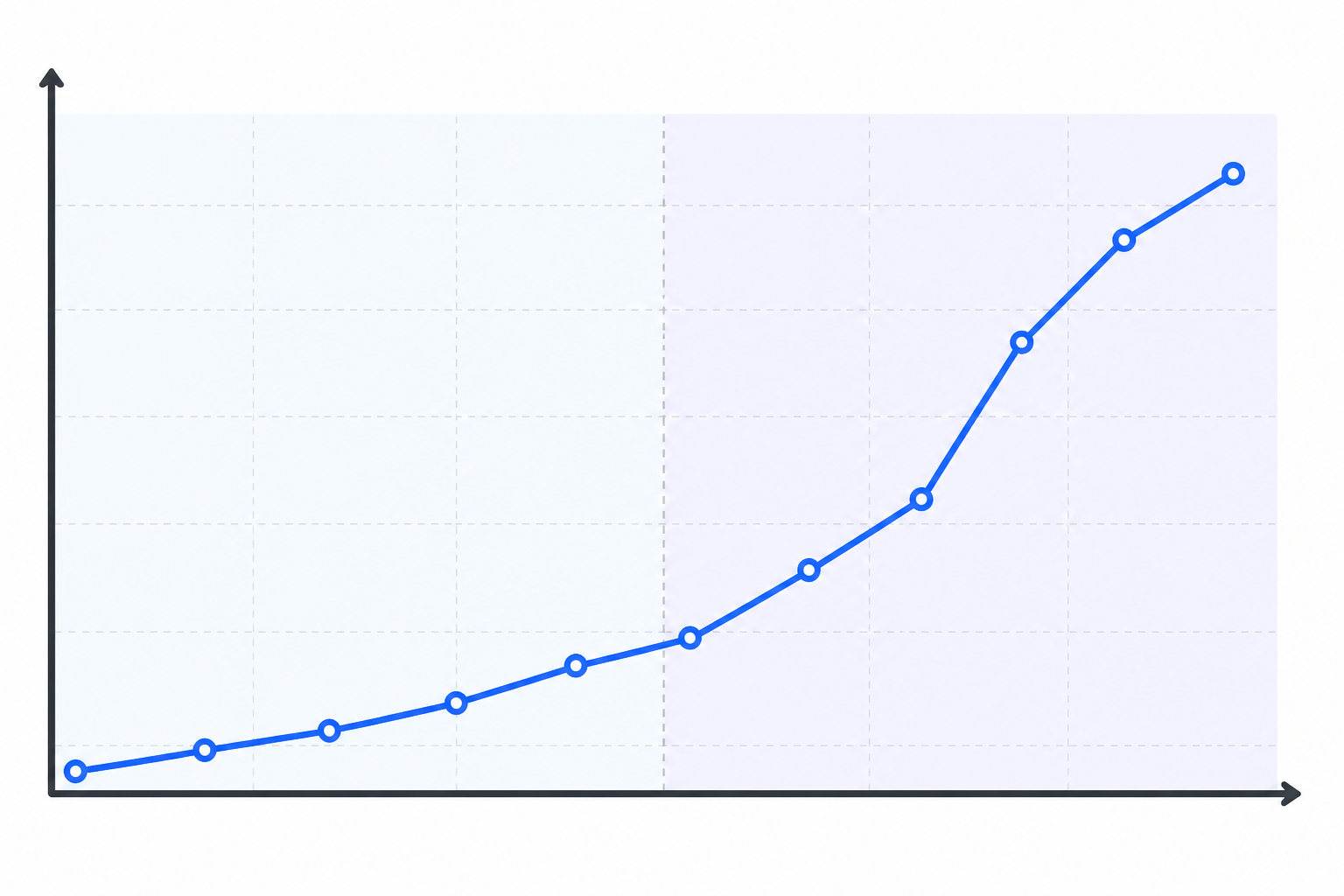
A more reliable way to read ramp-up is to look at it in layers rather than fixating on one number:
- Creative preparation: more new ads, hooks, formats, or variants showing up.
- Distribution expansion: new placements, channels, audiences, or markets getting added.
- Commercial pressure: sharper discounts, urgency language, retargeting, or stronger calls to action.
When two or more of these move at once, that's stronger evidence than any single metric on its own.
Avoiding head-on collisions with bigger advertising budgets
This is the part that hits your costs directly if you get it wrong. When a well-funded competitor scales a promotion, it can temporarily soak up a disproportionate share of impressions in your category. Auctions on Meta and Google don't care about fairness. They respond to bids, relevance, and budget. If a competitor suddenly spends three times its normal budget, your ads are competing in a more expensive, noisier auction than they were the previous week.
Launching your own campaign into that same window can mean higher CPMs, slower learning phases, and creative that never gets a fair shot at finding its audience. The problem might not be your creative at all. It might just be timing.
This is where an ad intelligence tool that tracks creative volume across Meta, Google Ads, TikTok, and LinkedIn earns its keep. Instead of finding out after the fact that a competitor flooded the market, you can spot the scaling activity earlier and adjust before you commit your own budget.

A practical rule of thumb: if a key competitor's active ad count has roughly doubled over the past two weeks, that's probably not the best week for your own major push. It doesn't mean cancel the launch. You could shift it a week or two, tweak the offer, or lean into a channel where that competitor isn't currently scaling.
None of this means avoiding competition entirely, which isn't realistic in eCommerce anyway. It's about dodging the worst possible timing, when the odds are stacked against your campaign before the ads even go live.
Finding gaps in the competitive advertising calendar
Watching for competitor scaling also helps you spot quieter periods. Most categories have predictable lulls: post-holiday stretches, mid-quarter slowdowns, or gaps when competitors pull back to plan their next push.
You're unlikely to spot these gaps by watching just one competitor. Tracking several at once can show you when the wider category goes quiet, which tends to create a stronger launch opportunity. If your three closest rivals all have low, stable ad counts and aren't pushing much new creative, the category's attention is probably more up for grabs.
A gap doesn't mean no one is advertising. Brands rarely go completely dark. It means no one is scaling aggressively, so your launch has room to breathe instead of getting drowned out.
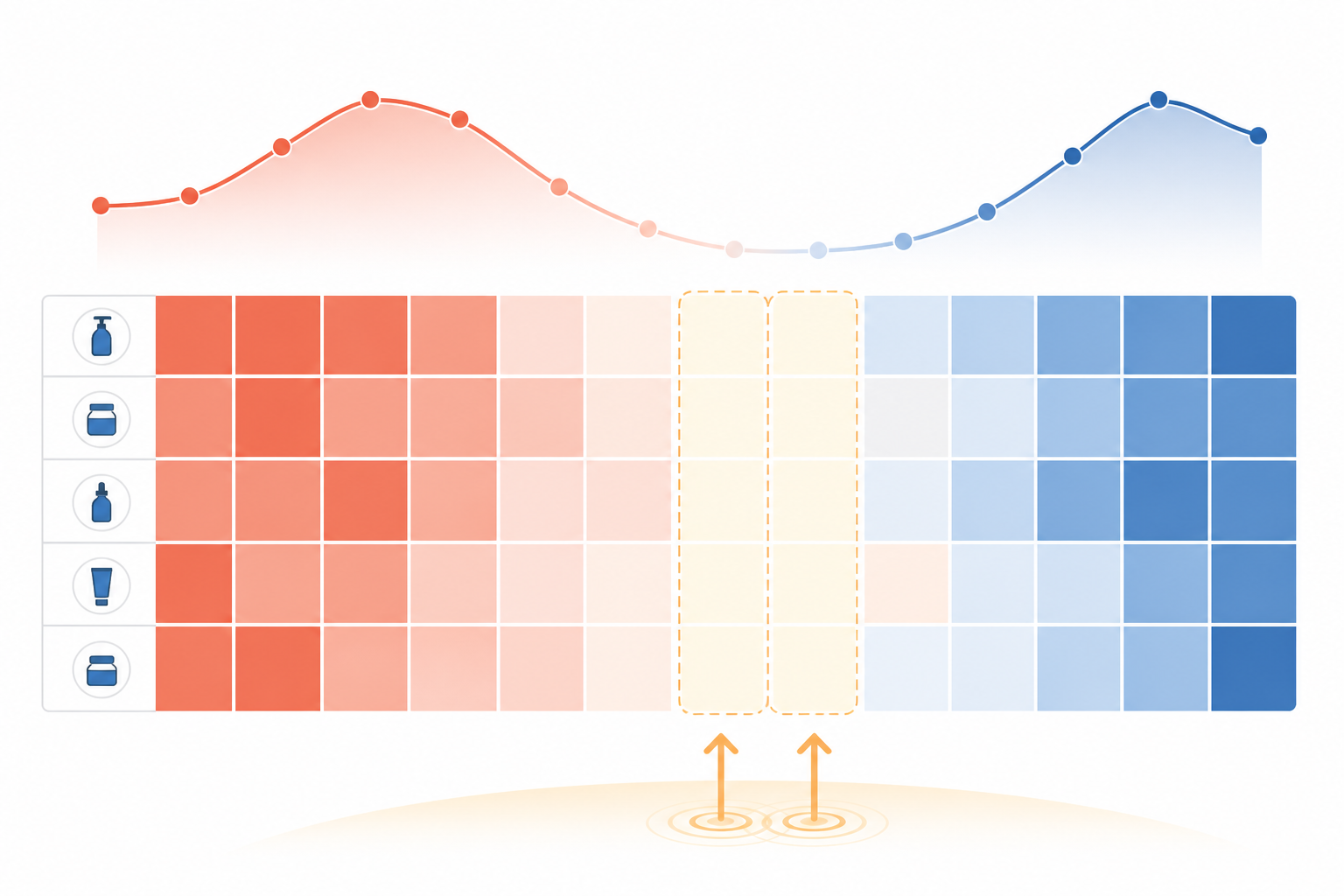
Historical ad archives help here too. If a competitor scales back every year in the same month, right after its Black Friday campaign, for example, that's a pattern worth factoring into your own launch calendar. UK DTC categories like apparel and fitness often see creative testing drop in early January after the Christmas sales rush, which opens up a lower-noise window for a new campaign.
Manually checking five different ad libraries every Monday morning isn't realistic for most marketing teams. This is where Rival Ads' weekly digests help, surfacing potential gaps automatically instead of you cross-referencing the Meta Ad Library, Google's Ads Transparency Center, and TikTok Creative Center by hand.
A simple pre-launch competitor ad check
To build competitor ad intelligence into your launch process, run through this before you lock in a date:
- List your 3–5 closest competitors and make sure they're being monitored across Meta, Google Ads, TikTok, and LinkedIn.
- Check current active ad counts. Is anyone scaling compared with their usual baseline?
- Review the past few weeks of creative changes. Lots of new variants suggests testing; stable, unchanged creative might mean an established campaign that's already found traction.
- Read the ad copy and check the offers. Are competitors signalling a seasonal push, a new product, or a big discount event?
- Cross-reference what you find with your launch date. If you spot a potential collision, consider shifting by a week or two.
- Set up a recurring check. A weekly email digest or monitoring process keeps competitor analysis part of your launch workflow rather than a last-minute scramble.
Once you've got monitoring set up, this whole process takes around 20 minutes. Without it, you're relying on gut instinct, or hoping you happen to notice a competitor's ads in your own feed, and that's not a strategy.
How ad intelligence turns launch timing into a repeatable process
Doing this manually means checking several ad libraries every week, comparing screenshots, and trying to remember what a competitor's ad account looked like three weeks ago. Most teams don't have time for that, especially while they're prepping their own launch.
That's the gap we built Rival Ads to close. It pulls active competitor ads weekly, including real creatives, exact copy, and links, without requiring you to connect any ad accounts. You give it a competitor's website, and it finds their presence across Meta, Google Ads, TikTok, and LinkedIn. From there you get week-over-week differences showing what's new, what's stopped, and what's still scaling.
The AI-generated strategic analysis, powered by Claude, helps interpret these changes too. It flags ramp-up patterns, likely launches, and scaling signals in plain language, so you're not stuck manually combing through a spreadsheet of ad counts trying to spot trends.
For agencies juggling multiple client accounts, whitelabel reporting turns this into something you can hand to clients directly, rather than keeping it as an internal tool nobody outside the team ever sees.
The goal here isn't reacting to every competitor move (that way lies burnout and reactive marketing). It's making launch decisions with real market context, so your campaigns land in windows where they actually have a fair shot at breaking through.
Frequently asked questions about competitor ad intelligence
Should I check competitor ad activity before launching a product?
Yes, ideally several weeks before launch rather than the day before. Checking early gives you time to adjust your launch date if a rival is ramping up a major campaign, instead of finding out after your budget is already committed.
How do I avoid launching against a competitor's big promotion?
Watch for a sharp jump in a competitor's active ad count or a wave of new creative testing. Both are early signs of a scaling campaign. If that pattern is building, shift your launch window by a week or two, or lean into a channel where the competitor isn't as active.
What signals show that a competitor is about to launch something new?
The clearest signals are a burst of new ad variants over a short period, changes to landing page links, and messaging that hints at a product reveal or limited-time offer. When a few of these show up together in a week-over-week comparison, a new campaign is probably close.
Do I need to monitor every competitor or just my closest rivals?
Start with your 3–5 closest competitors, but keep an eye on the wider category too. Sometimes the whole market goes quiet at once, and that category-wide lull can be the best launch window you get all quarter.
Related Articles
How to Read a Weekly Ad Diff Like a Senior Media Buyer
Learn the exact framework senior media buyers use to interpret weekly ad diffs—what new, stopped, and scaling ads really mean for competitor strategy.

What Your Competitor's Ad Spend Signals About Growth Plans (And How to Read Them)
Decode competitor ad spend signals to spot funding, expansion, and strategy pivots early, with a practical ad intelligence framework for CMOs.

Create content like this automatically
Scribe uses AI to generate high-quality blog posts that engage your audience and drive traffic.