The Ultimate Baby Registry Checklist for South African Parents (Trimester by Trimester)
14 min read
Loading...

Meta description: Use this trimester-by-trimester baby registry checklist for South African seasons, climate and local stores. Discover newborn essentials and baby shower gifts you'll actually use.
If you've just started Googling “baby registry checklist” at 11pm with a cup of rooibos going cold beside you, take a breath. You don't need to figure everything out tonight.
The best baby registry checklist isn't one giant list you tackle in a single weekend. It's built trimester by trimester, so you can add big-ticket items early, nursery and travel gear in the middle, and hospital bag essentials near the end. This matters especially in South Africa, because a baby due in July in Cape Town has very different needs from one arriving in January in Durban. Rain gear and warm layers versus sun hats and lightweight muslins: the season your baby arrives in changes almost everything on your list.
This guide walks you through how to build your baby registry one trimester at a time, with a practical inventory at each stage. You'll also find advice on newborn essentials, baby shower gifts, local South African brands and what to put on a baby registry.
I've seen it happen more times than I can count: an excited mum-to-be opens her registry to everyone at once, and three weeks later she's got five swaddle blankets, two wipe warmers and precisely zero nappies. Nobody's fault, really — guests tend to buy what catches their eye, and without structure, the cute stuff gets claimed while the genuinely useful items are ignored.
A structured, trimester-based approach solves this. It spreads out what you're asking for, so family and friends aren't bombarded with 80 items on day one. It also means big purchases — such as cots, car seats and prams — get flagged early, giving relatives with bigger budgets time to plan or even contribute together.
As you build your list, tag each item as:
If you're due in winter in Johannesburg, you may need warmer sleepsuits and a suitable swaddle weight. If you're expecting a Durban summer baby, you'll probably prioritise breathable cotton, sun hats and ways to keep baby cool rather than cosy. A baby registry checklist that ignores timing doesn't work as well in a country with several distinct climates.
This is part of why we built bababloom the way we did: one shareable registry that pulls from trusted local baby stores, where guests check out directly on the retailer's own site rather than through a middleman. It helps reduce duplicate gifts and guesswork.
The first trimester is rarely about buying. It's about research — quietly, in the background, probably while everyone around you still thinks you've just got a stomach bug.
Here's what to focus on when deciding what to put on a baby registry:
This trimester is low-pressure by design. You're laying the groundwork, not finalising a shopping cart.
Once the first-trimester fog lifts, it's time to get practical. This is usually when you build the foundations of your baby registry.
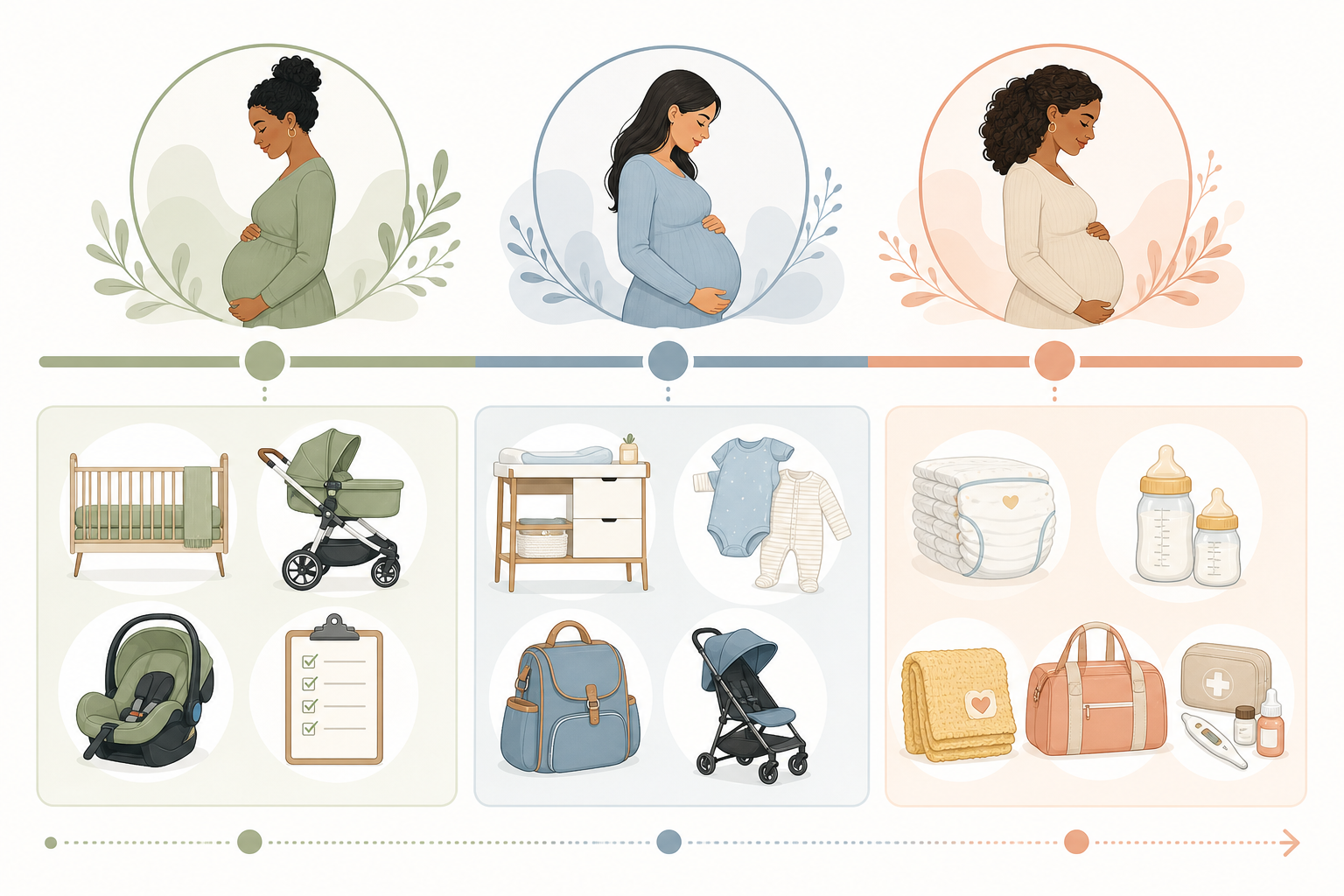
By the third trimester, you're not researching anymore — you're finishing. This is the stage when the small, practical items need to land on your baby registry, because they are the things you'll reach for during those first exhausted, wonderful weeks.
South African hospitals and birthing units vary considerably in what they provide. Call yours directly during the third trimester to ask exactly what's included and what you'll need to bring. Don't assume they'll provide much beyond basic medical supplies.
This is also baby shower season for many South African parents, so it's time to finalise and share your registry widely. Leave plenty of small, easy-to-buy baby shower gifts on the list too. Not everyone wants to — or can afford to — buy a cot, and a R150 pack of muslins lets distant cousins and colleagues contribute meaningfully.
Through our partnership with the Hatch Foundation, guests on bababloom can also add a donation alongside their gift, going towards newborn essentials for a mother who doesn't have a registry of her own. It's a small way for your celebration to ripple outward, if that appeals to you.
One thing I genuinely love about building registries for South African parents is how much good local talent there is once you start looking. When comparing options, weigh delivery lead time, returns policy and local service support alongside price.
| Category | Local Options to Consider | What to Compare |
|---|---|---|
| Nursery furniture | Local artisan workshops, plus Babies R Us and Baby City for ready stock | Delivery timelines, mattress fit, warranty |
| Travel gear, including prams and carriers | Our Baby, Chelino, Bugaboo (imported but locally serviced) | Boot fit, terrain handling, local spares availability |
| Skincare and toiletries | Pure Beginnings, Oh Lief | Fragrance-free options, sensitive-skin suitability |
| Reusable nappies | Biddykins, Bumbuns | Size range, absorbency, ease of washing |
| Clothing and blankets | Woolworths baby range, Naartjie, independent boutiques | Fabric weight for the season, sizing generosity |
| Gift registry platforms | Yuppiechef, Baby City, bababloom | Range of local stores, checkout experience |
| Pharmacy essentials | Dis-Chem, Clicks | Loyalty pricing, click-and-collect availability |
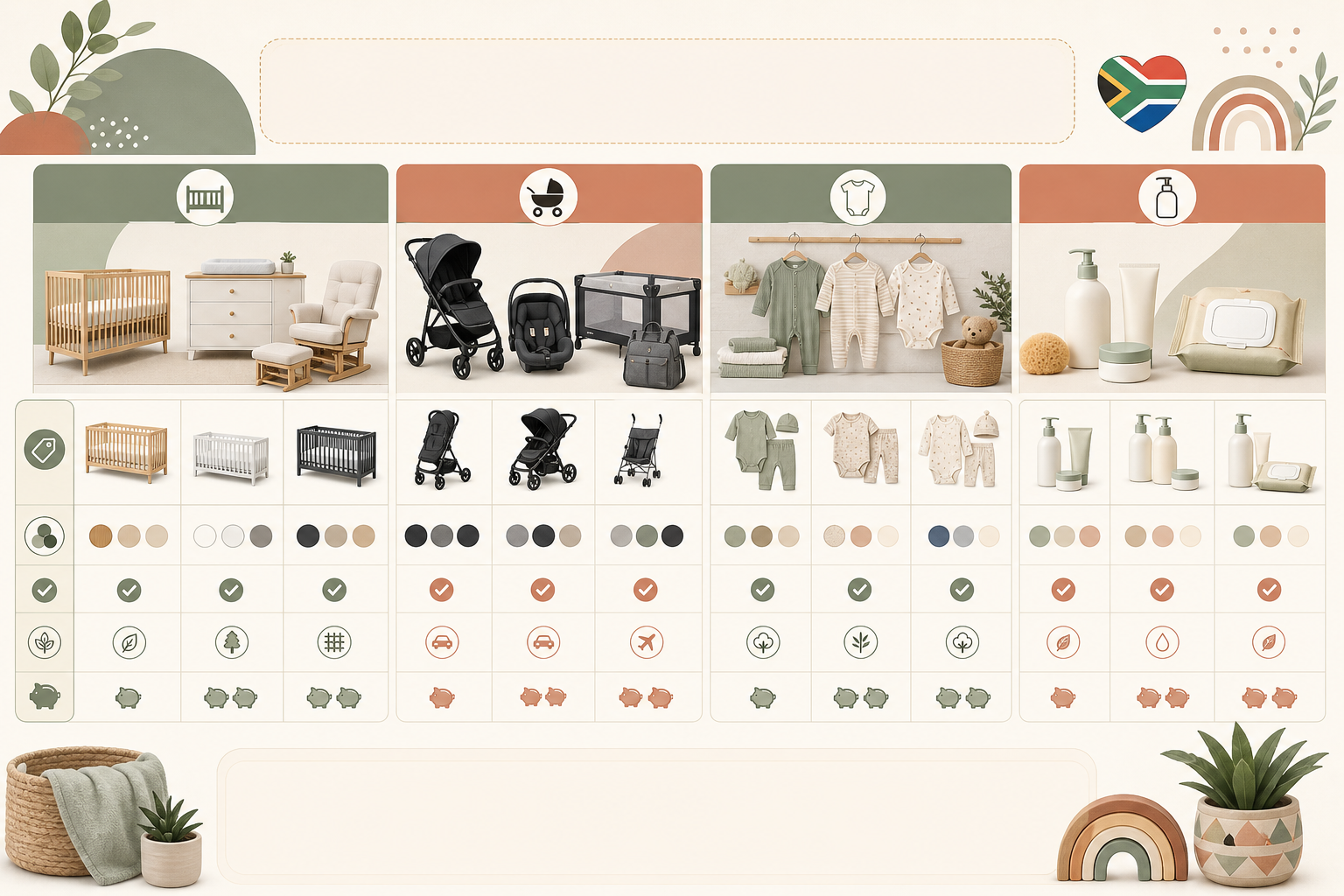
Buying local isn't just a feel-good choice. Many small South African businesses and artisans can offer quicker delivery than waiting weeks for something stuck on a container ship, simply because stock is already here. When you're nesting and want things sorted, that matters more than you'd think.
This is part of why bababloom exists: instead of hunting across 30 different websites for South African-made options, you can build one registry that pulls from multiple local stores at once — nursery décor, handmade clothing, skincare and travel gear in one shareable list.
This is a question I get asked constantly, and the honest answer depends mostly on your guest count. Too few items, and you may end up with duplicate, low-cost gifts because guests have nothing else to choose from. Too many, and your big-ticket requests get buried under 40 variations of baby socks.
A useful rule of thumb is to mix a handful of big-ticket items — such as a cot, car seat and pram — with a wide range of smaller items across different price points. That way, every guest, whether they have R150 or R3,000 to spend, can find a gift that feels right.
For a large baby shower with 50 or more guests, you may need around 100–120 items to provide genuine choice. For a smaller gathering of 15–20 people, 40–60 well-chosen items is often plenty. As one reference point, our own example registry includes around 100 gifts from roughly 30 local stores. Use this as a sense of scale, not a target to hit.
Most South African parents start quietly building a registry in the early second trimester, once the 12-week milestone has passed and energy levels return. You don't have to share it yet. Research and add items privately, then open the list to family and friends closer to your baby shower, typically around 28–32 weeks.
Your needs are the non-negotiables: a correctly fitted car seat, somewhere safe for your baby to sleep, nappies, season-appropriate clothing and basic feeding essentials. Wants include lovely extras such as designer nursery décor, a second pram for the car or luxury skincare sets. Add needs first, then include wants across a range of price points.
There is no fixed number. It depends on your guest list. A smaller shower may need only 40–60 items, while a larger one can comfortably support 100 or more, ranging from nursery furniture and travel gear to smaller R100 gifts.
Yes, and it's worth doing. Local baby shops and artisans often offer faster delivery and products suited to South African climates, compared with waiting weeks for imported goods. A registry platform in South Africa such as bababloom can help you curate products from local brands into one shareable list.
Be cautious. Car seats have expiry dates and can have hidden structural damage from an accident. If someone offers you a used seat, only accept it if you know its complete history, including whether it has ever been involved in a crash, and check the expiry label before use.
It varies widely by hospital and even by ward, so call ahead during your third trimester and ask directly. Most provide basic medical supplies but expect you to bring your own nappies, toiletries, clothing and postpartum comfort items.
Avoid buying in bulk. Many babies move out of newborn size within two to four weeks, so one starter pack is usually enough. You can order more once you know your baby's size and preferred brand.
It's reasonable to add one, even if you're undecided. Many parents who plan to breastfeed exclusively use a pump at some point, and it can be a practical gift for guests to buy.
Building a baby registry checklist trimester by trimester isn't about rigid rules. It's about giving yourself breathing room, giving guests clarity and making sure the items in your home match the season, climate and life you're walking into. Take it one trimester at a time. You've got this. 💛