How Multi-Product Companies Keep Support Tone Consistent Across Every Brand
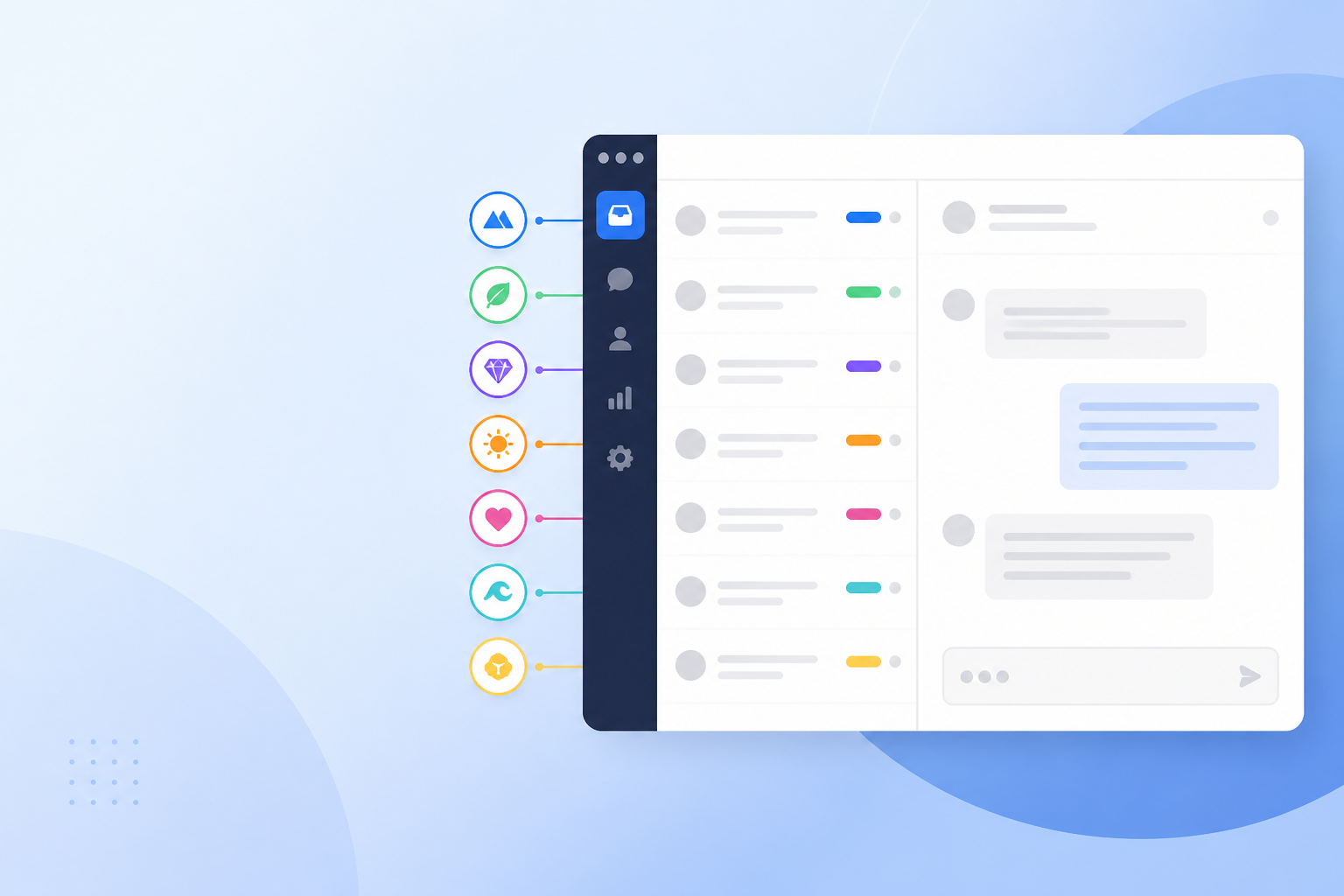
How a Shared Inbox Keeps Support Tone Consistent Across Multiple Brands
Meta description: Running support for more than one brand? Learn how a shared inbox, brand-specific canned responses, tone audits and clear governance keep every customer conversation on-brand.
If you're running customer support for more than one brand from a single team, you already know the weird little panic that happens when an agent answers a BrandA ticket in BrandB's voice. Maybe it's too casual. Maybe it's too stiff. Either way, it feels off—and customers notice, even if they can't quite articulate why.
Here's the thing: the companies that pull this off don't rely on tone-matching talent alone—they build systems for it. That means brand-specific canned responses stored in one shared inbox, internal notes agents can reference mid-conversation, and regular tone audits using tags and filters inside their help desk software. The goal isn't uniformity across brands; it's making sure each brand sounds consistently like itself, every single time.
This piece walks through the actual operating model: how to capture each brand's voice, how to guide agents in real time, how to check the work, and how to let personality bend without breaking. Think of it as four connected habits—capture, guide, check, improve—all living inside the same shared inbox rather than scattered across documents nobody opens. Let's get into how that works in practice, because “just train your agents better” isn't a real answer. It's a wish.
Why Tone Drifts Across Multiple Brands—even With Great Agents
I want to start here because a lot of support leaders assume tone drift is a hiring problem. It isn't. Even your sharpest, most detail-oriented agents will blend voices if you don't give them a system to prevent it. It's just how brains work.
Think about what you're actually asking an agent to do. One minute they're answering a playful, emoji-friendly ticket for a DTC skincare brand—“Ahh, so sorry your order's gone walkabout! Let's sort that right now 💛”. The next minute, they're switching to a formal B2B software client that expects zero exclamation points—“Thank you for flagging this. We've identified the cause and a fix will be deployed within 24 hours.” Two replies, ninety seconds apart, written by the same person. That's context switching, and it's mentally taxing even when you're barely aware it's happening. Do that a dozen times an hour, across three or four brands, and the voices start to bleed into each other. Not because the agent doesn't care, but because nobody can hold four distinct personalities in their head with perfect precision, ticket after ticket, all day long.
It gets worse with new hires and part-time support staff. If someone joined last month, they have no lived reference point for “how BrandX talks.” They weren't in the room when the tone guidelines were informally established. They're guessing based on vibes, and vibes aren't a system you can scale or audit.
And here's the real risk: without a shared inbox tying brand knowledge to the conversation itself, that knowledge lives in someone's head—usually the person who's been there longest. When they're on holiday, or worse, when they leave the company, the tone knowledge walks out of the door with them. Nothing was ever written down because nothing ever needed to be, until it did.
Tone drift is often invisible until it isn't. Everything feels fine internally until a customer screenshots a mismatched reply and posts it online, wondering why “the friendly brand” suddenly sounded like a legal disclaimer. By then, it's not a training issue any more. It's a trust issue.

Creating Brand-Specific Canned Responses in a Shared Inbox
This is where most teams should start, honestly. Canned responses get a bit of a bad reputation—people worry they sound robotic—but used well, inside a proper shared inbox, they're the backbone of consistent brand voice. They're not meant to replace human judgement. They're meant to give agents a reliable starting point so voice doesn't depend on memory or mood.
Here's how I'd build this out if I were setting it up from scratch:
Audit your last 50 conversations per brand. Don't guess at what your brand voice sounds like—look at what's already working. Pull recent tickets and pay attention to the phrases, greetings and sign-offs that got positive reactions. This is your raw material.
Write responses that actually reflect each brand's personality—and show your working. One brand might be warm and slightly cheeky. Another might be buttoned-up and precise. Here's what that looks like side by side for the same refund query:
Brand A (DTC, playful) Brand B (B2B software, formal) Voice in three words Warm, upbeat, a little cheeky Precise, calm, restrained Avoid Legal jargon, cold sign-offs Exclamation marks, slang Sample reply “Ah no, that's not on! I've popped your refund through—give it 3–5 days to land back with you. Sorry for the faff 💛” “Your refund has been processed. Please allow 3–5 business days for the funds to appear in your account. Do let us know if you have any further questions.” Resist the urge to write one “neutral” template and reuse it everywhere with a find-and-replace of the brand name. That's exactly how tone drift starts.
Store responses by brand or tag inside your shared inbox, with clear ownership. If canned responses are scattered across shared documents, spreadsheets or someone's bookmarks folder, agents will grab whatever's fastest—usually whatever's most familiar to them, not what's right for that brand. Keeping everything inside your customer support software, tagged and organised by brand, means the correct response is never more than a click away. Assign one owner per brand's response library—often the brand's account manager or a senior agent—who approves new templates and retires outdated ones.
Set a review date, not just a review trigger. Brand voice evolves. Give every canned response an expiry date (say, 90 days) so it gets a fresh look on a schedule, rather than a hasty rewrite only after something goes sideways. Mark each one “active”, “needs review” or “retired” so agents never accidentally use something stale.
Require a personalisation step before sending. A canned response should never go out completely untouched—agents should adjust the greeting and add one line specific to the customer's actual situation. This keeps the safety net of a template without the hollow feeling of a form letter.
A well-organised shared inbox turns canned responses from a shortcut into a genuine safeguard. It's the difference between hoping agents remember the right tone and knowing they have it in front of them, with clear ownership over who keeps it accurate.
Training Agents and AI Copilots on Each Brand's Voice
Canned responses handle the predictable stuff. But conversations get messy, and agents need more than templates—they need a working understanding of how each brand actually sounds when they're improvising.
A few things that genuinely help here:
- Build a one-page voice guide per brand, with real examples. Keep it simple: three words the brand is, three words it isn't—“warm, direct, a little witty” versus “corporate, cold, overly formal”—plus two or three sample phrases and two banned phrases. This takes twenty minutes to write and saves hours of correction later.
- Use internal notes in the shared inbox to flag quirks in real time. If a teammate notices BrandX never uses the word “unfortunately”, or always writes “got it” instead of “noted”, that should get logged as an internal note attached to the conversation—not mentioned once in a meeting and forgotten. Over a few months, these notes become a living style guide nobody had to sit down and write from scratch.
- Train AI copilots on brand-specific documentation, not one blended knowledge base. If you're using an AI-powered assistant to draft or suggest replies, feeding it a single generic knowledge base defeats the purpose—it will average out every brand's voice into mush. Separate the training material by brand, tag suggested replies with the brand they're intended for, and keep a human review step before anything goes out. The point isn't to remove the agent from the loop; it's to give them a better first draft to edit against the right voice guide.
- Pair new agents with a brand mentor. Someone who's owned that particular inbox the longest can catch tone issues faster than any written guide, especially in the first few weeks.
- Run short weekly tone check-ins instead of one big onboarding session. A single onboarding day rarely sticks. Five minutes every week, looking at a real example from that week, keeps brand voice fresh instead of theoretical.
None of this requires a massive training programme. It requires small, consistent touchpoints built into the team's actual workflow—which is exactly what good help desk software should support: not just a shared inbox for messages, but a shared memory for how your team talks, brand by brand.
Auditing Customer Conversations for Tone Consistency
Even with canned responses and training in place, you need a way to check your work. Tone consistency isn't a “set it and forget it” thing—it needs regular auditing, the same way you'd audit response times or resolution rates.
Here's a simple process, including a scoring approach, that works well for most teams I've seen do this successfully:
Score conversations against a simple 1–5 rubric. Rate each reviewed reply on greeting, formality level, vocabulary choice, empathy, sign-off and accuracy of any brand-specific claims (like returns windows or guarantees). A score of 4 or below on any category gets tagged “needs review” rather than left to gut feel. This turns “that sounded a bit off” into something you can actually track over time.
Tag conversations by brand and by tone flag as you go. Something as simple as “off-voice” or “on-brand” tags, applied in the moment by whoever's reviewing conversations, builds a searchable record over time. This only works if your team collaboration tools make tagging fast and frictionless—clunky tagging systems get abandoned within a week.
Pull a monthly report filtered by brand. Look for patterns, not just individual slip-ups. Is one brand consistently drifting more than others? Is it happening during specific shifts or with specific agents? Reporting on team performance by brand, not just overall, surfaces problems that a blended view would hide completely. Track a simple percentage: what share of audited replies per brand scored 4 or above.
Read 10 random resolved tickets per brand, out loud, once a month. This sounds almost too simple to work, but it's remarkably effective. If a reply sounds like it came from the wrong company, you'll hear it immediately in a way you might skim past on screen.
Cross-reference tone review with response-time and satisfaction data. In the teams I've looked at, rushed replies are frequently the ones that drift furthest from brand voice, though it's worth checking your own data rather than assuming it. If you notice tone issues clustering around your busiest hours or your fastest response times, that's worth investigating as a workload problem wearing a tone-consistency costume.
Assign an owner for the audit itself. Someone—often a team lead—should be responsible for running the monthly review, sharing results with the team and deciding when a canned response or voice guide needs updating as a result. Without an owner, audits happen once, get praised and quietly stop.
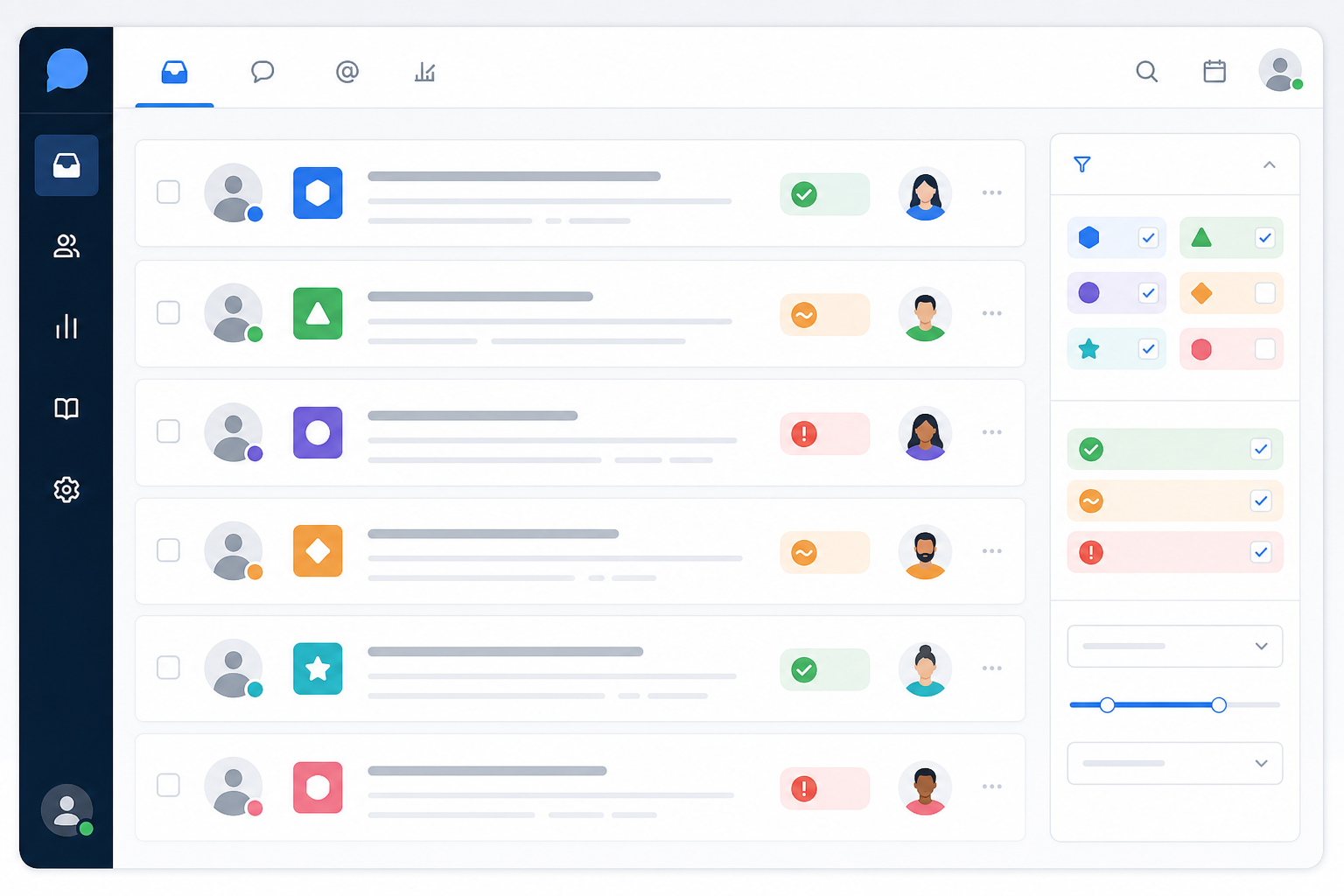
Balancing Brand Consistency With Personalisation
Here's the part I really want to get across, because it's easy to overcorrect: consistency doesn't mean robotic. It means recognisable.
A canned response is a starting point, not a script to be recited word for word. If a customer mentions their dog has just had surgery in the middle of a billing question, a great agent acknowledges that—warmly, briefly, genuinely—before moving on to the actual issue. That's not tone drift. That's a human being present in the conversation, which is exactly what customers want from any support experience, brand voice guidelines or not.
The trick is knowing which elements can flex and which never should. Greetings, small talk, sign-offs and word choice can flex freely within a brand's voice guide. Refund promises, legal wording, product claims and anything involving an escalation should stay fixed and approved—these are the details that create real problems when an agent improvises under time pressure. A good voice guide should say this explicitly: “vary the tone, never vary the policy.”
The best support teams treat brand voice like a house style guide, not a cage. A style guide tells you the shape of good writing—it doesn't dictate every single sentence. Encourage your agents to personalise within guardrails: adjust the greeting, skip a line that doesn't fit the moment, and add a touch of empathy that no template could have anticipated.
Customers notice authenticity far more than they notice perfection. A slightly varied but clearly on-brand reply builds trust. A word-for-word identical response, repeated across a hundred tickets, starts to feel hollow—like talking to a wall that happens to type back. The sweet spot is a team that knows the brand well enough to bend the rules slightly, in the right direction, at the right moment.
That's really the whole philosophy behind building this kind of system into a shared inbox in the first place. You're not trying to strip personality out of your support team. You're trying to make sure that personality has guardrails, references and context—so it never has to be reinvented from scratch, brand by brand, conversation by conversation.
A 30-Day Shared Inbox Rollout Checklist
If you're starting from nothing, here's a realistic sequence rather than trying to do it all in one go:
- Week 1: Audit the last 50 conversations per brand. Draft a one-page voice guide for each brand—three words it is, three it isn't, plus sample phrases.
- Week 2: Build your first round of brand-tagged canned responses inside your shared inbox. Assign an owner per brand.
- Week 3: Set up tagging for tone audits (“off-voice”/“on-brand”) and run your first read-aloud review of 10 tickets per brand.
- Week 4: Pull your first monthly report by brand, share results with the team and schedule the first quarterly canned-response review date.
After that, it's maintenance: weekly five-minute tone check-ins, monthly audits and quarterly template reviews.
Frequently Asked Questions About Multi-Brand Support Tone
How do multi-brand companies keep support tone consistent?
Mostly by removing guesswork. Instead of relying on agents to remember how each brand talks, they store brand-specific canned responses, internal notes and voice guides directly inside their shared inbox, with clear owners responsible for keeping each one current. Tagging conversations by brand also makes it easy to audit tone against a simple rubric, rather than discovering problems after a customer complains.
Can one support team handle multiple brand voices?
Yes, and it's actually pretty common for lean teams running several products or storefronts. The key is giving agents the right tools inside their help desk software—brand-tagged canned responses, quick-reference voice guides, permission settings that route tickets to the right brand queue and a shared inbox that keeps context attached to each conversation—so switching between brands doesn't mean switching from memory.
What tools help maintain consistent customer communication?
Customer support software that combines live chat, email ticketing, tagging and internal collaboration in one place makes the biggest difference. Look specifically for brand-based routing, saved reply folders you can organise by brand, internal notes visible only to your team and reporting that can be filtered by brand rather than blended across your whole inbox. When your team isn't jumping between five different tools to find brand guidelines or past replies, tone consistency becomes a lot easier to maintain without extra training overhead.
Should each brand have its own canned responses?
Generally, yes. Even if two brands sell similar products, their tone, formality and even punctuation style might differ, as the refund example above shows. Separate canned response libraries—organised by tag or folder inside your shared inbox, each with a named owner and a review date—prevent agents from accidentally copy-pasting BrandA's cheerful reply into a BrandB ticket that's meant to sound more formal.
Who should own brand voice guidelines day to day?
In most teams I've seen do this well, it's not one central “brand police” role—it's distributed. Each brand gets an owner (often a senior agent or account lead) responsible for its canned responses and voice guide, while a team lead owns the monthly audit process across all brands. That combination keeps the detail with people close to the brand while someone still has visibility across the whole shared inbox.
Related Articles

Onboarding New Support Agents in Minutes, Not Weeks: A Startup's Guide
Onboard support agents in days, not weeks with team collaboration, shared inboxes and help desk software—an advantage for fast-growing startup teams.

5 Signs Your Support Team Has Outgrown Email-Only Tools
Learn the five signs your team has outgrown email ticketing, from lost messages to manual reporting, and when a shared inbox can help.
Create content like this automatically
Scribe uses AI to generate high-quality blog posts that engage your audience and drive traffic.