Why 99.9% Uptime SLA Matters for E-commerce Support (And What Happens When It Fails)
11 min read
Loading...
A 99.9% uptime SLA means your customer support software can be unavailable for about 8.7 hours per year. But during a flash sale, even 10 minutes of live chat downtime can mean hundreds of lost orders and frustrated customers venting on social media. If you're running an online shop, uptime affects your revenue and your reputation directly, not just your dev team's dashboard.
I've talked to enough e-commerce founders to know that most of us think about uptime the way we think about home insurance, necessary, but not exactly thrilling. Then something goes wrong, and suddenly it's the only thing that matters. So let's have a proper chat about what that little "99.9%" actually promises you, what happens when it doesn't hold up, and how you can protect your shop before you're the one refreshing a dead live chat widget during your biggest sale of the year.
Here's the thing about percentages: they sound impressively close to perfect, but the gap between "pretty good" and "actually reliable" is bigger than you'd think.
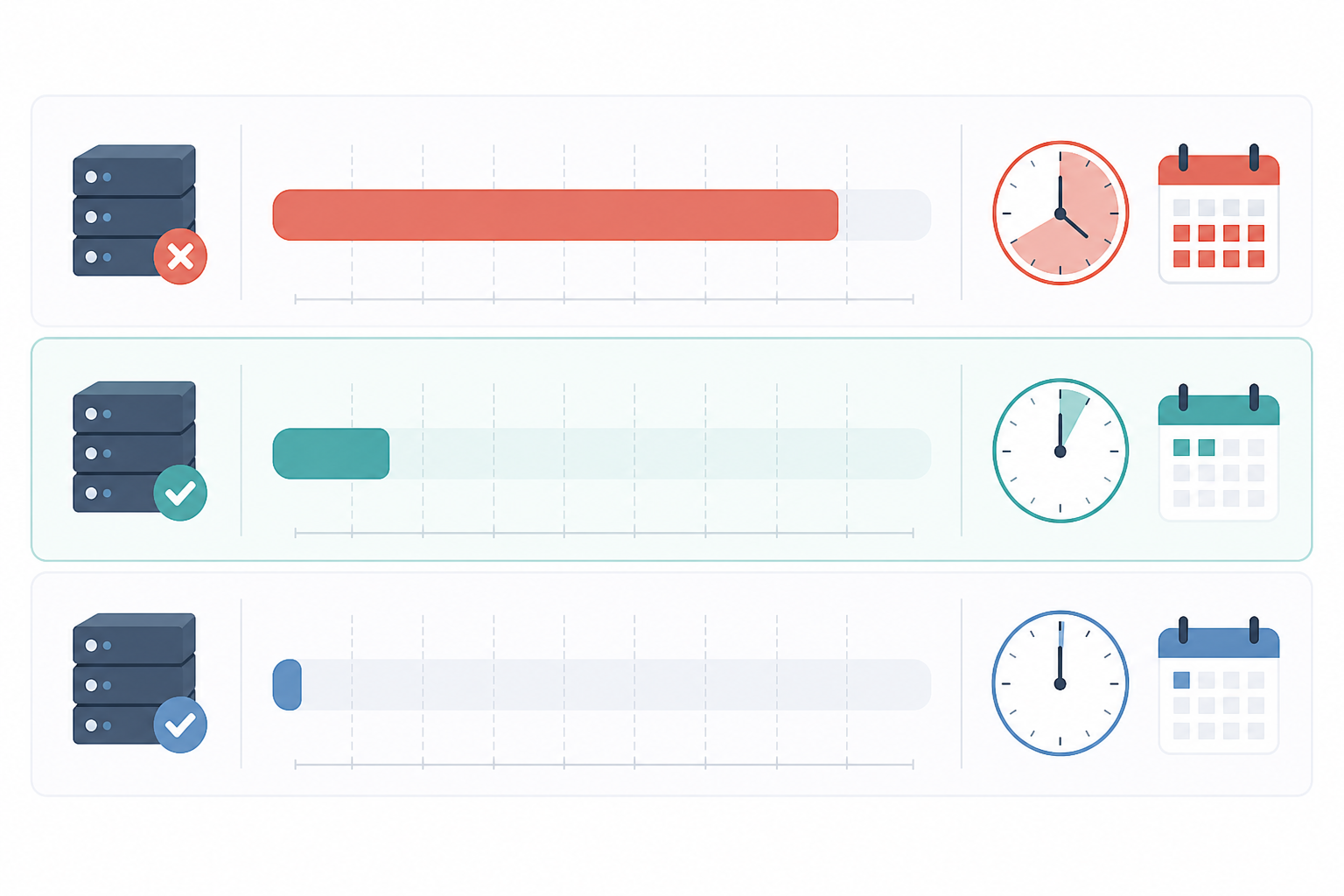
A 99.9% uptime SLA works out to roughly 8 hours, 45 minutes, and 36 seconds of permitted downtime per year. Break that down monthly, and you're looking at about 43 minutes and 49 seconds a month when your customer support software could legitimately be unavailable while the vendor is still technically meeting its promise.
Now compare the different uptime tiers, because the differences matter more than they look:
That jump from 99% to 99.9% isn't a rounding error. It's the difference between losing nearly four full days of support access and losing less than a working day. Going from 99.9% to 99.99% cuts the permitted downtime down to under an hour. Every extra "9" gets exponentially harder, and pricier, for a vendor to deliver. That's exactly why you should raise an eyebrow at anyone promising 99.999% at bargain-bin prices.
One thing worth flagging: a proper uptime SLA should cover your whole help desk platform, not just the parts that are easiest to keep running. That means your live chat widget, email ticketing, team dashboard, and integrations should all be included, not just "core services" while the chat widget quietly sits in a grey area.
This is part of why we publish our 99.9% uptime SLA at Sonny rather than simply mentioning it on a sales call. If you're going to build your customer support around a tool, you deserve to know exactly what reliability you're buying, in writing, not just in a pitch deck.
Let's paint the scenario, because I think it's the fastest way to make this real.
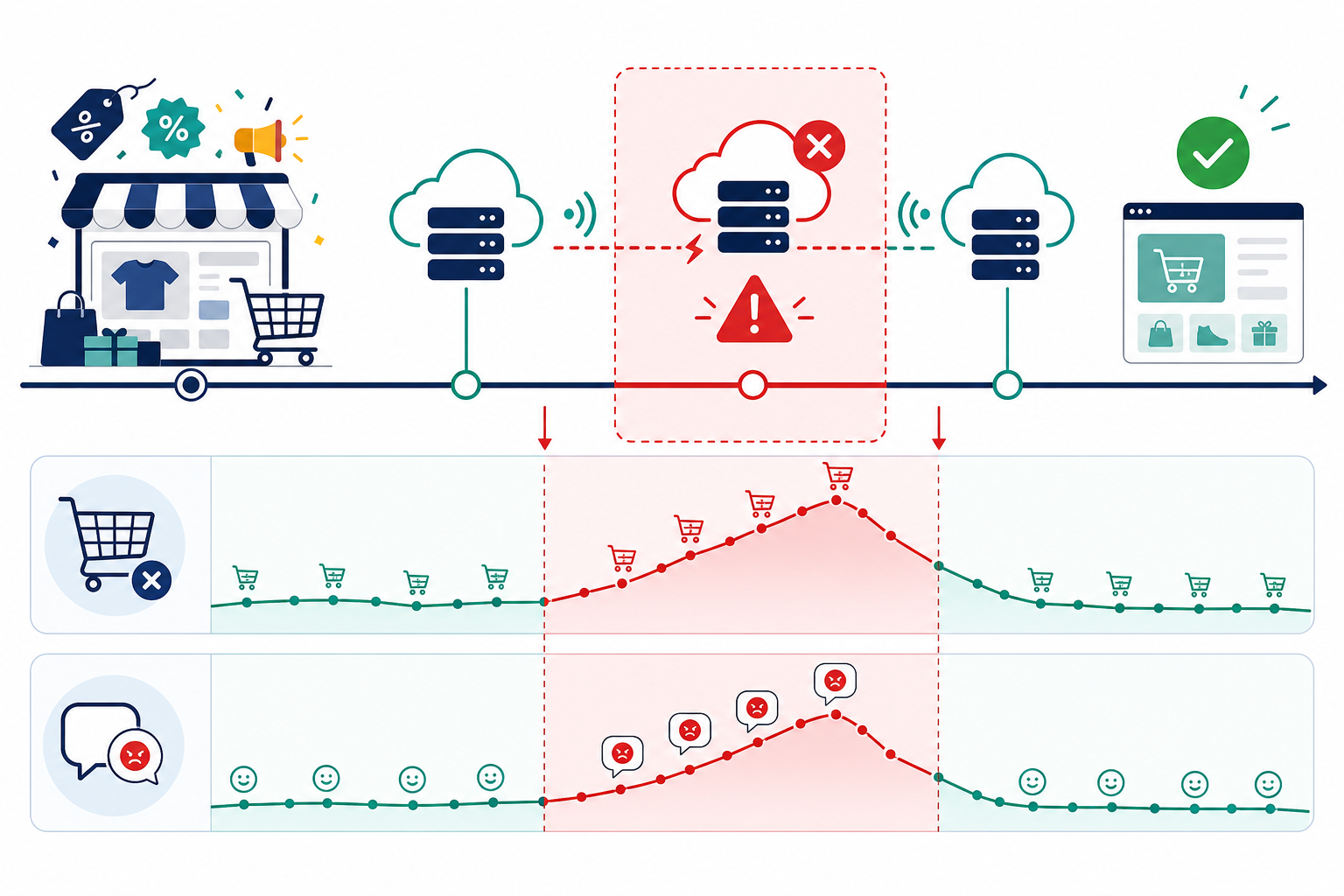
It's Black Friday. Your ad spend is at its peak, traffic is pouring in, and your live chat widget, the one that usually answers questions like "Does this run small?" or "Will this arrive before Christmas?", goes dark. No error message, no fallback, just a blank box where help used to be.
Here's what makes this worse than an outage on a random Tuesday: downtime during peak traffic doesn't cost you a flat percentage of conversations. It compounds. More visitors means more people hitting that dead chat widget at the exact moment they have a question standing between them and checkout.
The average documented cart abandonment rate already sits around 70%, according to Baymard Institute research pooling dozens of studies, and that's on a good day when customer support is working normally. Take away the ability to ask a quick question, and you're pushing hesitant shoppers towards "I'll just leave."
The ripple effects don't stop when the live chat widget comes back online, either:
And here's the part that stings the most: customers don't distinguish between "the shop is down" and "the support tool is down." To them, it's all the same brand failing them at the worst possible moment. PwC research found that 32% of customers will walk away from a brand they love after just one bad experience. A blank chat widget during a sale you spent months planning is exactly the kind of moment that can create that one bad experience.
So how do you avoid finding this out the hard way? Before you commit to any help desk software, put the vendor's reliability claims through a proper check:
This is the boring homework that pays off. It takes perhaps 20 minutes, and it can save you from discovering that your help desk software's "99.9% uptime" was aspirational rather than actual.
When you're on that vendor call, don't just nod along when they mention their uptime SLA number, dig into the fine print. Here's what I'd ask:
A proper uptime SLA should clearly define the measurement window, exclusions, covered services, severity levels, and how incidents are communicated to you. If a vendor can't answer these questions plainly, that's a red flag worth taking seriously.
Here's the reality: even the best customer support software with the strongest uptime SLA can have a bad day. What separates smooth recoveries from full-blown crises is whether you've planned for it in advance.
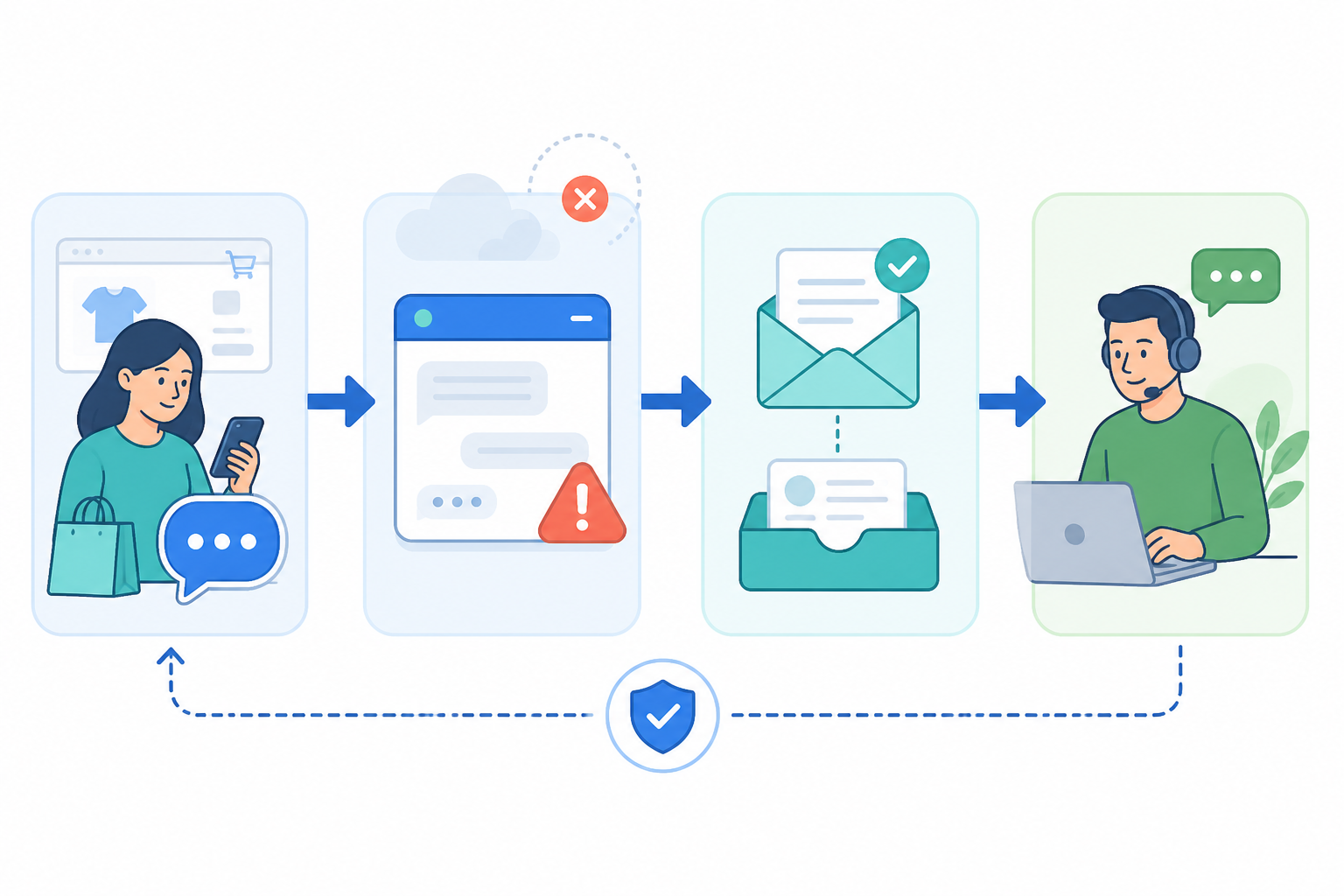
A good rule of thumb from site reliability practices used by much larger engineering teams is that redundant contact paths, a visible status page, and tested escalation procedures aren't overkill. They're the baseline for any customer support setup that expects real traffic.
Here's something that doesn't get talked about enough: pricing models can quietly affect reliability too.
When customer support software charges per seat, teams naturally limit who gets access because every added login costs more money. That's fine on a normal Tuesday. But during an outage or traffic spike, you suddenly need more hands on deck, not fewer. If only three people have logins because that's all the budget allowed, you've built a single point of failure into your own team structure.
This is exactly why we built Sonny around flat-rate pricing: $19.99/month for unlimited agents and unlimited conversations. When a sale goes sideways or a support tool experiences an issue, you can bring in your entire team to help clear the backlog without anyone worrying about triggering another seat charge. A shared inbox with internal notes and tagging means whoever jumps in can immediately see where a conversation left off, instead of starting from scratch or duplicating replies.
Server uptime is only half of reliability. The other half is whether your team can actually respond fast when something breaks, and removing the per-seat penalty means more people can jump in exactly when you need them most.
An uptime SLA, or Service Level Agreement, is a vendor's formal promise about how reliably its platform will be available. A 99.9% uptime SLA means the software is intended to be operational 99.9% of the time, leaving room for roughly 8.76 hours of downtime per year, ideally scheduled during low-traffic periods, not your biggest sale of the season.
For most e-commerce brands, anything below 99.9% uptime starts to feel risky, especially if you run frequent promotions or rely heavily on live chat for pre-purchase questions. The lower the percentage, the more downtime your vendor is permitted, and unpredictability is exactly what you don't want when shoppers are ready to buy.
In the best case, a few customers receive delayed responses and you catch up through email tickets afterwards. In the worst case, shoppers with questions about sizing, shipping, or discount codes abandon their carts and buy from a competitor instead. That's why having a documented uptime SLA and a backup communication plan, such as email-to-ticket forwarding, matters so much during high-traffic events.
At the end of the day, uptime is one of those things you barely think about until it becomes the only thing you're thinking about. Do the homework upfront, ask the uncomfortable questions, and build a backup plan before you need one. Your future self (the one not frantically refreshing a dead chat widget on Black Friday) will thank you. 🙌
Confused about email ticketing vs. a regular inbox? Here's a plain-English guide to how email ticketing works, why it beats shared mailboxes, and how

Move from Zendesk to flat-rate help desk software in a week. Export tickets, train your team and cut over safely—without lost conversations or GDPR headaches for UK teams.
Compare UK help desk software for multi-brand teams: shared inbox features, pricing, integrations, trials and a checklist for choosing the right tool.